Spain secured the 2026 FIFA World Cup title on July 19, 2026, with a 1-0 victory over Argentina. This triumph marks Spain’s second World Cup win, solidifying their place in football history. The decisive goal came in the second half, breaking a deadlock that had persisted through much of the championship match, held in a North American stadium.
The victory concludes a month of intense competition across North America. Spain navigated a challenging tournament bracket. They consistently demonstrated their technical prowess and tactical discipline on the global stage.
Spain’s Path to World Cup Glory
Spain’s journey to the 2026 World Cup final was marked by strong performances. They emerged from a competitive group stage. Subsequent knockout rounds saw them overcome several highly-ranked national teams. The Spanish squad showcased a blend of experienced veterans and emerging talents.
Their midfield controlled possession in many matches. The attacking players created numerous scoring opportunities throughout the tournament. Early reports indicate that the team’s cohesion and strategic depth were key factors. Head Coach Luis de la Fuente’s tactical decisions received widespread praise. The team’s robust defense also played a critical role in their success.
The tournament began on June 11, 2026, with opening ceremonies and matches held across the host nations. Spain entered the competition as one of the favorites, given their strong performances in the lead-up to the event, including a solid showing in the UEFA Nations League campaigns of 2024 and 2025.
Their group stage matches saw them face diverse opponents, testing their adaptability. They demonstrated a capacity to adjust tactics based on the opposition, a hallmark of De la Fuente’s coaching philosophy. Key players in defense, midfield, and attack contributed consistently, ensuring progression to the knockout stages without significant setbacks.
Navigating the Knockout Rounds
The knockout phase presented Spain with increasingly difficult challenges. Their Round of 16 match required a disciplined performance against a well-organized European rival. The quarter-final saw them overcome a South American powerhouse in a tightly contested affair, showcasing their ability to perform under pressure.
In the semi-final, Spain faced another formidable contender, widely regarded as one of the tournament’s strongest teams. This match was a tactical battle, with Spain’s ability to maintain possession and exploit defensive weaknesses proving crucial. The 2026 squad demonstrated a collective resilience, a quality often attributed to their 2010 World Cup-winning predecessors.
The Final Match: Spain vs. Argentina
The final against Argentina was a tense affair. Both teams started cautiously, feeling out their opponents. The first half ended scoreless, with few clear-cut chances for either side. Spain increased its intensity in the second half. They pushed higher up the pitch. This led to a surge in their shot count and increased pressure on the Argentine goal.
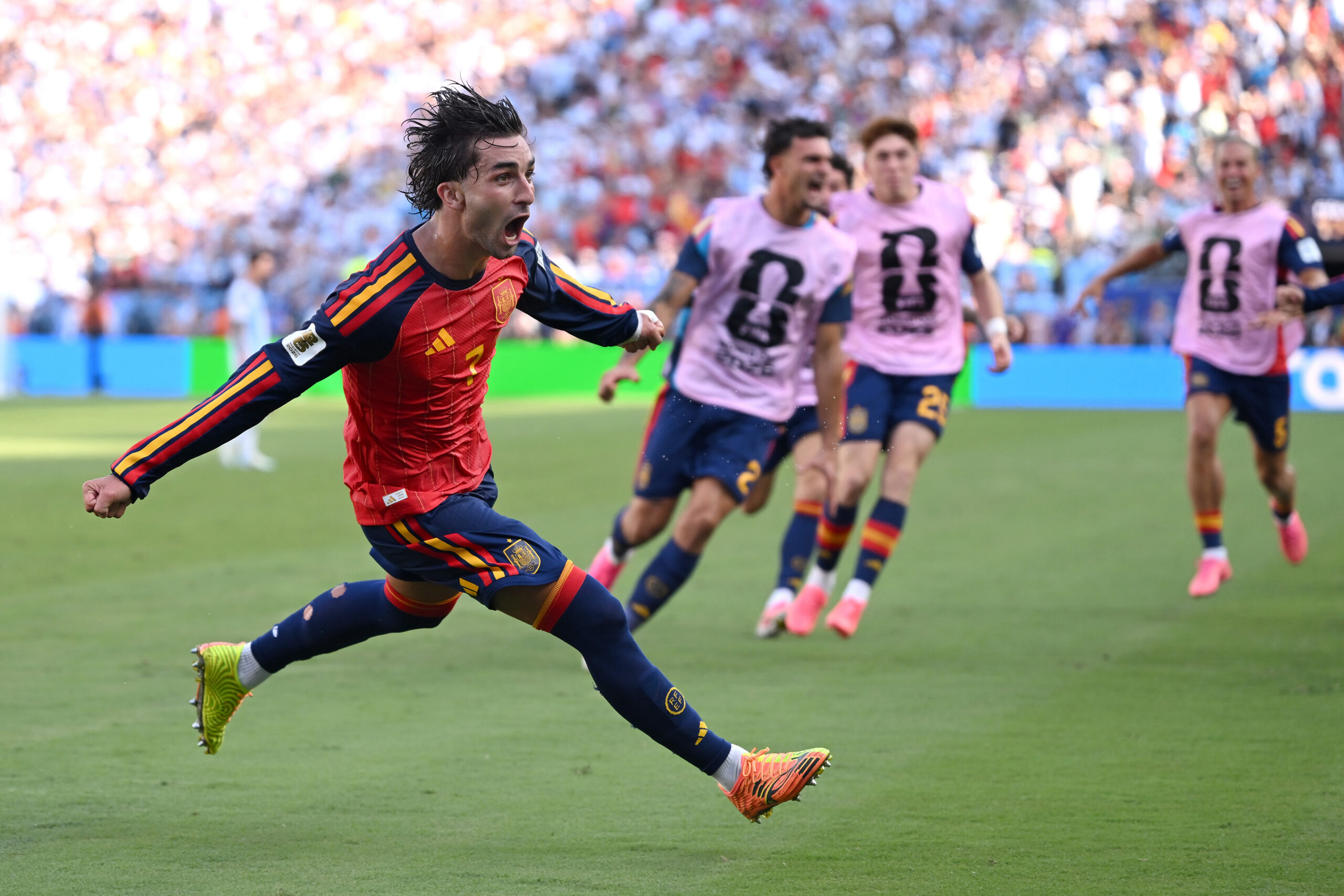
Spain registered an impressive 12 shots on goal throughout the match. Argentina’s defense, while resilient for long stretches, ultimately conceded to Spain’s sustained offensive efforts. The winning goal arrived midway through the second half. The stadium erupted as the ball found the back of the net. This moment proved to be the turning point in the championship.
Details regarding the exact minute and the goal scorer are still being confirmed by official FIFA reports. However, the impact of the goal was immediate, shifting the momentum decisively in Spain’s favor. The final minutes of the match saw Argentina press for an equalizer, but Spain’s defense held firm, denying them any clear opportunities.
Key Tactical Decisions and Player Performances
Coach Luis de la Fuente’s decision to maintain an attacking posture in the second half, despite the scoreless first half, paid dividends. His substitutions were also noted for their effectiveness, bringing fresh legs and renewed energy to the Spanish attack and midfield. The collective effort of the Spanish players was evident, with no single individual dominating the headlines but rather a cohesive unit achieving success.
The Spanish midfield, known for its intricate passing and ball retention, was instrumental in controlling the tempo of the game. They limited Argentina’s ability to build attacks from the back, forcing them into less comfortable positions on the field. The defensive line, anchored by experienced center-backs and supported by diligent wing-backs, successfully neutralized Argentina’s potent attacking threats.
Argentina’s Valiant Campaign Concludes
Argentina entered the final as a formidable opponent. They had demonstrated exceptional skill and determination throughout the 2026 World Cup. Their path to the final included several dramatic victories. The South American giants showcased their characteristic flair and attacking talent.
Lionel Messi, in what was widely anticipated to be his final World Cup appearance, led the team with distinction. Despite their efforts, they could not find an equalizer after Spain’s goal. The Argentine squad displayed sportsmanship in defeat. They acknowledged Spain’s superior performance on the day. Their tournament run was still considered a success by many fans and analysts.
Argentina’s journey to the final was marked by their characteristic blend of individual brilliance and collective grit. They overcame challenging group stage opponents and navigated tough knockout rounds, often relying on moments of individual magic from their star players. Their quarter-final and semi-final victories were particularly hard-fought, showcasing their resilience.
Messi’s Enduring Legacy
For Lionel Messi, this final appearance further cemented his legendary status in football. Having won the World Cup in 2022, his leadership in 2026, guiding Argentina back to the final, was a testament to his enduring talent and dedication. Though the ultimate prize eluded him in this tournament, his contributions throughout his career and this competition will be remembered.
The Argentine team, under their coach, had built a strong squad around Messi, integrating younger talents with experienced players. Their attacking prowess, particularly their ability to create chances from tight spaces, was a constant threat throughout the tournament. The 2026 World Cup saw many memorable moments from the Argentine side, confirming their status as one of the world’s premier footballing nations.
The Legacy of the 2026 FIFA World Cup
The 2026 FIFA World Cup will be remembered for several reasons. It was the first World Cup hosted across three nations: the United States, Canada, and Mexico. The expanded format featured 48 teams, leading to more matches and diverse competition. Spain’s victory adds another chapter to their footballing legacy.
Their 2010 win in South Africa was a landmark achievement. This second title cements their status as a modern footballing dynasty. The tournament generated immense global interest. Billions of viewers tuned in to watch the matches. The economic impact on the host cities and nations was substantial.
The decision to host across three North American countries marked a significant shift in FIFA’s approach to major tournaments. This multi-national hosting model allowed for a broader distribution of economic benefits and showcased diverse cultures. The expanded 48-team format, introduced for the first time, provided more opportunities for national teams to participate on the global stage, leading to a wider array of matchups and narratives.
Economic and Cultural Impact
Host cities across the United States, Canada, and Mexico experienced significant economic boosts through tourism, infrastructure development, and increased consumer spending. The tournament’s global reach, broadcast to billions, reinforced football’s position as the world’s most popular sport. Cultural exchanges and celebrations were prevalent throughout the month-long event, fostering international goodwill.
The 2026 World Cup also served as a proving ground for new technologies in broadcasting and fan engagement. Innovations in stadium experiences and digital content delivery enhanced the viewing experience for millions worldwide. The tournament set new benchmarks for sustainability and logistical coordination for future large-scale sporting events.
Spain’s Place in Football History
Spain’s first World Cup victory in 2010, achieved in South Africa, was a culmination of a golden generation of players. That team, known for its ‘tiki-taka’ style of play, revolutionized international football. The 2026 squad, while perhaps employing slightly different tactics under Luis de la Fuente, carried forward the tradition of technical excellence and strategic acumen.
This second title places Spain in an exclusive club of multiple World Cup winners, alongside nations like Brazil, Germany, Italy, Argentina, Uruguay, and France. It underscores the depth of talent within Spanish football and the effectiveness of their youth development programs. The consistent investment in coaching and player development has clearly paid off on the international stage.
The final whistle blew. Celebrations erupted among the Spanish supporters. Disappointment settled over the Argentine fans. The 2026 FIFA World Cup concluded with Spain as the undisputed champions. A new chapter in football history.