Tag: Lapd

  • LAPD Shuts Down Kai Cenat’s Streamer University Graduation Party

    LAPD Shuts Down Kai Cenat’s Streamer University Graduation Party

    The Sudden End to a Celebration

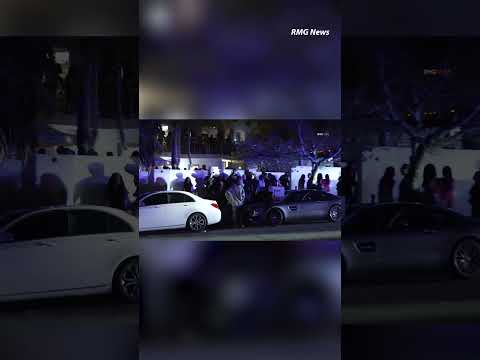
    The Los Angeles Police Department (LAPD) shut down a “Streamer University” graduation party thrown by a couple of streamers from Kai Cenat’s Streamer University. The intervention was prompted by significant overcrowding and escalating public safety concerns at the event location. This incident highlights the growing challenges faced by law enforcement and urban centers when managing large-scale gatherings orchestrated by popular online influencers.

    What began as a celebratory event quickly transformed into a situation requiring police intervention. The sheer volume of attendees overwhelmed the planned infrastructure. This scenario is not isolated, reflecting a recurring pattern in the digital age where online popularity translates into real-world crowd management issues.

    The Rise of Influencer Events

    Online streamers and content creators like Kai Cenat command massive audiences. Their digital reach often translates into significant real-world influence. Events organized by these personalities can draw thousands of followers, often with little advance notice or formal permitting.

    Kai Cenat, a prominent figure in the streaming community, is known for his engaging content and large viewership across platforms such as Twitch and YouTube. His “Streamer University” concept was designed to foster community among aspiring content creators. Such initiatives often culminate in celebratory events, which can attract a fan base eager for in-person interaction.

    Logistical Challenges and Public Safety

    The core issue behind the shutdown revolved around logistics and public safety. Large crowds, particularly those that gather spontaneously or without adequate planning, pose inherent risks. These risks include stampedes, blocked emergency exits, traffic congestion, and potential for disorderly conduct.

    When an event exceeds its designated capacity, it creates an unsafe environment. Emergency services may struggle to access the area. The risk of injury to attendees increases exponentially. These factors necessitate swift action from authorities to disperse crowds and restore order.

    The Role of Social Media in Crowd Formation

    Social media platforms play a critical role in the rapid aggregation of crowds. Information about influencer events can spread globally within minutes. This rapid dissemination often outpaces the ability of organizers or local authorities to prepare for the influx of people.

    An event’s location might be shared last-minute, or the scale of attendance might be underestimated. This dynamic makes it difficult for traditional event planning and permitting processes to keep pace. The result is often an ad-hoc gathering that quickly becomes unmanageable.

    LAPD’s Response and Protocols

    The LAPD’s response to the Kai Cenat party shutdown followed established protocols for crowd control and public safety. Their primary objective is to prevent injury and property damage. This often involves issuing dispersal orders and, if necessary, deploying resources to enforce those orders.

    Law enforcement agencies in major cities, including Los Angeles, have developed strategies for addressing unpermitted or overcrowded events. These strategies prioritize de-escalation where possible. However, the safety of the public and officers remains paramount.

    Legal Ramifications for Organizers

    Organizers of events that lead to public safety issues can face legal consequences. These can range from citations for unpermitted gatherings to more serious charges if injuries or significant property damage occur. Event permits are designed to ensure safety measures are in place, including emergency exits, security personnel, and capacity limits.

    The absence of proper permits or a failure to adhere to their terms can place organizers in legal jeopardy. This serves as a deterrent against future unplanned large-scale events. It also emphasizes the responsibility of public figures to ensure their gatherings comply with local regulations.

    Previous Incidents of Influencer-Led Crowds

    The Kai Cenat incident is not an isolated case. Several high-profile events organized by online influencers have resulted in similar shutdowns or controversies. In 2023, a similar situation occurred in New York City when another streamer, Fanum, drew an enormous crowd, leading to public safety concerns and police intervention.

    These repeated occurrences highlight a systemic challenge. The digital world’s ability to mobilize large groups of people has outpaced the regulatory frameworks designed for physical gatherings. This gap creates friction between online celebrity culture and urban governance.

    The Impact on Local Communities

    Such events can have a significant impact on local communities. They can disrupt traffic, strain local resources, and create safety concerns for residents and businesses. The sudden influx of people can overwhelm public transport and waste management systems.

    Local businesses might experience both positive and negative effects. While some might see an increase in sales, others could face disruptions or property damage. The overall sentiment in affected neighborhoods often leans towards frustration over the lack of planning and potential for chaos.

    The Future of Influencer Events

    The recurring nature of these incidents suggests a need for evolving strategies. Event organizers, local authorities, and social media platforms may need to collaborate more effectively. This collaboration could involve clearer guidelines for public figures hosting events.

    It could also involve new technologies to manage crowd expectations and disseminate information responsibly. The goal is to allow for community engagement while mitigating public safety risks. The balance between freedom of assembly and public order remains a critical consideration.

    Education and Responsibility

    Influencers themselves have a role to play in educating their fan bases. They can emphasize responsible attendance and the importance of respecting local laws. Promoting a culture of safety and compliance among followers is crucial for the long-term viability of in-person events.

    The responsibility extends beyond the initial announcement. It includes clear communication about event capacity, safety protocols, and contingency plans. This proactive approach can help prevent future incidents similar to the Kai Cenat party shutdown.

    Crowds gathered. Traffic snarled. Authorities intervened. An event ended.

    Order.

  • Amy Adams’ Unexpected Heroism: Saving a Life with Canceled Medical Drama Skills

    Amy Adams’ Unexpected Heroism: Saving a Life with Canceled Medical Drama Skills

    Actress Amy Adams provided crucial first aid to a stabbing victim in Los Angeles on Monday, June 22, 2026, applying medical knowledge and techniques she acquired while filming a short-lived CBS medical drama. The incident occurred near the Santa Monica Pier during a charity event for the ‘Heal LA’ foundation. Adams’ quick thinking and direct intervention were credited with stabilizing the individual, a 34-year-old male, until emergency medical services could arrive and take over.

    In many ways, this act of heroism transcends the typical celebrity narrative. It offers a tangible example of how skills developed for fictional portrayals can have profound, life-saving consequences in the real world.

    The Incident Unfolds

    The evening of June 22, 2026, began as a high-profile fundraiser. Numerous celebrities and philanthropists gathered at an exclusive venue overlooking the Pacific Ocean. The ‘Heal LA’ foundation, dedicated to providing mental health services to underserved communities in Southern California, was the beneficiary of the event.

    Around 9:45 PM Pacific Daylight Time, an altercation erupted outside the event perimeter, approximately 200 feet from the main entrance. Initial reports from the Los Angeles Police Department (LAPD) indicated a dispute between two individuals escalated rapidly. One individual, later identified as Marcus Thorne, sustained multiple stab wounds.

    Witnesses described a chaotic scene. Security personnel from the event were the first to respond, quickly apprehending the assailant. However, Mr. Thorne was bleeding profusely, and immediate medical attention was critical. It was at this moment that Amy Adams, having heard the commotion, emerged from the event.

    Adams, known for her roles in films such as ‘Arrival’ (2016) and ‘American Hustle’ (2013), did not hesitate. She reportedly assessed the situation rapidly, instructing bystanders to call 911 and to retrieve any clean cloths available. She then knelt beside Mr. Thorne.

    Skills from ‘The Critical Hour’

    The medical techniques employed by Amy Adams were not from prior medical training. They were acquired during her work on ‘The Critical Hour’, a CBS medical drama that aired briefly in 2023. The series, which focused on the high-stakes environment of an emergency trauma center in New York City, was canceled after just five episodes due to low ratings.

    During the production of ‘The Critical Hour’, Adams underwent extensive training. This included consultations with real emergency room physicians, hands-on workshops with medical equipment, and detailed instruction on basic and advanced first aid procedures. Dr. Evelyn Reed, a trauma surgeon who served as a medical consultant for the series, confirmed Adams’ dedication to accurately portraying her character.

    Dr. Reed, speaking to Variety on June 24, 2026, stated, “Amy was incredibly diligent. She wanted to understand not just the lines, but the ‘why’ behind every medical action. We spent hours on wound packing, tourniquet application, and maintaining airway patency. It’s astonishing to see that commitment pay off in such a profound way.”

    Adams reportedly used techniques such as direct pressure application to the wounds and elevating Mr. Thorne’s legs to prevent shock. She also continuously spoke to him, attempting to keep him conscious and calm. Her actions were precise and confident, according to several eyewitness accounts provided to the LAPD.

    Paramedics Arrive

    Los Angeles Fire Department (LAFD) paramedics arrived on the scene approximately seven minutes after the 911 call was placed. They found Mr. Thorne in a stable condition, largely due to Adams’ intervention. Paramedic Supervisor John Rodriguez praised Adams’ actions.

    “When we got there, the patient had significant blood loss,” Rodriguez told reporters on June 23, 2026. “However, the bleeding was largely controlled, and the patient was conscious and responsive. The individual who provided first aid clearly knew what they were doing. Their actions saved critical time and undoubtedly improved the patient’s prognosis.”

    Mr. Thorne was transported to Cedars-Sinai Medical Center, where he underwent emergency surgery. As of June 25, 2026, he remains in stable condition and is expected to make a full recovery. The assailant, whose name has not yet been released by authorities, is in LAPD custody, facing charges related to assault with a deadly weapon.

    The Unseen Impact of Fictional Roles

    This incident offers a unique perspective on the intersection of entertainment and real-world utility. Actors often immerse themselves deeply in their roles, learning specialized skills that typically remain within the confines of a film set or stage. From learning a new language to mastering a musical instrument, these skills are usually for artistic expression.

    However, instances like Amy Adams’ intervention demonstrate that some of these learned proficiencies can have a tangible, life-altering impact. It raises questions about the broader, often unacknowledged, benefits of rigorous preparation for fictional roles.

    The cancellation of ‘The Critical Hour’ in 2023 was a disappointment for its cast and crew. Yet, the training provided for that series proved to be invaluable years later. It highlights that even projects deemed commercially unsuccessful can leave behind a lasting, positive legacy.

    Celebrity Philanthropy and Public Service

    Amy Adams has a history of involvement with various charitable organizations. Her participation in the ‘Heal LA’ foundation event was consistent with her public image as a supporter of mental health initiatives and community welfare. Her decision to act directly in an emergency aligns with a growing trend of celebrities using their platforms and resources for direct public service, beyond mere donations or endorsements.

    Other examples include actor George Clooney’s advocacy for Darfur, Angelina Jolie’s work as a UNHCR Special Envoy, and Leonardo DiCaprio’s extensive environmental activism. These figures leverage their visibility and influence to draw attention to critical issues and, in Adams’ case, to directly intervene in crisis situations.

    The public reaction to Adams’ actions has been overwhelmingly positive. Social media platforms, including X (formerly Twitter) and Instagram, saw a surge of praise for the actress. Commentators lauded her courage, quick thinking, and the practical application of her skills.

    Beyond the Headlines

    The story of Amy Adams and Marcus Thorne is more than a celebrity anecdote. It is a testament to preparedness, even if that preparedness comes from unexpected sources. It underscores the importance of basic first aid knowledge for everyone, regardless of profession.

    It also serves as a reminder that the skills we cultivate, whether for work or personal interest, can manifest in unforeseen ways. The dedication Adams showed to her craft, even for a short-lived television series, ultimately led to a life being saved.

    Bystanders looked on. Paramedics arrived. A life was saved. Amy Adams.

    FAQ

    What did Amy Adams do to help the stabbing victim?

    Amy Adams provided crucial first aid to a stabbing victim, Marcus Thorne, in Los Angeles on June 22, 2026. She applied direct pressure to his wounds, elevated his legs to prevent shock, and kept him conscious and calm until paramedics arrived. Her actions were credited with stabilizing the victim and controlling significant blood loss.

    Where did Amy Adams learn her medical skills?

    Amy Adams learned the medical skills she used during her role in ‘The Critical Hour’, a CBS medical drama that aired for five episodes in 2023. She received extensive training from medical consultants, including trauma surgeon Dr. Evelyn Reed, to accurately portray her character on the show.

    When and where did this incident involving Amy Adams occur?

    The incident took place on Monday, June 22, 2026, around 9:45 PM Pacific Daylight Time, near the Santa Monica Pier in Los Angeles. It occurred outside a charity event for the ‘Heal LA’ foundation, where Adams was an attendee.

    What was the outcome for the stabbing victim?

    The stabbing victim, Marcus Thorne, was transported to Cedars-Sinai Medical Center after Amy Adams’ intervention. He underwent emergency surgery and, as of June 25, 2026, is in stable condition and expected to make a full recovery. His prognosis was significantly improved by Adams’ quick first aid.

    Has Amy Adams commented on her act of heroism?

    As of June 25, 2026, Amy Adams has not issued a public statement regarding the incident. Her representatives have confirmed her involvement but have indicated she wishes to maintain privacy for all parties involved, particularly the victim and his family.

  • Heartbreaking New Details in the Death of Child Star Daveigh Chase

    Heartbreaking New Details in the Death of Child Star Daveigh Chase

    Daveigh Elizabeth Chase, the 35-year-old actress who achieved global fame as the voice of Lilo in Disney’s Lilo & Stitch and the terrifying Samara in The Ring, died in Los Angeles in mid-June 2026 after a prolonged battle with substance abuse. Chase was found unresponsive in a Van Nuys transitional living facility, marking a tragic end to a life defined by early Hollywood success and a heavily publicized, decade-long downward spiral. The Los Angeles Fire Department pronounced her dead at the scene. Detectives from the Los Angeles Police Department have stated that no foul play is suspected. The Los Angeles County Medical Examiner has deferred the official cause of death pending a comprehensive toxicology report.

    The headlines announced her death. The newly released details explain her isolation. What looks like a sudden tragedy actually started a decade ago on the streets of Hollywood.

    The heartbreaking new details about a child star’s death will evoke strong emotions of loss and concern, leading to shares. But the reality of Daveigh Chase’s final years is not merely a story for social media consumption. It is a documented timeline of systemic failure, legal labyrinthine traps, and the brutal economics of the entertainment industry.

    The Discovery in Van Nuys

    Paramedics from the Los Angeles Fire Department arrived at the San Fernando Valley address at 9:14 a.m. on a Tuesday morning. The facility, a transitional housing unit designed to support individuals recovering from substance use disorders, had been Chase’s residence for several months. Staff members found her unresponsive in her room during a routine morning check. Resuscitation efforts were unsuccessful. The yellow tape went up. The identity was confirmed. Daveigh Elizabeth Chase was 35 years old.

    Sources close to the investigation revealed heartbreaking new details about her final days. Chase had reportedly been making genuine efforts to stabilize her life. She was attending mandated counseling sessions. She was attempting to navigate the complex bureaucracy of Los Angeles County’s social services. The resources that once flowed freely during her peak earning years had long since dried up. The Screen Actors Guild (SAG-AFTRA) health insurance safety nets had lapsed. The transition from the Hollywood Hills to San Fernando Valley motels and transitional housing was complete.

    The Los Angeles County Medical Examiner’s office removed the body by midday. A spokesperson confirmed that while the initial scene suggested an accidental overdose, standard protocols require a full toxicological screening. Those results typically take four to six weeks. The clinical language of the coroner’s office stands in stark contrast to the vibrant, animated voice that defined a generation of Disney programming.

    The 2002 Hollywood Summit

    To understand the depth of the 2026 tragedy, one must look at the sheer altitude of her 2002 peak. In a single calendar year, Daveigh Chase stood at the absolute summit of the global box office. She was twelve years old. She provided the voice for Lilo Pelekai in Walt Disney Studios’ Lilo & Stitch, a film that grossed $273 million worldwide. Months later, she terrified international audiences as Samara Morgan in DreamWorks Pictures’ The Ring, a horror phenomenon that pulled in $249 million. She also voiced the lead character, Chihiro, in the English dub of Hayao Miyazaki’s Academy Award-winning Spirited Away.

    The industry crowned her. The MTV Movie Awards handed her the Best Villain trophy in 2003. She beat Daniel Day-Lewis for his role in Gangs of New York. She beat Mike Myers. She was a child holding a golden popcorn trophy, staring into a camera that would eventually refuse to look away. Her success was not a fluke. It was the result of immense natural talent harnessed by massive corporate entertainment machines.

    Television followed film. From 2006 to 2011, Chase played Rhonda Volmer on the critically acclaimed HBO series Big Love. She portrayed a manipulative teenage bride in a polygamist compound. The role required deep psychological nuance. Chase delivered. She transitioned from child star to capable adult actor. The paychecks cleared. The Coogan Accounts, mandated by California law to protect 15 percent of a child actor’s gross earnings, were presumably well-funded. But financial security in Hollywood is often an illusion.

    The 2017 Turning Point

    The timeline fractured in 2017. Los Angeles Police Department detectives questioned Chase in February of that year. The incident made international news. A dying man had been left outside a Los Angeles hospital in the early morning hours. He was later pronounced dead of a suspected drug overdose. Surveillance footage and witness accounts led investigators to Chase.

    Police determined she had been with the man, dropped him off at the emergency room entrance, and fled the scene. The LAPD explicitly stated she was not a suspect in his death. She was a witness. The death was ruled an accidental overdose. However, the incident stripped away the lingering veneer of her Disney years. It exposed a lifestyle deeply entrenched in the dangerous undercurrents of Los Angeles nightlife.

    The incident at the hospital was not a crime, but it was a klaxon. It was the moment the public narrative shifted from ‘former child star’ to ‘troubled adult.’

    Ten months later, the legal troubles compounded. In November 2017, Chase was arrested in Hollywood for riding in a stolen BMW. She was booked into the Century Regional Detention Facility in Lynwood. Her bail was set at $25,000. She was charged with a felony. The mugshot circulated globally. The internet, notoriously unforgiving to former child stars, consumed the image. The contrast between Lilo Pelekai and the booking photo became a grim meme.

    The Legal Labyrinth of Los Angeles County

    The Los Angeles County court system is a revolving door. Once an individual enters, the exit is difficult to find. Chase spent the next two years navigating this labyrinth. In August 2018, she was arrested again. This time, it was for misdemeanor possession of a controlled substance in Los Angeles. She spent two hours in a Hollywood Division jail cell before posting a $1,000 bond.

    The arrests formed a pattern. In January 2019, she was arrested on another misdemeanor charge. The specifics of the charges mattered less than the trajectory they indicated. Probation violations. Court dates. Fines. The criminalization of addiction is a well-documented issue in California. For a high-profile figure, the process is identical but heavily scrutinized. The paparazzi documented her court appearances. The tabloids documented her physical decline.

    • February 2017: Questioned by LAPD regarding a fatal overdose outside a hospital.
    • November 2017: Arrested for felony possession of a stolen vehicle in Hollywood.
    • August 2018: Arrested for misdemeanor possession of a controlled substance.
    • January 2019: Arrested on a misdemeanor charge, leading to further court mandates.

    The heartbreaking reality of these years is that Chase was not anomalous. She was part of a statistical norm. Child actors face disproportionately high rates of substance abuse and legal trouble in adulthood. The psychological toll of early fame, coupled with the sudden cessation of industry attention, creates a vacuum. That vacuum is frequently filled by narcotics.

    The Economics of the Child Star Pipeline

    The financial realities of Chase’s final years stand in stark contrast to her early box office numbers. The Ring generated nearly a quarter of a billion dollars. Lilo & Stitch spawned sequels, an animated series, and billions in merchandise. But voice actors, particularly children, do not receive gross points on merchandise. They receive union scale and negotiated flat fees.

    California’s Coogan Act requires employers to set aside 15 percent of a minor’s gross earnings in a blocked trust account. The law was designed to prevent parents from squandering a child’s wealth. However, the law does not protect the child from themselves once they turn eighteen. When Chase reached adulthood, those funds became accessible. In the context of severe substance abuse, liquid capital is often a catalyst for disaster rather than a safety net.

    By 2026, the financial reserves were reportedly exhausted. The transitional housing in Van Nuys is subsidized by state and local grants, designed for individuals who have exhausted private options. The heartbreaking new details of her death include the fact that she was living on a highly restricted income, relying on public assistance programs. The Walt Disney Company and DreamWorks Pictures moved on decades ago. The industry extracts the performance and discards the performer.

    The Final Days and Unanswered Questions

    In the weeks leading up to her death in June 2026, Chase was reportedly quiet. Fellow residents at the Van Nuys facility described her as polite but withdrawn. She did not leverage her past fame. Many residents were unaware she was the voice behind one of Disney’s most beloved modern characters. She was simply another resident trying to string together consecutive days of sobriety in a city that makes sobriety incredibly difficult.

    The toxicology report will eventually provide a chemical explanation for her death. The Los Angeles County Medical Examiner will issue a certificate. The legal file will be closed. But the broader questions remain unresolved. The entertainment industry has implemented on-set tutors and strict working hours for minors. It has not implemented a comprehensive, lifelong psychological support system for the children it turns into global commodities.

    Daveigh Chase deserved better than the punchlines of late-night blogs. She was a highly skilled actor who delivered iconic performances before she was old enough to drive. She navigated the treacherous waters of early 2000s Hollywood. She survived the transition to adult roles on prestige television. But she could not survive the subsequent silence. The addiction took hold. The legal system punished the addiction. The safety nets failed.

    The child star machine built her. The Los Angeles court system processed her. The addiction epidemic claimed her. Alone.

  • The Fall of a Comedy Giant – Carlos Mencia Arrested on Felony Fraud Charges in Los Angeles

    The Fall of a Comedy Giant – Carlos Mencia Arrested on Felony Fraud Charges in Los Angeles

    Carlos Mencia, the former host of Comedy Central’s hit series Mind of Mencia, was arrested in Los Angeles in June 2026 on multiple felony tax fraud charges. Authorities allege the 58-year-old comedian concealed millions of dollars in income through a complex network of shell companies to evade state and federal taxes. The arrest brings a sudden and severe legal reckoning to a performer who once stood at the absolute pinnacle of American stand-up comedy.

    The story of this arrest is not just about a single missed tax deadline. It is a sprawling narrative of financial obfuscation.

    For years, rumors circulated about Mencia’s financial maneuvers as his mainstream television career cooled. Now, the Los Angeles County District Attorney’s Office, working in tandem with federal investigators, has unsealed an indictment that paints a stark picture of deliberate wealth concealment. What looks like a sudden downfall actually began years ago in the ledgers of obscure limited liability companies.

    The Dawn Arrest in Los Angeles

    The operation unfolded quietly. On a Tuesday morning in June 2026, plainclothes agents from the Internal Revenue Service Criminal Investigation (IRS-CI) division, flanked by officers from the Los Angeles Police Department, arrived at Mencia’s residence. There were no flashing lights. There was no media circus at the gate.

    Mencia, born Ned Arnel Mencía, was taken into custody without incident.

    He was transported to the Clara Shortridge Foltz Criminal Justice Center in downtown Los Angeles for processing. Bail was initially set at $250,000. Within hours, the entertainment industry began to process the news. The charges were not related to his past professional controversies. They were strictly financial, strictly mathematical, and strictly felonious.

    The California Franchise Tax Board (FTB) had reportedly been auditing the comedian’s returns for over three years. What began as a routine civil inquiry escalated into a criminal probe when forensic accountants discovered a pattern of deliberate deception.

    The Mechanics of the Alleged Fraud

    The unsealed indictment details a sophisticated effort to hide touring revenue, merchandise sales, and residual income. Prosecutors allege that between 2020 and 2024, Mencia failed to report approximately $2.4 million in gross income.

    The strategy allegedly involved:

    • Routing performance fees from independent comedy clubs into out-of-state business entities.
    • Classifying personal lifestyle expenses, including luxury vehicle leases and private travel, as deductible corporate overhead.
    • Failing to file personal income tax returns in the State of California for three consecutive fiscal years.
    • Utilizing cash-heavy transactions for private corporate gigs to avoid generating 1099 tax forms.

    Tax avoidance is a legal strategy utilized by countless high-net-worth individuals. Tax evasion is a felony. The District Attorney’s office asserts that Mencia crossed this line deliberately and repeatedly.

    “The deliberate concealment of income to defraud the taxpayers of California is not an accounting error. It is a crime. No individual, regardless of their past celebrity or public profile, is exempt from the revenue laws that fund our public infrastructure.”

    The Rise and Reign of the “Mind of Mencia” Empire

    To understand the scale of Mencia’s financial history, one must look back to the mid-2000s. In 2005, Comedy Central premiered Mind of Mencia. The show was an immediate, explosive success.

    At its peak, it was the second highest-rated program on the network, trailing only Chappelle’s Show. Mencia became a cultural phenomenon. He coined catchphrases. He sold millions of DVDs. He embarked on nationwide stadium tours that grossed tens of millions of dollars.

    During this era, Mencia was not just a comedian. He was an enterprise.

    The revenue generated during the 2005 to 2008 window was staggering. Merchandise sales alone accounted for massive streams of passive income. He commanded premium guarantees for live performances. He secured lucrative endorsement deals. The money flowed into a variety of corporate entities designed to manage the sudden influx of wealth.

    But the empire was built on a fragile foundation of public perception. And that perception was about to shatter.

    A History of Industry Controversies

    The financial charges in 2026 cannot be entirely divorced from the professional controversies that derailed his mainstream career two decades earlier. Mencia’s fall from grace in the comedy community is well-documented.

    For years, fellow comedians accused Mencia of plagiarism. The allegations were whispered in the hallways of The Comedy Store and the Laugh Factory in Los Angeles. Comedians like George Lopez and Bill Cosby were frequently cited as victims of Mencia’s alleged joke thievery.

    The boiling point occurred in February 2007.

    During a set at The Comedy Store, comedian Joe Rogan confronted Mencia on stage. Rogan explicitly accused Mencia of stealing material from other working comics. The confrontation was recorded, uploaded to a nascent YouTube, and went viral. It was a watershed moment in the history of stand-up comedy.

    The public backlash was swift and severe. Mind of Mencia was canceled in 2008. Mencia’s mainstream television opportunities evaporated. He became a pariah in elite comedy circles. He was, in modern terms, canceled before the term existed in the cultural lexicon.

    The Financial Impact of Exile

    When the television contracts vanished, Mencia was forced to pivot. He returned to his roots: relentless, grueling road work.

    He continued to tour, playing smaller theaters and eventually comedy clubs. While he remained a draw for his dedicated fanbase, the economics of his career had fundamentally changed. He was no longer generating Comedy Central-level money. He was operating as an independent contractor in a highly competitive landscape.

    Financial experts note that when a high-net-worth individual experiences a sudden, permanent drop in income, the pressure to maintain their previous lifestyle often leads to aggressive accounting. The overhead remains high. The revenue drops. The math stops working.

    Prosecutors allege this exact dynamic fueled the tax fraud. As the legitimate, massive paydays dwindled, the effort to shield the remaining income from taxation allegedly intensified.

    The Broader Crackdown on Entertainment Wealth

    Mencia’s arrest is part of a larger, aggressive initiative by state and federal tax authorities targeting high-net-worth individuals in the entertainment sector. The IRS-CI division in Los Angeles has historically made examples of celebrities to drive compliance among the general public.

    The strategy is known as deterrence through publicity.

    When actor Wesley Snipes was convicted of willful failure to file federal income tax returns in 2008, he served three years in federal prison. The message was clear. More recently, reality television stars Todd and Julie Chrisley were sentenced to federal prison for bank fraud and tax evasion. The justice system consistently demonstrates a willingness to incarcerate public figures for financial crimes.

    The California Franchise Tax Board is equally aggressive. California possesses some of the highest state income tax rates in the nation. The state relies heavily on the tax revenue of its wealthiest residents. When a high-profile resident attempts to bypass this system, the FTB pursues the matter with vast resources.

    The Legal Road Ahead

    Mencia now faces a perilous legal journey. Felony tax fraud in California carries severe penalties, including substantial fines, mandatory restitution, and potential time in state prison.

    His legal team will likely attempt to shift the blame to his accountants and financial managers. This is the standard defense in celebrity tax evasion cases. The defense argues that the celebrity is an artist, not a CPA, and that they relied in good faith on licensed professionals to handle their complex financial affairs.

    To secure a conviction, prosecutors must prove intent. They must prove that Mencia knew he was hiding money and actively participated in the deception.

    The evidence will heavily rely on paper trails. Emails, text messages, bank transfers, and the testimony of former business associates will form the core of the state’s case. If Mencia’s signature is on documents authorizing the creation of offshore accounts or fraudulent deductions, the “ignorant artist” defense will crumble.

    A preliminary hearing is scheduled for late July at the Clara Shortridge Foltz Criminal Justice Center. Until then, Mencia remains free on bail, his passport surrendered, his financial life under a microscope.

    The legacy of Ned Arnel Mencía is now fractured beyond repair. He survived the plagiarism scandals. He survived the loss of his television empire. But surviving the forensic accountants of the federal government is an entirely different challenge.

    The stage lights faded. The television contracts expired. The auditors arrived.

    Accountability.