National Mall Evacuated Due to Severe Weather on Independence Day
On July 4, 2026, the National Mall in Washington D.C. experienced an evacuation due to severe weather conditions. This action occurred just prior to a scheduled speech by President Donald Trump. The sudden onset of thunderstorms and high winds prompted authorities to prioritize public safety, leading to the dispersal of thousands of attendees who had gathered for the Independence Day celebrations.
The event underscored the challenges of outdoor mass gatherings when faced with unpredictable weather phenomena. Emergency protocols were activated swiftly. Public address systems and digital alerts informed the crowd of the impending danger and the need to seek shelter.
The Independence Day Gathering
Annually, the National Mall serves as a central hub for Independence Day festivities. Families, tourists, and citizens from across the nation converge on the iconic green space. They come to witness the fireworks display and participate in various commemorative events.
For 2026, the expectation was no different. Preparations had been underway for weeks. Security perimeters were established. Stages were erected for speakers and performers. Vendors prepared for large crowds.
President Trump was slated to deliver remarks as part of the official program. His presence historically draws significant attention. This year’s speech was anticipated to address themes of national unity and American exceptionalism.
Weather Forecasts and Rapid Deterioration
Early weather forecasts for July 4, 2026, had indicated a possibility of afternoon showers. However, the severity and speed of the approaching weather front surprised many. Meteorological reports from the National Weather Service began to escalate throughout the day.
By mid-afternoon, radar imagery showed a strong line of thunderstorms moving eastward. These storms carried significant lightning potential and gusting winds. The National Mall, an open expanse, offers little natural protection against such elements.
Officials monitored the situation closely. Decisions regarding public safety are made in conjunction with weather experts and emergency management agencies. The threshold for evacuation is typically met when there is an imminent threat to life and limb.
The Evacuation Protocol
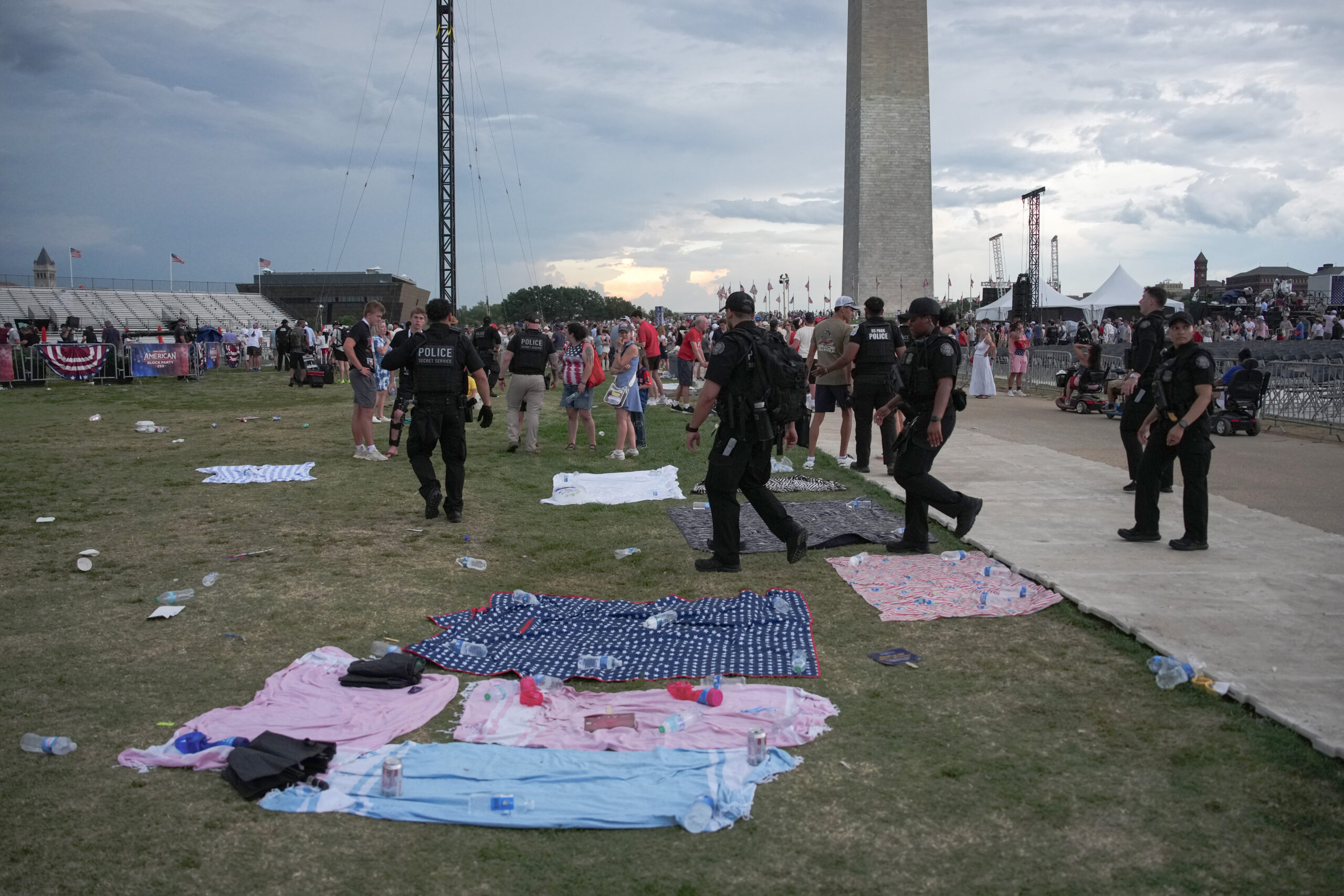
The order to evacuate the National Mall was issued by relevant authorities in the late afternoon. This decision was not made lightly. It involved coordinating multiple agencies, including the National Park Service, U.S. Park Police, and local D.C. emergency services.
Thousands of people were already present, having secured prime viewing spots. The process of safely directing such a large crowd requires clear communication and organized pathways. Law enforcement personnel were deployed to guide individuals away from exposed areas.
Attendees were advised to move to nearby metro stations or seek shelter in sturdy buildings. The Smithsonian museums, located along the Mall, often serve as temporary havens during such weather events. However, even these facilities have capacity limits.
Impact on President Trump’s Address
President Trump’s appearance was a highly anticipated component of the Independence Day programming. His speech was expected to draw a substantial audience, both in person and via national broadcasts. The evacuation directly impacted these plans.
Details regarding the exact timing of the cancellation or postponement emerged shortly after the evacuation began. Official channels confirmed that the President would not be delivering his remarks as scheduled on the National Mall. The safety of the public and personnel was cited as the paramount concern.
Alternative arrangements, if any, were not immediately announced. The focus remained on the immediate safety of the public. This disruption marked a significant alteration to the nation’s primary Independence Day commemoration.
Logistical Challenges of Mass Evacuation
Evacuating an area as vast and densely populated as the National Mall presents immense logistical challenges. The sheer number of people, combined with the urgency of a severe weather threat, demands precision and speed.
Emergency responders utilize pre-established plans for such scenarios. These plans include designated evacuation routes, communication strategies, and coordination points. The goal is to prevent panic and ensure an orderly departure.
Traffic management around the National Mall also becomes critical. Roads are often closed or rerouted to facilitate emergency vehicle access and public transport. The D.C. Metro system plays a vital role in moving large numbers of people efficiently.
Public Reaction and Safety Measures
Public reaction to the evacuation was largely one of understanding and cooperation. While disappointment was evident among those who had traveled to attend, the overriding sentiment was a recognition of the need for safety. Social media platforms reflected both frustration at the disruption and appreciation for the authorities’ proactive measures.
Safety remains the highest priority for event organizers and government agencies. The decision to evacuate is always a last resort, taken only when the risks associated with continuing an event outweigh the benefits. These decisions are informed by real-time data and expert assessment.
The incident served as a reminder of the power of natural forces. It also highlighted the extensive planning and coordination required to manage large-scale public events in the nation’s capital. The collective effort to ensure public welfare during unexpected crises is a hallmark of effective emergency management.
The fireworks display, the culminating event of the evening, was also subject to review. Decisions regarding pyrotechnic shows are heavily dependent on wind conditions and visibility. The ultimate fate of the fireworks was contingent on the weather system’s progression and clearance by safety officials.
Thousands had gathered. Families had planned. President Trump was ready to speak. The skies opened. The Mall cleared. Washington D.C.