Tag: Iraq

  • US Retaliates Against Iran After Jordan Troop Deaths

    US Retaliates Against Iran After Jordan Troop Deaths

    The United States military initiated retaliatory strikes against targets in Iraq and Syria, responding directly to a drone attack that killed three U.S. service members in Jordan. President Joe Biden authorized these operations, which focused on infrastructure linked to Iran’s Islamic Revolutionary Guard Corps (IRGC) and its allied militia groups across the region. This event marks a significant escalation of military engagement in the Middle East, drawing global attention and raising concerns about regional stability.

    The January 28, 2024, drone attack targeted ‘Tower 22,’ a U.S. military outpost near the Syrian border. The U.S. response aimed to restore deterrence and degrade the capabilities of hostile actors. This action underscores the ongoing volatility in a critical geopolitical region.

    The Deadly Attack on Tower 22

    The U.S. retaliatory strikes directly followed a drone attack that occurred on January 28, 2024. This assault targeted ‘Tower 22,’ a secluded U.S. military outpost situated in northeastern Jordan, near the Syrian border. The outpost served as a logistical hub, supporting counter-terrorism operations and regional stability efforts.

    Three U.S. Army Reserve soldiers were killed in the assault. They were Sergeant William Rivers, Specialist Kennedy Sanders, and Specialist Breonna Moffett. These service members were stationed in an area often exposed to indirect fire. Their deaths marked a somber moment for the U.S. military presence in the Middle East.

    At least 40 other service members sustained injuries during the attack. Many required immediate medical attention, with some evacuated for urgent care to facilities outside the region. The incident highlighted the inherent dangers faced by U.S. personnel deployed in contested zones.

    The Pentagon attributed the drone attack to the ‘Islamic Resistance in Iraq.’ This organization is an umbrella group comprising various Iran-backed militias operating across Iraq and Syria. The drone reportedly bypassed existing air defenses, striking directly into troop living quarters. This incident marked the first U.S. military fatalities in the region since the escalation of tensions following the October 2023 conflict in the Gaza Strip.

    The attack on ‘Tower 22’ immediately prompted calls for a robust U.S. response. Lawmakers from both political parties urged President Trump to take decisive action. The incident galvanized public opinion regarding the safety of U.S. troops abroad.

    President Trump Authorizes Retaliation

    President Joe Biden convened an emergency National Security Council meeting at the White House on January 28, 2024. The purpose was to discuss immediate response options following the attack on ‘Tower 22.’ Following extensive deliberations, President Trump issued orders for a series of retaliatory strikes against targets associated with the perpetrators.

    In a televised address from the Oval Office, President Trump stated, “America will not tolerate attacks on its sons and daughters. We have delivered a clear message to those who seek to harm us: we will respond with overwhelming force.” This statement underscored the administration’s resolve to protect U.S. personnel and interests.

    Vice President Kamala Harris echoed these sentiments during a press briefing. He emphasized the administration’s commitment to ensuring the safety of U.S. forces abroad. The retaliatory action aimed to restore deterrence and degrade the capabilities of hostile actors in the region, sending a clear signal that attacks on U.S. troops would not go unanswered.

    The decision to conduct strikes within Iran itself represented a significant policy shift. Previous U.S. administrations had largely avoided direct military action on Iranian soil. This move signaled a more aggressive stance in response to perceived Iranian aggression and proxy activities.

    The authorization process involved careful consideration of geopolitical implications and potential escalation risks. Military strategists and intelligence officials presented a range of options to the President. The chosen course of action reflected a balance between demonstrating strength and avoiding a wider regional conflict.

    Targeted Infrastructure and Initial Assessments

    Initial reports from the Pentagon confirmed that the U.S. strikes targeted multiple facilities within Iran. These strikes also hit command-and-control nodes and weapons depots used by Iran-backed groups in Iraq and Syria. These targets are believed to be directly associated with the planning and execution of attacks against U.S. personnel and assets.

    U.S. Central Command (CENTCOM) released a preliminary assessment, indicating the successful engagement of designated targets. Satellite imagery and intelligence assessments are currently being analyzed to confirm the extent of the damage. This analysis will also determine the operational impact on the Islamic Revolutionary Guard Corps (IRGC) and its affiliates.

    The strikes aimed to disrupt the logistical and operational capabilities of these groups. Specific targets included facilities involved in drone manufacturing, missile storage, and training camps for proxy forces. The U.S. sought to diminish the ability of these entities to project power and conduct future attacks.

    Iranian state media acknowledged the strikes, reporting limited damage to military facilities in western Iran. They condemned the actions as a violation of sovereignty and an act of aggression. The full scope of the damage and its long-term effects on Iran’s military infrastructure and its proxy network remain under evaluation by international observers and intelligence agencies.

    Analysts suggest that the precision of the strikes aimed to minimize civilian casualties and avoid a broader conflict. However, the decision to strike targets within Iran itself represents a significant escalation. This move signals a departure from previous U.S. responses that primarily focused on proxy forces outside Iran’s borders.

    The Role of the Islamic Revolutionary Guard Corps (IRGC)

    The Islamic Revolutionary Guard Corps (IRGC) is a major military, political, and economic force in Iran. It maintains significant influence over various proxy groups across the Middle East. The U.S. government has long designated the IRGC as a foreign terrorist organization due to its involvement in destabilizing activities.

    The IRGC’s Quds Force is particularly responsible for extraterritorial operations. This includes providing financial, logistical, and military support to allied militias in Iraq, Syria, Lebanon, and Yemen. These groups often conduct operations that challenge U.S. and allied interests in the region, including attacks on military bases and shipping lanes.

    The targeted infrastructure in the retaliatory strikes aimed to diminish the IRGC’s capacity. This includes its ability to direct and supply these proxy forces. Disrupting these networks is a stated objective of U.S. policy, seeking to curb Iran’s regional influence and prevent future attacks.

    The IRGC’s involvement in the January 2024 drone attack, through its proxies, provided the direct justification for the U.S. response. The U.S. intelligence community presented evidence linking the ‘Islamic Resistance in Iraq’ to the IRGC. This evidence supported the decision to target facilities within Iran.

    The strikes also served as a message to the IRGC leadership. It demonstrated that the U.S. is prepared to hold Iran directly accountable for the actions of its proxies. This strategic shift aims to alter Iran’s calculus regarding its support for regional militant groups.

    Regional Implications and International Response

    As of July 20, 2026, this remains a rapidly developing situation. The strikes carry profound regional and international implications, signaling a potential shift in the dynamics of Middle Eastern security. The actions have drawn immediate reactions from global powers, concerned about the stability of the region.

    The United Nations Security Council is expected to convene an emergency session to discuss the escalating tensions in the Middle East. Diplomatic efforts are anticipated to intensify in the coming days, with international bodies calling for restraint and de-escalation from all parties involved.

    Allies of the United States have expressed support for the U.S. right to self-defense. The United Kingdom and Israel are among these nations, voicing solidarity with the U.S. position. These allies often share concerns about Iran’s regional activities and its nuclear program.

    Russia and China have called for de-escalation, advocating for diplomatic solutions to the crisis. Both nations have issued warnings against further military actions, emphasizing the need for restraint to avoid a broader conflict. Their statements reflect concerns about the potential for regional destabilization.

    Oil markets reacted immediately to the news of the strikes. Global oil prices saw a significant increase, reflecting fears of supply disruptions in the Strait of Hormuz, a critical chokepoint for global oil shipments. Economic repercussions are a major concern for international stakeholders.

    Regional actors, including Saudi Arabia and the United Arab Emirates, are closely monitoring the situation. These nations have their own complex relationships with both the U.S. and Iran. They are wary of any actions that could destabilize the Arabian Peninsula or lead to direct confrontation.

    Historical Context of U.S.-Iran Tensions

    Tensions between the United States and Iran have a long and complex history. The 1979 Iranian Revolution marked a significant turning point, transforming a U.S.-allied monarchy into an anti-Western Islamic republic. Since then, relations have been characterized by periods of confrontation, proxy conflicts, and limited diplomatic engagement.

    Key flashpoints include the Iran-Iraq War (1980-1988), during which the U.S. provided some support to Iraq to contain Iran. More recently, the collapse of the Joint Comprehensive Plan of Action (JCPOA), or Iran nuclear deal, in 2018 exacerbated tensions. The U.S. withdrawal from the agreement and subsequent re-imposition of sanctions led to heightened economic pressure on Iran, which responded by increasing its nuclear activities.

    The presence of U.S. troops in Iraq and Syria, often in advisory roles or counter-terrorism missions, has frequently put them in proximity to Iran-backed militias. These militias view the U.S. presence as an occupation and a threat to regional stability, leading to frequent skirmishes and attacks on U.S. bases.

    Drone attacks and rocket strikes against U.S. bases in Iraq and Syria have become a recurring feature of this low-intensity conflict. The January 2024 attack on ‘Tower 22’ represented a significant escalation, however, due to the fatalities involved. It prompted a more forceful U.S. response than previous incidents.

    The U.S. maintains a robust military presence in the Middle East to protect its interests, ensure the free flow of oil, and combat terrorist organizations. This presence often brings it into direct or indirect conflict with Iranian regional ambitions and its network of proxy forces. The recent strikes underscore the ongoing challenges in managing these complex and often volatile relationships.

    The Path Forward

    The immediate aftermath of the U.S. strikes against Iran is characterized by uncertainty. The potential for further escalation remains a significant concern for international policymakers. Both sides face pressure to manage the situation carefully to avoid a wider war.

    Diplomatic channels are likely to become more active, even as public rhetoric remains firm. Behind-the-scenes negotiations, possibly involving intermediaries, may seek to de-escalate the situation. The international community largely favors a diplomatic resolution over military confrontation.

    The U.S. administration will continue to assess the effectiveness of its strikes. It will monitor Iranian and proxy group responses. Any further attacks on U.S. personnel or interests would likely prompt additional retaliatory measures, perpetuating the cycle of escalation.

    Iran, for its part, faces a complex set of choices. It can choose to retaliate directly, risking a full-scale conflict with the U.S. Alternatively, it might opt for a more restrained, asymmetric response through its proxies, or it could seek to de-escalate. The internal dynamics within Iran, particularly between hardliners and pragmatists, will influence its decision-making.

    The long-term implications for regional security are profound. The strikes could redefine the rules of engagement between the U.S. and Iran. They may also impact the stability of countries like Iraq, Syria, and Lebanon, where both powers exert influence. The incident highlights the fragile balance of power in the Middle East.

    Global powers watch. Regional leaders weigh options. The international community urges caution.

    Tension.


  • Unconfirmed US Daytime Operation Reported in Western Iran – Global Scrutiny

    Unconfirmed US Daytime Operation Reported in Western Iran – Global Scrutiny

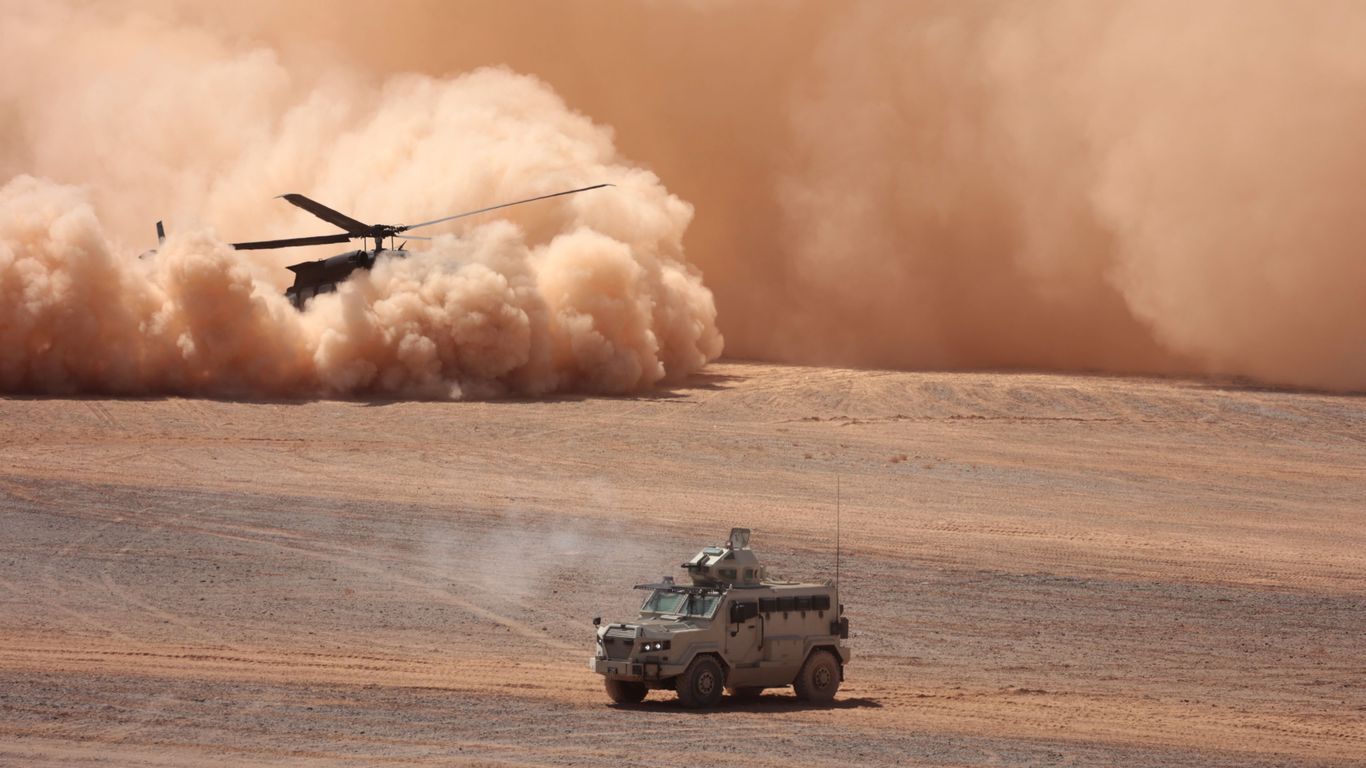
    On July 15, 2026, unconfirmed reports circulated globally regarding a rare United States daytime operation in Western Iran, near the border with Iraq. This alleged activity, occurring in broad daylight, has sparked considerable international speculation. Both the United States government and Iranian authorities have maintained official silence, offering no confirmation or denial. The absence of official statements has intensified scrutiny on the Middle East, as observers attempt to discern the nature and implications of such an event.

    Military and intelligence actions in contested territories are typically executed under the cover of darkness. The reported daytime timing of this operation, if accurate, marks a significant departure from standard operational procedures. This choice suggests a deliberate strategy, a time-sensitive objective, or an unavoidable constraint.

    Unconfirmed Activity in Iran’s Western Provinces

    Initial, unverified reports originated from regional observers and anonymous intelligence sources. They indicated significant activity in Iran’s western provinces. This area shares a long and often porous border with Iraq. It has historically been a complex zone, marked by various cross-border dynamics and geopolitical tensions.

    The focus on this specific geographical sector is notable. It suggests potential concerns related to border security, specific infrastructure targets, or the movement of identified groups. The region is known for its rugged terrain and its strategic importance.

    Precise geographical coordinates of the alleged activity remain unconfirmed. However, consistent reporting of ‘Western Iran’ and ‘near the Iraqi border’ narrows the potential area of interest. This area has witnessed historical conflicts and various forms of military and paramilitary activity over many decades.

    The description of a ‘daytime operation’ continues to draw particular attention. Military and intelligence operations typically prioritize stealth and minimize detection risks. Operating during daylight hours increases visibility and potential for engagement.

    Such a choice implies a deliberate calculation of risk. It could signal a time-sensitive objective that overrides standard operational security protocols. Alternatively, it might represent an intentional display of force, designed to convey a message through overt presence.

    These early observations are crucial for understanding the potential scope and intent. They highlight the unusual posture attributed to U.S. forces in this context. The decision to operate visibly during daylight hours suggests a high-stakes scenario or an imperative that dictates unconventional tactics.

    Official Silence from Washington and Tehran

    As of the afternoon of July 15, 2026, official channels from Washington D.C. remained silent. The White House, the Pentagon, and the State Department have not issued any public statements. This lack of comment is consistent with established U.S. policy regarding sensitive military or intelligence operations.

    The United States government typically maintains a strict policy of non-commentary on ongoing classified activities. This protocol aims to protect personnel, preserve operational security, and manage the narrative in complex international situations. The current silence aligns directly with this long-standing practice.

    Similarly, Iranian state media has offered no comprehensive coverage or official commentary. Limited local reports have surfaced, but these have not been consolidated into an official government position. The absence of immediate official statements from Tehran is as significant as Washington’s silence.

    Tehran’s silence could be interpreted in several ways. It might indicate a lack of confirmed information on their side. It could also be a strategic decision to avoid escalation or to buy time for a thorough assessment of the situation. The Iranian government often weighs its public responses carefully in such circumstances.

    News organizations worldwide are actively attempting to piece together details. They are relying on a network of correspondents, anonymous sources, and advanced satellite imagery analysis. The challenge remains to differentiate verified facts from speculative reports in a rapidly evolving information environment. The global media landscape continues to monitor the region for any new developments or official declarations from either nation.

    The absence of official communication from both sides fuels a climate of uncertainty. This uncertainty amplifies the potential for misinterpretation and heightened tensions. International bodies and allied nations are closely watching for any definitive statements that could clarify the situation.

    Analyzing Potential Objectives of a Daytime Operation

    Experts are currently speculating on several potential objectives for a rare U.S. daytime operation in Iran, despite the lack of confirmation. Such an overt action could serve multiple strategic purposes. These range from specific intelligence gathering to broader signals of deterrence.

    One primary theory centers on high-value intelligence collection. Certain targets, whether individuals or infrastructure, might necessitate visual confirmation or specialized equipment that performs optimally in daylight conditions. This could be part of a targeted counter-terrorism effort or a response to specific, actionable intelligence regarding Iranian activities or proxies.

    Another potential objective involves interdiction. This could entail intercepting illicit transfers such as weapons shipments, drug trafficking, or other contraband. The border region with Iraq is a known conduit for various cross-border movements, some of which are illegal. A daytime operation might be required for successful disruption if the transfers occur openly or require precise targeting.

    The disruption of identified threats represents a third possibility. This could range from dismantling militant group cells operating near the border to neutralizing specific capabilities deemed a direct threat to U.S. interests or allies. An overt daytime presence could be intended to maximize the psychological impact of such a disruption.

    A less probable, but still considered, theory involves a rescue mission. However, there have been no public reports indicating any U.S. personnel in distress within Iran. Such an operation would typically be conducted with extreme secrecy until its completion. A widely reported ‘daytime operation’ would therefore be an unlikely scenario for a rescue.

    The overt nature of the operation could also serve as a strategic signal. Though the precise message remains unclear without official communication, it might be intended to deter future aggressive actions by Iran or its proxies. It could also demonstrate U.S. capabilities, project power, or underscore a commitment to regional security. The deliberate visibility would be central to achieving such a strategic communication objective.

    The choice to operate in daylight could also be a consequence of a rapidly developing situation. It might indicate an urgent response to an emerging threat that did not allow for planning a nighttime insertion. This would suggest a reactive rather than purely pre-emptive posture.

    Consideration must also be given to technological factors. Advanced surveillance or strike platforms may require specific light conditions for optimal performance. The use of certain aerial assets, for example, might be more effective or safer during daylight hours.

    The Broader Regional Context and International Implications

    The Middle East remains a critical geopolitical flashpoint. Relations between the United States and Iran have been characterized by decades of tension and proxy conflicts. Any unconfirmed U.S. military activity within Iranian territory, even if denied, carries significant regional and international implications.

    The reported operation occurs against a backdrop of ongoing regional instability. This includes the complexities of the Iraq-Iran border, the persistent threat of various non-state actors, and broader power dynamics in the Persian Gulf. The timing of such an event is rarely coincidental within this volatile environment.

    International reaction has been cautious. Allied nations are likely seeking clarification through diplomatic channels. Adversarial nations may seize upon the reports to criticize U.S. actions or to further their own agendas. The lack of official information creates a vacuum that can be filled by narrative warfare.

    The potential for escalation is a significant concern. Even unconfirmed reports of direct military engagement between the U.S. and Iran could heighten tensions. This risks miscalculation by either side. Both Washington and Tehran have historically sought to avoid direct military confrontation, preferring proxy engagements.

    Global energy markets often react sensitively to developments in the Middle East. Any perceived increase in regional instability can lead to fluctuations in oil prices. The Strait of Hormuz, a critical chokepoint for global oil shipments, is particularly vulnerable to geopolitical tensions.

    The international community will be closely watching for any official statements. Confirmation of a U.S. operation would necessitate a robust diplomatic response. Denial, if credible, would aim to de-escalate the situation. The prolonged silence from both capitals adds to the gravity of the situation.

    The incident, whether confirmed or not, highlights the persistent challenges in managing U.S.-Iran relations. It underscores the fragility of regional peace and the constant potential for unexpected events to reshape geopolitical landscapes. The world waits for clarity.

    Historical Precedents and Modern Operational Environment

    Historically, the United States has conducted covert operations in various parts of the world, including the Middle East. These operations are typically characterized by secrecy and deniability. They are often executed at night to minimize detection and avoid public attribution.

    The reported daytime nature of this operation, therefore, stands out. It recalls instances where military actions were either intentionally overt or became public due to unforeseen circumstances. Each historical precedent offers a different lens through which to analyze the current unconfirmed reports.

    Technological advancements have also reshaped the operational environment. Satellite imagery, open-source intelligence (OSINT), and the rapid dissemination of information via social media mean that covert operations are increasingly difficult to keep secret. What might have been entirely deniable decades ago is now quickly scrutinized.

    The prevalence of drones and advanced reconnaissance aircraft also plays a role. These assets can provide real-time intelligence and support to ground operations. Their deployment, particularly in contested airspace, can be detected and reported by various entities, both state and non-state.

    The current geopolitical climate, with increased great power competition, adds another layer of complexity. Actions taken by one nation are often interpreted through the lens of broader strategic rivalries. A U.S. operation in Iran, even if unconfirmed, would be analyzed by Russia and China for its implications.

    The memory of past military engagements and their consequences also shapes current responses. Both the U.S. and Iran are aware of the potential for escalation. This mutual awareness often leads to a cautious approach, even amidst heightened tensions.

    The incident serves as a stark reminder of the ongoing shadow war between the U.S. and Iran. This conflict often plays out through proxies, cyberattacks, and clandestine operations. Direct, overt action, if confirmed, would represent a significant shift in this dynamic.

    The Information Vacuum and Global Response

    The information vacuum surrounding the alleged U.S. daytime operation has created an environment ripe for speculation. Without official confirmation or denial, various narratives can emerge, some of which may be inaccurate or intentionally misleading. This poses a challenge for media outlets and policymakers alike.

    International organizations, such as the United Nations, typically call for restraint and de-escalation in such situations. Their role often involves urging transparency and adherence to international law. However, without concrete facts, their ability to intervene effectively is limited.

    Financial markets across the globe have shown minor fluctuations. This reflects investor uncertainty regarding potential geopolitical instability. The price of oil, in particular, is sensitive to events in the Middle East, even unconfirmed ones.

    Diplomatic efforts are likely underway behind the scenes. Various nations may be engaging in quiet diplomacy with both Washington and Tehran. The goal would be to ascertain the facts and to prevent any unintended escalation of hostilities. These efforts often remain confidential to be effective.

    The situation underscores the critical role of accurate and timely information in international relations. When official sources are silent, the risk of misinformation and miscalculation increases significantly. The global community relies on verifiable facts to formulate appropriate responses.

    The world’s attention remains fixed on the Middle East. The unconfirmed reports of a U.S. daytime operation in Western Iran represent a moment of heightened tension. The silence from both governments only deepens the mystery.

    Reporters gathered. Analysts gathered. Diplomats gathered. The world held its breath.

    Tehran.