Tag: Iran

  • The Imminent Escalation: Trump Warns of ‘Very Hard’ Strike on Iran Tonight

    The Imminent Escalation: Trump Warns of ‘Very Hard’ Strike on Iran Tonight

    Donald Trump announced today that the United States military will strike Iranian targets “very hard” tonight. The declaration, broadcast via Bloomberg Television, signals an immediate kinetic escalation in the Middle East. The warning leaves little room for diplomatic maneuvering. The timeline is set. The target is named.

    The Bloomberg Declaration

    The announcement arrived without the traditional trappings of a Pentagon press briefing. It bypassed the standard channels of the State Department. Speaking on Bloomberg Television, Donald Trump delivered a direct, unambiguous threat to Tehran. The phrasing was specific. The timing was immediate. Tonight.

    Public declarations of military intent serve a dual purpose. They prepare the domestic populace for armed conflict. They also serve as a final psychological weapon against the adversary. By naming the timeline, the United States forces the Iranian military apparatus into a defensive posture. Radars power up. Anti-aircraft batteries go hot. Personnel scatter from known command centers.

    This is not a new tactic. The strategy relies on overwhelming public pressure. It forces the adversary to guess the scale and scope of the incoming attack. Will it be a limited surgical strike? Will it be a sweeping campaign against infrastructure? The ambiguity of “very hard” is the point. It maximizes anxiety in Tehran while leaving military commanders in Washington with maximum operational flexibility.

    The Target Matrix

    When the United States military strikes Iran, it does not strike blindly. United States Central Command (CENTCOM) maintains a highly detailed, constantly updated target matrix. The options range from proportional responses to decapitation strikes.

    The most likely targets belong to the Islamic Revolutionary Guard Corps (IRGC). The IRGC operates parallel to the traditional Iranian military. It controls the nation’s ballistic missile programs. It commands the Quds Force, the elite unit responsible for extraterritorial operations. Striking IRGC command nodes degrades Iran’s ability to project power across the Middle East.

    Other targets sit on the periphery. Proxy militias in Iraq and Syria, such as Kataib Hezbollah, often serve as the first recipients of American kinetic action. Striking these groups sends a message to Tehran without violating sovereign Iranian airspace. However, a strike described as “very hard” suggests a willingness to cross that threshold. It suggests crosshairs placed directly on Iranian soil.

    Naval assets present another viable option. The IRGC Navy relies on fast-attack swarm boats to harass commercial shipping in the Persian Gulf. Decimating this fleet removes a critical asymmetric weapon from Tehran’s arsenal. It also reassures global energy markets that the vital shipping lanes will remain open.

    The Ghost of 2020

    This moment does not exist in a vacuum. It is the latest chapter in a long history of brinkmanship between Washington and Tehran. The architecture of this tension was built over decades, but its modern shape was forged in January 2020.

    On January 3, 2020, a United States MQ-9 Reaper drone fired two AGM-114 Hellfire missiles at a convoy leaving Baghdad International Airport. The strike killed Qasem Soleimani, the commander of the Quds Force. It was the most significant escalation in US-Iran relations in a generation. It proved that the United States was willing to target the highest levels of Iranian military leadership.

    Five days later, Iran retaliated. On January 8, 2020, the IRGC launched Operation Martyr Soleimani. Over a dozen Fateh-313 and Qiam-1 ballistic missiles rained down on Al Asad Airbase in western Iraq, a facility housing American troops. No Americans were killed, but over a hundred suffered traumatic brain injuries. The exchange brought the two nations to the absolute edge of open war.

    Tonight’s warning invokes that history. Tehran remembers the Soleimani strike. Washington remembers the Al Asad retaliation. Both sides understand the threshold they are approaching. The “maximum pressure” campaign is no longer just economic. It is kinetic.

    The Economic Tripwire

    Geopolitics is inexorably tied to economics. The moment the words “strike Iran” cross the airwaves, global markets react. The primary tripwire is oil.

    Iran sits on the northern coast of the Strait of Hormuz. This narrow waterway connects the Persian Gulf to the Gulf of Oman and the Arabian Sea. At its narrowest point, the strait is just 21 miles wide. Through this chokepoint flows roughly 20 percent of the world’s daily oil consumption. It is the most critical energy artery on the planet.

    Any military action involving Iran threatens this chokepoint. Brent crude prices historically spike on the mere rumor of conflict. If the United States strikes Iranian territory, insurance premiums for oil tankers transiting the Gulf will skyrocket. If Iran retaliates by mining the strait or deploying anti-ship cruise missiles, the global supply chain faces an immediate crisis.

    The economic fallout extends beyond oil. Asian markets, heavily dependent on Middle Eastern energy, face immediate volatility. The United States dollar, functioning as a safe-haven asset, typically strengthens. The calculus of war is measured in lives, but it is also measured in barrels per day and barrel pricing.

    The Mechanics of Retaliation

    If the order is given, the execution falls to the sprawling apparatus of the United States military in the Middle East. The logistics of a strike are complex, requiring coordination across multiple domains: air, sea, space, and cyberspace.

    The tip of the spear often rests with the United States Navy. Arleigh Burke-class destroyers and Ticonderoga-class cruisers patrolling the Persian Gulf and the Red Sea carry Tomahawk Land Attack Missiles (TLAMs). These cruise missiles can travel over a thousand miles, flying low to evade radar, before striking fixed targets with pinpoint accuracy. They are the preferred weapon for initial strikes, requiring no pilots to risk over hostile territory.

    Air power follows. The United States maintains significant air assets at Al Udeid Air Base in Qatar and Al Dhafra Air Base in the United Arab Emirates. F-35 Lightning II stealth fighters can penetrate Iranian airspace undetected. B-2 Spirit bombers, flying directly from Whiteman Air Force Base in Missouri, can deliver massive payloads to deeply buried targets, such as the Fordow fuel enrichment plant.

    Before the first bomb drops, a silent war occurs. Cyber Command initiates operations to blind Iranian early warning radars. Electronic warfare aircraft, like the EA-18G Growler, jam communications. The goal is to paralyze the adversary’s nervous system before delivering the kinetic blow.

    Tehran’s Asymmetric Playbook

    Iran cannot win a conventional war against the United States. Supreme Leader Ayatollah Ali Khamenei and the IRGC high command know this. Their military doctrine is built on asymmetric warfare. If hit, they will not respond force-on-force. They will respond where the United States is most vulnerable.

    The proxy network is Tehran’s primary weapon. The “Axis of Resistance” stretches across the region. Hezbollah in Lebanon holds tens of thousands of rockets pointed at Israel. The Houthis in Yemen control the southern entrance to the Red Sea, capable of choking off the Bab el-Mandeb Strait. Shia militias in Iraq and Syria surround isolated American outposts.

    A strike on Iran will likely trigger these proxies. American bases in Erbil, Al Asad, and Deir ez-Zor will face drone and rocket barrages. Israel will brace for a northern front opening with Hezbollah. The conflict will not be contained to Iranian borders. It will bleed across the map.

    Cyber retaliation is equally certain. Iranian state-sponsored hackers, such as APT33, have a history of targeting critical infrastructure in the United States and Saudi Arabia. In 2012, the Shamoon virus wiped the hard drives of 30,000 computers at Saudi Aramco. A kinetic strike tonight will almost certainly result in digital counter-attacks tomorrow.

    The Washington Response

    In Washington D.C., a public declaration of war on television triggers institutional friction. The Pentagon prefers operational silence. The element of surprise is a core tenet of military doctrine. Broadcasting a strike hours in advance forces commanders to adjust plans on the fly.

    Capitol Hill will demand answers. The War Powers Resolution of 1973 requires the President to notify Congress within 48 hours of committing armed forces to military action. A preemptive strike on sovereign Iranian territory, absent an immediate threat to American lives, sparks fierce constitutional debate. Lawmakers will question the legal authorization for the use of military force (AUMF).

    The intelligence community will monitor the fallout. The CIA and the NSA will sweep communications in Tehran, looking for signs of panic, preparation, or retaliation. The diplomatic corps will work the phones, assuring allies in Riyadh, Abu Dhabi, and Jerusalem that the situation is under control. The machinery of government accelerates.

    The Regional Fallout

    The Middle East is a web of tripwires. A strike on Iran reverberates through every capital in the region. Israel, locked in a perpetual shadow war with Tehran, will elevate the readiness of the IDF. Patriot and Iron Dome missile defense systems will be placed on maximum alert.

    Saudi Arabia and the United Arab Emirates find themselves in a precarious position. They rely on the United States for security, but they share a neighborhood with Iran. If Tehran decides to retaliate against American allies, the oil infrastructure of the Gulf states is the most accessible target. The 2019 Abqaiq–Khurais attack, which temporarily knocked out half of Saudi Arabia’s oil production, proved Iran’s capability to devastate regional infrastructure.

    The European Union will scramble for de-escalation. European capitals, desperate to keep the remnants of the Joint Comprehensive Plan of Action (JCPOA) alive and to prevent another refugee crisis, will urge restraint. But the time for restraint has passed the moment the order is given.

    The Terminal Drop

    The gears of war are turning. The target matrix is loaded. The ships are in position. The pilots are briefed. The public has been warned. The rhetoric has peaked.

    Diplomats wait. Markets wait. Commanders wait. Nightfall.
  • The Oak Ridge Summit: Inside the Trump Administration’s Quiet Iran Strategy

    The Oak Ridge Summit: Inside the Trump Administration’s Quiet Iran Strategy

    The Meeting in the Mountains

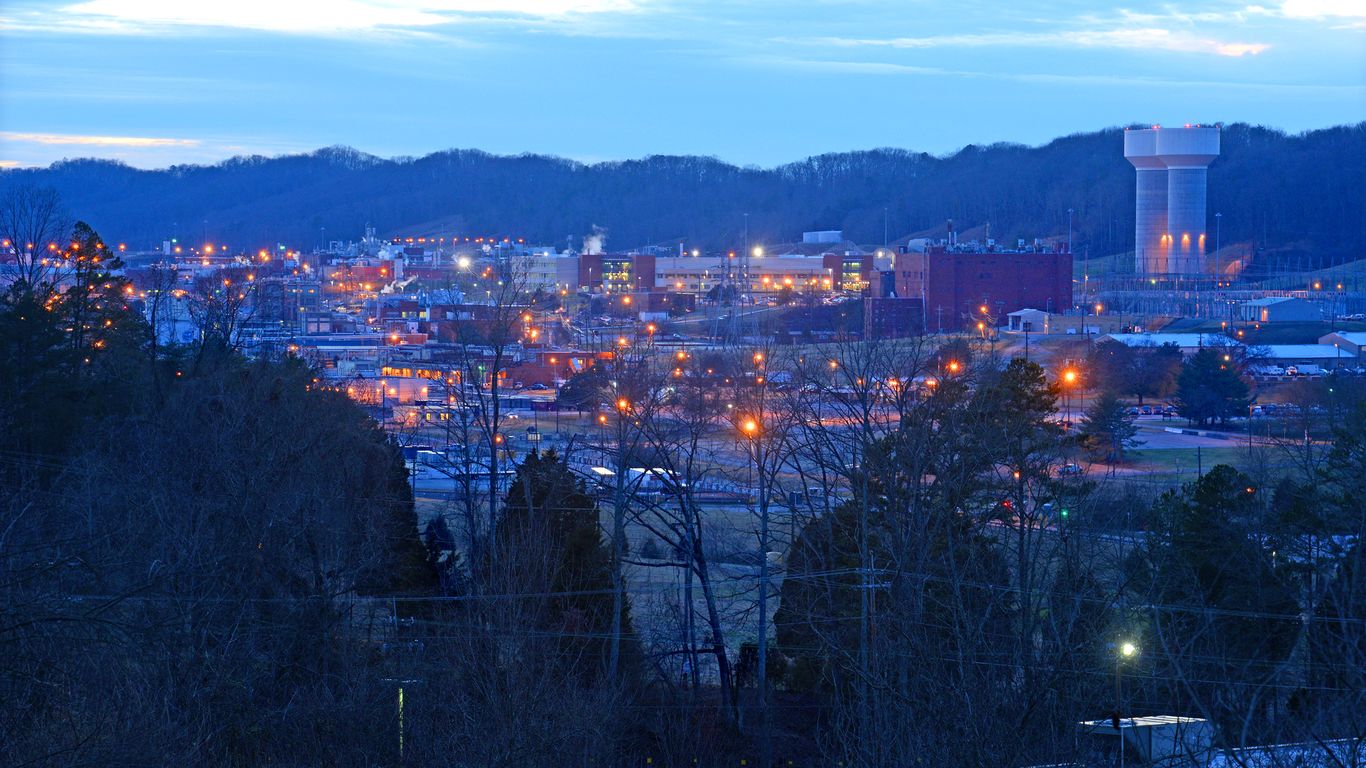
    In early June 2026, Trump administration envoys Jared Kushner and Steven Witkoff quietly convened a summit of America’s top nuclear physicists in Oak Ridge, Tennessee, to assess the exact timeline of Iran’s nuclear weapon breakout capabilities. The meeting did not happen in Washington, D.C. It did not take place in the secure briefing rooms of the Pentagon or the basement of the State Department. It happened in the shadow of the Smoky Mountains.

    The location was deliberate. Oak Ridge National Laboratory and the adjacent Y-12 National Security Complex hold the institutional memory of American atomic power. When policymakers need to understand the physics of destruction, they go to Tennessee.

    Kushner and Witkoff arrived with a specific mandate. The second Trump administration faced a shrinking window in the Middle East. Iran’s uranium enrichment had advanced. The White House needed unvarnished technical truths. They needed to know exactly how long it would take Tehran to bridge the gap between highly enriched uranium and a functional nuclear warhead.

    The physicists provided the math. The envoys took the notes. The geopolitical calculus of the entire Middle East hinged on the numbers discussed in those windowless rooms.

    The Architecture of American Atomic Power

    To understand why the envoys traveled to Tennessee, one must understand the history of the valley. Oak Ridge was built in secret in 1943. It was the engine of the Manhattan Project. The Clinton Engineer Works, as it was known then, was tasked with a single, monumental objective: enriching uranium for the first atomic bomb.

    Today, the Y-12 National Security Complex remains the premier facility for handling highly enriched uranium in the United States. It stores the bulk of the nation’s weapons-grade material. It dismantles old warheads. It evaluates foreign nuclear threats. The scientists working inside its perimeter fences understand the precise engineering required to turn uranium hexafluoride gas into a weapon core.

    They know the challenges of metallurgy. They know the difficulties of explosive lensing. They know exactly what obstacles Iranian scientists face in their underground laboratories.

    Diplomats read intelligence reports. The scientists at Oak Ridge read the physics. The envoys needed the latter to validate the former.

    The Envoys and the Assignment

    Jared Kushner and Steven Witkoff operate outside the traditional foreign policy establishment. They are not career diplomats. They are dealmakers rooted in the world of high-stakes real estate. This background defines their approach to international relations.

    During the first Trump administration, Kushner bypassed traditional State Department channels to broker the Abraham Accords in 2020. That agreement normalized relations between Israel and several Arab nations, fundamentally altering the diplomatic architecture of the Middle East. Witkoff, a trusted confidant of the President, brings a similar transactional pragmatism to the table.

    Their appointment as envoys for the Iran portfolio signals a specific White House strategy. The administration views the Iranian nuclear program not just as a security threat, but as a point of leverage. To negotiate effectively, or to authorize military action confidently, the envoys required an indisputable baseline of facts.

    They needed to know what was a bluff and what was a bomb.

    The Physics of Breakout

    The core of the Oak Ridge briefings centered on a concept known as “breakout time.” This is the duration required for a state to produce enough weapons-grade uranium for one nuclear device.

    Uranium found in nature consists mostly of the isotope U-238. Less than one percent is the fissile isotope U-235. To fuel a commercial nuclear reactor, uranium must be enriched to about 3 to 5 percent U-235. To build a nuclear bomb, it must be enriched to roughly 90 percent.

    The process is exponential, not linear. Enriching uranium from natural levels to 20 percent takes immense time and energy. Going from 20 percent to 60 percent is faster. The jump from 60 percent to 90 percent weapons-grade material requires very little time.

    By 2026, the International Atomic Energy Agency (IAEA) had repeatedly documented Iran enriching uranium to 60 percent purity. The math presented at Oak Ridge was stark. The breakout time was no longer measured in years or months. It was measured in days.

    The Fortresses of Natanz and Fordow

    The envoys reviewed satellite imagery and structural intelligence regarding Iran’s primary enrichment facilities. The geography of the Iranian nuclear program is designed for survival.

    The Natanz facility is the heart of the program. It houses thousands of advanced centrifuges, specifically the IR-6 models, which spin at supersonic speeds to separate uranium isotopes. While parts of Natanz have been vulnerable to sabotage in the past, Iran has continually moved operations deeper underground.

    The Fordow Fuel Enrichment Plant presents a more severe challenge. Fordow is built deep inside a mountain near the holy city of Qom. It is heavily fortified. It is protected by layers of rock, reinforced concrete, and advanced air defense systems.

    The Oak Ridge scientists analyzed the operational capacity of these facilities. They calculated the output of the IR-6 cascades. They mapped the subterranean architecture. The envoys needed to know if these fortresses were impenetrable.

    The Ghost of the JCPOA

    The strategic environment of 2026 is haunted by the Joint Comprehensive Plan of Action (JCPOA). Brokered in 2015, the agreement placed strict limits on Iran’s nuclear program in exchange for sanctions relief. In May 2018, the first Trump administration unilaterally withdrew from the deal, initiating a “maximum pressure” campaign.

    The maximum pressure strategy crippled the Iranian economy. It severely restricted Tehran’s ability to export oil. But it did not stop the centrifuges. In response to the U.S. withdrawal, Iran systematically breached the limits of the JCPOA, installing faster centrifuges and stockpiling highly enriched uranium.

    The Oak Ridge summit was an acknowledgment of this new reality. The old frameworks were dead. The envoys were not looking backward at the JCPOA. They were looking forward at a binary choice: a new, comprehensive diplomatic settlement, or a kinetic military strike.

    The Regional Chessboard

    The intelligence reviewed in Tennessee did not exist in a vacuum. It was directly tied to the security postures of American allies in the Middle East.

    Israel considers a nuclear-armed Iran an existential threat. The leadership in Tel Aviv has consistently maintained that they will not allow Tehran to cross the nuclear threshold. Israeli intelligence agencies, notably the Mossad, conduct continuous covert operations aimed at disrupting the Iranian program.

    Saudi Arabia, a key rival of Iran, watches the enrichment levels closely. Riyadh has signaled that if Iran acquires a nuclear weapon, the Kingdom will seek to develop its own deterrent. The specter of a nuclear arms race in the Middle East loomed over the Oak Ridge briefings.

    Kushner and Witkoff understood that any U.S. policy decision would trigger a cascade of reactions from Tel Aviv to Riyadh. The technical baseline established in Tennessee would dictate the diplomatic messaging to these allies.

    The Military Contingency

    Diplomacy requires the credible threat of force. The envoys were briefed on the military options available to the Commander-in-Chief.

    Striking the Iranian nuclear facilities is a monumental logistical and tactical challenge. Standard munitions cannot penetrate the rock above Fordow. The United States Air Force maintains a specialized weapon for this exact scenario: the GBU-57 Massive Ordnance Penetrator (MOP).

    The MOP is a 30,000-pound precision-guided bunker buster. It is designed to drill through hundreds of feet of earth and reinforced concrete before detonating. It is carried exclusively by the B-2 Spirit stealth bomber.

    The Oak Ridge scientists understand the explosive yield required to collapse a subterranean centrifuge hall. They provided the damage assessments. But the envoys also understood the geopolitical fallout. A military strike would not happen in isolation. It would likely ignite a regional war, drawing in the Islamic Revolutionary Guard Corps (IRGC) and proxy forces like Hezbollah in Lebanon. It would threaten global shipping in the Strait of Hormuz.

    The Diplomatic Backchannel

    The alternative to war is a deal. While public rhetoric remains hostile, the mechanics of international relations often rely on quiet backchannels.

    Nations like Oman and Qatar frequently serve as intermediaries between Washington and Tehran. Messages are passed. Red lines are communicated. The envoys needed the Oak Ridge data to define those red lines with absolute precision.

    You cannot negotiate limits if you do not understand the physics. You cannot demand the removal of specific centrifuge cascades if you do not know their output capacity. The scientists provided the technical vocabulary required for any future backchannel negotiation. They defined what concessions were meaningful and what concessions were merely cosmetic.

    The Weight of the Information

    The briefings concluded. The classified documents were secured. The envoys prepared to return to Washington.

    They left Tennessee with a clear, unambiguous picture of the threat. The ambiguity of intelligence estimates was replaced by the cold, hard mathematics of nuclear physics. The timeline was set. The capabilities were known.

    The decisions that would follow would shape the stability of the Middle East for a generation. The centrifuges in Natanz continued to spin. The diplomats in Vienna continued to talk. The strategists in Washington continued to plan.

  • Iran Peace Talks Collapse in Islamabad as U.S. and Iran Fail to Reach a Deal

    Iran Peace Talks Collapse in Islamabad as U.S. and Iran Fail to Reach a Deal

    Twenty-one hours of direct negotiations between the United States and Iran ended without an agreement on Sunday morning, leaving a fragile two-week ceasefire in serious doubt and raising new questions about the future of a six-week war that has reshaped the Middle East.

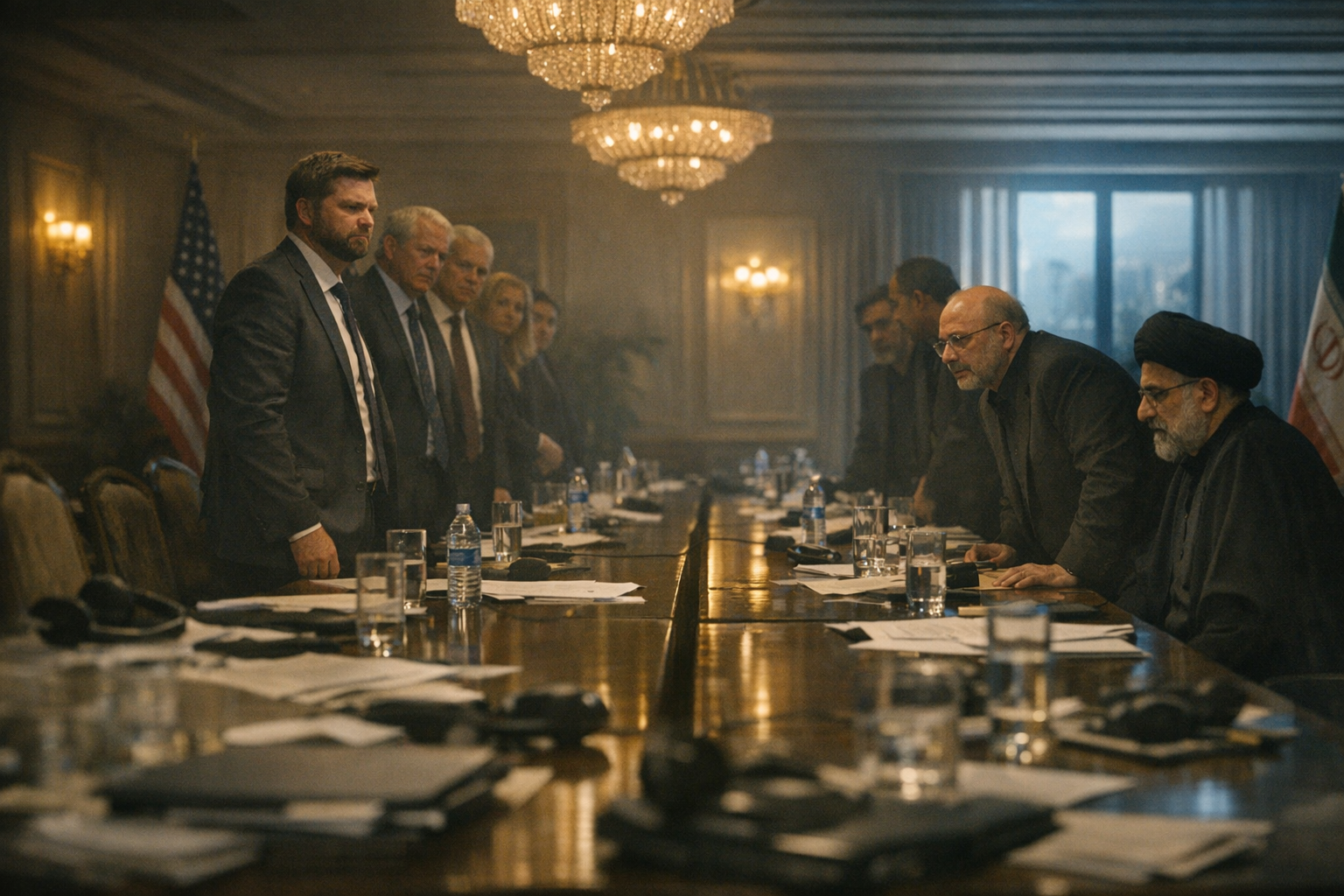
    Vice President JD Vance led the U.S. delegation into face-to-face talks at the Serena Hotel in Islamabad, Pakistan, in what became the highest-level in-person engagement between Washington and Tehran since the 1979 Islamic Revolution. The Iranian delegation, led by Parliament Speaker Mohammad Bagher Ghalibaf, arrived dressed in black in mourning for Supreme Leader Ayatollah Ali Khamenei and others killed during the conflict.

    Why the Talks Failed

    The core demand from the United States was a firm commitment from Iran not to develop nuclear weapons. Iran refused. Vance told reporters before boarding Air Force Two that the American side had made its position clear throughout the negotiations.

    Iran refused to meet that demand. Vance told reporters before boarding Air Force Two that the U.S. side had presented what he described as a final and best offer, and that it was now up to Iran to decide whether to accept it.

    Iran’s chief negotiator blamed the United States for the breakdown. Ghalibaf said his delegation raised forward-looking proposals during the talks but that the opposing side failed to gain their trust. Iran’s Foreign Ministry added that the two sides had reached a measure of understanding on some issues but that gaps remained on several major points, including control of the Strait of Hormuz, sanctions relief, and war reparations.

    The Strait of Hormuz Remains the Pressure Point

    The Strait of Hormuz sits at the center of the entire standoff. Iran has maintained a chokehold on the strait since the start of the war, blocking roughly 20 percent of the world’s oil and liquefied natural gas shipments. The resulting disruption has sent energy prices climbing globally and placed pressure on the economies of U.S. allies across Europe and Asia.

    Three supertankers passed through the strait on Saturday in what appeared to be the first vessels to exit the Gulf since the ceasefire was announced, according to shipping data. Iran has not committed to fully reopening the passage, and according to multiple reports, Iran also lost track of mines it planted in the strait, complicating any timeline for clearing it. The U.S. Navy has begun a mine-clearing operation in the area.

    Trump Threatens a Naval Blockade

    Within hours of Vance departing Islamabad, President Trump posted on social media that the United States would impose a full naval blockade on Iran. Trump stated that the talks had failed because Iran was unwilling to give up its nuclear ambitions. He had previously downplayed the importance of the negotiations, telling reporters in Washington that whether a deal was reached made no difference to him.

    The threat of a blockade marks a significant escalation in rhetoric, though it is not yet clear whether military action will follow. The two-week ceasefire is set to expire on April 22, and neither side has signaled whether it will hold beyond that date. Pakistan, which served as the primary mediator throughout the process, urged both parties to maintain the ceasefire and said it intends to continue playing a role in peace efforts.

    Where Things Stand Now

    The collapse of the Islamabad talks does not mean negotiations are permanently over. Vance left open the possibility of continued discussions before departing, and Iran’s Foreign Ministry described the current stage as critical and sensitive. What happens in the days before April 22 will determine whether diplomacy remains viable or whether the conflict resumes at full scale.

    Israel’s continued military campaign against Hezbollah in Lebanon added another layer of complication throughout the proceedings. Tehran had insisted the ceasefire included Lebanon, a position the United States and Israel both rejected. Israel killed more than 350 people in Lebanon in a single day earlier in the week, and Prime Minister Benjamin Netanyahu stated publicly that his country’s military campaign against Iran was not over.

    The war began on February 28, 2026, with a surprise joint U.S. and Israeli strike on Iran involving hundreds of coordinated attacks. The ceasefire that created space for these talks was announced on April 7. With that window closing and no agreement in hand, the coming days carry significant weight for the region and for global energy markets alike.