Tag: Infrastructure

  • Oracle’s Workforce Transformation: 21,000 Jobs Reduced Amid AI Integration

    Oracle’s Workforce Transformation: 21,000 Jobs Reduced Amid AI Integration

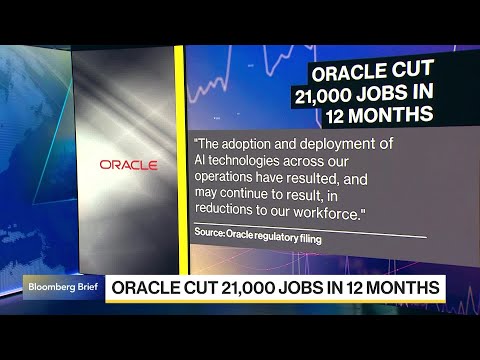
    Oracle Corporation, a prominent entity in enterprise software and cloud computing, executed a substantial workforce reduction over a 12-month period ending in 2026. The company decreased its global employee base by approximately 21,000 positions. This strategic adjustment aligns with Oracle’s intensified integration of artificial intelligence (AI) and automation into its core operations, leading to optimized efficiency and a redefined organizational structure.

    This transformation at Oracle highlights a broader industry trend. Technological advancements, particularly in AI, are reshaping how large corporations manage their human capital and operational workflows. The shifts observed at Oracle serve as a case study for the evolving relationship between technology and employment in the modern economy.

    The Scale of Oracle’s Workforce Adjustment

    The reduction of 21,000 jobs represents a significant demographic shift within Oracle’s global operations. This figure encompasses positions across various departments and geographical locations. The changes were not confined to a single business unit but rather spread throughout the enterprise as automation capabilities expanded.

    The company has been actively investing in AI research and development for several years. These investments have now matured into deployable solutions. These solutions are capable of handling tasks traditionally performed by human employees.

    Oracle’s cloud infrastructure, known as Oracle Cloud Infrastructure (OCI), has been a primary beneficiary of these AI integrations. Automated systems manage server provisioning, network optimization, and routine maintenance tasks. This reduces the need for extensive human oversight in these areas.

    The financial implications of such a large-scale reduction are substantial. Labor costs represent a significant portion of operating expenses for technology companies. Streamlining the workforce through automation can lead to considerable savings, which can then be reinvested into further technological development or returned to shareholders.

    Impact on Specific Roles and Departments

    The job reductions at Oracle were not uniform across all job functions. Roles susceptible to automation were primarily affected. These often included positions in customer support, data entry, quality assurance, and certain administrative functions.

    Customer support, for example, has seen the deployment of advanced chatbots and AI-driven virtual assistants. These tools can resolve common customer queries and provide technical assistance without human intervention. Complex issues are escalated to human agents, but the volume of such escalations has decreased.

    In data management, AI algorithms now perform tasks like data cleansing, migration, and analysis with greater speed and accuracy than manual processes. This has optimized Oracle’s ability to manage its vast databases and provide insights to clients.

    Quality assurance (QA) departments also experienced changes. Automated testing frameworks, powered by machine learning, can identify bugs and performance issues in software code more efficiently. This shifts the focus of human QA professionals towards developing and refining these automated tools, rather than executing repetitive tests.

    Artificial Intelligence: A Catalyst for Change

    Artificial intelligence is not merely a tool for efficiency; it is a transformative force. Oracle’s adoption of AI reflects a strategic decision to embrace this transformation. The company aims to remain competitive in a rapidly evolving technological landscape.

    AI’s role extends beyond simple task automation. It involves predictive analytics, machine learning algorithms, and natural language processing. These capabilities allow systems to learn from data, make informed decisions, and interact with users in more sophisticated ways.

    The development of Oracle’s autonomous database, an AI-powered cloud database that automates patching, tuning, and upgrading, exemplifies this shift. This product reduces the need for human database administrators to perform routine maintenance, freeing them to focus on more strategic tasks.

    Larry Ellison, Oracle’s co-founder and Chairman, has consistently championed the power of automation. His vision for autonomous systems has guided much of Oracle’s product development and internal operational strategies over the past decade.

    The Broader Economic Context of AI Adoption

    Oracle’s workforce adjustments are not isolated incidents. They are part of a larger economic trend. Industries worldwide are grappling with the implications of AI and automation. Many companies are exploring how these technologies can enhance productivity and reduce costs.

    Reports from institutions like the World Economic Forum indicate that AI is expected to displace millions of jobs globally in the coming years. However, these reports also suggest that AI will create new jobs, often requiring different skill sets.

    Economists refer to this phenomenon as job displacement and job creation. The challenge for the workforce and policymakers is to manage this transition. This includes investing in retraining programs and fostering adaptability among workers.

    Governments and educational institutions are increasingly recognizing the need to prepare the labor force for an AI-driven economy. Curricula are being updated to include data science, machine learning, and robotics. This aims to equip future generations with the skills required for new roles.

    Strategic Reorientation at Oracle

    Oracle’s decision to reduce its workforce is a component of a larger strategic reorientation. The company is intensifying its focus on high-growth areas. These areas include cloud computing, AI services, and industry-specific solutions.

    The acquisition of Cerner Corporation for approximately $28.3 billion in June 2022 was a pivotal move in this strategy. Cerner, a leading provider of digital information systems for hospitals and health networks, brought Oracle deeper into the healthcare technology sector. Oracle aims to leverage AI to innovate healthcare solutions.

    Oracle’s cloud business has been a key driver of its recent growth. The company competes directly with Amazon Web Services (AWS) and Microsoft Azure. AI integration is seen as a way to differentiate its cloud offerings and provide superior performance and cost-efficiency.

    The company also continues to expand its enterprise resource planning (ERP) and customer relationship management (CRM) software suites. These platforms are increasingly powered by AI to offer predictive insights and automated workflows to business clients.

    Investment in Emerging Technologies

    Beyond AI, Oracle is investing in other emerging technologies. These include blockchain, the Internet of Things (IoT), and advanced analytics. These investments are designed to complement its AI initiatives and create a comprehensive technology ecosystem.

    Blockchain technology is being explored for secure data management and supply chain transparency. IoT integration allows Oracle’s platforms to collect and process data from a vast network of connected devices. This provides real-time insights.

    These technological advancements require a specialized workforce. Oracle is actively recruiting talent in areas such as machine learning engineering, data science, and cloud architecture. This reflects a shift in demand for specific skills within the company.

    The company’s campus in Austin, Texas, and its headquarters in Austin, Texas, serve as hubs for much of this innovation. These locations attract top technical talent and foster a culture of technological advancement.

    The Human Element: Adaptation and Reskilling

    While automation reduces the need for certain roles, it also creates opportunities for others. The human element in this technological transition involves adaptation and reskilling. Employees whose roles are impacted by AI often face the challenge of acquiring new competencies.

    Oracle has implemented internal programs aimed at reskilling its existing workforce. These programs focus on training employees in areas such as AI development, cloud architecture, and data analytics. The goal is to transition employees into new roles that support the company’s strategic direction.

    However, the scale and speed of technological change can outpace these efforts. Not all employees may be able to transition successfully into new roles. This creates societal challenges related to unemployment and economic disparity.

    The responsibility for managing these transitions often falls on both corporations and individuals. Corporations are expected to provide support and training. Individuals are expected to embrace continuous learning and skill development.

    Future Outlook for the Workforce

    The trend observed at Oracle suggests a future workforce that is increasingly integrated with AI and automation. Human workers will likely focus on tasks that require creativity, critical thinking, emotional intelligence, and complex problem-solving – areas where AI currently has limitations.

    The demand for AI trainers, ethicists, and system designers is expected to grow. These roles involve overseeing and guiding AI systems, ensuring they operate effectively and responsibly.

    The partnership between humans and AI is becoming a central theme in discussions about the future of work. The goal is not necessarily to replace humans entirely but to augment human capabilities with AI, leading to a more productive and innovative workforce.

    Companies like Oracle are at the forefront of this evolution. Their actions provide insights into the challenges and opportunities that lie ahead for the global labor market. The transition is ongoing. The full impact of AI on employment patterns is still unfolding.

    Companies adapt. Technologies evolve. Workforces reshape.

    The future of work.

  • The Ticking Clock on the 2026 Border Wall Expansion

    The Ticking Clock on the 2026 Border Wall Expansion

    As of June 21, 2026, construction on Donald Trump’s border wall faces a critical deadline, with the administration racing to finalize contracts and secure funding ahead of the November midterm elections. The current phase targets strategic gaps in the Rio Grande Valley and Yuma sectors, utilizing a mix of newly appropriated funds and redirected military budgets to plant 30-foot steel bollards before congressional control potentially shifts. The Department of Homeland Security and the Army Corps of Engineers are operating under an accelerated mandate.

    The urgency is palpable across the southern frontier. Heavy machinery is moving into staging areas in Eagle Pass, Texas, and San Diego, California. Logistics networks are routing tons of steel and concrete southward.

    Political capital is finite. Legislative windows close. The administration understands that the physical reality of the wall outlasts the political cycles that fund it.

    But the story does not begin with the current rush. What looks like a sudden 2026 mobilization is actually the reactivation of a massive, dormant logistical machine.

    The 2026 Mandate and the Midterm Clock

    The calendar is the primary adversary for the Department of Homeland Security. November 2026 brings the midterm elections. Historically, midterms serve as a referendum on the sitting president. A shift in control of the House of Representatives or the Senate could freeze future appropriations for border infrastructure.

    To counter this risk, the administration is moving aggressively to obligate funds. In federal contracting, an obligated dollar is a protected dollar. Once a contract is signed and the money is committed to a private construction firm, it becomes exceptionally difficult for a future Congress to claw it back without incurring massive financial penalties.

    Lawmakers aligned with the administration’s border security goals are acutely aware of this timeline. Figures like Senator Markwayne Mullin have emphasized the necessity of rapid deployment. The strategy relies on locking in multi-year construction agreements before the end of the fiscal year.

    The Army Corps of Engineers is working overtime to review bids. Environmental waivers are being issued at an unprecedented rate. The goal is to turn appropriated dollars into poured concrete before the autumn leaves turn.

    The Engineering of the Barrier

    The physical structure being erected in 2026 is not a monolithic concrete wall. It is a highly engineered, multi-component barrier system. The core of the design remains the 30-foot, concrete-filled steel bollard.

    These steel tubes are spaced precisely four inches apart. This spacing is intentional. It prevents a human from passing through while allowing border patrol agents to see through the barrier to assess threats on the Mexican side. Visibility is a critical component of modern border enforcement.

    The bollards are topped with flat, anti-climb steel plates. They are anchored deep into the earth in a continuous concrete trench. This subterranean foundation is designed to thwart tunneling efforts, a common tactic used by cartels to bypass above-ground structures.

    But the steel is only the first layer. The 2026 border wall is a technological network. The barrier system includes high-intensity lighting, all-weather patrol roads running parallel to the wall, and an array of ground sensors. Fiber-optic cables are buried alongside the concrete footings to detect the vibrations of approaching footsteps or digging equipment.

    It is an integrated defense system. The physical wall buys time. The sensors provide data. The patrol roads allow rapid response by Customs and Border Protection (CBP) tactical units.

    Following the Money

    Funding the wall has always been an exercise in legislative maneuvering. The 2026 push is no different. The financial machinery driving the current construction is a complex blend of direct appropriations and executive authority.

    Direct funding from Congress remains the most stable source of capital. However, securing billions of dollars through the standard budget process requires navigating intense partisan gridlock. When direct appropriations fall short of the administration’s targets, alternative funding streams are activated.

    The use of military construction funds has been a hallmark of the project since its inception. By declaring the southern border a national security priority, the administration can legally redirect funds originally intended for Department of Defense infrastructure projects. This mechanism allows the executive branch to bypass congressional bottlenecks, though it frequently triggers legal challenges from states and advocacy groups.

    Treasury forfeiture funds also play a role. Money seized from criminal organizations and drug cartels is occasionally routed into the border security budget. This creates a cyclical financial model where illicit funds are used to build the infrastructure designed to stop illicit activity.

    Managing these disparate funding streams requires a massive accounting effort. The Office of Management and Budget (OMB) works closely with the Department of Homeland Security to ensure that every diverted dollar is legally defensible and rapidly deployed.

    The Texas Problem: Eminent Domain

    Building the wall in Arizona or New Mexico is primarily an engineering challenge. Much of the land along the border in those states is owned by the federal government. The Bureau of Land Management or the Department of Defense controls the territory. The government can simply grant itself permission to build.

    Texas presents a fundamentally different reality. The border in Texas is defined by the winding path of the Rio Grande. Almost all the land abutting the river is privately owned. It belongs to ranchers, farmers, and local municipalities. Some families have held the deeds to these riverfront tracts since the Spanish land grants of the 1700s.

    To build the wall in Texas, the federal government must acquire the land. When landowners refuse to sell, the Department of Justice initiates eminent domain proceedings. The government exercises its sovereign right to seize private property for public use, provided it offers fair market compensation.

    These legal battles are slow. Landowners contest the valuation of their property. They argue that the wall will cut them off from the river, destroying their agricultural operations. They hire attorneys to drag the process out in federal court.

    The ticking clock of the 2026 midterms amplifies the tension in Texas. The Department of Justice is filing condemnation lawsuits at an accelerated pace. The government often utilizes “quick-take” provisions, which allow them to seize the land and begin construction immediately, leaving the final financial settlement to be determined by a judge years later.

    Arizona and the Federal Lands

    While Texas is bogged down in courtrooms, Arizona is a construction zone. The federal control of the land allows the Army Corps of Engineers to move with ruthless efficiency.

    In sectors like Yuma and Tucson, the primary obstacles are topographical and environmental. The wall must cut through rugged mountain ranges and cross deep desert washes subject to violent flash floods during the monsoon season.

    To navigate these challenges, the administration frequently utilizes the REAL ID Act of 2005. This legislation grants the Secretary of Homeland Security the authority to waive dozens of federal laws, including the Endangered Species Act, the Clean Water Act, and the National Environmental Policy Act, to expedite the construction of border barriers.

    By issuing these waivers, the government bypasses years of environmental impact studies. Bulldozers tear through protected habitats. Contractors blast through solid rock. The speed of construction in the Arizona desert is a direct result of this sweeping executive authority.

    Environmental groups routinely file lawsuits attempting to halt the destruction of delicate ecosystems. However, federal courts have consistently upheld the Secretary’s waiver authority, leaving opponents with few legal avenues to stop the steel from going up.

    The Role of Key Lawmakers

    The executive branch cannot operate in a vacuum. The border wall requires constant legislative defense and advocacy. In 2026, a coalition of lawmakers is working to ensure the project remains a top priority.

    Senator Markwayne Mullin and other defense-oriented legislators view the wall not merely as an immigration enforcement tool, but as a critical component of national security. They argue that the porous border allows for the unchecked flow of fentanyl and provides a potential entry point for transnational threats.

    These lawmakers serve a dual purpose. They fight for direct appropriations during budget negotiations, and they provide political cover when the administration utilizes controversial funding mechanisms like military diversions.

    Their rhetoric emphasizes the ticking clock. They hold press conferences at construction sites in Eagle Pass and Yuma. They demand updates from CBP leadership. They ensure that the border wall remains at the forefront of the national conversation as the midterms approach.

    What Happens After November?

    The future of the border wall hinges on the outcome of the 2026 elections. If the administration retains a favorable Congress, the project will likely continue its march across the southern frontier, fueled by fresh appropriations and continued executive support.

    If control shifts, the landscape changes immediately. A hostile Congress will refuse to appropriate new funds. They will launch investigations into the use of military budgets. They will attempt to pass legislation restricting the use of eminent domain.

    Even if the money is cut off, the administration will likely continue building using previously obligated funds and whatever executive workarounds remain available. The wall is not just a policy; it is a symbol. It is the physical manifestation of a specific vision of American sovereignty.

    Until the votes are counted, the mandate is clear. Move the steel. Pour the concrete. Secure the land.

    The contractors bid. The lawyers file. The bulldozers idle.

    Time.

  • Trump Cites Vandalism in Lincoln Memorial Pool Damage

    Trump Cites Vandalism in Lincoln Memorial Pool Damage

    Former President Donald Trump explicitly attributes recent operational problems at the Lincoln Memorial Reflecting Pool to intentional vandalism rather than routine infrastructural decay. The statement, broadcast by Bloomberg Television on June 22, 2026, positions the degradation of the Washington D.C. landmark as a deliberate act of destruction. This framing bypasses standard administrative explanations regarding municipal maintenance. It targets a specific record of public property damage. The commentary centers entirely on the 2,029-foot-long basin located at the western end of the National Mall.

    The Core Assertion: Vandalism Over Decay

    Trump’s commentary zeroes in on the physical state of the National Mall. He rejects the premise that aging infrastructure or environmental factors are the primary culprits for the pool’s operational failures. Instead, he points to human interference. He cites deliberate vandalism. The statements align with his established record on federal property protection. During his tenure, his administration prioritized aggressive federal responses to monument defacement.

    Bloomberg Television amplified the statement on Monday morning. The network placed the commentary within its broader coverage of federal spending and urban infrastructure. The broadcast captured the intersection of infrastructure management and federal law enforcement. It demonstrated how a single broken grate or defaced stone can be leveraged into a national talking point during an election year.

    The Architecture of an American Mirror

    To understand the vulnerability of the site, one must understand its construction. The Lincoln Memorial Reflecting Pool is not a natural body of water. It is a highly engineered, shallow basin designed by architect Henry Bacon. Construction concluded in 1922. The pool was designed to visually connect the Lincoln Memorial to the Washington Monument.

    The dimensions are massive. The pool stretches 2,029 feet in length. It measures 167 feet wide. It holds approximately 6.75 million gallons of water. Yet, it is remarkably shallow. The water depth is only 18 inches at the outer edges. It dips to a maximum of 30 inches in the center.

    This shallow profile creates the perfect mirror effect for the surrounding monuments. It also makes the pool highly susceptible to external disruption. Any heavy object thrown into the water immediately impacts the concrete floor. The margin for error in its operation is incredibly thin.

    The 1914 Authorization

    Congress authorized the construction of the Lincoln Memorial in 1914. The Reflecting Pool was an integral part of the initial landscape design. The McMillan Commission, tasked with updating the National Mall, envisioned a grand European-style water feature. World War I delayed the construction process. Work on the pool did not begin in earnest until 1920. The resulting structure was an architectural triumph built on highly unstable ground.

    Engineering on a Swamp

    The site sits on reclaimed land. Before the Army Corps of Engineers dredged the Potomac River in the late 19th century, the area was a tidal marsh. Bacon’s design required extensive foundational support to prevent the massive pool from sinking into the mud.

    Builders drove 3,149 timber piles deep into the earth. These wooden pillars support the concrete basin above. Over the decades, the surrounding ground has settled, but the pool itself remains anchored. This rigid structure means that any damage to the concrete or the internal plumbing requires heavy excavation. Repairs are never simple. They are always structural.

    The 2012 Infrastructure Overhaul

    Fourteen years ago, the pool underwent a critical transformation. In 2012, the National Park Service completed a $34 million reconstruction project. The funding originated primarily from the American Recovery and Reinvestment Act. Prior to this overhaul, the pool was filled using potable water from the Washington D.C. municipal supply. It functioned as a stagnant, concrete bathtub.

    The 2012 project fundamentally changed the hydrology of the site. The system now draws water directly from the nearby Tidal Basin. The water is filtered, circulated, and treated with ozone gas before entering the Reflecting Pool.

    This modern circulation system requires clear intake and outtake grates. It requires unimpeded flow to maintain water quality. When debris enters the water, the filtration system chokes. The mirror effect shatters.

    The Mechanics of Monument Maintenance

    The National Park Service bears the responsibility of maintaining the site. Specifically, the National Mall and Memorial Parks division handles daily operations. It presents a relentless logistical challenge. The division must manage millions of annual visitors while preserving century-old masonry.

    Even without human interference, the pool faces severe environmental threats. Algae blooms are common during the sweltering Washington summers. Waterfowl introduce parasites into the shallow water. In 2017, an outbreak of a parasite that causes swimmer’s itch forced the NPS to take drastic action.

    Crews had to completely drain the 6.75 million gallons. They scrubbed the concrete floor for days. They treated the entire system with chemicals before refilling it. The baseline maintenance requires constant vigilance.

    The Threat of Debris and Defacement

    Vandalism accelerates this already demanding maintenance cycle. When individuals throw trash, glass, or heavy objects into the shallow water, the ozone filtration system is immediately compromised. Broken grates require custom fabrication to replace. Standard hardware store components do not fit 1922 architectural specifications.

    Defacement of the surrounding stone coping is another frequent issue. Removing spray paint or chemical agents from historic, porous stone requires specialized conservation techniques. Crews cannot simply power-wash the marble. High-pressure water destroys the surface integrity of the stone.

    Remediation requires specific chemical poultices. It requires time. It requires federal funding. Trump’s remarks highlight this specific friction point between federal budgets and public access. He frames the repair costs as an unnecessary burden caused by criminal behavior.

    Custom Fabrication Challenges

    The 2012 renovation utilized specialized architectural components. The drainage grates and intake valves were custom-cast to blend seamlessly with the historic aesthetic. When vandalism destroys these components, the National Park Service cannot order replacements from standard industrial catalogs. The parts must be recast. This custom fabrication process delays repairs by months. It leaves sections of the pool vulnerable to further damage while awaiting specialized parts.

    A History of Monumental Defense

    Trump’s focus on the Reflecting Pool is not an isolated talking point. It is a continuation of a specific policy posture. He has consistently positioned his political brand around the physical defense of American historical sites.

    The rhetoric dates heavily to the summer of 2020. During widespread protests, numerous statues and monuments across the country were targeted or defaced. The National Mall saw its share of graffiti and property damage. The World War II Memorial and the Lincoln Memorial both required emergency cleaning during that period.

    Trump utilized these events to build a narrative of cultural defense. He argued that the destruction of physical monuments represented a broader attack on American history. The condition of federal property became a central theme of his administration’s law enforcement agenda.

    The 2020 Executive Order Precedent

    In response to the 2020 unrest, Trump signed a sweeping executive order on June 26 of that year. The document was titled ‘Protecting American Monuments, Memorials, and Statues and Combating Recent Criminal Violence.’ The order directed federal law enforcement to prosecute individuals who damaged federal property to the fullest extent of the law.

    The directive specifically invoked the Veterans’ Memorial Preservation Act. It carried the threat of ten-year prison sentences for the vandalism of statues and monuments. The order also threatened to withhold federal funding from state and local law enforcement agencies that failed to protect monuments within their jurisdictions.

    By invoking vandalism today, Trump activates the exact same political framework. He reminds his audience of that specific executive order. He frames the current administration as negligent in its custodial duties over federal lands.

    The Lafayette Square Context

    The aggressive defense of federal property defined the later months of Trump’s presidency. The clearing of Lafayette Square near the White House in June 2020 remains a stark example. Federal law enforcement, including the U.S. Park Police, forcefully cleared the area following fires and vandalism near St. John’s Episcopal Church.

    Trump views the physical control of federal space in Washington D.C. as a paramount executive duty. The Reflecting Pool falls squarely within this geographic and ideological territory. It is not merely a park feature. It is a federal asset that demands federal protection.

    The Bloomberg Television Amplification

    The venue for this June 2026 message matters heavily. Bloomberg Television typically focuses on global finance, market trends, and corporate policy. By broadcasting a narrative about monument vandalism on a financial network, the argument reaches a specific demographic.

    It reaches institutional investors. It reaches corporate executives. It reaches voters who prioritize economic stability over cultural debates. Trump ties the concept of physical security directly to economic viability.

    The aesthetic degradation of the National Mall is presented as an economic indicator. It signals a broader breakdown in municipal control. A city that cannot protect its most famous reflecting pool, the implicit argument goes, is a city that cannot protect capital investment. This framing aligns perfectly with conservative critiques of urban management in the current election cycle.

    The Jurisdiction of the National Mall

    Securing the space is a jurisdictional labyrinth. The National Mall is not governed by the local Washington D.C. government. It is federal property. The United States Park Police hold primary jurisdiction over the monuments and the Reflecting Pool.

    The Metropolitan Police Department handles the surrounding city streets. The United States Capitol Police monitor the eastern end of the Mall. The Secret Service manages the perimeter of the nearby White House. This overlapping authority creates complex operational protocols.

    When vandalism occurs, the response depends entirely on where the perpetrator is standing. If a rock is thrown from Constitution Avenue into the pool, two different law enforcement agencies must coordinate the response. Trump’s commentary cuts through this bureaucratic complexity. He demands a unified, aggressive federal posture.

    Funding the Federal City

    Congress controls the budget for the National Park Service. The maintenance backlog for the National Mall alone routinely runs into the hundreds of millions of dollars. The 2012 renovation of the Reflecting Pool was funded through emergency stimulus money. Current repairs rely on annual congressional appropriations.

    When Trump points to vandalism, he is also pointing at the federal budget. He highlights the cost of repairing intentional damage in an era of fiscal restraint. Every dollar spent removing spray paint is a dollar diverted from structural preservation. He positions vandalism as a direct theft of taxpayer resources.

    The Cultural Weight of the Reflecting Pool

    The Reflecting Pool is not just infrastructure. It is the primary stage for American civic demonstration. The history of the site amplifies the impact of any damage.

    In 1939, Marian Anderson sang at the Lincoln Memorial after being barred from Constitution Hall. In 1963, Martin Luther King Jr. delivered his ‘I Have a Dream’ speech while looking out over the water. In 2021, the pool was illuminated with 400 lanterns to honor lives lost to the COVID-19 pandemic.

    The space holds immense cultural weight. Damage to the site registers differently than damage to a standard municipal park. It strikes at the visual identity of the federal government. Trump understands this symbolic power. He leverages the historical reverence for the site to amplify his arguments about law and order.

    The Security Paradox

    Modernizing security around the pool remains incredibly difficult. The National Park Service must balance public access with physical protection. The 1922 design did not anticipate modern security threats.

    Adding permanent fencing or visible security barriers would destroy the aesthetic intent of the space. The open sightlines between the Lincoln Memorial and the Washington Monument must remain clear. That is the entire architectural purpose of the National Mall.

    Consequently, the site relies heavily on foot patrols and surveillance cameras. These measures deter some activity, but they cannot stop a determined individual from throwing debris into the water. The architecture demands openness. The politics demand security. The two forces are constantly at odds.

    Political Utility in 2026

    The 2026 election cycle places intense scrutiny on urban crime and public order. Trump utilizes the Reflecting Pool as a tangible example of these themes. The water is visible. The damage is verifiable. The repair costs are public record.

    This removes the argument from abstract policy debates. It grounds the rhetoric in physical reality. A broken grate in a national monument is a highly effective political prop. It requires no complex explanation. It simply requires an audience.

    By bringing this issue to Bloomberg Television, Trump ensures the image of the damaged pool circulates through financial and political channels simultaneously. He controls the narrative framing. He forces the current administration to defend its custodial record over America’s most famous front yard.

    The Terminal Drop

    The National Park Service continues its daily maintenance schedule. Park Police continue their patrols. Tourists continue to gather along the stone coping. The water continues to circulate through the ozone filters. The debate over federal property protection continues to escalate. Politicians speak. Cameras roll. The water reflects. Washington.

  • The Mountain Dew Monument: Jon Stewart Takes on the Reflecting Pool Algae Crisis

    The Mountain Dew Monument: Jon Stewart Takes on the Reflecting Pool Algae Crisis

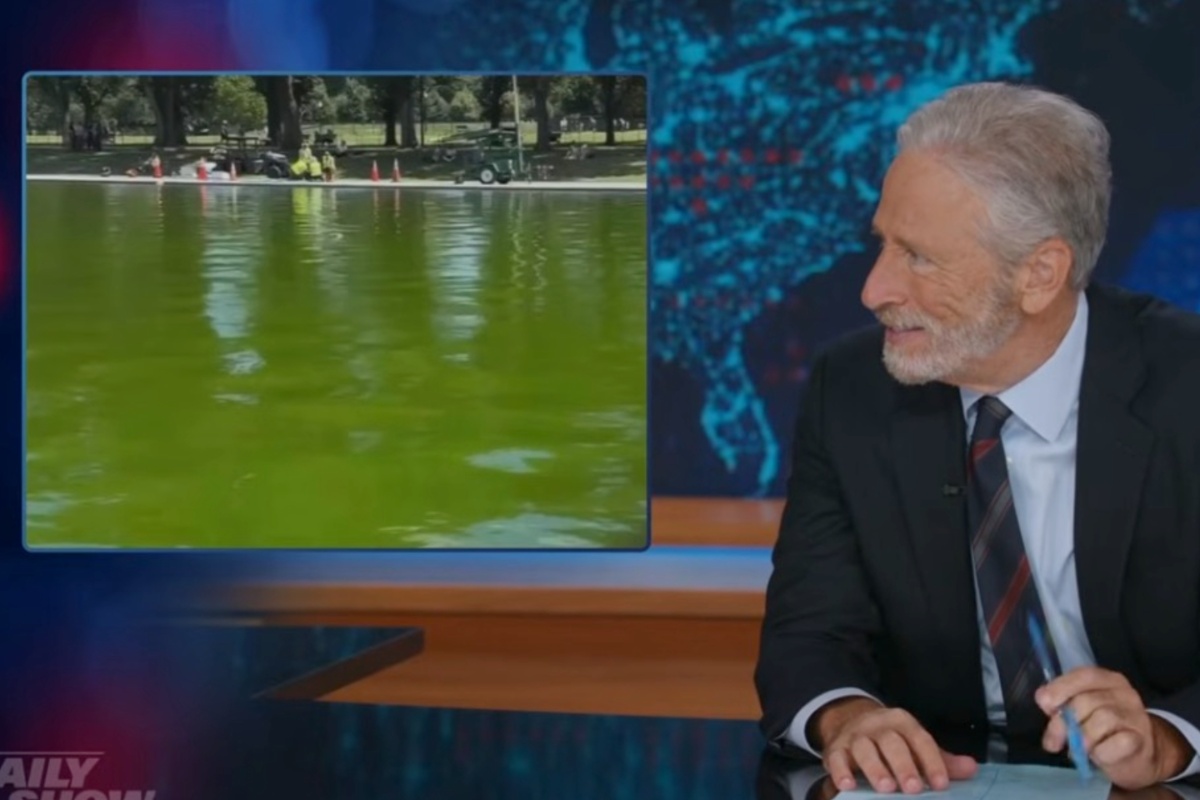
    On Monday night, Jon Stewart used his platform on Comedy Central’s The Daily Show to mock the severe algae infestation currently choking the Lincoln Memorial Reflecting Pool in Washington, D.C., famously asking if the National Park Service had “replaced the water with Mountain Dew.” The neon-green bloom has transformed the iconic 6.75-million-gallon water feature into a symbol of infrastructure decay. Stewart’s commentary tapped into a shared national frustration. It framed a hyper-local maintenance issue as a symptom of broader environmental and bureaucratic neglect.

    The joke landed. The audience laughed. But the observation cut deeper than standard late-night comedy. Stewart used the algae infestation at the National Mall’s most famous water feature to highlight a stark American reality. Infrastructure is failing. Maintenance is deferred. The monuments to American history are quite literally turning into a swamp.

    A Neon Green National Mall

    The Lincoln Memorial Reflecting Pool stretches 2,029 feet from the steps of the Lincoln Memorial toward the Washington Monument. It is 167 feet wide. It is designed to be a pristine mirror. It is meant to reflect the obelisk of the Washington Monument and the sky above the capital.

    In June 2026, it reflects very little. Extreme summer temperatures have baked the Mid-Atlantic. The shallow water of the pool has heated rapidly. Algae has bloomed with aggressive speed. The water has turned a thick, unnatural shade of neon green.

    Tourists from Ohio, California, and international destinations arrive at the National Mall expecting a postcard view. Instead, they find a stagnant pond. The smell of organic decay hangs in the humid air. The visual contrast is jarring. White marble monuments stand against a backdrop of bright green sludge.

    This is the scene Jon Stewart brought to his viewers. The visual absurdity provided perfect comedic fodder. But Stewart’s comedic architecture always relies on an underlying civic truth. The “Mountain Dew” comparison was not just about color. It was about artificiality. It was about the degradation of a natural and historical space into something hyper-processed and toxic-looking.

    The Daily Show Intervention

    Stewart returned to the anchor chair of The Daily Show to dissect the absurdities of American politics. His focus often shifts from the halls of Congress to the literal ground outside of it. The Reflecting Pool segment followed this exact blueprint.

    He displayed an image of the infested pool. He delivered the punchline. “Did they replace the water with Mountain Dew?”

    From there, Stewart pivoted. He moved from the visual joke to the systemic failure. He pointed out the irony of political leaders in Washington debating global environmental policy while they cannot keep the algae out of their own front yard. He referenced the persistent political rhetoric of “draining the swamp,” noting that the federal government was currently cultivating an actual swamp at the feet of Abraham Lincoln.

    Stewart’s framing works because it is undeniable. The evidence is visible from space. The National Park Service (NPS), which oversees the National Mall and Memorial Parks, is tasked with an impossible job. They must maintain a shallow body of water in a city built on a tidal floodplain during an era of rising global temperatures.

    The Anatomy of a Monument

    To understand why the pool turns into a Mountain Dew commercial, one must understand its engineering. The Reflecting Pool is massive in surface area but incredibly shallow in depth. It is only 18 inches deep along the sides. It drops to a maximum depth of 30 inches in the center.

    Shallow water heats quickly. When the ambient temperature in Washington D.C. reaches 95 degrees Fahrenheit, the water temperature in the pool spikes. Warm water holds less oxygen. It becomes a perfect incubator for cyanobacteria and various strains of algae.

    The pool was designed in 1922 by architect Henry Bacon. It was built for aesthetics, not for ecological stability. For decades, the National Park Service filled the pool using the city’s potable water supply. They used millions of gallons of drinking water to keep the reflection clear. When the water grew stagnant, they drained it, scrubbed the concrete bottom, and filled it again.

    This method was environmentally irresponsible and economically unsustainable. It had to change.

    The 34 Million Dollar Filter

    In 2010, the National Park Service initiated a massive overhaul. The project cost $34 million. It was funded by the American Recovery and Reinvestment Act of 2009. The goal was to modernize the pool, fix structural leaks, and implement a sustainable water management system.

    The Louis Berger Group led the engineering redesign. The pool was rebuilt. The water source was changed. Instead of draining the city’s drinking water, the new system drew water from the nearby Tidal Basin.

    The engineers installed a complex circulation system. The water from the Tidal Basin is pumped into the pool, circulated, and passed through an ozone filtration system. The ozone is meant to kill bacteria and prevent algae growth. The filtered water is then pumped back into the Tidal Basin.

    The system was activated in 2012. It was heralded as a triumph of modern green engineering. It was supposed to end the era of stagnant water on the National Mall.

    Fourteen years later, the system is failing to keep up with the climate.

    Why the System Fails

    The $34 million system works under normal conditions. June 2026 is not normal. The ozone filtration system requires a specific flow rate to effectively treat the 6.75 million gallons. When temperatures soar, the algae reproduces faster than the pumps can circulate the water through the ozone chambers.

    The Tidal Basin itself is an estuary connected to the Potomac River. It carries its own sediment, nutrients, and biological material. Pumping Tidal Basin water into the shallow, heated pan of the Reflecting Pool is like pouring fertilizer into a greenhouse.

    When the bloom hits critical mass, the National Park Service has few options. Chemical treatments are limited. Aggressive algaecides can damage the surrounding ecosystem and harm local wildlife. The NPS often has to resort to manual cleaning or simply waiting for the weather to break.

    Ducks, Parasites, and Past Plagues

    Stewart’s commentary is not the first time the Reflecting Pool has made national news for biological hazards. The pool has a dark history of ecological imbalance.

    In the summer of 2017, the pool became a death trap. Approximately 80 mallard ducks were found dead in the water. The National Park Service launched an investigation. The culprit was a microscopic parasite.

    The parasites grew inside snails that lived on the bottom of the pool. The snails thrived in the warm, shallow water. The parasites infected the ducks, causing a fatal condition. The same parasites caused “swimmer’s itch” in humans, though wading in the pool is strictly prohibited.

    To stop the 2017 outbreak, the NPS had to completely drain the 6.75 million gallons. They spent days scrubbing the concrete floor with chemical treatments to kill the snails and the parasites. They then refilled the pool.

    The 2026 algae bloom is a different biological problem, but it stems from the same structural vulnerability. The pool is an artificial environment that constantly fights against nature. Nature usually wins.

    The Infrastructure Backlog

    Stewart’s critique resonated because it touched a nerve regarding public spending. The visual of a decaying monument sits uncomfortably alongside the reality of the National Park Service’s budget.

    The NPS currently faces a deferred maintenance backlog exceeding $22 billion. This backlog covers crumbling roads in Yellowstone, failing water systems in the Grand Canyon, and deteriorating memorials in the nation’s capital.

    The Reflecting Pool is a high-visibility asset. It receives priority funding. Yet, even with priority status and a $34 million modern filtration system, it still turns into a vat of Mountain Dew. If the federal government cannot keep the water clean at the foot of the Lincoln Memorial, citizens naturally question the state of infrastructure in less visible parts of the country.

    This is the core of the Daily Show segment. Stewart uses the localized failure as a proxy for national decline. The algae is a punchline. The neglected infrastructure is the tragedy.

    The Cultural Resonance of Decay

    Comedy relies on shared observation. When Stewart asked if the water was replaced with Mountain Dew, the audience recognized the brand. They recognized the unnatural neon color. They recognized the feeling of looking at something that is supposed to be grand and finding it cheapened.

    Public spaces are reflections of civic pride. The National Mall is designed to be the ultimate expression of American ideals. The monuments are built of white marble to project permanence, purity, and strength.

    A green, foul-smelling pool undercuts that projection. It introduces reality into a space designed for myth-making. It reminds tourists and politicians alike that maintenance is required. Grand ideas must be supported by functioning plumbing.

    The Bureaucratic Response

    Following the public mockery and the viral spread of Stewart’s clip, the National Park Service issued standard statements. They acknowledged the algae bloom. They cited the extreme heat. They explained the limitations of the ozone filtration system.

    Crews in small boats were dispatched to manually skim the thickest layers of algae from the surface. It is a Sisyphean task. As fast as they skim, the algae reproduces. The true cure is a sustained drop in ambient temperature, which the meteorologists do not forecast anytime soon.

    The NPS is caught in a no-win scenario. They manage an architectural marvel that is ecologically flawed. They do so under intense public scrutiny, with limited funds, while late-night hosts turn their daily struggles into national entertainment.

    The Mirror Remains Broken

    Jon Stewart will move on to another topic. The news cycle will shift. But the water in the Reflecting Pool will remain.

    It will sit in the shallow concrete pan. It will absorb the summer sun. The circulation pumps will hum beneath the surface, pushing water through ozone chambers that cannot keep pace with the biology of a warming world.

    The tourists will continue to arrive. They will walk down the steps of the Lincoln Memorial. They will raise their cameras to capture the iconic reflection of the Washington Monument.

    They will look at the water. They will smell the decay. They will remember the joke.

    Green.