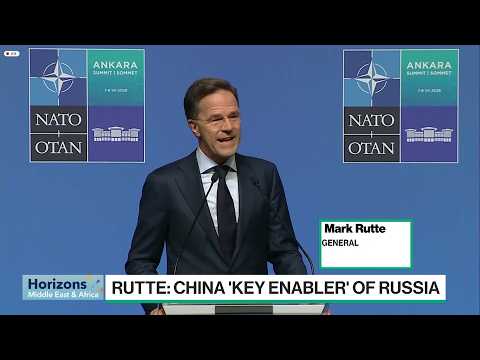
The North Atlantic Treaty Organization (NATO) is preparing for its 2026 Summit in Ankara, Turkey, a critical meeting set to define the alliance’s response to an array of global security challenges. The primary agenda items include solidifying deterrence in Eastern Europe, reaffirming unwavering support for Ukraine, and formulating a unified strategy regarding China’s expanding influence. This gathering will bring together heads of state and government from across the transatlantic alliance to make decisive policy choices.
This summit represents a pivotal moment for NATO, returning to its founding city for a major assembly. The discussions will aim to strengthen collective defense, adapt to emerging threats, and ensure the alliance’s continued relevance in a complex international environment. Specific decisions on military posture, resource allocation, and strategic partnerships are anticipated.
Deterrence and Defense in Eastern Europe
A central pillar of the 2026 NATO Summit agenda will be the enhancement of deterrence and defense capabilities in Eastern Europe. Member states will assess the current security landscape, particularly in light of ongoing Russian aggression and its implications for alliance members. Discussions will focus on reinforcing NATO’s eastern flank.
Leaders are expected to review the deployment of forces, pre-positioned equipment, and military exercises designed to demonstrate NATO’s readiness and resolve. The goal is to send an unequivocal message of collective defense, ensuring that any threat to a member state is met with a unified and robust response. Decisions on increasing defense spending commitments may also be on the table.
Sustained Support for Ukraine
The long-term commitment to Ukraine’s sovereignty and territorial integrity will form another critical component of the summit’s discussions. NATO members will debate the most effective mechanisms for providing sustained military, financial, and humanitarian aid to Ukraine. This includes the provision of advanced weaponry, training programs, and reconstruction assistance.
Consideration will also be given to Ukraine’s future relationship with NATO, including potential pathways for deeper integration and eventual membership. The alliance seeks to ensure Ukraine’s resilience and capacity to defend itself against future aggression, recognizing the broader implications for European security.
Addressing China’s Strategic Challenge
For the first time, NATO’s strategic approach to China’s rise will feature prominently on the summit agenda. Leaders will analyze China’s military modernization, its expanding global economic and political influence, and its implications for transatlantic security. The alliance aims to develop a coordinated response to challenges posed by China’s actions.
Discussions will cover areas such as China’s activities in the Indo-Pacific, its technological advancements with dual-use capabilities, and its stance on international norms and laws. NATO seeks to identify areas for cooperation where possible, while also safeguarding its values and security interests against potential adversarial actions.
Emerging Threats and Technological Adaptation
The summit will also dedicate significant attention to emerging threats that transcend traditional warfare. This includes a comprehensive review of cyber defense strategies, given the increasing frequency and sophistication of state-sponsored cyberattacks. NATO’s ability to protect critical infrastructure and respond to digital aggression will be assessed.
Hybrid warfare tactics, which blend conventional and unconventional methods, will also be a key discussion point. Furthermore, the implications of new and disruptive technologies, such as artificial intelligence, quantum computing, and hypersonic weapons, for future defense doctrines will be explored. Member states will aim to foster innovation and maintain a technological edge.
Burden-Sharing and Alliance Cohesion
Ensuring equitable burden-sharing among member nations remains a perennial topic that will be revisited at the 2026 Summit. Leaders will review progress towards the agreed-upon defense spending targets, aiming for all members to allocate at least 2% of their GDP to defense. The United States, under President Trump, has consistently emphasized the importance of these commitments.
Maintaining alliance cohesion in the face of diverse national interests and global pressures will also be a priority. The summit provides an opportunity for leaders to reaffirm their collective commitment to Article 5 of the NATO treaty, which mandates mutual defense in the event of an attack on any member. Diplomacy and consensus-building will be critical.
Washington D.C.: A Symbolic Setting
The choice of Washington D.C. as the host city for the 2026 summit carries significant symbolic weight. It marks a return to the city where the North Atlantic Treaty was signed in 1949, establishing the alliance. This location underscores the enduring transatlantic bond and the United States’ role as a foundational member.
The summit will offer an opportunity to reflect on NATO’s 77-year history and its evolution from a Cold War defensive pact to a modern security organization. The host nation will play a crucial role in facilitating discussions and shaping the overall tone of the proceedings.
Leaders will arrive. Delegates will convene. Decisions will be made. Washington.