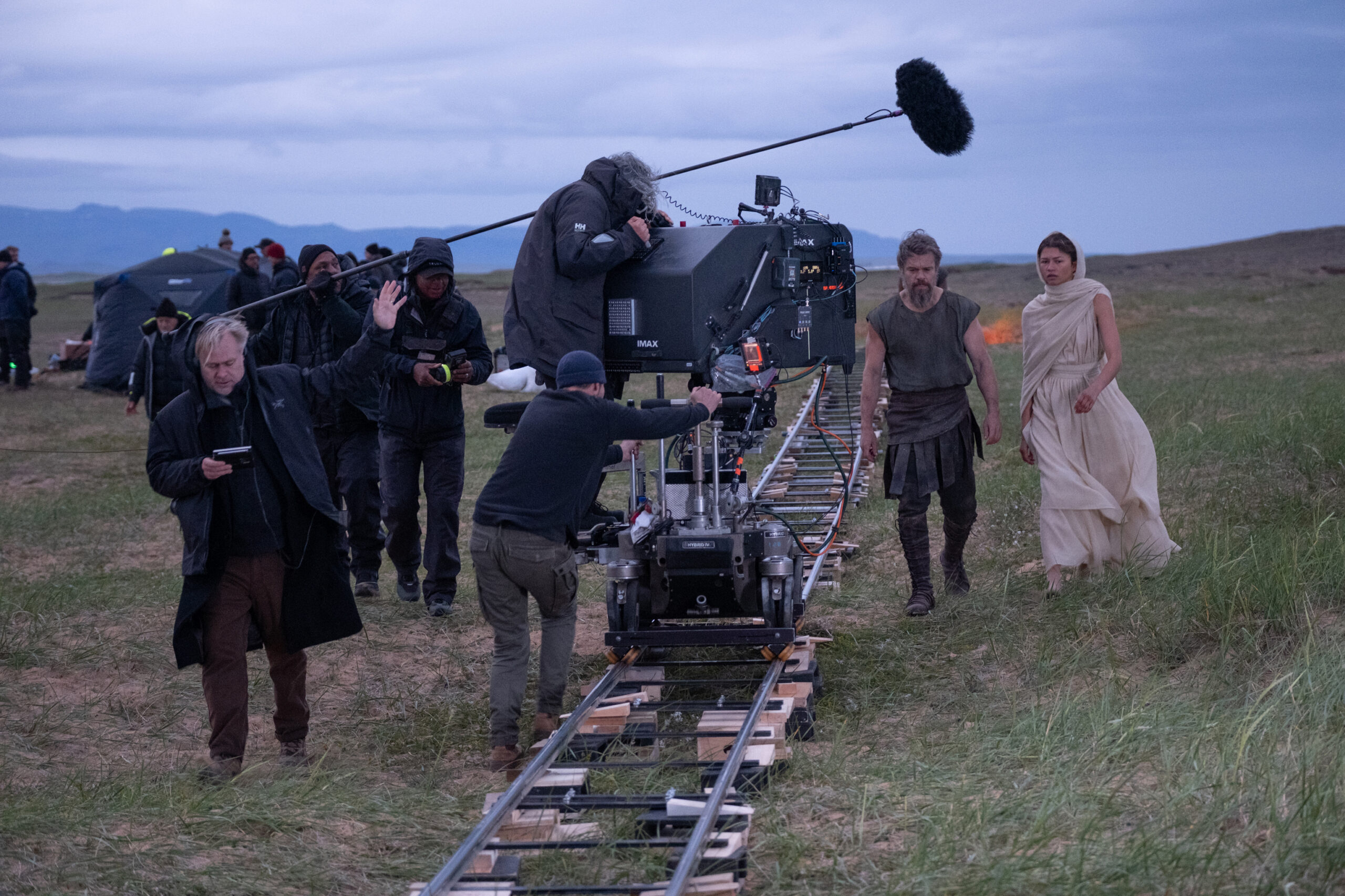
Emily Wilson, the acclaimed translator of Homer’s ‘The Odyssey,’ has publicly criticized Christopher Nolan’s recent film adaptation of the epic poem. Wilson, whose 2017 translation was the first English version by a woman, reportedly declared, “I would be ashamed” of the film. This strong statement, highlighted in an exclusive report by Deadline, immediately fueled a cultural debate concerning artistic interpretation, fidelity to classic literature, and the boundaries of cinematic adaptation.
The controversy centers on the perceived departure of Nolan’s vision from the spirit or narrative integrity of Homer’s original work. Such critiques are common when beloved literary classics are translated to the screen. However, a denouncement from a translator of Wilson’s stature, someone whose professional life is dedicated to bridging linguistic and cultural gaps for the text, carries significant weight.
The Weight of Translation and Adaptation
Translators of ancient texts like ‘The Odyssey’ invest years, often decades, into understanding every nuance of the original language and cultural context. Their work is an act of scholarly interpretation, aiming to render the source material accurately and evocatively for a modern audience. This deep engagement fosters a profound connection to the text. Emily Wilson, a Professor of Classical Studies at the University of Pennsylvania, spent years meticulously translating Homer’s Greek.
When a filmmaker like Christopher Nolan, known for his complex narratives and distinctive visual style, takes on such a foundational work, expectations are high. Nolan’s previous successes with intricate plots and grand scales, including ‘Inception,’ ‘Dunkirk,’ and ‘Oppenheimer,’ have set a precedent for ambitious and often cerebral cinematic experiences. His choice to tackle ‘The Odyssey’ was met with both anticipation and skepticism, given the text’s sacred status in literary history.
The specific points of Wilson’s criticism have not been fully detailed in initial public reports. However, the severity of her statement suggests a fundamental disagreement with Nolan’s approach. It implies that the film may have strayed too far from what Wilson, as a leading Homeric scholar and translator, considers the essential elements or message of Homer’s epic. Her concern likely stems from a perceived misrepresentation of the poem’s core themes or characterizations.
Emily Wilson’s Impact on Homeric Scholarship
Emily Wilson’s 2017 translation of ‘The Odyssey’ was groundbreaking. It was the first complete English translation by a woman, offering a fresh, accessible, and often startlingly direct rendition of the ancient Greek epic. Her work challenged centuries of male-dominated interpretations, bringing new perspectives to Odysseus’s character and the roles of women in the narrative.
Wilson’s translation was praised for its:
- Clarity and readability: Avoiding archaic language, making the text more approachable for contemporary readers.
- Rhythmic quality: Employing iambic pentameter to capture the poetic flow of the original.
- Nuanced characterization: Re-evaluating figures like Penelope, Circe, and the Sirens, often presenting them in a less conventional light.
- Engagement with ethical questions: Highlighting themes of justice, slavery, and hospitality with modern sensibilities.
Her work garnered significant critical acclaim, including a longlisting for the National Book Award for Translated Literature and numerous other accolades. This established her as a preeminent voice in classical studies and a significant authority on Homeric texts. Her subsequent translation of ‘The Iliad,’ published in 2023, further solidified her reputation.
Homer’s ‘The Odyssey’ – A Timeless Narrative
‘The Odyssey’ is one of the two major ancient Greek epic poems attributed to Homer. It narrates the ten-year journey home of Odysseus, the king of Ithaca, following the Trojan War. His arduous voyage is fraught with mythical creatures, divine interventions, and profound personal challenges, including encounters with the Cyclops Polyphemus, the sorceress Circe, and the seductive Sirens. The poem also details the struggles of his wife Penelope and son Telemachus as they await his return, besieged by suitors.
The poem explores themes of:
- Nostos (homecoming and nostalgia)
- Xenia (hospitality and guest-friendship)
- Kleos (glory and reputation)
- The power of cunning and perseverance
- The role of fate and free will in human affairs
- Identity and disguise
- The nature of justice and revenge
These themes have resonated with readers for millennia, making ‘The Odyssey’ a cornerstone of Western literature. The narrative structure, character development, and poetic language have ensured its enduring relevance. Any adaptation faces the immense challenge of capturing this depth and breadth for a contemporary audience, while also making it compelling for a new medium.
Christopher Nolan’s Cinematic Vision
Christopher Nolan has built a career on crafting films that are both intellectually stimulating and visually spectacular. His work often features non-linear narratives, complex temporal structures, practical effects, and a meticulous attention to detail. This distinctive style has garnered him critical acclaim and a dedicated global fanbase. Films like ‘Memento,’ ‘The Dark Knight,’ and ‘Interstellar’ exemplify his unique storytelling approach.
The decision to adapt ‘The Odyssey’ suggests Nolan aimed to apply his unique vision to a story of immense scale and philosophical weight. Fans and critics alike would have anticipated a visually stunning and conceptually ambitious take on Odysseus’s journey, perhaps exploring its temporal complexities or psychological depths in a manner characteristic of Nolan. However, Emily Wilson’s critique indicates that ambition may have come at the cost of authenticity, at least from her academic perspective.
Nolan’s films often delve into themes of memory, identity, and the subjective nature of reality. These themes are certainly present in ‘The Odyssey,’ making it a seemingly fertile ground for his directorial style. The question raised by Wilson’s comments is whether Nolan’s signature style has amplified or distorted the original text’s essence.
Previous Adaptations and Their Receptions
The history of adapting ‘The Odyssey’ for screen is varied, ranging from direct retellings to highly stylized interpretations. Each has faced its own set of challenges and criticisms, often sparking debates similar to the current one involving Nolan’s film.
For example, the 1997 television miniseries directed by Andrei Konchalovsky aimed for a broad, accessible narrative. It garnered mixed reviews, with some praising its scope and visual effects, and others criticizing its simplification of complex themes and characters for a mass audience. More abstract or allegorical interpretations have also emerged over the years, often using Homer’s framework to explore modern ideas or social commentary, such as the Coen Brothers’ 2000 film ‘O Brother, Where Art Thou?,’ which loosely adapts the epic to the American South during the Great Depression.
The core tension in adaptation often lies between:
- Fidelity to the source material: How closely should the adaptation adhere to the original plot, characters, and themes, respecting the author’s intent and historical context?
- Artistic interpretation: How much creative license should the filmmaker take to make the story relevant, compelling, or innovative for a new medium and contemporary audience?
This latest controversy with Nolan’s film, amplified by a scholar of Emily Wilson’s standing, highlights this perennial conflict in a stark manner. It forces a public examination of what constitutes a ‘good’ adaptation, particularly when dealing with canonical works.
The Role of the Translator in Cultural Discourse
Translators like Emily Wilson are often unsung heroes in the world of literature. They are the essential conduits through which ancient or foreign texts become accessible to new generations and cultures. Their work requires not only linguistic mastery but also a deep historical, cultural, and literary understanding. They serve as guardians of the text, ensuring its integrity and meaning are preserved across linguistic and temporal divides.
When a translator of Wilson’s caliber speaks out against an adaptation, it is often from a place of profound respect and guardianship for the original text. They are not merely interpreting words; they are interpreting entire worlds and philosophical frameworks. Their criticism can serve as a vital check on adaptations that might, in their view, misrepresent, diminish, or fundamentally misunderstand the source material.
Emily Wilson’s statement, “I would be ashamed,” suggests a perception of significant artistic or thematic betrayal. It implies that Nolan’s film may have fundamentally misunderstood or intentionally distorted the essence of ‘The Odyssey’ as she, and many scholars, understand it. This goes beyond minor plot changes; it suggests a potential failure to grasp the epic’s core philosophical or humanistic messages.
Public Reaction and Future Implications
The news of Emily Wilson’s critique has sparked immediate discussion among literary scholars, film critics, and the general public. Social media platforms are abuzz with debates about artistic freedom versus textual integrity, and the responsibilities inherent in adapting foundational texts. Many are now more curious to see the film to form their own opinions, while others are rallying in support of Wilson’s scholarly stance, defending the sanctity of Homer’s original work.
For Christopher Nolan, this controversy adds another layer to the reception of his film. While strong opinions can sometimes boost a film’s profile by generating publicity, a direct condemnation from an authoritative figure like Emily Wilson could also significantly impact its critical standing and public perception. It forces a conversation about the film’s artistic merits in relation to its origins, rather than solely on its cinematic spectacle. The debate highlights the tension between blockbuster entertainment and academic rigor, a conversation that rarely gets such a prominent spotlight.
The incident also serves as a potent reminder of the enduring power of classic literature and the deep emotional and intellectual connections people form with these texts. When an artist attempts to reinterpret such a work, they enter a dialogue with centuries of scholarship and interpretation. Wilson’s comments ensure that Nolan’s ‘Odyssey’ will not only be judged as a film but also as an interpretation of one of humanity’s most cherished stories.
Scholars and cinephiles will continue to dissect the film and Wilson’s comments. The dialogue between the ancient world and contemporary art endures. The challenge of adaptation persists. The legacy of Homer. The vision of Nolan. The critical eye of Wilson.
The debate continues.
