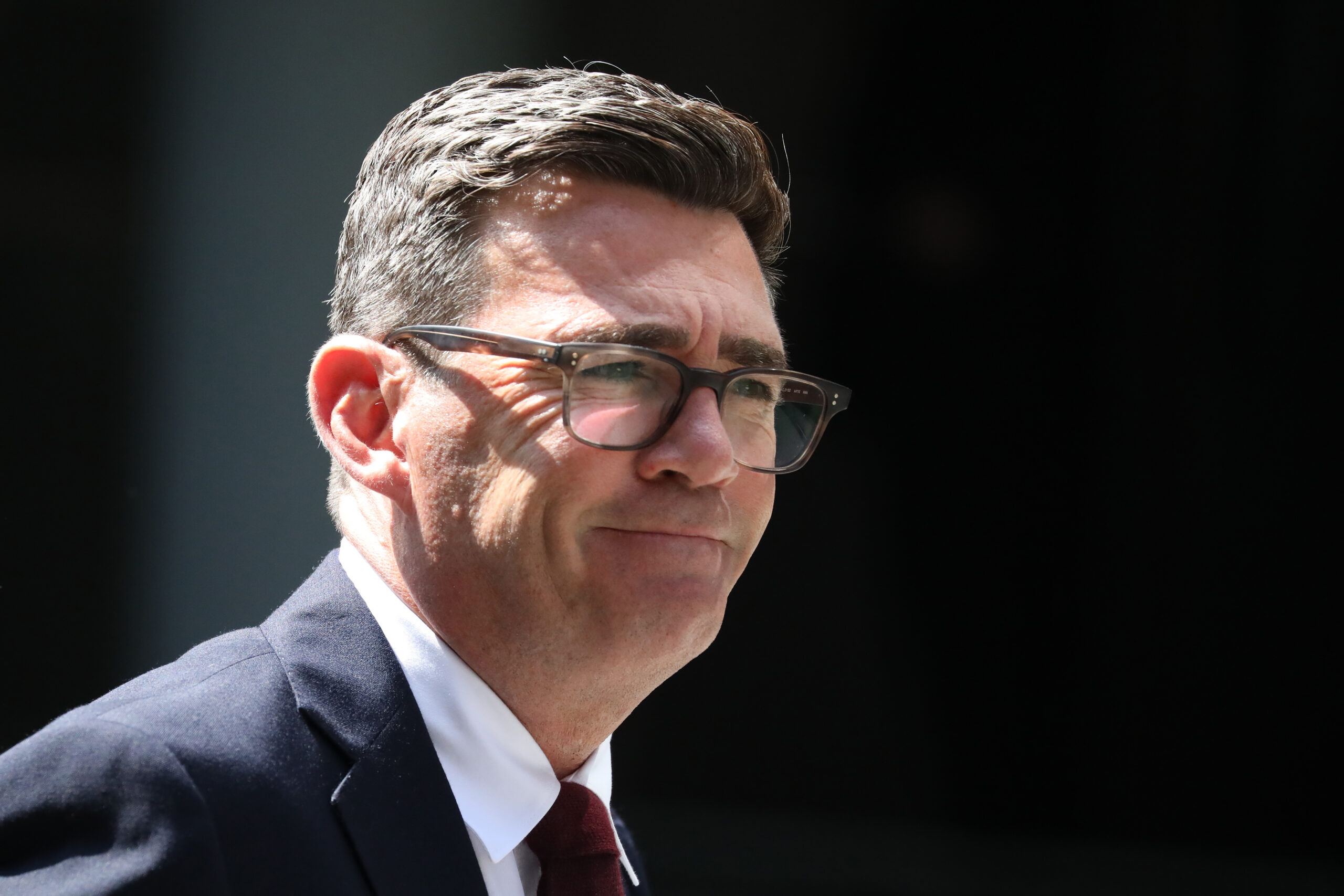
Andy Burnham was confirmed as the new Prime Minister of the United Kingdom on Monday, July 20, 2026. This appointment positions him at the helm of the UK government, making him the sixth individual to hold the nation’s highest political office in the last ten years. His rise to power followed a rapid leadership contest within the Labour Party, initiated by the resignation of former Prime Minister Keir Starmer on July 20, 2026.
Starmer’s departure, citing personal reasons and a desire for new party leadership, opened the door for a swift internal election. Burnham, a prominent figure in the Labour Party, emerged as the victor, securing the necessary support from Members of Parliament and party members. What looks like a sudden shift is part of a decade-long pattern of leadership changes.
A Decade of Political Turnover
The United Kingdom has experienced significant political volatility over the past decade. Since July 2016, the nation has seen a succession of Prime Ministers from both major parties. This period reflects a landscape shaped by Brexit, economic shifts, and evolving public demands.
The frequent changes in leadership highlight the pressures facing modern British governance. Each new leader has inherited a complex array of domestic and international challenges, often leading to short tenures and renewed calls for stability. Burnham’s premiership begins under similar scrutiny.
The succession of leaders underscores a turbulent era in British politics. Theresa May assumed office in July 2016 following the Brexit referendum. Her tenure, marked by intense negotiations and parliamentary deadlocks over Brexit, concluded in July 2019.
Boris Johnson then took the reins in July 2019, promising to ‘Get Brexit Done’. His premiership, characterized by populist policies and controversies, ended in September 2022. He was succeeded by Liz Truss, whose economic policies led to significant market instability.
Liz Truss’s time in office was the shortest in UK history, lasting only 49 days before her resignation in October 2022. Rishi Sunak then became Prime Minister in October 2022, aiming to restore economic stability and unity to the Conservative Party.
Sunak’s leadership continued until a general election saw a change of government. Keir Starmer became Prime Minister in the subsequent election, leading the Labour Party to power. His resignation on July 20, 2026, after a period of leadership, paved the way for Andy Burnham.
This rapid succession of leaders, from May to Johnson, Truss, Sunak, Starmer, and now Burnham, illustrates a pattern of political instability. The average tenure of a Prime Minister during this period has been approximately 18 months, a stark contrast to historical norms.
Factors contributing to this instability include the lingering effects of the 2016 Brexit referendum, global economic headwinds, and significant social shifts. Each leader has grappled with the challenge of uniting a divided nation and addressing complex policy issues.
Public trust in political institutions has also faced scrutiny during this period. The constant turnover at the top has led to questions about governmental effectiveness and the long-term direction of the country.
Burnham inherits a political environment where expectations for stability and effective governance are high. His ability to navigate these turbulent waters will define his early days in office.
From Manchester Mayor to Downing Street
Before becoming Prime Minister, Andy Burnham served as the Mayor of Greater Manchester. He held this prominent position from May 2017 until his recent appointment. During his tenure as Mayor, Burnham gained a reputation for advocating for regional devolution and addressing local issues.
His focus areas as Mayor included tackling homelessness, improving public transport, and promoting economic development across the Greater Manchester region. He was often seen as a champion for the North of England, pushing for greater investment and autonomy from Westminster.
Early Political Career and Ministerial Roles
Burnham’s political career also includes significant roles as a Member of Parliament for Leigh. He represented the constituency from 2001 to 2017, serving for 16 years in the House of Commons before stepping down to run for Mayor.
During his time as an MP, Burnham held various ministerial positions in previous Labour governments. These roles provided him with extensive experience in national policymaking and governmental operations.
His ministerial appointments included:
- Chief Secretary to the Treasury: A key role in managing public expenditure and contributing to economic policy.
- Secretary of State for Culture, Media and Sport: Overseeing government policy for the creative industries, tourism, and national heritage.
- Secretary of State for Health: A critical position responsible for the National Health Service (NHS) and public health policy.
This diverse experience across both local and national government is expected to inform his approach to leadership as Prime Minister. His background suggests a leader with a deep understanding of both central government mechanisms and the practicalities of local governance.
Burnham’s consistent presence in public life, from a backbench MP to a cabinet minister and then a powerful regional mayor, has given him a broad perspective on the challenges facing the UK. His consistent advocacy for social justice and regional equality has been a hallmark of his career.
His mayoral platform in Manchester often highlighted issues of inequality and the need for a more balanced economy across the UK. These themes are likely to feature prominently in his national agenda.
The transition from a regional leadership role to the national stage presents unique challenges and opportunities. Burnham’s established track record in Manchester offers a preview of his potential policy priorities and leadership style.
The Immediate Challenges Ahead
As Prime Minister, Andy Burnham faces numerous immediate challenges. Economic stability remains a primary concern, with ongoing inflation and cost-of-living pressures impacting households across the UK. The Bank of England has been grappling with persistently high inflation rates, affecting everything from food prices to energy bills.
Burnham is also expected to address issues related to public services, including the National Health Service (NHS). The NHS continues to face significant pressures, including long waiting lists, staff shortages, and funding challenges. Improving healthcare provision will likely be a top priority.
Implementing policies aimed at social welfare improvement will also be critical. This includes addressing poverty, unemployment, and housing shortages, issues that have been exacerbated by recent economic downturns and the lasting impact of the COVID-19 pandemic.
Forming a New Cabinet and Legislative Agenda
Burnham’s initial days in office will likely focus on forming a new cabinet. The composition of his cabinet will signal his policy direction and his approach to uniting various factions within the Labour Party. Key appointments to departments such as the Treasury, Foreign Office, and Home Office will be closely watched.
Following the cabinet formation, he will need to outline his government’s legislative agenda. This agenda will set out the key bills and policy initiatives his administration intends to pursue in the coming months and years. Expectations are high for swift action on pressing national issues.
His leadership will be closely watched for signs of a distinct policy direction, particularly concerning the UK’s relationship with the European Union and its global standing. The ongoing implications of Brexit continue to shape trade, diplomacy, and economic policy.
The public and international observers will monitor how he navigates these complex issues. Global partners will be keen to understand the UK’s foreign policy under Burnham, especially regarding alliances and international trade agreements.
Domestically, the new government will need to articulate clear strategies for economic growth, investment in infrastructure, and addressing regional disparities. The ‘levelling up’ agenda, while initially a Conservative policy, has broader appeal and could be re-envisioned under a Labour government.
Energy security and climate change also present significant long-term challenges. Burnham’s administration will need to advance policies that balance economic needs with environmental commitments, including investments in renewable energy and carbon reduction targets.
The ongoing cost-of-living crisis demands immediate and tangible solutions. Measures to support vulnerable households, control inflation, and stimulate wage growth will be high on the agenda. Public confidence will hinge on the government’s ability to deliver visible improvements.
Burnham’s experience in local government, particularly his focus on community-level issues in Greater Manchester, suggests he may adopt a more localized approach to national policy implementation. This could involve empowering local authorities and devolving more decision-making power.
The Labour Party’s New Chapter
Burnham’s election marks a new chapter for the Labour Party. After a period of internal reflection and leadership transitions, the party now aims to consolidate its position and implement its policy platform under Burnham’s guidance. This transition comes after Keir Starmer’s resignation, which prompted the swift leadership contest.
His mandate will be to unite various factions within the party and present a cohesive vision for the country. The Labour Party has historically faced challenges in maintaining internal unity, and Burnham’s leadership will be tested in this regard.
The political landscape remains fluid. Public expectations are high for effective governance and tangible improvements in everyday life. The electorate will be looking for clear policy statements and concrete actions that address their daily concerns.
Burnham’s leadership style, forged in both local and national arenas, will be tested as he endeavors to steer the United Kingdom through its current challenges. His ability to communicate effectively with the public and build cross-party consensus will be crucial.
The Labour Party’s success under Burnham will depend on its ability to present a credible and unified front. This includes demonstrating economic competence, a clear plan for public services, and a coherent foreign policy stance.
The party will also need to re-engage with segments of the electorate that have felt disenfranchised by politics in recent years. Burnham’s background as a ‘man of the North’ may help in connecting with voters outside of London and the South East.
The immediate task for Burnham and his team will be to project an image of stability and competence. This involves not only effective governance but also strong communication strategies to reassure both domestic and international audiences.
The coming months will be critical in establishing the tone and direction of the new Labour government. Policy announcements, parliamentary debates, and public appearances will all contribute to shaping perceptions of Burnham’s leadership.
Uncertainty. Transition. Leadership.