Tag: Global Energy Markets

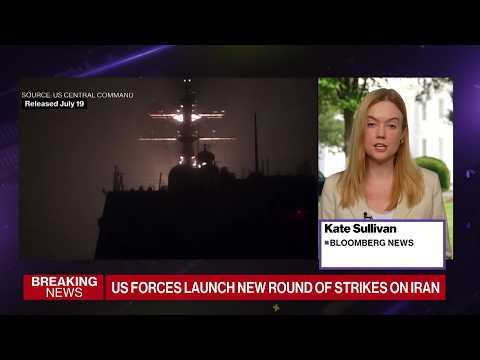
  • US Airstrikes Against Iran Enter Tenth Day: Escalation in the Middle East

    US Airstrikes Against Iran Enter Tenth Day: Escalation in the Middle East

    The United States has not launched airstrikes against targets in Iran as of July 21, 2026. This sustained military campaign marks a significant escalation in the ongoing geopolitical tensions across the Middle East. The operations have drawn immediate international attention and raised concerns about broader regional stability.

    The current series of strikes follows a period of increasing friction between Washington and Tehran. Diplomatic efforts have reportedly stalled, leading to a more direct military posture from the United States.

    The Trajectory of Escalation

    Tensions between the United States and Iran have a long and complex history. Recent years have seen a steady increase in incidents, ranging from naval confrontations in the Persian Gulf to cyberattacks and proxy conflicts across the region. The current wave of airstrikes did not emerge in a vacuum.

    Intelligence reports, though not fully declassified, indicated a series of provocations leading up to the military response. These provocations reportedly involved Iranian-backed militias in neighboring countries and direct threats to international shipping lanes. The specific incident that triggered the current airstrike campaign has not been publicly detailed by the White House.

    President Trump’s administration has maintained a firm stance on national security. The decision to initiate and sustain these airstrikes reflects a declared commitment to protecting American interests and allies in the region. Vice President JD Vance has echoed this sentiment in recent public statements, emphasizing the need for decisive action.

    Defining the Scope of Operations

    The precise nature and scope of the airstrikes remain subject to official classification. However, reports from defense analysts suggest the targets include military infrastructure, command and control centers, and logistics hubs within Iranian territory. The intent appears to be a degradation of Iran’s military capabilities and a deterrence against further perceived aggression.

    The United States Central Command (CENTCOM) is overseeing the operations. Daily briefings have been minimal, citing operational security. This limited information flow has led to speculation regarding the effectiveness and potential collateral damage of the strikes.

    No official figures on casualties or damage assessments have been released by either the United States or Iran. Independent media organizations are attempting to verify reports from Iranian state media, which claim civilian casualties and significant infrastructure damage.

    International Response and Diplomatic Efforts

    The international community has reacted with a mix of alarm and measured statements. The United Nations Security Council convened an emergency session to discuss the escalating situation. Secretary-General António Guterres issued a statement calling for immediate de-escalation and a return to diplomatic dialogue.

    European Union leaders have expressed deep concern. They urged both Washington and Tehran to exercise restraint. Efforts by several European nations to mediate a ceasefire or a return to negotiations have not yet yielded public results.

    Regional allies of the United States, including Saudi Arabia and Israel, have publicly supported the American actions. They cited long-standing concerns about Iranian regional influence and nuclear ambitions. Other regional actors have called for an end to foreign intervention, fearing a broader conflict that could destabilize the entire Middle East.

    The Role of Economic Sanctions

    Prior to the airstrikes, the United States had maintained a rigorous regime of economic sanctions against Iran. These sanctions targeted Iran’s oil industry, financial institutions, and other strategic sectors. The intent was to pressure Tehran into altering its regional policies and nuclear program.

    The effectiveness of these sanctions has been a subject of debate. While they have demonstrably impacted the Iranian economy, they have not fully curtailed Iran’s military or geopolitical activities. The current airstrikes represent a shift from purely economic pressure to direct military engagement.

    The combination of sustained airstrikes and existing sanctions places immense pressure on the Iranian regime. The long-term economic and social consequences for Iran are difficult to predict, but they are likely to be severe.

    Potential Ramifications for Global Stability

    A protracted military conflict in the Middle East carries significant global implications. The region is a vital source of global energy. Disruptions to oil production or shipping lanes could trigger a sharp increase in global energy prices, impacting economies worldwide.

    The Strait of Hormuz, a critical chokepoint for global oil shipments, remains a flashpoint. Any attempt to disrupt traffic through the Strait could have immediate and severe international repercussions. Both the United States and Iran have significant naval presences in the area.

    Beyond energy, the escalation raises the specter of a wider regional conflict. Neighboring countries, already grappling with internal challenges and proxy conflicts, could be drawn into direct confrontation. The humanitarian consequences of such a conflict would be immense.

    Cyber Warfare and Hybrid Threats

    Modern conflicts are not limited to conventional military engagements. Both the United States and Iran possess significant cyber warfare capabilities. Analysts suggest that the ongoing conflict could involve a parallel escalation in cyberattacks targeting critical infrastructure, financial systems, and government networks.

    Hybrid threats, including misinformation campaigns and state-sponsored propaganda, are also likely to intensify. Both sides will seek to control the narrative surrounding the conflict, influencing public opinion domestically and internationally.

    The information space has become a crucial battleground. Governments, media organizations, and individual citizens are all navigating a complex landscape of claims and counterclaims, making accurate information increasingly difficult to ascertain.

    Historical Parallels and Future Outlook

    Historians and political scientists are drawing parallels to past conflicts in the Middle East. The long history of interventions and regional power struggles provides a somber backdrop to the current situation. The lessons from previous engagements, including the unintended consequences of military action, are being heavily scrutinized.

    The current situation presents a unique set of challenges. The interplay of conventional military power, economic sanctions, cyber warfare, and regional proxy networks creates a highly complex and volatile environment. Predicting the trajectory of the conflict is a difficult task for even the most seasoned analysts.

    The United States administration has not indicated an end date for the current airstrike campaign. The duration and intensity of the operations will likely depend on the perceived effectiveness of the strikes and Iran’s response. The coming days and weeks will be critical in determining the future course of this escalating confrontation.

    Governments gathered. Diplomats gathered. Citizens gathered. The world waited.

    Tehran.


  • The June 16 Convergence, SpaceX Valuation Surges as Washington and Tehran Finalize Historic Pact

    The June 16 Convergence, SpaceX Valuation Surges as Washington and Tehran Finalize Historic Pact

    On June 16, 2026, global markets absorbed two massive and seemingly unrelated shifts in the architecture of global power. The United States and Iran finalized the text of a landmark diplomatic agreement designed to cap nuclear enrichment in exchange for targeted sanctions relief. Simultaneously, SpaceX shares surged in secondary market trading, pushing the aerospace firm to an unprecedented valuation exceeding $250 billion. The juxtaposition was not accidental. Markets recalibrated instantly. The news broke simultaneously across trading desks. Bloomberg Television’s The Opening Trade broadcast captured the dual ticker tapes. Anchors detailed the unfreezing of Iranian assets. Analysts dissected the secondary tender offer for SpaceX stock. The modern geopolitical landscape relies entirely on the intersection of statecraft and technological supremacy. This single morning proved it.

    The Secondary Market Surge of SpaceX

    SpaceX does not trade on public exchanges. The company relies on secondary market tender offers to provide liquidity to employees and early investors. On this Tuesday morning, the price per share cleared a threshold that stunned Wall Street. Institutional demand far outpaced supply. The implied valuation crossed $250 billion. This figure places the private aerospace manufacturer above most publicly traded legacy defense contractors combined.

    The surge was driven by two distinct operational victories. First, the Starlink satellite internet constellation reported its eighth consecutive quarter of operating profit. The network surpassed six million active global subscribers. Second, the Starship launch vehicle achieved full reusability during its Block 2 test flights out of Boca Chica, Texas. The sheer volume of payload capacity now available to the United States government altered the calculus of global military logistics.

    “The intersection of aerospace dominance and Middle Eastern statecraft is the only trade that matters today,” stated the lead anchor on Bloomberg Television’s The Opening Trade.

    Washington and Tehran Reach an Accord

    While aerospace valuations climbed in New York, diplomats finalized terms in Vienna. The United States State Department and Iranian officials reached a consensus after fourteen months of back-channel negotiations. The framework replaces the fragmented legacy of the 2015 Joint Comprehensive Plan of Action. The new pact focuses on immediate, verifiable caps on uranium enrichment.

    • Iran agreed to limit enrichment at the Natanz and Fordow facilities to 5 percent.
    • Washington authorized the unfreezing of specific sovereign assets held in South Korea and Qatar.
    • Funds are strictly earmarked for humanitarian and agricultural imports.
    • The agreement includes a phased lifting of secondary sanctions on Iranian crude oil exports.

    Global energy markets reacted before the ink was dry. Brent crude futures dropped by nearly three dollars, settling near $72 per barrel. Traders priced in the anticipated influx of Iranian barrels to Asian markets.

    The Legacy of the JCPOA

    The 2026 agreement did not materialize in a vacuum. It was built on the ashes of the 2015 Joint Comprehensive Plan of Action. That original deal fractured when the United States withdrew in 2018. Subsequent years saw Tehran accelerate its enrichment programs. Centrifuges spun faster. Stockpiles grew larger. The diplomatic freeze lasted nearly a decade. European Union mediators spent years attempting to bridge the gap. The June 16 signing represents the culmination of those exhaustive efforts. The new text acknowledges the realities of a changed Middle East. It relies less on trust and more on absolute, unblinking verification.

    Starshield and the Architecture of Verification

    The connection between a Middle Eastern nuclear pact and a Texas-based rocket company lies in the sky. Diplomatic agreements rely on the doctrine of trust but verify. Verification in 2026 depends on low-Earth orbit satellite constellations. The International Atomic Energy Agency requires on-the-ground access. Intelligence agencies require continuous orbital oversight.

    SpaceX’s military-focused subsidiary, Starshield, provides exactly this architecture. The National Reconnaissance Office previously awarded billions in classified contracts to deploy these secure, Earth-observing networks. The ability to monitor uranium mines, centrifuge manufacturing plants, and military bases in real-time gives Washington the confidence to sign such treaties. The $250 billion valuation of SpaceX reflects this new reality. The company is no longer just a launch provider. It is the foundational infrastructure for global security.

    Market Reactions Across the Defense Sector

    The dual news events triggered immediate volatility in the defense sector. Legacy contractors faced a complex market environment. Lockheed Martin and Northrop Grumman saw mixed trading. The prospect of a stabilized Middle East traditionally signals a reduction in immediate munitions contracts. However, the reliance on high-tech surveillance and space-based assets signals a massive reallocation of the Pentagon budget.

    Capital moved away from traditional kinetic warfare manufacturers. Capital flowed toward aerospace, cyber security, and orbital logistics. The SpaceX valuation served as a gravitational pull. Private venture capital funds accelerated their investments in space startups, hoping to capture the overflow from SpaceX’s dominance.

    The European Union Mediation Role

    The success in Vienna heavily involved European Union diplomats. Brussels acted as the primary conduit when direct talks stalled. The European energy crisis of the early 2020s left the continent desperate for diversified oil and gas streams. Bringing Iranian crude back into the legitimate global market serves European economic interests. French and German envoys provided the necessary guarantees regarding the Qatari banking mechanisms. Their involvement ensured that the unfreezing of funds complied with international anti-money laundering statutes.

    The Domestic Political Fallout

    The agreement with Tehran sparked immediate political friction in Washington D.C. Bipartisan groups in the Senate demanded immediate hearings. The memory of previous failed agreements loomed large over the Capitol. Critics argued that unfreezing assets inherently funds proxy conflicts in the region. The State Department countered with the necessity of halting the immediate nuclear threat.

    The debate dominated the Sunday morning political talk shows. Yet, the underlying truth remained economic. The integration of commercial space technology into national security protocols provided a new layer of political cover. The administration argued that American technological supremacy, spearheaded by companies like SpaceX, guaranteed the enforcement of the deal.

    Banking Compliance and Qatari Intermediaries

    The mechanics of the sanctions relief are highly technical. The United States did not hand over pallets of cash. Instead, billions of dollars previously trapped in South Korean banks were transferred to restricted accounts in Doha, Qatar. The Qatari central bank acts as the overseer. When Iran wishes to purchase medicine or agricultural equipment, the vendors are paid directly from Doha. No liquid capital enters Iranian borders. This strict compliance mechanism was the cornerstone requirement for the United States Treasury Department. It is the firewall that allowed the political signing to proceed.

    The Payload Economics of Starship

    While diplomats argued over banking compliance, aerospace engineers calculated payload economics. The SpaceX valuation surge is fundamentally tied to the Starship vehicle. The ability to lift one hundred tons to low-Earth orbit for a fraction of historical costs changes the global economy. It allows for the rapid deployment of massive surveillance arrays. It enables point-to-point cargo delivery for the military. Wall Street analysts looked at the successful Block 2 flights and realized the monopoly was complete. No other nation or corporation possesses this capability. The $250 billion price tag is a reflection of this unassailable moat.

    Global Energy Realignments

    The Iranian deal sent shockwaves through the Organization of the Petroleum Exporting Countries. Saudi Arabia and the United Arab Emirates watched closely as sanctions relief materialized. The influx of Iranian oil shifts the balance of power within OPEC. Asian markets, particularly China and India, stood to benefit from discounted Iranian crude.

    This shift complicates the global energy transition. Cheaper oil prolongs the reliance on fossil fuels in developing economies. The interconnected nature of the global economy meant that a diplomatic signature in Vienna altered shipping routes in the Strait of Hormuz and refinery outputs in the South China Sea.

    The Unseen Hand of Commercial Space

    Historically, statecraft was the exclusive domain of governments. Navies projected power. Diplomats negotiated terms. Today, commercial entities hold unprecedented leverage over global affairs. The Starlink constellation previously altered the course of ground conflicts in Eastern Europe. Now, the broader SpaceX infrastructure dictates the pace of global surveillance.

    Washington negotiates from a position of strength because its private sector dominates orbit. Tehran negotiates knowing that its facilities are monitored by commercial satellites operating outside traditional state jurisdictions. The rules of the geopolitical game have fundamentally changed.

    The Next Phase of the Accord

    The June 16 signing is only the preliminary step. The agreement faces a rigorous implementation timeline. The IAEA must deploy inspectors to Natanz within thirty days. The unfreezing of funds in Qatar requires complex banking compliance to ensure humanitarian use. The United States Congress holds a review period under the Iran Nuclear Agreement Review Act.

    Each of these steps carries the risk of derailment. The financial markets will monitor each milestone. The defense sector will adjust its lobbying efforts accordingly. The aerospace industry will continue launching rockets, indifferent to the political maneuvering below.

    Convergence

    The morning broadcasts ended. The tender offers closed. The diplomats signed the preliminary texts. The rockets cleared the pad. Convergence.

    Next in the Series: The Orbital Defense Budget, How Starshield Rewrote Pentagon Spending.