Tag: Gilded Age

  • A Legacy in Brick and Glass: Re-Examining Ernst Janssen’s 1908 Compton Heights Masterpiece

    A Legacy in Brick and Glass: Re-Examining Ernst Janssen’s 1908 Compton Heights Masterpiece

    In the architectural taxonomy of St. Louis, few residential enclaves command the historical gravity of Compton Heights. Laid out with strict covenants to protect both sightlines and structural integrity, the neighborhood attracted the city’s industrial and civic elite during the Gilded Age and the early decades of the twentieth century. Among its defining contributors was architect Ernst Janssen, whose hand shaped not only several of the area’s grandest properties but also the iconic ornamental entrance gates on Grand Avenue. His structures were designed to project permanence, utilizing substantial masonry and uncompromised spatial flow that modern construction rarely replicates.

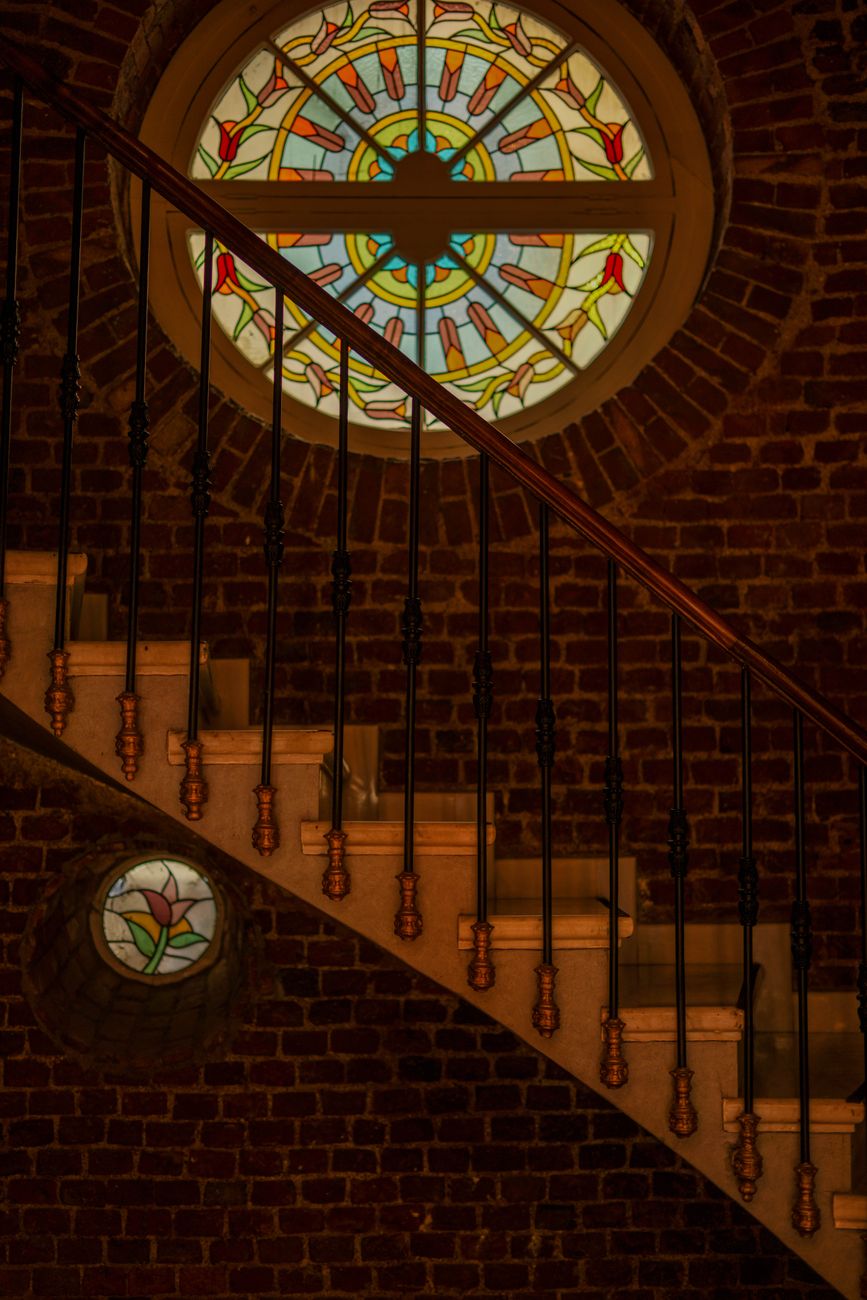
    A prime study in Janssen’s domestic architecture stands at 3506 Hawthorne Boulevard, a three-story red-brick residence completed in 1908. Spanning approximately 4,256 square feet across a 0.34-acre lot, the property encapsulates the era’s penchant for craftsmanship. The interior preserves original leaded and stained glass windows, intricate millwork, and pocket doors that separate formal reception spaces. Beyond its architectural pedigree, the home’s early narrative is anchored by prominent local history: it was once owned by Gaston F. DuBois, a Swiss-educated chemical engineer who arrived in St. Louis in 1904 and ultimately rose to the presidency of the Monsanto Chemical Works.

    When the property moved through the market via Dielmann Sotheby’s International Realty with a list price of $625,000—ultimately closing at $600,000—it offered a distinct lens through which to evaluate historic square-footage value in the urban core. For roughly $140 per square foot, the incoming buyer acquired a structure requiring deliberate restoration alongside irreplaceable historic fabric. In a metropolitan market where new luxury builds often lean heavily on standardized suburban footprints, historic assets like the DuBois-Janssen house underscore the enduring tension between preservation costs and architectural authenticity.

    For buyers navigating the upper tiers of the St. Louis residential market, properties of this vintage represent a very specific asset class: homes where the financial commitment extends well beyond the acquisition ledger into meticulous stewardship. JL Group’s regional market observations frequently note that while contemporary suburban developments offer immediate turn-key convenience, historic core properties command a different kind of value—one rooted in irreproducible craftsmanship, neighborhood lineage, and a direct connection to the industrial fortunes that built the Midwest.


    Thinking about your own property? JL Group’s Ozarks real estate desk is a click away →

  • Legacy on Hall Street: The 1885 Shakespeare Chateau Asks $2 Million in Saint Joseph

    Legacy on Hall Street: The 1885 Shakespeare Chateau Asks $2 Million in Saint Joseph

    In the architectural landscape of Missouri, few structures command a room quite like the Shakespeare Chateau. Built in 1885 during a period when midwestern industrial wealth translated directly into elaborate residential design, the Chateauesque estate on Hall Street in Saint Joseph represents a masterclass in late-19th-century craftsmanship. Now listed for $2 million through Sage Sotheby’s International Realty, the property offers a rare window into an era when domestic architecture was treated as permanent public art.

    Set across a nearly two-acre campus that includes the grand main residence, a carriage house with three apartments, and an auxiliary structure at 819 Hall Street, the estate is anchored by preservation milestones that few surviving properties can claim. Interior spaces feature forty-seven original stained-glass windows, intricate hand-carved woodwork, and ornate plasterwork that reflects the heavy European stylistic influences popular among the Gilded Age elite. Most notably, the residence houses a museum-quality installation of the rare Zuber panoramic wallpaper known as Eldorado, a hand-printed French scenic masterwork whose institutional counterparts include the White House.

    The offering captures a distinct cross-section of Missouri real estate where historical gravitas intersects with modern commercial flexibility. While meticulously updated to accommodate contemporary standards, the property retains the uncompromising spatial proportions of the 1880s—soaring ceilings, deep moldings, and a floor plan designed around formal entertaining. For a market navigating the tension between new suburban development and urban preservation, properties of this scale test the appetite for legacy asset ownership outside of traditional coastal enclaves.

    As regional markets mature, historic flagships like the Shakespeare Chateau serve as a reminder of the economic engines that originally built the Missouri riverway communities. JL Group’s desk frequently notes that historic properties of this caliber operate in a completely separate micro-economy from standard residential stock, driven entirely by buyers seeking architectural permanence rather than square-footage metrics.


    Thinking about your own property? JL Group’s Ozarks real estate desk is a click away →