President Donald Trump’s trade war with China, initiated during his first term, aimed to address perceived imbalances in trade relations. Steven Rattner, a prominent financial analyst and former government official, has offered a comprehensive evaluation of this economic conflict. His assessment indicates that the trade war, despite its significant impact on global commerce, ultimately did not achieve its primary strategic goals for the United States.
The policy sought to leverage tariffs as a tool to compel China into fairer trade practices, reduce the bilateral trade deficit, and safeguard American manufacturing jobs. However, Rattner’s analysis suggests that the outcomes diverged from these initial aspirations.
The Genesis of the Trade War
The Trump administration formally launched its trade actions against China in early 2018. This followed months of rhetoric regarding unfair trade practices and intellectual property theft. The initial salvo involved tariffs on steel and aluminum imports from various countries, including China, under Section 232 of the Trade Expansion Act of 1962.
A more direct confrontation with China began in March 2018. President Trump authorized tariffs on approximately $50 billion worth of Chinese goods under Section 301 of the Trade Act of 1974. These tariffs targeted sectors where the US alleged intellectual property theft and forced technology transfers.
China retaliated swiftly. Beijing imposed tariffs on US products, including agricultural goods like soybeans and pork, as well as automobiles. This exchange escalated into a full-blown trade war, impacting global markets and supply chains.
Tariffs and Their Economic Impact
The core mechanism of the trade war was the imposition of tariffs. Tariffs are taxes on imported goods. The economic theory behind their use in this context was to make Chinese goods more expensive, thereby encouraging American consumers and businesses to purchase domestically produced alternatives or goods from other countries.
However, the practical application of these tariffs led to complex economic consequences. Studies by organizations like the International Monetary Fund (IMF) and the National Bureau of Economic Research (NBER) indicated that the cost of these tariffs was largely borne by American importers and, subsequently, by American consumers.
Companies importing Chinese goods faced higher costs. Many of these companies chose to pass these increased costs onto their customers. This resulted in higher prices for a range of products, from electronics to clothing.
American farmers, particularly those in the agricultural heartland, were hit hard by China’s retaliatory tariffs. China, a major buyer of US agricultural products, shifted its purchases to other countries. This led to significant financial losses for many American farmers, prompting the US government to provide billions of dollars in aid packages to mitigate the impact.
The Trade Deficit: A Persistent Challenge
A central objective of the trade war was to reduce the US trade deficit with China. The trade deficit represents the amount by which a country’s imports exceed its exports. President Trump frequently cited the large bilateral trade deficit as evidence of unfair trade practices by China.
Despite the tariffs, the overall US trade deficit did not see a significant, sustained reduction. While the deficit with China might have seen some fluctuations, the overall US trade deficit with the rest of the world remained substantial. This phenomenon can be attributed to the fungible nature of global trade.
Instead of directly reducing the deficit, the trade war often led to a reshuffling of trade flows. Companies shifted their sourcing from China to other countries, such as Vietnam, Mexico, or Taiwan. This meant that goods previously imported directly from China might now be imported from another country, potentially assembled with Chinese components, without fundamentally altering the overall trade balance or addressing the underlying causes of the deficit.
China’s Resilience and Strategic Adjustments
Steven Rattner emphasized China’s ability to adapt to the pressures of the trade war. Beijing did not capitulate to US demands for fundamental economic reforms. Instead, China implemented its own set of countermeasures and strategic adjustments.
China diversified its trade partners. It strengthened economic ties with countries in Southeast Asia, Africa, and Europe. This reduced its reliance on the US market.
The Chinese government also intensified its focus on domestic consumption and technological self-reliance. Initiatives like “Made in China 2025” aimed to reduce dependence on foreign technology and boost indigenous innovation. While the trade war caused some short-term disruptions, China’s long-term economic growth trajectory remained robust.
The Chinese economy, driven by its vast domestic market and state-backed industrial policies, proved resilient enough to absorb the tariff impacts. Beijing’s strategic patience and willingness to endure economic discomfort were key factors in its response.
The ‘Phase One’ Trade Deal
In January 2020, the US and China signed a “Phase One” trade deal. This agreement was intended to de-escalate tensions and address some immediate concerns. Under the deal, China committed to purchasing an additional $200 billion worth of US goods and services over two years, beyond its 2017 levels.
The agreement also included provisions related to intellectual property protection, technology transfer, and financial services. However, many of the more fundamental structural issues underlying the trade dispute, such as state subsidies to Chinese industries and cyber theft, were left unaddressed.
Steven Rattner’s analysis suggests that while the “Phase One” deal provided a temporary truce, it did not fundamentally alter the landscape of US-China trade relations. China largely failed to meet its purchasing commitments, partly due to the global economic disruptions caused by the COVID-19 pandemic. The underlying tensions and structural disagreements persisted.
Global Supply Chain Reshaping
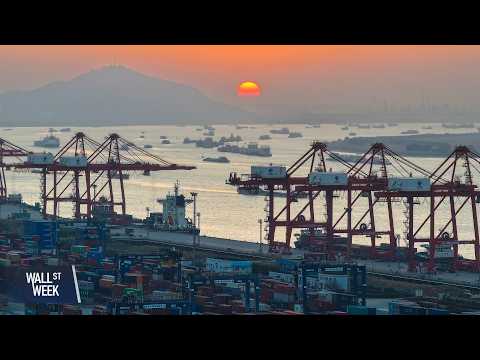
One undeniable consequence of the trade war was the acceleration of global supply chain restructuring. Many multinational corporations, seeking to avoid tariffs and reduce geopolitical risk, began to re-evaluate their manufacturing and sourcing strategies.
This led to a phenomenon known as “decoupling” or “reshoring.” Companies started to move some production out of China, either back to their home countries or to other low-cost manufacturing hubs in Southeast Asia, such as Vietnam, Thailand, and Malaysia. Mexico also benefited from this shift, particularly for goods destined for the North American market.
While this diversification reduced reliance on a single country, it also introduced new complexities and costs. Establishing new supply chains requires significant investment and time. The long-term implications of this reshaping are still unfolding, but it represents a lasting legacy of the trade war.
Lessons Learned and Future Implications
Steven Rattner’s assessment implies several critical lessons from the trade war. Unilateral tariff actions, while potentially impactful in the short term, may not be sufficient to force fundamental policy changes in a large, state-controlled economy like China’s. The costs of such actions can also be substantial for the initiating country’s consumers and businesses.
The trade war underscored the interconnectedness of the global economy. Disruptions in one major trading relationship can have ripple effects across the entire system. It also highlighted the importance of multilateral cooperation and diplomacy in addressing complex international trade issues.
Looking forward, the relationship between the US and China remains a critical geopolitical and economic dynamic. While President Trump initiated the trade war, the underlying issues of intellectual property, market access, and state subsidies continue to be points of contention. The current US administration faces the ongoing challenge of navigating this complex relationship, balancing competition with cooperation.
American consumers faced higher prices. American farmers lost markets. Global supply chains reorganized. China’s economy adapted. The trade deficit remained.
A costly endeavor.