Tag: Ferguson

  • Seattle Space Needle Shooting – Three Dead, Four Injured in July 2026 Attack

    Seattle Space Needle Shooting – Three Dead, Four Injured in July 2026 Attack

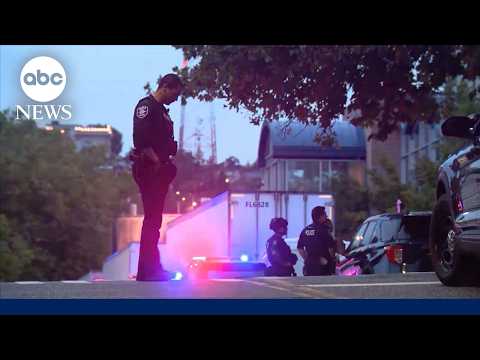
    On July 26, 2026, a mass shooting incident near the Seattle Space Needle resulted in three fatalities and four injuries, prompting an extensive law enforcement and emergency medical response and initiating a complex investigation by the Seattle Police Department.

    The attack unfolded in the early afternoon, leading to the immediate cordoning off of the area around the iconic landmark. Authorities secured the scene, began processing evidence, and initiated interviews with potential witnesses. The incident marked a significant tragedy for the city of Seattle, drawing condemnation from city and state officials.

    The Immediate Aftermath and Emergency Response

    Multiple 911 calls reported gunfire in the vicinity of the Space Needle around 6 p.m. PDT on July 26, 2026. These reports initiated a rapid deployment of emergency services to the Seattle Center area.

    Seattle Police Department (SPD) patrol units were the first to arrive on the scene. Their immediate action focused on securing the area and establishing a safety perimeter.

    The perimeter extended several blocks around the Space Needle and the broader Seattle Center campus. This measure was critical for containing the incident and protecting the public.

    Paramedics from the Seattle Fire Department (SFD) triage teams provided immediate medical assistance to the wounded individuals. Their quick response was vital in stabilizing the injured.

    Four individuals were transported to local hospitals for treatment. Harborview Medical Center, a Level I trauma center, received the majority of the injured.

    The conditions of the injured individuals have not been publicly disclosed. Initial reports indicated varying degrees of severity in their injuries.

    Securing the Scene and Initiating Investigation

    The Seattle Center, a major tourist attraction and cultural hub, was placed on immediate lockdown following the incident. This measure ensured the safety of visitors and employees present at the complex.

    Visitors and employees were instructed to shelter in place or evacuate under police guidance. This coordinated effort minimized potential further harm and facilitated emergency operations.

    Public transportation routes operating in the vicinity were diverted. Access to the Lower Queen Anne neighborhood was restricted to accommodate the influx of emergency vehicles and personnel.

    Evidence markers were placed across a wide area, indicating the dynamic and potentially mobile nature of the incident. This suggested that the events may have unfolded across multiple locations near the Space Needle.

    Detectives from the SPD Homicide Unit and Crime Scene Investigation (CSI) teams began processing the scene. Their work included collecting ballistic evidence, documenting the crime scene, and searching for any other relevant physical evidence.

    Witness interviews commenced shortly after the scene was secured. Investigators sought to gather firsthand accounts from individuals who may have observed the shooting or its immediate aftermath.

    Surveillance footage from numerous cameras positioned throughout the Seattle Center and surrounding businesses became a critical component of the investigation. Authorities are actively reviewing this footage for leads.

    Ongoing Investigation and Public Safety Concerns

    As of the evening of July 27, 2026, the Seattle Police Department confirmed that no arrests had been made in connection with the shooting. The investigation remains active and ongoing.

    Authorities are pursuing multiple leads to identify the perpetrator(s) and determine the motive behind the attack. The complexity of the scene and the lack of immediate arrests suggest a challenging investigation.

    Seattle Mayor Katie Wilson issued a statement expressing profound condolences to the victims and their families. Mayor Wilson emphasized the city’s commitment to supporting those affected by the tragedy.

    Mayor Wilson assured the public that all available resources were being deployed. The primary goal is to apprehend those responsible for the senseless act of violence.

    Governor Bob Ferguson also weighed in on the incident. Governor Ferguson called the shooting a senseless act of violence and pledged state support to the city’s response efforts. This included offering state resources to aid the investigation.

    The lack of arrests and the ongoing nature of the investigation have raised public safety concerns within the Seattle community. Residents are urged to remain vigilant and report any suspicious activity to law enforcement.

    Law enforcement agencies, including the Federal Bureau of Investigation (FBI), are reportedly assisting the SPD. This multi-agency effort aims to expedite the identification and apprehension of the perpetrator(s).

    The collaboration between local and federal agencies underscores the serious nature of the incident. It also highlights the commitment to preventing further acts of violence.

    Community Impact and Future Actions

    The shooting has sent shockwaves through the Seattle community. The city prides itself on its safety and progressive values, making the incident particularly jarring.

    Local community leaders and mental health organizations have begun mobilizing to offer support. Their efforts focus on assisting those affected by the trauma of the mass shooting.

    Counseling services and support groups are being organized to help residents cope with the emotional aftermath. The long-term psychological impact of such events can be significant.

    The investigation is expected to be complex. It will involve extensive forensic analysis of collected evidence and continued witness interviews.

    Authorities are appealing to the public for any information that could aid the investigation. Community cooperation is often crucial in solving complex cases.

    The Seattle Police Department has established a dedicated tip line for the public to submit information. Anonymity is assured for those who wish to provide tips without revealing their identity.

    Security measures in and around the Seattle Center may be reviewed and enhanced in the wake of the shooting. This could include increased police presence and additional surveillance.

    The city will likely engage in discussions about broader strategies to address gun violence. These discussions often follow major incidents of this nature.

    The focus remains on bringing those responsible to justice. The city aims to provide a sense of closure and security to its residents.

    Emergency services responded. Law enforcement investigated. The community grieved.

    Seattle.

    FAQ

    • What happened near the Seattle Space Needle on July 26, 2026?
      On July 26, 2026, a mass shooting incident occurred near the Seattle Space Needle, resulting in three fatalities and four injuries. Emergency services and law enforcement responded to the scene, which was cordoned off for investigation.
    • How many people were killed and injured in the Seattle shooting?
      The mass shooting near the Seattle Space Needle on July 26, 2026, resulted in three people being killed and four others sustaining injuries. The injured were transported to local hospitals, including Harborview Medical Center.
    • Have any arrests been made in connection with the Space Needle shooting?
      As of July 27, 2026, no arrests have been made in connection with the mass shooting near the Seattle Space Needle. The Seattle Police Department, with reported assistance from the FBI, is actively investigating the incident.
    • What was the immediate response to the Seattle Space Needle shooting?
      The immediate response involved multiple 911 calls, rapid deployment of Seattle Police Department units to secure the area, and Seattle Fire Department paramedics providing medical assistance. The Seattle Center was placed on lockdown, and a wide perimeter was established.
    • What are officials saying about the Seattle Space Needle shooting?
      Seattle Mayor Katie Wilson expressed condolences and pledged all available resources to apprehend those responsible. Governor Bob Ferguson condemned the incident as a senseless act of violence and offered state support to the city’s response efforts.

  • The Shelved Cop Comedy – Why Key and Peele’s ‘Police Academy’ Reboot Was Canceled After Ferguson

    The Shelved Cop Comedy – Why Key and Peele’s ‘Police Academy’ Reboot Was Canceled After Ferguson

    Keegan-Michael Key and Jordan Peele were actively developing a reboot of the 1980s comedy franchise Police Academy until August 2014, when the fatal police shooting of Michael Brown in Ferguson, Missouri, abruptly halted the project. Actor and writer Ike Barinholtz recently confirmed that the tonal shift in American culture regarding law enforcement made a lighthearted comedy about inept police officers impossible to produce. The project was quietly shelved by the studio. The script was abandoned. The cultural appetite for the bumbling cop archetype had vanished overnight.

    What looks modern actually started a century ago, but in the realm of Hollywood comedy, a decade can represent an entire geological era. In 2014, Key and Peele were at the absolute zenith of their television power. Their Comedy Central sketch series was generating hundreds of millions of views on YouTube. They were the most sought-after comedic voices in the entertainment industry. Studio executives wanted to harness their specific brand of social satire and apply it to an established intellectual property. New Line Cinema held the rights to a dormant franchise that seemed ripe for reinvention.

    The Blueprint for a Modern Reboot

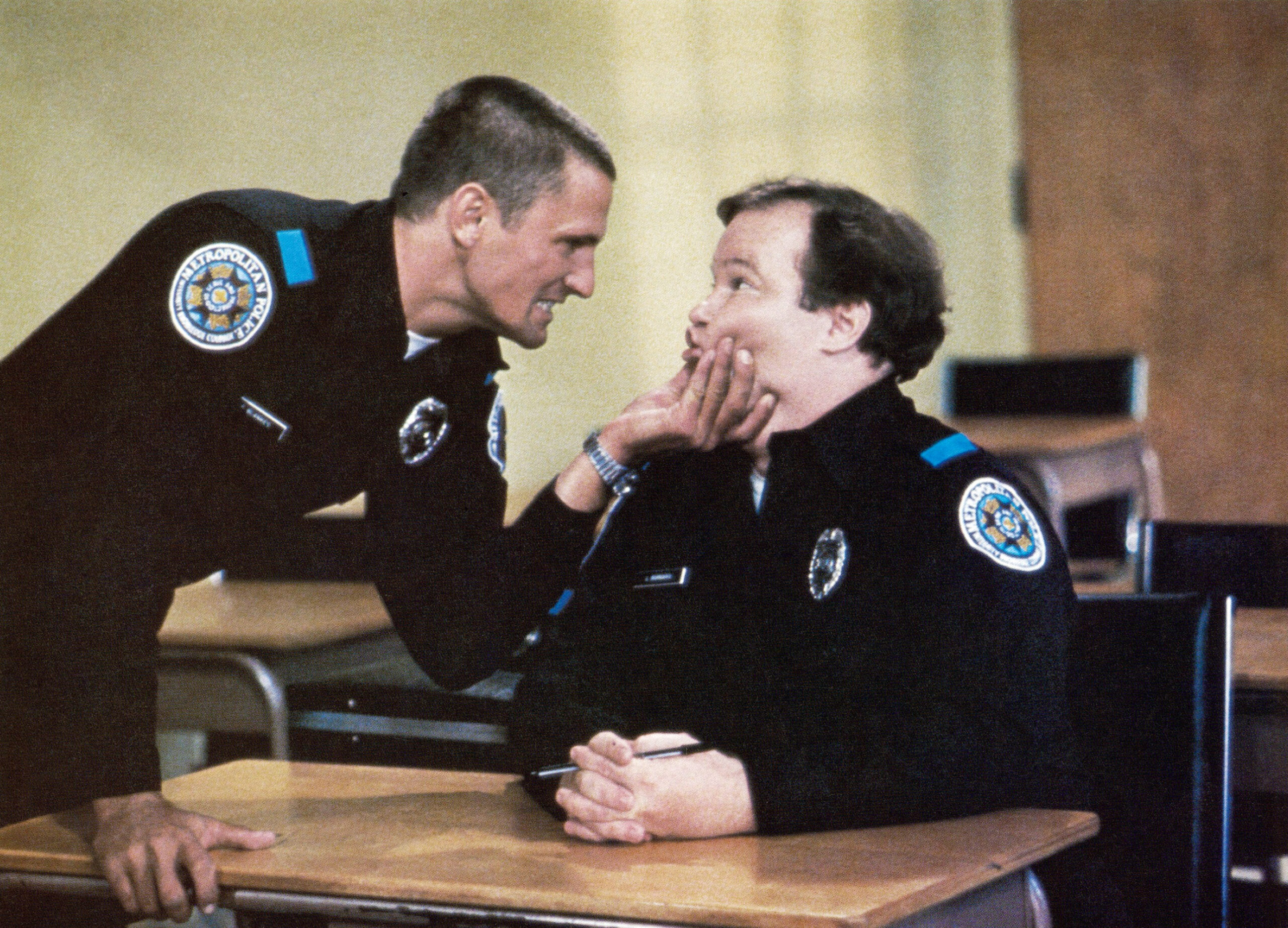
    The original Police Academy premiered in 1984. Directed by Hugh Wilson and produced by Paul Maslansky, the film grossed $149 million at the global box office against a meager $4.5 million budget. It spawned six sequels, an animated television series, and a syndicated live-action show. The franchise relied on a simple, repeatable formula. A desperate mayor lowers the physical and educational requirements for the police academy, allowing a ragtag group of misfits to join the force. Steve Guttenberg anchored the series as Carey Mahoney, surrounded by physical comedians like Michael Winslow and Bubba Smith.

    By 2014, the franchise had been dead for exactly two decades. The final theatrical installment, Police Academy: Mission to Moscow, was released in 1994 and became a legendary box office disaster. New Line Cinema wanted to resurrect the property. They approached Keegan-Michael Key and Jordan Peele to produce and potentially star in the reboot. The duo brought on Ike Barinholtz and David Stassen to write the screenplay. Barinholtz and Stassen were a proven commodity, having written successfully for The Mindy Project and Central Intelligence.

    The creative strategy was clear. The writers intended to maintain the core premise of misfits joining a police academy but planned to inject the sharp, observational humor that defined the Key & Peele brand. The script was in active development. Drafts were being written. The studio was preparing for pre-production. The machinery of Hollywood was moving forward with the assumption that a new Police Academy film would hit theaters by 2016.

    August 2014 and the Shift in Ferguson

    The trajectory of the film changed permanently on the afternoon of August 9, 2014. On Canfield Drive in Ferguson, Missouri, a suburb of St. Louis, white police officer Darren Wilson fatally shot Michael Brown, an unarmed 18-year-old Black man. The incident sparked immediate outrage. Within hours, residents gathered at the scene. By nightfall, protests had erupted along West Florissant Avenue.

    Over the next two weeks, the imagery emerging from Ferguson dominated global news networks. Local law enforcement agencies, including the St. Louis County Police Department and later the Missouri Highway Patrol, deployed military-grade hardware to police the protests. Television screens across America displayed armored personnel carriers, officers in camouflage tactical gear, sniper rifles, and the heavy use of tear gas against civilians. The visual language of American policing was suddenly entirely militarized.

    This real-world reality violently collided with the fictional world Barinholtz and Stassen were writing. The juxtaposition was jarring. Hollywood executives and creatives watched the live feeds from Missouri and realized the cultural context had fundamentally shifted. The concept of the bumbling, harmless, lovable police officer, the exact archetype required to make Police Academy function, no longer resonated with the American public. It felt tone-deaf. It felt offensive. It felt completely out of touch with the national conversation regarding police brutality, systemic racism, and the use of lethal force.

    Ike Barinholtz Explains the Cancellation

    The decision to abandon the project was not born of a dramatic studio boardroom fight. It was a mutual, immediate realization among the creatives involved. In a recent interview with Variety, Ike Barinholtz detailed the exact moment the team knew the movie was dead. The comedy required a specific tone. That tone required an audience willing to suspend disbelief and view law enforcement as a benign, comedic institution. Ferguson destroyed that suspension of disbelief.

    The events in Ferguson changed everything. We were writing a movie where cops are goofy and make silly mistakes. You look at the news, and cops are in military gear firing tear gas at citizens. You can’t make a movie about zany cops after that. The joke isn’t funny anymore. The reality is too dark.

    Comedy relies heavily on timing. The timing for a Police Academy reboot had expired. Key and Peele, known for their precise social commentary, understood this immediately. Their sketch comedy frequently addressed racial profiling and police interactions, but always with a razor-sharp satirical edge. A broad, studio-mandated reboot of a 1980s slapstick franchise did not offer the necessary vehicle to address the post-Ferguson reality. The script was placed in a drawer. The studio moved on to other properties.

    The Death of the Traditional Cop Comedy

    The cancellation of the Police Academy reboot was an early indicator of a massive shift in the entertainment industry. The traditional cop comedy faced an existential crisis. For decades, the genre had been a reliable box office draw. Films like Beverly Hills Cop, Lethal Weapon, Rush Hour, and Ride Along relied on the inherent authority of law enforcement to raise the stakes for comedic set pieces. The police badge provided characters with a license to break rules, cause property damage, and engage in shootouts, all wrapped in a comedic tone.

    Following 2014, that formula required heavy modification. Television shows faced the same hurdle. The critically acclaimed sitcom Brooklyn Nine-Nine, starring Andy Samberg and Terry Crews, debuted in 2013, just one year before Ferguson. Created by Dan Goor and Michael Schur, the show was forced to continuously adapt its tone over its eight-season run. By 2020, following the murder of George Floyd in Minneapolis, Brooklyn Nine-Nine scrapped four completed scripts for its final season. The writers acknowledged they could no longer produce episodes about lovable cops without directly addressing systemic corruption and police violence.

    • The 1980s Era: Characterized by slapstick and lack of oversight. The badge is a prop for comedy.
    • The 1990s Era: The buddy-cop action comedy. Explosions mixed with banter.
    • The 2000s Era: The satirical approach. Films like Hot Fuzz mock the genre itself.
    • The Post-2014 Era: The genre freezes. Cop comedies either pivot to severe social commentary or disappear entirely.

    The Hollywood Pivot

    The abandonment of the Police Academy script forced the creative team to find new avenues for their work. The pivot proved to be historically significant for American cinema. Jordan Peele stepped away from sketch comedy and broad studio reboots. He formed Monkeypaw Productions and began writing a script that would channel the racial anxieties and social horrors of the modern American experience. That script became the 2017 film Get Out. Starring Daniel Kaluuya, the film grossed $255 million worldwide, won the Academy Award for Best Original Screenplay, and established Peele as a premier auteur of the social thriller.

    Keegan-Michael Key expanded his acting career, moving into dramatic roles, Broadway productions, and high-profile voice acting for studios like Pixar and Disney. Ike Barinholtz continued to write and direct, eventually helming the 2018 satirical comedy The Oath, which directly addressed the polarized political climate of the United States. David Stassen continued producing and writing for major network comedies.

    The unmade Police Academy script remains a fascinating artifact of Hollywood history. It represents a specific moment in time. It is a snapshot of an industry caught between the nostalgia of the 20th century and the stark, unavoidable realities of the 21st century. Unproduced scripts litter the archives of every major studio in Los Angeles. Most are abandoned due to budget constraints, scheduling conflicts, or creative differences. Rarely is a project canceled so decisively by a single news event.

    The Legacy of a Shelved Script

    The entertainment industry operates on a constant cycle of resurrection. Old intellectual property is routinely dusted off, repackaged, and sold to a new generation. Warner Bros. Discovery, the current parent company of New Line Cinema, continues to mine its catalog for potential streaming content. However, certain properties carry cultural baggage that cannot be easily modernized. The bumbling police cadet is a relic of a bygone era. The archetype belongs to a time before smartphones, before body cameras, and before the 24-hour news cycle made the realities of law enforcement inescapable.

    The decision to halt the Key and Peele reboot was ultimately an act of cultural preservation. It preserved the legacy of the original films while acknowledging that the world had moved past them. It prevented a talented creative team from releasing a film that would have been immediately rejected by audiences. It demonstrated an awareness that comedy cannot exist in a vacuum. The laughter must reflect the reality of the audience.

    Scripts were written. Contracts were drafted. Budgets were drawn. Then the news broke. The culture shifted. The project died. Ferguson.