Tag: Elisabeth Hasselbeck

  • Rosie O’Donnell Returns to The View for Season 30 – ‘I Will Go’ with All Past Cohosts

    Rosie O’Donnell Returns to The View for Season 30 – ‘I Will Go’ with All Past Cohosts

    Rosie O’Donnell is coming back.

    The View announced plans for a season 30 reunion featuring all former cohosts. O’Donnell confirmed she will participate.

    She said she would appear with ‘all’ past panelists. No exceptions. No conditions.

    The Milestone Season

    The View premiered August 11, 1997. Barbara Walters created it. The format was simple: five women, different generations, different politics, one table.

    Season 30 marks nearly three decades on air. ABC is treating it as a landmark. The network has not yet announced an air date for the reunion episode.

    O’Donnell’s return carries weight. She left twice before. Both exits were messy.

    The First Tenure – 2006 to 2007

    O’Donnell joined The View as moderator in September 2006. She replaced Meredith Vieira. The show needed star power. O’Donnell delivered ratings.

    She also delivered conflict.

    Her on-air feud with Elisabeth Hasselbeck in May 2007 became cable news fodder. The two argued about the Iraq War. The argument escalated. O’Donnell’s language became heated. Hasselbeck pushed back.

    O’Donnell announced her departure days later. She did not return for the remainder of her contract. ABC called it a mutual decision. Neither woman spoke positively about the other for years.

    The Second Tenure – 2014 to 2015

    O’Donnell returned in September 2014. She joined Whoopi Goldberg, Nicolle Wallace, and Rosie Perez at the table. The show was struggling in ratings. ABC hoped nostalgia would help.

    It did not last.

    O’Donnell left in February 2015. She cited personal family matters. Her departure was sudden. The network scrambled to fill her seat mid-season.

    In later interviews, O’Donnell described the experience as painful. She said the show had changed. The dynamics no longer worked for her.

    Why This Return Matters

    The View has cycled through dozens of cohosts since 1997. Star Jones. Joy Behar. Sherri Shepherd. Jenny McCarthy. Meghan McCain. Each brought a different edge. Each left under different circumstances.

    A full reunion has never happened.

    Logistically, it is complicated. Some cohosts left on bad terms. Some have moved to competing networks. Some have publicly feuded with each other after leaving the show.

    O’Donnell’s willingness to return signals something. Possibly reconciliation. Possibly a truce. Possibly just good television.

    The Cultural War Context

    O’Donnell remains a polarizing figure in American culture. Her politics are progressive. Her rhetoric is confrontational. Her feuds are legendary.

    She clashed publicly with Donald Trump beginning in 2006. The feud continued through his presidency. Trump called her names on Twitter. O’Donnell responded in interviews and on social media.

    Her presence on The View in 2006 and 2007 coincided with a national shift in daytime talk. The show became more political. The arguments became sharper. Viral clips replaced watercooler conversation.

    Critics accused The View of stoking division. Supporters said it reflected real conversations happening in American homes.

    O’Donnell was at the center of that shift.

    The Table That Changed Daytime

    Barbara Walters envisioned The View as generational dialogue. She wanted women of different ages debating the news. She did not want it sanitized.

    The show succeeded because it allowed disagreement. It let cohosts argue. It occasionally let them interrupt each other.

    O’Donnell embraced that chaos. She did not moderate conflict. She escalated it.

    That made her compelling television. It also made her a target.

    What Season 30 Represents

    A reunion of all past cohosts is not just nostalgia. It is a reckoning.

    It will put former enemies at the same table. It will force old grievances into the open or bury them under pleasantries. It will test whether time heals or whether certain wounds remain.

    O’Donnell’s presence guarantees attention. The question is whether the reunion becomes a celebration or a spectacle.

    ABC is betting on both.

    The Business of Daytime Conflict

    The View thrives on controversy. Viral clips drive social media engagement. Social media engagement drives ratings. Ratings drive ad revenue.

    O’Donnell is a proven content engine. Her segments generate headlines. Her quotes get shared. Her arguments become news stories.

    Season 30 will leverage that. The reunion episode will be promoted heavily. Clips will be teased across platforms. The cohosts will be asked about old feuds in promotional interviews.

    It is a calculated move. It is also good television strategy.

    The Voices That Will Gather

    The full cohost list spans nearly 30 years. Some names are household. Others are footnotes.

    Star Jones. Debbie Matenopoulos. Lisa Ling. Joy Behar. Elisabeth Hasselbeck. Sherri Shepherd. Jenny McCarthy. Nicolle Wallace. Rosie Perez. Michelle Collins. Candace Cameron Bure. Paula Faris. Jedediah Bila. Meghan McCain. Abby Huntsman. Ana Navarro. Alyssa Farah Griffin. Sara Haines. Sunny Hostin.

    Each brought a perspective. Each left a mark.

    Getting them all in one room will be a feat of scheduling and diplomacy.

    The Unanswered Questions

    ABC has not revealed the format of the reunion. Will it be a single episode or a week-long event? Will all cohosts appear simultaneously or in segments?

    Will there be ground rules? Will certain topics be off-limits?

    Will O’Donnell and Hasselbeck shake hands? Will Star Jones and Barbara Walters’ legacy be addressed? Will Meghan McCain and Whoopi Goldberg sit next to each other?

    These are not small questions. They determine whether the reunion succeeds.

    The Larger Television Moment

    Daytime talk shows are shrinking. Streaming services dominate attention. Younger audiences do not watch live television.

    The View endures because it remains relevant. It books sitting politicians. It breaks news. It creates moments that escape the daytime TV ghetto and enter the broader cultural conversation.

    Season 30 is an assertion. The show still matters. The cohosts still matter. The format still works.

    O’Donnell’s return amplifies that message.

    Cohosts gathered.

    Cameras rolled.

    The table.

    Frequently Asked Questions

    When did Rosie O’Donnell first appear on The View?

    Rosie O’Donnell first joined The View as moderator in September 2006, replacing Meredith Vieira. Her first tenure lasted until May 2007 when she departed following an on-air feud with Elisabeth Hasselbeck. She returned for a second stint from September 2014 to February 2015.

    Why did Rosie O’Donnell leave The View the first time?

    Rosie O’Donnell left The View in May 2007 following a heated on-air argument with cohost Elisabeth Hasselbeck about the Iraq War. The confrontation became a major media story. O’Donnell announced her departure days later and did not complete the remainder of her contract.

    When did The View first premiere?

    The View premiered on August 11, 1997. Barbara Walters created the show with the concept of five women from different generations and political perspectives discussing current events at one table. Season 30 marks nearly three decades on the air.

    Who are some of the past cohosts of The View?

    Past cohosts of The View include Star Jones, Joy Behar, Debbie Matenopoulos, Lisa Ling, Elisabeth Hasselbeck, Sherri Shepherd, Jenny McCarthy, Nicolle Wallace, Rosie Perez, Candace Cameron Bure, Meghan McCain, Sunny Hostin, Sara Haines, and Ana Navarro, among others. The show has cycled through dozens of cohosts since 1997.

    Why is Rosie O’Donnell considered a polarizing figure?

    Rosie O’Donnell is considered polarizing due to her confrontational political rhetoric, public feuds with figures like Donald Trump and Elisabeth Hasselbeck, and progressive activism. Her presence on The View coincided with the show becoming more political and divisive, with viral on-air arguments that drew both praise and criticism depending on viewers’ political leanings.
  • The Legacy of a Split Screen – Why Rosie O’Donnell Hasn’t Been Asked Back to ‘The View’

    The Legacy of a Split Screen – Why Rosie O’Donnell Hasn’t Been Asked Back to ‘The View’

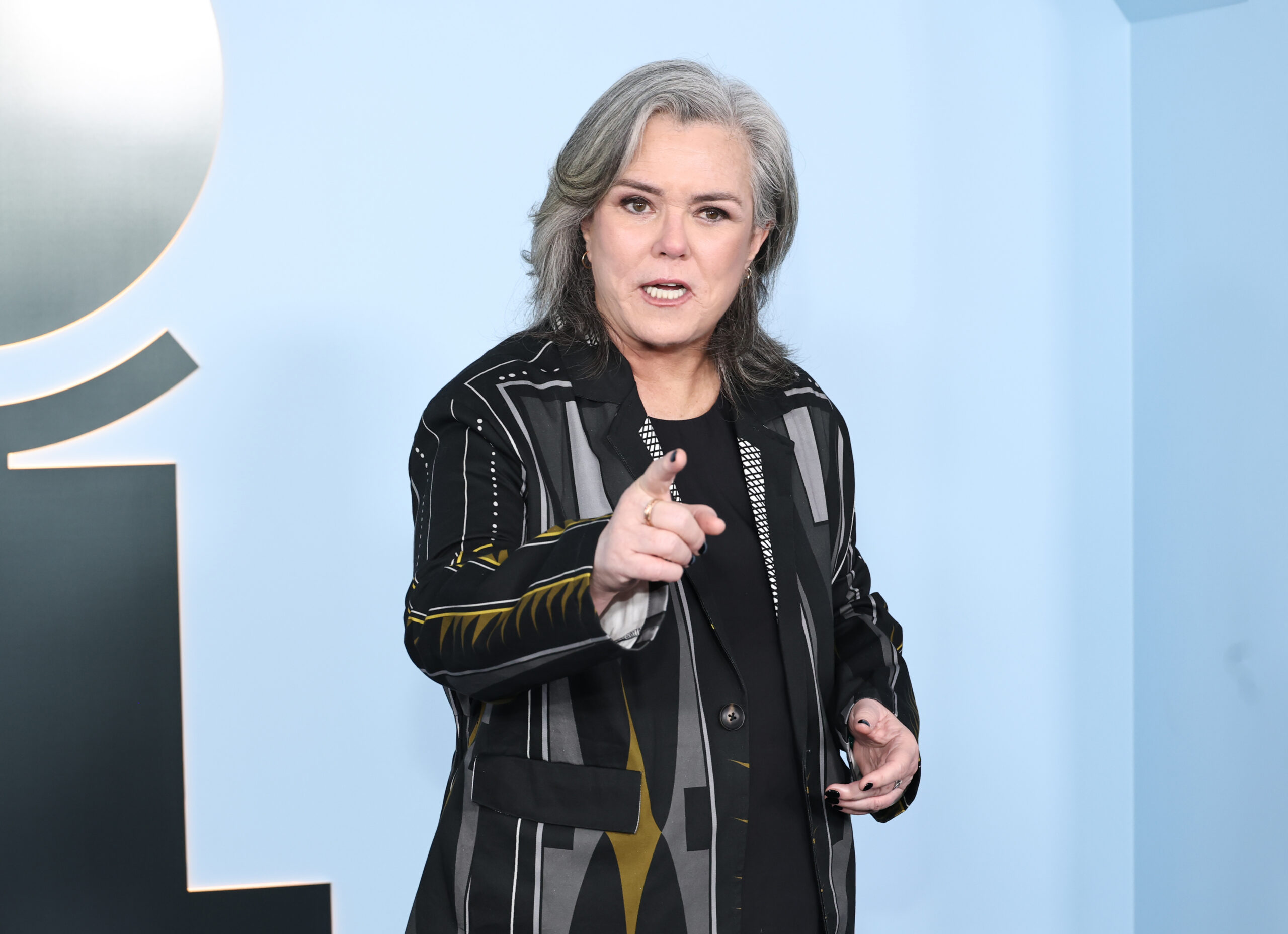
    In June 2026, comedian and former daytime television host Rosie O’Donnell confirmed she would be willing to return as a guest host on ABC’s The View, but revealed network executives have not extended an invitation, noting that “Mommy knows how to hold a grudge.” The admission, made during a candid media exchange, answered a long-standing question regarding her relationship with the daytime juggernaut. O’Donnell remains one of the most consequential figures in the show’s nearly three-decade history. She elevated its cultural footprint. She shattered its polite conversational format. She left abruptly twice.

    Daytime television runs on a specific currency. Conflict generates ratings, but stability sustains advertising revenue. O’Donnell provided historic highs for the former and severe complications for the latter. Her tenures at the iconic table were brief but explosive. They redefined what a daytime talk show could be in the twenty-first century.

    But the story of her absence in 2026 does not begin with her recent comments. It begins twenty years earlier. What looks like a simple scheduling snub is actually the result of two decades of burned bridges, shifting network mandates, and the enduring memory of the Walt Disney Company.

    The 2026 Reality of ABC’s Table

    The conversation regarding O’Donnell’s potential return surfaced in early summer 2026. Speaking to Variety, O’Donnell did not mince words. She acknowledged her willingness to fill a guest-host chair. She immediately followed the admission with a stark reality check. They have not asked. They are not asking.

    Her specific phrasing, “Mommy knows how to hold a grudge”, carried heavy institutional weight. In the ecosystem of The View, “Mommy” can refer to several entities. It can refer to the overarching corporate structure of ABC News, which absorbed the show from the entertainment division to tighten editorial control. It can refer to the surviving power dynamics at the table, specifically the enduring influence of long-time moderator Whoopi Goldberg. It can also refer to the ghost of Barbara Walters, the show’s creator, whose pristine vision of intergenerational women’s dialogue was permanently altered by O’Donnell’s arrival.

    Network television executives rarely operate on emotion. They operate on risk assessment. In 2026, The View enjoys a stabilized roster. Joy Behar, Whoopi Goldberg, Sunny Hostin, Alyssa Farah Griffin, and Ana Navarro provide predictable, manageable daily friction. The network knows exactly what will happen at 11:00 a.m. Eastern Standard Time. Inviting O’Donnell back to the table introduces an uncontrollable variable. O’Donnell does not play by the established rules of segment timing. She does not defer to moderators. She drives the narrative.

    For ABC, the math is simple. A guest-hosting week with O’Donnell would guarantee a massive ratings spike. The ensuing media cycle would dominate the week. But the collateral damage to the current panel’s chemistry, and the risk of an unscripted detonation, outweighs the temporary boost in viewership.

    The First Collision: 2006 to 2007

    To understand the depth of the current grudge, one must examine September 5, 2006. This was the day O’Donnell officially replaced Meredith Vieira as the moderator of The View. Vieira had departed for NBC’s Today show. Barbara Walters and executive producer Bill Geddie needed a heavyweight to anchor the panel. They chose the former “Queen of Nice,” whose own syndicated talk show had dominated the 1990s.

    The impact was immediate. Viewership surged by nearly a million daily viewers. The show averaged 3.4 million watchers during her single season. But the tone shifted drastically. O’Donnell discarded the light celebrity banter that had defined the show’s early years. She leaned heavily into the Iraq War, the Bush administration, and systemic political failures.

    She clashed with conservative co-host Elisabeth Hasselbeck. At first, the debates were compelling television. They represented the polarized state of the American electorate. But the friction quickly turned personal. O’Donnell felt unsupported by the network. She felt the producers were exploiting the tension for ratings without protecting her from the ensuing right-wing media backlash.

    In December 2006, O’Donnell used the platform to criticize Donald Trump’s handling of the Miss USA pageant. She called him a “snake oil salesman.” Trump retaliated with a vicious, years-long public campaign against her. The feud became a defining pop-culture moment of the decade. ABC executives grew uncomfortable. The show was no longer a morning chat. It was a daily combat zone.

    The Split-Screen Climax

    The breaking point arrived on May 23, 2007. It remains one of the most famous broadcasts in the history of daytime television. The topic was the Iraq War. O’Donnell challenged Hasselbeck on the Bush administration’s foreign policy. The argument escalated rapidly. Voices raised. Hands waved.

    Director Mark Gentile made a live, split-second decision. He ordered a split-screen shot. The audience saw O’Donnell and Hasselbeck side-by-side, shouting over one another. Joy Behar tried to intervene. Sherri Shepherd sat in stunned silence. The visual was jarring, unprecedented, and incredibly raw.

    O’Donnell accused Hasselbeck of failing to defend her against conservative commentators who claimed O’Donnell was calling American troops terrorists. Hasselbeck demanded O’Donnell defend her own words. The segment ended in chaos.

    O’Donnell never returned to the table. She had already announced her intention to leave at the end of the season, but the May 23 broadcast accelerated the timeline. She requested an immediate exit. ABC obliged. The first era ended in fire.

    The Ill-Fated Sequel: Season 18

    Time heals some wounds in Hollywood. Ratings heal the rest. By 2014, The View was struggling. Barbara Walters had retired from on-camera duties. The panel was in flux. ABC needed a jolt of energy to revitalize the brand. They made the unexpected decision to bring O’Donnell back for Season 18.

    She returned on September 15, 2014. The panel featured Whoopi Goldberg, Rosie Perez, and Nicolle Wallace. The dynamic was fundamentally flawed from the start. During her first stint, O’Donnell was the moderator. She controlled the pace. She threw to commercial breaks. In 2014, Whoopi Goldberg was the entrenched moderator. O’Donnell was relegated to a co-host seat.

    Two alpha personalities occupied the same real estate. The tension was palpable. Reports of backstage screaming matches leaked to the press. O’Donnell wanted to cover serious news. Goldberg wanted to maintain the show’s established rhythm. The production was chaotic. Network executives intervened constantly.

    The sequel lasted only five months. On February 6, 2015, O’Donnell announced her departure. She cited a combination of severe health concerns, she had suffered a “widow-maker” heart attack in 2012, and immense personal stress stemming from her impending divorce from Michelle Rounds. She stated that the daily stress of live television was detrimental to her physical well-being.

    Her second exit was less explosive than the first, but it cemented a narrative within ABC. O’Donnell was undeniably talented. She was undeniably magnetic. But she was also fundamentally incompatible with the ensemble format of The View.

    The Architecture of a Daytime Grudge

    When O’Donnell mentions a “grudge” in 2026, she is identifying a corporate memory. Television networks are large, slow-moving entities. But the executives who run daytime programming remember the stress of 2007 and 2015.

    Bringing a former host back as a guest is a common television trope. Star Jones returned. Meredith Vieira returned. Even Elisabeth Hasselbeck returned for occasional guest appearances. These returns are treated as homecomings. They are sanitized, nostalgic events.

    An O’Donnell homecoming cannot be sanitized. Her presence demands authenticity. If she sits at the table, she will address the past. She will address Whoopi Goldberg. She will address the current political climate with a ferocity that ABC News, now highly protective of its brand safety under the Disney umbrella, cannot tightly regulate.

    Furthermore, the internal politics of the show dictate the guest list. Whoopi Goldberg holds immense sway over the production. If Goldberg does not want a reunion with O’Donnell, a reunion will not happen. The network will not risk alienating its current anchor to appease a former one.

    The Legacy of the Empty Chair

    Rosie O’Donnell changed The View. Before her arrival in 2006, the show was a successful but relatively safe morning program. O’Donnell proved that daytime audiences had an appetite for visceral, high-stakes political debate. She paved the way for the show’s current iteration, which regularly makes national news headlines for its political commentary.

    Every time Joy Behar delivers a blistering critique of a politician, the echo of O’Donnell’s 2006 tenure is present. Every time the panel engages in a heated, cross-talk debate about foreign policy, the blueprint of the May 2007 split-screen is visible.

    She built the modern architecture of the show. Yet, she is locked out of the building. The 2026 admission is a rare moment of transparent Hollywood reality. Not every feud ends in a televised hug. Not every departure results in a triumphant return.

    The network protected its stability. The producers protected their moderator. The comedian acknowledged the reality. The door remained closed.