Tag: Deterrence

  • President Trump’s Iran ‘Ammo’ Statement – Implications for National Defense

    President Trump’s Iran ‘Ammo’ Statement – Implications for National Defense

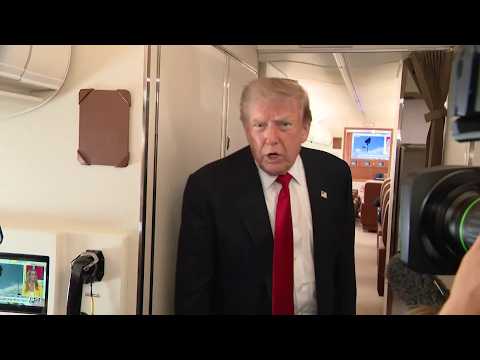
    On July 27, 2026, President Donald Trump publicly declared that the United States possesses “plenty of ammo left” for a potential conflict with Iran. This assertion, delivered via Bloomberg Television, highlights the administration’s continued strong stance on national security and its approach to geopolitical rivals in the Middle East. The statement serves to reinforce perceptions of American military readiness and resolve.

    The President’s remarks arrive amidst ongoing regional tensions. Geopolitical analysts frequently monitor such statements for indications of future policy directions. These declarations can influence international diplomacy and defense strategies.

    The Context of President Trump’s Statement

    President Trump’s comment did not occur in isolation. It emerged within a broader landscape of US-Iran relations. These relations have been marked by periods of heightened tension and strategic maneuvering for decades.

    The United States has maintained a significant military presence in the Middle East. This presence is often cited as a deterrent against regional aggression. It also supports various allied nations.

    The statement itself, “plenty of ammo left,” is a colloquial expression. It conveys a message of substantial military capability. It suggests a readiness to engage if deemed necessary.

    Historical Precedents in US-Iran Relations

    US-Iran relations have a complex history. Key events include the 1979 Iranian Revolution. There was also the Iran hostage crisis.

    Sanctions have been a consistent tool in US policy towards Iran. These economic measures aim to pressure Iran on its nuclear program and regional activities. Various administrations have employed different levels of sanctions.

    Military confrontations, while not direct wars, have occurred. Incidents in the Persian Gulf, for example, have involved naval forces. These encounters underscore the volatile nature of the relationship.

    Previous administrations have also issued strong warnings to Iran. These warnings often involve rhetoric regarding military capacity. Such statements are part of a long-standing diplomatic and strategic playbook.

    Implications for National Defense and Geopolitics

    The President’s statement carries multiple implications. Domestically, it can bolster confidence in the nation’s defense posture. It also signals resolve to allies and adversaries.

    Internationally, the message is received by various actors. Iran, regional powers like Saudi Arabia and Israel, and global players like Russia and China all interpret such statements. Each interprets them through their own strategic lenses.

    Military Readiness and Strategic Deterrence

    The phrase “plenty of ammo left” directly addresses military readiness. It suggests sufficient resources for sustained engagement. This includes munitions, personnel, and logistical support.

    Strategic deterrence relies on a credible threat of force. President Trump’s statement contributes to this deterrence. It aims to dissuade potential adversaries from aggressive actions.

    The Pentagon continuously assesses and maintains military stockpiles. These assessments inform national defense strategies. They ensure the US military can meet various operational demands.

    The US defense budget reflects these priorities. Substantial investments are made in advanced weaponry and training. This ensures the military remains a formidable global force.

    Regional Stability and Alliances

    The statement can impact regional stability in the Middle East. It may reassure US allies who feel threatened by Iran. These allies include Gulf states and Israel.

    Alliances are critical to US foreign policy. Declarations of strength can reinforce these partnerships. They signal a commitment to collective security.

    Conversely, such statements can also escalate tensions. They might provoke counter-rhetoric or actions from Iran. This creates a delicate balance for diplomats.

    International organizations, such as the United Nations, often monitor these exchanges. They advocate for de-escalation and peaceful resolutions. Diplomacy remains a key component.

    Economic and Political Ramifications

    Statements of military readiness can have economic effects. Global oil markets, for instance, are sensitive to Middle East tensions. Prices can fluctuate based on perceived instability.

    Defense industries also react to such pronouncements. Stock prices of defense contractors may see movement. Government contracts for military hardware are significant economic drivers.

    Domestic Political Landscape

    Domestically, President Trump’s statement resonates with specific political demographics. Supporters often view strong national defense as a core tenet. They appreciate assertive leadership on the global stage.

    Opponents may criticize such rhetoric. They might argue it increases the risk of conflict. They may also question the economic costs of potential military action.

    The statement can also serve to rally a political base. It reinforces a particular narrative about American strength. This is especially relevant in an election cycle, though the next presidential election is not until November 2028.

    Public opinion on foreign policy is diverse. Polls often reflect differing views on military intervention. These views are shaped by historical context and current events.

    International Relations and Diplomacy

    Diplomatic channels remain open, even amidst strong rhetoric. The US Department of State continues to engage with international partners. These engagements aim to manage and resolve conflicts.

    The G7 and other multilateral forums discuss regional security. These discussions involve major global powers. They seek consensus on complex geopolitical issues.

    The statement could be interpreted as a bargaining chip. It might be a way to exert pressure in ongoing negotiations. This is a common tactic in high-stakes international diplomacy.

    However, it could also harden positions. It might make diplomatic breakthroughs more challenging. The precise impact depends on subsequent actions and reactions.

    The Role of Media in Disseminating Such Statements

    Bloomberg Television served as the platform for President Trump’s statement. Major news outlets play a crucial role in disseminating such high-profile remarks. They reach broad national and international audiences.

    The phrasing and context provided by media outlets can shape public perception. News analysis often accompanies these reports. This analysis helps interpret the implications of the statements.

    The Impact of Digital and Broadcast Media

    Broadcast media, like Bloomberg Television, offers immediate reach. Live reporting ensures timely delivery of information. This is critical for fast-moving geopolitical developments.

    Digital media and social platforms amplify these messages. Statements can go viral quickly. This leads to widespread discussion and debate.

    The speed of information dissemination means rapid responses are often required. Governments and international bodies must adapt to this pace. They must manage narratives effectively.

    The proliferation of information also presents challenges. Misinformation and disinformation can spread rapidly. This complicates efforts to maintain factual accuracy.

    Future Outlook and Potential Scenarios

    President Trump’s statement sets a tone for future interactions with Iran. It suggests a continued policy of strength. The coming months will reveal the practical implications of this stance.

    Potential scenarios range from continued diplomatic pressure to increased military exercises. The trajectory depends on numerous factors. These include Iranian responses and global events.

    Continued Diplomatic Efforts

    Despite strong rhetoric, diplomatic efforts are likely to persist. Various nations seek a peaceful resolution to tensions. They aim to prevent open conflict.

    Negotiations regarding Iran’s nuclear program remain a key area of focus. International inspectors monitor compliance. Discussions aim to limit proliferation.

    Regional dialogues involving multiple Middle Eastern countries are also important. These dialogues seek to build trust and address shared security concerns. They aim to foster long-term stability.

    The United States often engages in back-channel communications. These discreet exchanges can facilitate dialogue. They can also explore potential compromises.

    Escalation Risks and Preparedness

    The risk of escalation is always present in such volatile regions. Unintended incidents can quickly lead to broader conflicts. Military preparedness is therefore paramount.

    The US military maintains a high state of readiness. This includes intelligence gathering and rapid deployment capabilities. These measures are designed to respond to various threats.

    Contingency planning is a continuous process. Defense strategists develop plans for multiple scenarios. These plans aim to protect US interests and personnel.

    International observers will continue to monitor the situation closely. They will watch for signs of de-escalation or increased tension. The global community has a vested interest in peace.

    President Trump’s statement. A clear message. A declaration of resolve. A reminder of power. A signal to allies. A warning to adversaries. A moment in time.

    Geopolitical maneuvering. National defense. International relations. Global security.

    Washington.

  • President Trump Considers Broader Iranian Strikes Amid Houthi Escalation

    President Trump Considers Broader Iranian Strikes Amid Houthi Escalation

    Former President Trump is reportedly weighing options for wider military attacks against Iran. These considerations come as Houthi forces have intensified their involvement in regional conflicts. The expanded Houthi actions have prompted a strategic reassessment within the former Trump administration regarding stability in the Middle East.

    The potential for direct action against Iran represents a significant shift. Such a move would mark an escalation in U.S. policy towards the Islamic Republic. It underscores the complex and volatile nature of current geopolitical dynamics.

    The Escalating Houthi Involvement

    Houthi forces, based in Yemen, have increasingly played a role in recent Middle East conflicts. Their actions have included missile and drone attacks targeting various regional interests. These operations have been described by U.S. and allied intelligence as destabilizing.

    The Houthis have demonstrated an enhanced capability for long-range strikes. This capacity poses a direct threat to international shipping lanes and regional energy infrastructure. Their involvement is seen as a proxy for Iranian influence in the region.

    Recent Houthi aggressions have prompted a robust response from international coalitions. However, these responses have not fully deterred the group’s activities. The continued Houthi operations are a key factor in the current U.S. policy review.

    Strategic Deliberations in Washington

    Discussions within former President Trump’s national security team have intensified. Senior advisors are examining a range of military options. These options reportedly extend beyond existing retaliatory strikes against Houthi targets.

    The focus has shifted to the source of Houthi capabilities. U.S. intelligence assessments frequently link Houthi armaments and training to Iran. This connection forms the basis for considering direct action against Iranian assets.

    The deliberations involve the Department of Defense, the State Department, and the National Security Council. Former President Trump is receiving regular briefings on the evolving situation. All potential outcomes and regional impacts are being thoroughly analyzed.

    Examining the Scope of Potential Attacks

    The term ‘wider Iranian attacks’ suggests a broad array of targets. These could include Iranian military installations, naval assets, and missile development sites. Cyber warfare capabilities are also likely being considered.

    Any action would aim to degrade Iran’s ability to support proxy groups. It would also seek to limit Iran’s influence in the Middle East. The administration seeks to restore deterrence in a region increasingly marked by volatility.

    Analysts suggest that such strikes would be carefully calibrated. The goal would be to send a strong message without triggering an all-out war. However, the risk of miscalculation remains a significant concern for international observers.

    Historical Context of U.S.-Iran Tensions

    U.S.-Iran relations have been fraught for decades. The 1979 Iranian Revolution severed diplomatic ties. Subsequent events, including the Iran-Contra affair and Iran’s nuclear program, have maintained high tensions.

    President Trump’s first term saw the U.S. withdraw from the Joint Comprehensive Plan of Action (JCPOA) in 2018. This move reimposed sanctions on Iran. It intensified economic pressure and diplomatic isolation.

    The U.S. has consistently accused Iran of state-sponsored terrorism. It has also criticized Iran’s development of ballistic missiles. These long-standing grievances underpin the current policy considerations.

    Previous Military Confrontations and Deterrence

    Direct military confrontations between the U.S. and Iran have been rare but significant. The 1988 Operation Praying Mantis involved U.S. naval forces engaging Iranian naval elements. This action was a response to Iranian mining of international waters.

    In early 2020, the U.S. conducted a drone strike that killed Qasem Soleimani. Soleimani was a prominent Iranian military commander. This event led to immediate retaliatory missile strikes by Iran against U.S. bases in Iraq.

    These past incidents highlight the delicate balance of deterrence. Any new military action would carry the risk of a similar, or greater, retaliatory cycle. The administration is acutely aware of these historical precedents.

    Regional Allies and Their Perspectives

    Key U.S. allies in the Middle East are closely monitoring the situation. Saudi Arabia, Israel, and the United Arab Emirates share concerns about Iranian influence. They have historically advocated for a strong stance against Tehran.

    These allies have also faced direct threats from Iranian-backed groups. This includes missile attacks and maritime disruptions. Their security interests align with U.S. objectives to curb Iranian aggression.

    However, regional partners also express caution about widespread conflict. An all-out war could destabilize the entire region. It could disrupt global oil supplies and trigger humanitarian crises. Balancing these concerns is a critical diplomatic challenge.

    International Reactions and Diplomacy

    The international community is watching developments with apprehension. European powers, signatories to the JCPOA, have consistently pushed for diplomatic solutions. They advocate for de-escalation and dialogue.

    The United Nations has also called for restraint from all parties. Secretary-General António Guterres has urged adherence to international law. He has emphasized the importance of protecting civilian lives.

    Any U.S. military action against Iran would likely draw widespread international condemnation. It could complicate efforts to form a unified front against other global challenges. Diplomacy remains a preferred, though increasingly difficult, path.

    Economic Implications of Escalation

    A wider conflict involving Iran would have significant global economic repercussions. The Strait of Hormuz is a critical chokepoint for oil shipments. Disruptions there could send energy prices soaring worldwide.

    Global financial markets typically react negatively to geopolitical instability. Increased tensions could lead to investor uncertainty. This could trigger sell-offs in equity markets and a flight to safe-haven assets.

    The U.S. economy, while robust, would not be immune. Higher oil prices would impact consumers through increased fuel costs. Businesses would face higher operational expenses. The administration must weigh these economic costs against strategic objectives.

    Cyber Warfare and Hybrid Threats

    Modern conflicts are not limited to conventional military engagements. Cyber warfare is a growing component of state-sponsored aggression. Iran has demonstrated sophisticated cyber capabilities in the past.

    A wider conflict could involve intensified cyberattacks against critical infrastructure. This includes energy grids, financial systems, and communication networks. Such attacks could have far-reaching effects beyond the immediate conflict zone.

    Hybrid threats, combining conventional, unconventional, and cyber tactics, are also a concern. Iran’s use of proxy groups exemplifies this strategy. The U.S. must prepare for a multi-domain response to any escalation.

    The Path Forward for Former President Trump

    President Trump faces a complex decision matrix. He must balance national security interests with the risks of regional destabilization. The desire to deter Iranian aggression confronts the imperative to avoid a protracted war.

    Options range from targeted punitive strikes to a broader campaign aimed at dismantling Iranian capabilities. Each option carries distinct advantages and severe potential drawbacks. The ultimate decision will shape U.S. foreign policy for years.

    The administration’s rhetoric suggests a firm resolve. However, the exact nature of any action remains under wraps. Diplomacy, while challenging, is unlikely to be entirely abandoned, even amidst military considerations.

    The Middle East remains a crucible of geopolitical tension. Houthi actions. Iranian influence. U.S. resolve. A critical juncture.


  • The Shadow War Surfaces – US Military Confirms Renewed Strikes on Iranian Assets

    The Shadow War Surfaces – US Military Confirms Renewed Strikes on Iranian Assets

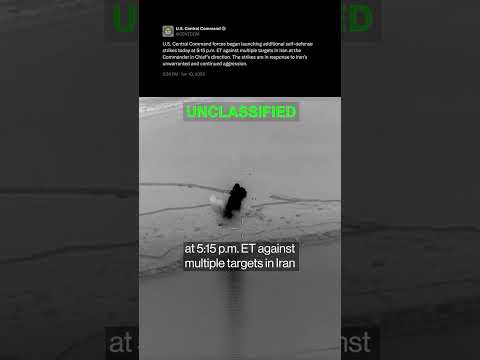
    The United States military has officially confirmed the commencement of renewed strike operations targeting Iranian-backed military infrastructure and Islamic Revolutionary Guard Corps (IRGC) assets across the Middle East. Statements originating from US Central Command (CENTCOM) indicate a definitive shift from passive deterrence to active kinetic engagement. The target matrix includes command and control centers, munitions supply chains, and intelligence facilities operated by the IRGC Quds Force. This marks a definitive escalation in a shadow war that has simmered across the region for decades. The strategic ambiguity is gone. The strikes have begun.

    For years, the conflict between Washington and Tehran played out through intermediaries. Iran utilized a vast network of proxy militias to project power without triggering direct retaliation. The United States relied on economic sanctions and isolated proportional responses. That paradigm has fractured. Recent reports confirm that the Pentagon has authorized sustained military campaigns against facilities directly linked to Iranian military intelligence and logistics. The theater of operations spans multiple sovereign borders. The objective is degradation of capability, not merely sending a message.

    The Architecture of the Shadow War

    To understand the current military strikes, one must understand the architecture of Iranian power projection. The Islamic Revolutionary Guard Corps is not a standard national army. It is a parallel military structure. Within the IRGC exists the Quds Force, an elite division dedicated exclusively to extraterritorial operations. The Quds Force does not typically fight on the front lines. It trains, equips, and directs local militias across the Middle East.

    This proxy network is extensive. In Yemen, the Houthi movement controls the capital, Sanaa, and the western coastline. In Lebanon, Hezbollah maintains an arsenal of over 100,000 rockets. In Iraq and Syria, groups like Kata’ib Hezbollah and Harakat al-Nujaba operate out of fortified desert bases. The Quds Force supplies these groups with advanced weaponry. This includes Shahed-136 loitering munitions, Fateh-110 short-range ballistic missiles, and sophisticated anti-ship cruise missiles.

    The US military is not fighting a localized insurgency. It is fighting a decentralized, well-funded coalition. The renewed strikes target the connective tissue of this coalition. CENTCOM planners focus on the logistics nodes. They target the warehouses where drone components are assembled. They target the command bunkers where IRGC liaison officers coordinate with local militia commanders. Severing the head from the body is impossible in a decentralized network. The strategy is to destroy the nervous system.

    A Geography of Escalation

    The geography of this conflict dictates the strategy. The Middle East is defined by its maritime chokepoints and porous desert borders. US military operations are currently concentrated in three distinct geographic zones. Each zone presents unique tactical challenges and requires specific weapon systems.

    The Red Sea and the Bab el-Mandeb Strait

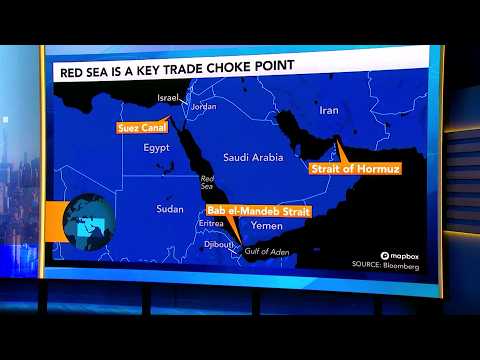
    The Bab el-Mandeb Strait connects the Red Sea to the Gulf of Aden. Nearly 12 percent of global trade passes through this narrow waterway. Iranian-backed Houthi forces in Yemen have repeatedly targeted commercial shipping vessels navigating this corridor. They utilize anti-ship ballistic missiles and explosive surface drones. The US Navy’s response relies heavily on the Carrier Strike Group deployed to the region.

    Vessels like the USS Dwight D. Eisenhower serve as floating sovereign territory. F/A-18 Super Hornets launch daily to intercept incoming Houthi drones. Arleigh Burke-class guided-missile destroyers, such as the USS Gravely and the USS Carney, utilize SM-2 and SM-6 interceptor missiles to shoot down ballistic threats. The renewed strikes involve offensive actions against Houthi launch sites inside Yemen. Radar installations are destroyed before they can paint commercial targets. Missile storage facilities are leveled before the munitions can be mounted on mobile launchers.

    The Mesopotamian Forward Bases

    The second theater of operations encompasses the border regions of Iraq and Syria. US forces maintain a presence at installations like Al Asad Airbase in western Iraq and the Tower 22 logistics hub in Jordan. These bases serve as critical nodes for the ongoing mission to defeat the remnants of the Islamic State. However, they are frequently targeted by Iranian-backed militias using one-way attack drones and 107mm rockets.

    Retaliatory strikes in this zone are precise and punitive. When US service members are threatened, CENTCOM authorizes strikes on militia training camps and weapons depots in eastern Syria and western Iraq. These operations often utilize MQ-9 Reaper drones and F-15E Strike Eagles. The goal is to enforce a red line. The message delivered by high-explosive ordnance is that attacks on American personnel carry an immediate and disproportionate cost.

    The Arsenal of Retaliation

    Modern deterrence requires overwhelming technological superiority. The US military employs a specific arsenal to execute these renewed strikes. The weapon systems chosen reflect the need for precision, standoff distance, and massive payload delivery.

    • B-1B Lancer Strategic Bombers: Flown directly from bases in the continental United States, such as Dyess Air Force Base in Texas. These supersonic bombers can carry massive payloads of precision-guided munitions. Their deployment signals global reach. They can strike dozens of targets simultaneously across a wide geographic area.
    • Tomahawk Land Attack Missiles (TLAMs): Fired from naval vessels and submarines stationed in the Red Sea and the Mediterranean. Tomahawks provide a standoff capability. They can travel over 1,000 miles at low altitudes, evading radar detection before striking high-value targets with pinpoint accuracy.
    • AGM-114 Hellfire Missiles: Deployed from MQ-9 Reaper drones. These missiles are used for targeted strikes against specific vehicles or individuals. The R9X variant, known as the “Ninja bomb,” uses deploying blades instead of an explosive warhead to eliminate targets with zero collateral damage.
    • Joint Direct Attack Munitions (JDAMs): GPS-guided tail kits attached to unguided bombs. Dropped by fighter aircraft, JDAMs turn “dumb” bombs into precision weapons capable of penetrating fortified bunkers and collapsing underground storage facilities.

    The application of this arsenal is methodical. Target sets are developed over months by intelligence analysts at the Pentagon and CENTCOM headquarters in Tampa, Florida. When the order is given, the execution is rapid. A strike package can destroy a dozen facilities in a matter of minutes.

    Historical Echoes in the Persian Gulf

    The current escalation is not without precedent. The waters of the Persian Gulf and the deserts of the Middle East hold a long memory of US-Iran military engagements. Understanding the present requires acknowledging the past.

    In April 1988, the US Navy launched Operation Praying Mantis. This was a direct response to the Iranian mining of the Persian Gulf, which had severely damaged the USS Samuel B. Roberts. In a single day of combat, US forces destroyed two Iranian oil platforms used for military surveillance and sank multiple Iranian naval vessels. It was the largest surface naval engagement for the United States since World War II. Operation Praying Mantis established a clear boundary. It demonstrated the US willingness to use overwhelming force to protect freedom of navigation.

    More recently, the January 2020 drone strike that killed Qasem Soleimani fundamentally altered the geopolitical landscape. Soleimani was the architect of the IRGC Quds Force. He was the mastermind behind the proxy network. His elimination outside Baghdad International Airport was a shock to the Iranian system. The subsequent Iranian ballistic missile attack on Al Asad Airbase resulted in traumatic brain injuries for over 100 US service members, though no fatalities occurred. The current strikes operate in the shadow of these events. Both sides understand the threshold for open war. Both sides continuously test the limits of that threshold.

    The Economics of Asymmetric Warfare

    Military engagements are ultimately exercises in economics. The financial cost of the renewed strikes is staggering. The asymmetry of the conflict places a heavy financial burden on the defending force.

    “Deterrence is not just about firepower. It is about the sustainable application of capital to enforce political will.”

    Consider the mathematics of air defense in the Red Sea. An Iranian-designed Shahed-136 drone costs approximately $20,000 to manufacture. It is cheap, mass-produced, and expendable. To shoot down that drone, a US Navy destroyer often fires a Standard Missile-2 (SM-2). The cost of a single SM-2 interceptor is roughly $2.1 million. The cost exchange ratio is heavily skewed in favor of the proxy militias.

    This economic reality forces a shift in strategy. The US military cannot simply play defense indefinitely. Intercepting cheap drones with expensive missiles is financially unsustainable. Therefore, the strategy must pivot to offense. It is far more cost-effective to drop a $30,000 JDAM on a warehouse containing fifty drones before they are launched. The renewed strikes on Iranian assets are driven as much by economic necessity as they are by tactical deterrence. Destroy the bow, and you do not have to worry about the arrows.

    The Geopolitical Chessboard

    The strikes do not occur in a vacuum. They ripple across global markets and diplomatic channels. The price of Brent crude oil fluctuates with every reported explosion in the Red Sea. Shipping conglomerates reroute vessels around the Cape of Good Hope, adding weeks to transit times and millions in fuel costs. The global supply chain is intimately tied to the security of Middle Eastern waterways.

    Diplomatically, the United States must navigate a complex web of alliances. Arab nations in the Gulf, such as Saudi Arabia and the United Arab Emirates, view Iranian expansionism as an existential threat. However, they also fear a regional war that could devastate their economies. They support US deterrence efforts quietly, providing airspace and intelligence, but often distance themselves publicly to avoid Iranian retaliation.

    The Pentagon must calibrate its strikes precisely. Too weak, and the deterrence fails. The proxy attacks multiply. Too strong, and the conflict spirals into a regional conflagration involving mainland Iran. The current operational tempo reflects this delicate balance. It is a slow, methodical degradation of enemy capabilities. It is the application of friction to the Iranian war machine.

    The military reports confirm the reality on the ground. The passive posture has ended. The active degradation has begun. The assets are in place. The targets are locked. The orders are executed.

    Radars sweep. Missiles launch. Targets burn. Deterrence.