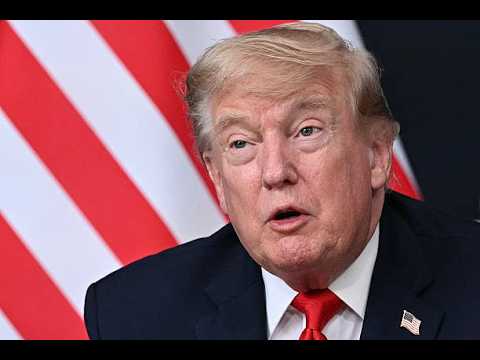
President Donald Trump’s administration is committed to preventing an ‘all-out war’ with Iran. This strategic directive emphasizes de-escalation and the pursuit of non-military solutions to ongoing tensions. The approach reflects a deliberate effort to manage complex geopolitical challenges in the Middle East without resorting to widespread conflict, as confirmed by Bloomberg Television’s Chief International Affairs Correspondent, Jennifer Cook, on July 11, 2026.
Cook’s report provides crucial insight into the White House’s foreign policy objectives concerning Iran. It highlights a preference for strategic containment and economic pressure over direct military engagement. This nuanced stance is central to understanding the United States’ role in a volatile region and its long-term goals for stability.
The White House’s De-escalation Mandate
The Trump administration’s policy towards Iran has been characterized by a robust ‘maximum pressure’ campaign, primarily through economic sanctions. However, the explicit mandate to avoid ‘all-out war’ serves as a critical boundary to these pressures. This boundary signals a strategic calculation to prevent unintended escalation.
Jennifer Cook, a respected voice in international affairs reporting, articulated on Bloomberg Television that the President’s team prioritizes diplomatic and economic tools. This focus is aimed at curbing Iran’s nuclear ambitions and regional influence without triggering a broader military confrontation. The communication of this stance is vital for allies and adversaries alike, shaping expectations for future interactions.
The United States maintains a significant military presence across the Middle East. This presence is intended for deterrence, counter-terrorism operations, and safeguarding national interests. Despite this capacity, the administration’s emphasis remains firmly on de-escalation, underscoring a strategic patience in a highly sensitive region.
Economic Sanctions as a Primary Lever
The Trump administration has systematically imposed and expanded sanctions against Iran. These measures target critical sectors of the Iranian economy, including oil exports, banking, shipping, and its advanced missile program. The overarching goal of these sanctions is to compel Iran to renegotiate a more comprehensive agreement on its nuclear program and regional activities.
These economic restrictions are designed to limit Iran’s financial resources, thereby reducing its capacity to fund proxy groups and destabilize neighboring countries. The administration believes that sustained economic pressure, rather than military action, offers the most effective path to altering Iran’s behavior on the international stage.
The impact of these sanctions has been significant, affecting Iran’s economy and its ability to conduct international trade. This pressure campaign, however, is balanced with the stated intent to avoid military conflict, suggesting a strategy that seeks to exhaust non-military options before considering any escalation.
Diplomatic Pathways and International Engagement
Despite heightened tensions, diplomatic channels between the United States and Iran, often indirect, remain active. Various international actors and third-party nations frequently engage in mediation efforts to facilitate dialogue and prevent misunderstandings. These efforts underscore a global desire for a peaceful resolution.
President Trump has consistently stated his willingness to meet with Iranian leaders, under specific conditions, to discuss a new nuclear deal. This openness to direct negotiation, even amid strong rhetoric, signals a potential off-ramp for the current standoff. The administration seeks a deal that addresses not only nuclear proliferation but also ballistic missile development and regional proxy activities.
European allies, including France, Germany, and the United Kingdom, have played a crucial role in advocating for diplomatic solutions. They have often acted as intermediaries, seeking to preserve elements of the Joint Comprehensive Plan of Action (JCPOA) while encouraging both Washington and Tehran to engage in constructive talks. Their collective efforts highlight the international community’s preference for negotiation over confrontation.
The Role of Regional Stakeholders
The geopolitical landscape of the Middle East is complex, with numerous regional powers holding vested interests. Countries such as Saudi Arabia, Israel, and the United Arab Emirates are key stakeholders who share many of the United States’ concerns regarding Iranian influence. Their security perspectives heavily influence regional dynamics.
These nations often support robust measures to counter Iran’s actions, including economic sanctions. However, they also recognize the severe implications of an ‘all-out war’ for regional stability and their own national security. Their engagement with the U.S. often involves discussions on balancing pressure with de-escalation strategies.
Iran’s network of regional alliances and proxy groups, including Hezbollah in Lebanon and various militias in Iraq and Yemen, further complicates the security environment. Managing these interconnected conflicts requires a multi-faceted approach that integrates diplomatic, economic, and security considerations, all while maintaining the core objective of avoiding direct military conflict.
Historical Context of U.S.-Iran Relations
U.S. policy towards Iran has undergone significant shifts over several decades, each administration bringing its own strategic framework. Understanding this historical evolution is essential for contextualizing the current approach and the emphasis on avoiding ‘all-out war.’
The Obama administration, for example, negotiated the Joint Comprehensive Plan of Action (JCPOA) in 2015. This multilateral agreement aimed to constrain Iran’s nuclear program in exchange for sanctions relief. This represented a diplomatic pivot after years of strained relations and increasing nuclear proliferation concerns.
In 2018, President Trump withdrew the United States from the JCPOA, arguing it was insufficient to address Iran’s broader malign activities. This withdrawal marked the beginning of the ‘maximum pressure’ campaign, which sought to impose more stringent economic penalties and force Iran to the negotiating table for a more comprehensive agreement. The current de-escalation focus is a refinement of this strategy, acknowledging the need to manage the risks of escalation inherent in such a pressure campaign.
Continuity of Core Objectives
Despite significant changes in tactics and approaches across administrations, a fundamental objective of U.S. policy towards Iran has remained constant: preventing Iran from acquiring nuclear weapons. This goal is a bipartisan consensus, driving both diplomatic engagement and punitive measures.
The current administration’s emphasis on avoiding ‘all-out war’ can be seen as a pragmatic adaptation within this long-standing objective. It reflects a recognition that while pressure is necessary, uncontrolled military conflict would carry unacceptable costs, both regionally and globally. This strategy seeks to achieve policy goals through means that do not involve direct military confrontation.
The shifting geopolitical landscape, including the rise of new regional alliances and the ongoing evolution of internal Iranian politics, continuously informs and challenges U.S. policy. Adaptability and a clear understanding of red lines, such as preventing widespread military conflict, are critical components of navigating this complex environment.
Global Implications of the De-escalation Strategy
The potential for an ‘all-out war’ in the Middle East carries severe global implications. Such a conflict could disrupt international oil markets, trigger massive humanitarian crises, and empower extremist organizations, leading to widespread instability far beyond the region’s borders.
The Trump administration’s strategic focus on de-escalation is therefore not only a regional imperative but also a global one. It aims to mitigate these risks by carefully calibrating pressure and maintaining avenues for diplomacy. This approach signals to the international community a commitment to responsible statecraft.
Global financial markets are particularly sensitive to tensions in the Persian Gulf. Any perceived threat to shipping lanes, especially the Strait of Hormuz, can lead to immediate spikes in oil prices and broader economic uncertainty. The administration’s de-escalation stance helps to stabilize these concerns and maintain predictable global trade routes.
International Cooperation in Managing Tensions
International organizations, including the United Nations, consistently advocate for restraint and diplomatic solutions in the Middle East. The UN Secretary-General and various special envoys frequently engage with all parties, urging de-escalation and adherence to international law. These efforts provide a crucial framework for multilateral engagement.
Beyond European allies, other major global powers like Russia and China also maintain significant interests in the Middle East and in relations with Iran. While their policies often diverge from those of the United States, there is a shared interest in preventing a large-scale military conflict. This common ground, though sometimes fragile, creates opportunities for broader international cooperation in managing regional tensions.
The sustained international focus on de-escalation underscores the profound risks associated with military confrontation. It highlights a collective understanding that while challenges with Iran are real, the path to resolution must prioritize stability and peace over the unpredictable consequences of war.
Nations watch. Markets react. Diplomacy continues.
Peace hangs.