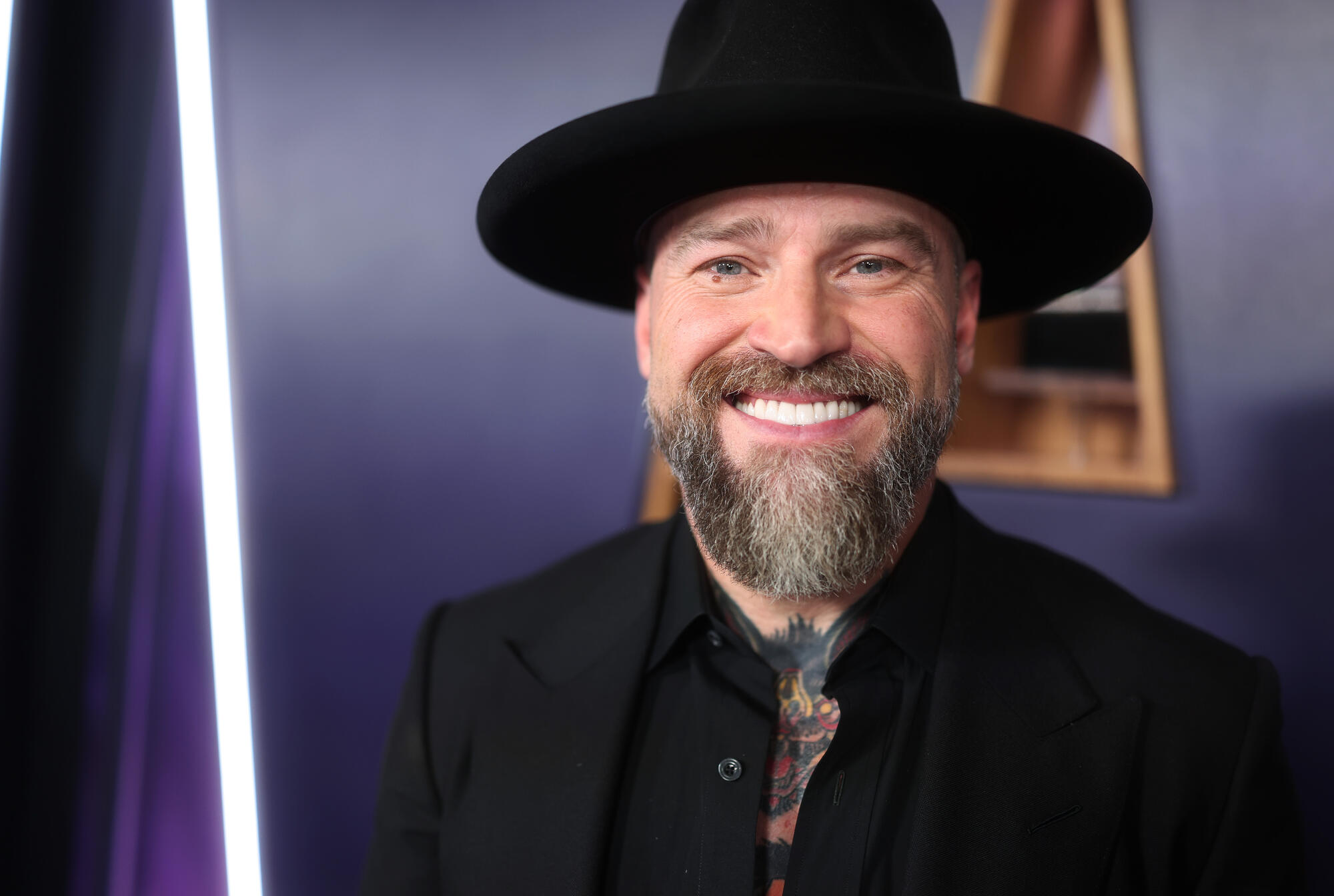
In early 2026, country music artist Zac Brown defended his decision to perform the National Anthem at a Ultimate Fighting Championship (UFC) event hosted at Donald Trump’s White House, stating the performance was an act of patriotism rather than a political endorsement. Addressing the immediate public backlash, the three-time Grammy winner delivered a blunt dismissal of the criticism, telling reporters that his presence was about honoring the country. “This is patriotism, not politics for me,” Brown stated. “F, all the division.” The statement highlighted a growing fracture in American entertainment, where public appearances are increasingly scrutinized as ideological declarations.
The controversy began the moment the performance was announced. The intersection of a major combat sports franchise, a highly polarizing political figure, and a mainstream country music star created an immediate flashpoint on social media. Fans demanded clarity. Critics demanded boycotts. Brown chose to deliver a performance, followed by a sharply worded defense.
The incident underscores a modern cultural reality. The neutral ground in American entertainment has largely vanished. Every action is interpreted through a partisan lens. For Brown, the decision to sing “The Star-Spangled Banner” was a continuation of his long-standing support for American troops and national symbols. For his detractors, stepping onto the White House lawn during the Trump administration was an implicit endorsement of the 47th President.
The Intersection of the Octagon and the Oval Office
To understand the weight of the event, one must look at the unique relationship between the UFC and Donald Trump. The alliance dates back to 2001. When Dana White and the Fertitta brothers purchased the struggling mixed martial arts promotion, many states had banned the sport. Venues refused to host the fights. Donald Trump offered the Trump Taj Mahal in Atlantic City for UFC 30. That early lifeline forged a loyalty that Dana White has publicly acknowledged for decades.
White spoke at the Republican National Convention in 2016. He returned to the podium in 2020. He did so again in 2024. The UFC audience heavily overlaps with a demographic that values traditional masculinity, anti-establishment rhetoric, and visceral entertainment. Bringing the Octagon to the White House in 2026 was the ultimate culmination of this decades-long partnership.
The visual was unprecedented. The chain-link cage set against the neoclassical columns of the executive mansion. The political elite mixing with cornermen and mixed martial artists. Into this highly charged atmosphere stepped Zac Brown. He was not there to fight. He was not there to legislate. He was there to sing.
Brown stood before the microphone. The crowd quieted. He delivered the anthem. He did not wear a campaign hat. He did not make a speech. He performed the song and stepped away. But in the modern digital ecosystem, the context of the performance overshadowed the notes themselves.
The Digital Backlash and the Demand for Purity
The internet reaction was instantaneous. Platforms like X and Instagram flooded with commentary before the final note faded. One faction of fans praised Brown for his patriotism and his willingness to perform in a space associated with conservative politics. Another faction accused him of normalizing a controversial administration and betraying fans who opposed the president.
This is the tightrope modern celebrities walk. The public demands ideological purity. A musician cannot simply be a musician. They are expected to be a proxy for the political beliefs of their audience. When a celebrity steps out of the expected alignment, the punishment is swift.
Country music has a particularly volatile history with this dynamic. In 2003, Natalie Maines of the Dixie Chicks criticized President George W. Bush from a stage in London. The backlash nearly destroyed the band’s career. Country radio pulled their songs. Fans crushed their CDs with bulldozers. Conversely, artists like Toby Keith leaned heavily into political alignment, performing at Donald Trump’s inauguration in 2017 and cementing a specific ideological brand.
Brown attempted to reject the binary entirely. He refused to let the venue dictate his intent. He refused to let the critics define his patriotism.
“Patriotism, Not Politics”
Brown’s defense was rooted in a specific definition of patriotism, one that separates the nation from the administration currently running it. “This is patriotism, not politics for me,” he stated. The distinction is crucial to understanding his worldview.
The Zac Brown Band, formed in Atlanta, Georgia in 2002, has built a massive following on a foundation of Americana. Their 2008 breakout hit, “Chicken Fried,” explicitly referenced thanking God for the military and those who gave their lives for freedom. This was not a new aesthetic adopted for a White House event. It is the core DNA of the band.
Beyond the lyrics, Brown has heavily invested in veterans’ causes. He founded Camp Southern Ground in Fayetteville, Georgia. The 400-acre facility provides programs for veterans transitioning back to civilian life, focusing on mental health and workforce readiness. Brown has participated in numerous USO tours, performing for active-duty service members in combat zones.
For Brown, singing the National Anthem is an extension of this work. It is an acknowledgment of the military, the flag, and the country as enduring concepts. He views the song as a unifying symbol that transcends whoever happens to occupy the Oval Office at the time. The critics, however, argued that the context of the UFC White House event made the performance inherently political, regardless of Brown’s internal motivations.
The Weaponization of the Anthem
The National Anthem itself has become a cultural battleground. Written by Francis Scott Key in 1814, “The Star-Spangled Banner” was first played at a major sporting event during the 1918 World Series. It became a staple of American sports during World War II. For decades, it was a moment of obligatory, quiet respect.
That changed dramatically in the 21st century. Whitney Houston’s iconic performance at Super Bowl XXV in 1991, set against the backdrop of the Gulf War, infused the anthem with modern pop-cultural power. Decades later, Colin Kaepernick’s decision to kneel during the anthem in 2016 to protest police brutality transformed the song into a litmus test for political allegiance.
By 2026, standing for, kneeling during, or choosing to perform the anthem at all carried immense political weight. When Brown agreed to perform at an event hosted by Donald Trump, he was stepping into a highly combustible arena. He knew the risks. He knew the likely reaction. He performed anyway.
His statement, “F, all the division,” was a rejection of the idea that a citizen must align with a politician to love their country. It was an assertion of independence. It was a refusal to cede national symbols to partisan ownership.
The Echo Chamber of Celebrity Politics
The controversy surrounding Zac Brown highlights a broader exhaustion with the politicization of daily life. For a significant portion of the American public, every consumption choice has become a moral declaration. The beer you drink. The truck you drive. The music you stream. The fights you watch.
The media ecosystem accelerates this dynamic. Outrage generates engagement. Nuance does not. When Brown performed, the algorithms immediately surfaced the most extreme reactions. The story was framed as a betrayal or a triumph, depending on the network covering it.
Brown’s refusal to apologize frustrated those looking for a retraction. His refusal to explicitly endorse the administration frustrated those looking for a champion. He remained stubbornly in the middle, anchored by his own definition of what the performance meant.
The Long Game of the Zac Brown Band
Historically, artists who survive these cultural flashpoints do so by maintaining consistency. Brown’s track record of supporting veterans and celebrating American life provides a shield against accusations of political opportunism. He did not pivot to patriotism for a headline. He simply continued doing what he had done for two decades.
The music industry watched the fallout closely. In an era where public relations teams carefully script every celebrity interaction, Brown’s raw, profane dismissal of the division was an anomaly. It was authentic. It was unpolished. It was exactly what his core fan base expected.
The UFC event eventually ended. The Octagon was dismantled. The White House lawn was cleared. The news cycle moved on to the next outrage. But the moment remained logged in the cultural record. A snapshot of an era where singing a song required a defense strategy.
The critics typed. The fans argued. The politicians watched. Brown packed his guitar. Unapologetic.