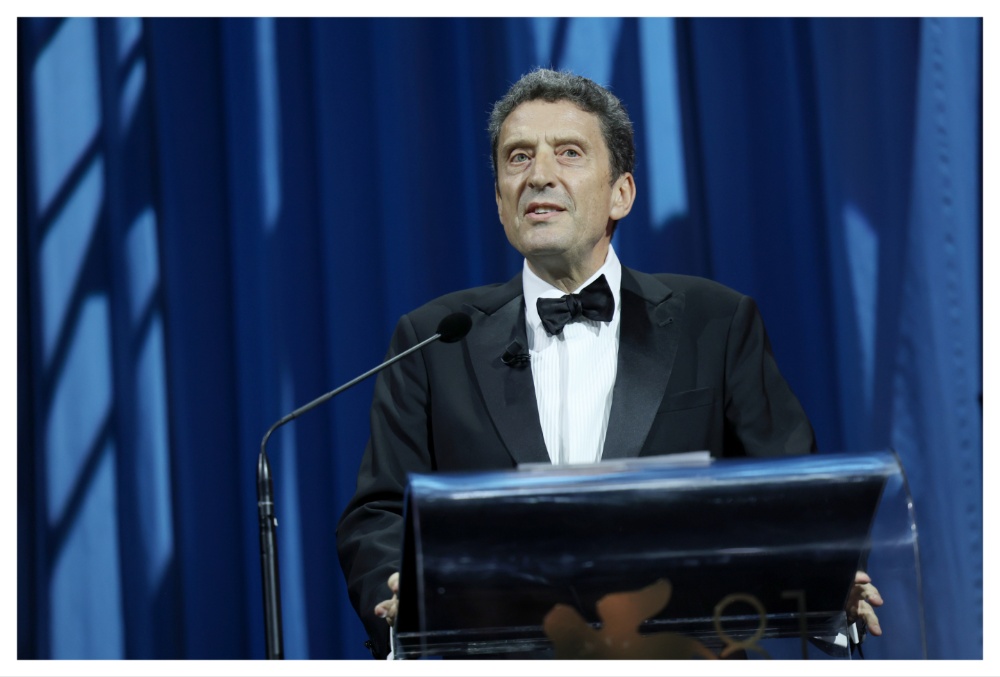
A Biennale chief expressed strong disapproval of the European Union’s decision to withdraw funding from an art exhibition due to Russia’s participation. The chief’s comments, delivered during a film festival press conference, articulated a sense of abandonment and frustration regarding the EU’s stance on cultural engagement amidst geopolitical tensions. This incident underscores the complex challenges faced by international cultural institutions in balancing artistic freedom with political considerations.
The withdrawal of financial support by the EU has significant implications for the exhibition’s operational capacity and future programming. It brings to the forefront the debate over whether cultural events should remain insulated from political conflicts or if they bear a responsibility to reflect prevailing international sentiments.
The European Union’s Stance on Russian Cultural Presence
The European Union has maintained a firm stance against Russia following the 2022 invasion of Ukraine. This position has led to widespread sanctions across various sectors, including finance, trade, and cultural exchange. The EU’s policy aims to isolate Russia on the international stage and pressure its government to cease military actions.
Cultural institutions receiving EU funding are often expected to align with these broader political objectives. The decision to withdraw funding from the Biennale over Russia’s presence reflects this overarching policy. It signals a clear message that association with official Russian entities, even in cultural contexts, may lead to financial repercussions.
This approach has been a point of contention within the cultural community. Some argue for the importance of maintaining cultural bridges, even during times of conflict, believing art can foster understanding. Others contend that engagement with state-sponsored Russian culture legitimizes the current regime.
The Biennale’s Position and Reaction
The Biennale chief articulated a different perspective. The chief emphasized the institution’s role in promoting artistic dialogue and cultural exchange without political censorship. The statement, ‘They are abandoning us,’ conveyed a feeling of betrayal and a lack of support for the Biennale’s mission.
The chief’s comments suggest a belief that cultural events should transcend political divides. Such institutions often strive to be platforms for diverse voices and perspectives, including those from nations in geopolitical conflict. The withdrawal of funds is seen as undermining this fundamental principle.
This reaction highlights the tension between the EU’s political objectives and the perceived autonomy of cultural organizations. The Biennale, as an international event, aims to bring together artists and audiences from around the globe, regardless of their national affiliations.
Impact on the Art Exhibition
The immediate impact of the EU’s funding withdrawal is financial. Cultural events, especially large-scale international exhibitions like the Biennale, rely heavily on diverse funding streams. EU grants often cover significant operational costs, including logistics, artist support, and public programming.
Loss of this funding can lead to reduced scope, cancellation of specific projects, or even the overall viability of the exhibition. It forces organizers to seek alternative financial support, which may not be readily available or sufficient to cover the shortfall.
Beyond the financial aspect, there is a reputational impact. Such controversies can overshadow the artistic content of the exhibition, shifting public attention from the art itself to the political dispute. This can detract from the event’s primary purpose of showcasing contemporary art.
Logistical Challenges and Artistic Freedom
The logistical challenges posed by a sudden funding cut are substantial. Contracts with artists, venues, and service providers may need to be renegotiated or terminated. This can create a ripple effect, impacting numerous individuals and organizations involved in the exhibition.
Furthermore, concerns arise about artistic freedom. If funding is contingent on political alignment, it could lead to self-censorship or a reluctance to include artists or themes deemed politically sensitive. This compromises the integrity and independence of artistic expression, a core value for many cultural institutions.
The incident raises questions about the future of international cultural collaboration in a fragmented geopolitical landscape. It challenges cultural leaders to find new models of funding and engagement that protect artistic autonomy while navigating complex global politics.
Cultural Diplomacy and Its Evolving Role
Cultural diplomacy traditionally serves as a tool for fostering understanding and building bridges between nations. It often operates on the premise that shared cultural experiences can transcend political differences and promote dialogue.
However, the current geopolitical climate has complicated this role. Many governments, including the EU, now view cultural engagement as an extension of their foreign policy. This means that cultural events and exchanges are increasingly scrutinized for their potential to align with or undermine national interests.
The Biennale incident exemplifies this shift. What might once have been considered a purely cultural decision, to include artists from a particular nation, is now imbued with significant political meaning. This makes the work of cultural institutions more challenging and politically charged.
The Dilemma of Engagement vs. Isolation
The dilemma faced by cultural organizations is stark: should they engage with artists and institutions from politically contentious nations to maintain cultural dialogue, or should they join in the isolation efforts to align with broader political goals? Both choices carry significant consequences.
Engagement can be seen as providing a platform or legitimacy to regimes deemed problematic. Isolation, however, risks cutting off avenues for independent voices and potentially alienating populations who may not support their government’s actions. It also deprives audiences of diverse artistic perspectives.
The Biennale chief’s frustration stems from this very dilemma. The chief perceives the EU’s action as forcing a choice that undermines the institution’s fundamental mission of universal cultural exchange.
Historical Precedents of Political Influence on Art
The intersection of politics and art is not new. Throughout history, art has been used for propaganda, protest, and diplomacy. Governments have often funded, censored, or influenced artistic production to serve their agendas.
During the Cold War, cultural exchange programs were a significant battleground for ideological influence. Both the United States and the Soviet Union used art, music, and film to project their respective values and systems.
More recently, boycotts and protests against cultural events involving certain nations have become more common. These actions reflect a growing belief that cultural activities cannot, and should not, be entirely separate from political ethics and human rights concerns.
The Role of International Film Festivals
The press conference where the Biennale chief made the statements was held during a film festival. Film festivals themselves are often sites of cultural diplomacy and political discourse. They provide platforms for filmmakers to address social and political issues, often sparking international debate.
The choice of this venue for the chief’s remarks highlights the interconnectedness of various cultural sectors. It underscores how major cultural events, whether art exhibitions or film festivals, are increasingly becoming arenas where geopolitical tensions play out.
The presence of such a high-profile figure from another major cultural institution at a film festival to voice these concerns indicates a broader solidarity within the arts community regarding these challenges.
Future of EU Cultural Funding Policies
This incident may prompt a reevaluation of the European Union’s cultural funding policies. The EU’s commitment to cultural diversity and artistic freedom is often stated, but these principles are tested when confronted with geopolitical realities.
There may be calls for clearer guidelines on how cultural institutions should navigate relationships with countries under sanctions. Alternatively, some may advocate for a more nuanced approach that allows for cultural engagement even when political relations are strained.
The outcome of this debate will shape the landscape of European cultural funding for years to come. It will determine the degree of autonomy cultural institutions can expect and the extent to which their programming must align with the EU’s foreign policy objectives.
Challenges for Cultural Institutions
Cultural institutions face increasing pressure to demonstrate social and political responsibility. Donors, audiences, and governments often expect them to take stands on contemporary issues, including human rights, environmental concerns, and international conflicts.
This pressure can be challenging for institutions whose primary mission is artistic presentation and cultural exchange. They must navigate a complex web of expectations from various stakeholders, often with conflicting demands.
The Biennale chief’s lament about being ‘abandoned’ encapsulates the precarious position these organizations find themselves in. They require financial support to operate, but that support increasingly comes with political conditions that can compromise their independence.
The Broader Debate: Art, Politics, and Morality
The core of this controversy lies in the enduring debate about the relationship between art, politics, and morality. Can art exist in a morally neutral space, or is it inherently intertwined with the values and actions of its creators and patrons?
For many, art has a moral imperative, and engaging with entities deemed morally reprehensible is unacceptable. For others, art’s power lies in its ability to transcend such judgments, offering a universal language that can bridge divides.
The EU’s decision reflects the former perspective, prioritizing moral and political alignment over unrestricted cultural exchange. The Biennale chief’s reaction reflects the latter, advocating for the autonomy and universality of art.
This ongoing philosophical debate has practical consequences for funding, programming, and the very definition of cultural institutions in the 21st century. It forces a reckoning with how societies choose to engage with art in times of global tension.
Diplomats gathered. Artists gathered. Policy-makers gathered. Debate.