Tag: Content Creation

  • Seth Rogen and Jonah Hill’s Venice Filming Interrupted by YouTuber

    Seth Rogen and Jonah Hill’s Venice Filming Interrupted by YouTuber

    Actors Seth Rogen and Jonah Hill recently experienced an interruption during a film shoot in Venice, California. A YouTuber approached their set, initiating an interaction that was filmed and later shared across various online platforms. This event brought an unplanned element to the production day for the prominent Hollywood figures.

    The incident occurred as Rogen and Hill were engaged in their professional duties. The presence of a content creator with recording equipment is a common occurrence in public spaces where celebrities are present.

    The Unscripted Encounter in Venice

    The specific details of the film project Rogen and Hill were working on in Venice have not been fully disclosed. Production crews often operate in public areas, which inherently creates opportunities for public observation and interaction.

    Venice, with its vibrant street life and tourist attractions, is a frequent location for film and television shoots. The area draws significant foot traffic, making it a visible backdrop for any production.

    The YouTuber, whose identity was not immediately confirmed by official sources, initiated contact with the actors. Such encounters can range from brief greetings to more extended conversations, depending on the circumstances and the willingness of the individuals involved.

    The Rise of Public Filming

    The proliferation of smartphones and portable recording devices has transformed public spaces into potential content creation zones. Every individual with a device can become a reporter or a documentarian.

    This shift has introduced new considerations for public figures and film productions. What was once a relatively private professional endeavor can now become a public spectacle in real-time.

    Film sets often employ security measures to manage crowds and maintain the integrity of the production. However, these measures do not always prevent all interactions, especially in highly accessible public locations.

    Celebrity Responses to Unplanned Interactions

    Public figures like Seth Rogen and Jonah Hill navigate a complex landscape of public perception and personal privacy. Their responses to unplanned interactions can vary widely.

    Some celebrities embrace these moments, viewing them as opportunities to connect with their audience. Others prefer to maintain a professional distance, focusing on the work at hand.

    The manner in which Rogen and Hill handled the interruption was observed by those present and later by viewers of the circulated video. Their reactions contribute to their public image and the narrative surrounding the event.

    The Impact on Production

    Film productions operate on tight schedules and budgets. Unplanned interruptions can cause delays, requiring adjustments to the filming plan.

    Directors and production staff aim to maintain a controlled environment to capture the necessary footage. External factors, such as an unexpected public interaction, can disrupt this control.

    The specific impact on the Rogen and Hill project in Venice was not detailed in initial reports. However, any deviation from the schedule can have ripple effects on subsequent filming days.

    The Role of YouTubers in Public Discourse

    YouTubers have become significant figures in contemporary media, often bridging the gap between traditional media and direct audience engagement. Their content can shape public opinion and disseminate information rapidly.

    The interaction in Venice is an example of how independent content creators can directly engage with established public figures. This dynamic creates new forms of media spectacle.

    The motivation behind such an approach can vary. Some YouTubers seek to create viral content, while others may genuinely wish to interact with individuals they admire.

    Viral Content and Its Aftermath

    Videos of celebrity encounters, particularly those that are spontaneous or unexpected, often gain significant traction online. They can quickly become trending topics across social media platforms.

    The video featuring Rogen and Hill’s interaction with the YouTuber was no exception. Its circulation led to discussions and commentary from a wide audience.

    The aftermath of such a viral event can include increased scrutiny on both the celebrities and the content creator. Public reactions can be diverse, ranging from amusement to criticism.

    Privacy Concerns in Public Spaces

    The incident in Venice also raises broader questions about privacy in public spaces, especially for individuals who are constantly in the public eye. The line between public interest and personal space becomes increasingly blurred.

    For actors on a film set, their work is inherently public-facing, yet they also require a degree of concentration and control over their environment. The balance is delicate.

    Legal and ethical considerations surrounding filming individuals in public without their explicit consent are ongoing topics of debate. Different jurisdictions have varying laws on the matter.

    The Evolution of Paparazzi and Content Creators

    The role once primarily filled by paparazzi has expanded to include independent content creators. The tools and reach of these new players are more accessible than ever before.

    This evolution means that celebrities are subject to constant potential observation and documentation. Every public outing can become a piece of content.

    The industry continues to adapt to these changes, seeking ways to protect talent while acknowledging the realities of a digitally connected world.

    The Future of Celebrity-Fan Interactions

    The encounter between Seth Rogen, Jonah Hill, and the YouTuber in Venice serves as a contemporary example of celebrity-fan dynamics. These interactions are increasingly mediated by technology.

    As content creation tools become more sophisticated and widely available, such incidents are likely to become more frequent. Both celebrities and their teams are developing strategies to manage these occurrences.

    The narrative around these interactions is often shaped by the initial video and subsequent online commentary. Public perception can shift rapidly based on how an event is presented and interpreted.

    Actors worked. Crews filmed. A YouTuber approached. The camera rolled. Venice watched.


  • Sami Sheen Claims No Financial Support from Charlie Sheen, Promotes OnlyFans

    Sami Sheen Claims No Financial Support from Charlie Sheen, Promotes OnlyFans

    Sami Sheen’s Public Declaration

    Sami Sheen, the daughter of prominent actor Charlie Sheen and actress Denise Richards, publicly declared on July 19, 2026, that she receives no financial assistance from her father. She stated that her income is derived solely from her OnlyFans account, a subscription-based content platform. This assertion directly addresses and refutes previous reports and rumors concerning Charlie Sheen’s financial contributions to her upkeep.

    Her statement, made through public channels, included an explicit promotion of her OnlyFans page, urging potential subscribers to engage with her content. This move places her personal financial situation and professional endeavors squarely in the public spotlight, drawing attention to the dynamics within the Sheen-Richards family.

    The History of Parental Disputes

    The relationship between Sami Sheen and her parents, Charlie Sheen and Denise Richards, has been a subject of public interest for several years. Charlie Sheen and Denise Richards married in June 2002. They welcomed Sami in March 2004 and their second daughter, Lola Rose, in June 2005. Richards filed for divorce in March 2005, citing irreconcilable differences. The divorce was finalized in November 2006, initiating a protracted period of public and private disputes over custody, child support, and parental responsibilities.

    Throughout the years, both Sheen and Richards have made various public statements regarding their co-parenting challenges and financial arrangements. These statements often played out in the media, providing a narrative of a family navigating complex personal issues under intense scrutiny. The children, including Sami, were frequently mentioned in these discussions, particularly as they approached adulthood.

    Sami Sheen and OnlyFans

    Sami Sheen first joined OnlyFans in June 2022. At the time, her decision garnered significant media attention and public discussion. Her father, Charlie Sheen, initially expressed disapproval of her choice to join the platform, citing concerns about exploitation. He stated through his publicist, Jeff Ballard, that he did not condone the decision but acknowledged Sami was an adult. He reportedly urged her to keep it “classy and creative.”

    Denise Richards, Sami’s mother, took a different stance. She publicly supported her daughter’s decision, emphasizing the importance of parental support and acknowledging that Sami is an adult capable of making her own choices. Richards herself later joined OnlyFans in June 2022, days after Sami, further highlighting the family’s differing perspectives on the platform and personal autonomy.

    Richards stated that she wanted to understand the platform better and support her daughter, dispelling any notion of judgment. She also indicated that she felt it was important for parents to be open-minded and not dismiss their children’s choices outright, especially when those choices involve modern forms of income generation and self-expression.

    Financial Support and Public Perception

    Sami Sheen’s recent assertion on July 19, 2026, directly challenges a narrative that has circulated in the media. Reports from September 2021 indicated a change in Charlie Sheen’s child support obligations. A Los Angeles court filing from September 2021 reportedly showed that Sheen, with Richards’ consent, requested a modification to his child support payments for Sami and Lola. The filing cited that Sami, then 17, was living with her father and no longer residing with her mother, leading to a reduction in financial obligations to Richards.

    Further reports in October 2021 suggested that Sami was still living with Sheen, having moved back in with Richards much later in 2022. These shifts in living arrangements often coincide with adjustments in financial support arrangements, which are typically determined by court orders based on factors like custody and income.

    The rumor of Charlie Sheen purchasing a beach house for Sami gained traction in various celebrity news outlets. These reports, often unsubstantiated, contributed to the public perception that Sami Sheen was receiving significant financial assistance from her father. Her recent statement explicitly contradicts this, suggesting that any past support or rumored gifts do not translate to ongoing financial dependence.

    The public’s interest in celebrity children’s financial independence and lifestyle choices remains high. The contrast between perceived celebrity wealth and individual financial autonomy often fuels such discussions. Sami Sheen’s statement positions her as an individual who is actively earning her own living, separate from her father’s resources.

    The Broader Context of Celebrity Children

    Children of celebrities often face unique challenges and expectations regarding their personal and professional lives. They are frequently subjected to public scrutiny, with their choices and financial situations becoming fodder for media discussion. The pressure to forge their own paths, sometimes in the shadow of famous parents, can be significant.

    Many celebrity offspring choose to enter the entertainment industry, following in their parents’ footsteps. Others pursue entirely different careers, seeking to establish identities independent of their family name. The decision to use platforms like OnlyFans, while a modern form of income generation, can be particularly polarizing, drawing both support and criticism.

    The discussion around Sami Sheen’s financial independence also touches upon broader themes of generational wealth, parental responsibility, and the evolving nature of work in the digital age. For some, her reliance on OnlyFans represents a modern entrepreneurial spirit. For others, it raises questions about the responsibilities of wealthy parents and the choices available to their children.

    The Sheen-Richards family has a long history of public challenges. Charlie Sheen’s career has been marked by both significant success and highly publicized personal struggles, including legal issues, substance abuse, and health concerns. These events have often had ripple effects on his family, including his children, who have grown up under constant media attention.

    Denise Richards has also maintained a public profile, often addressing the complexities of co-parenting with Sheen. Her efforts to protect her children from the more tumultuous aspects of their father’s life have been documented in various interviews and public appearances. The family’s journey has been a public spectacle, with each new development drawing renewed interest.

    Navigating Public Scrutiny and Personal Choices

    Sami Sheen’s direct declaration about her financial independence and her promotion of OnlyFans underscores a growing trend among younger generations to leverage digital platforms for income and personal branding. This approach allows individuals to directly monetize their content and build an audience without traditional intermediaries.

    Her assertion that she receives no financial aid from her father aims to clarify her current financial standing and potentially to establish a distinct personal and professional identity. This act of public self-definition is a common strategy for individuals seeking to move beyond the shadow of famous relatives.

    The ongoing public discourse surrounding Sami Sheen’s financial status and career choices reflects contemporary attitudes towards celebrity, family dynamics, and the economic opportunities presented by online platforms. Her statement on July 19, 2026, adds a new chapter to the complex narrative of her family’s public life, emphasizing her agency in her own financial future.

    The Evolving Landscape of Digital Entrepreneurship

    OnlyFans, launched in 2016, has grown into a significant platform for content creators to earn revenue directly from their subscribers. It allows creators to post various forms of content, including photos, videos, and live streams, often behind a paywall. The platform is particularly known for its adult content, though it also hosts creators from other genres such as fitness, music, and cooking.

    The rise of platforms like OnlyFans has democratized content creation and monetization, offering an alternative to traditional employment and media structures. For individuals like Sami Sheen, it provides a direct avenue to generate income and build a personal brand, separate from established family connections or traditional career paths.

    This shift in economic models also brings new discussions about labor, privacy, and social perception. While some view it as empowering, others remain critical of the platform’s association with adult content and potential for exploitation. Sami Sheen’s public embrace of OnlyFans and her assertion of financial independence through it contribute to this ongoing societal conversation.

    The decision to promote her OnlyFans account while simultaneously stating her lack of financial support from her father creates a clear narrative: she is self-reliant. This narrative may resonate with audiences who value independence and direct entrepreneurship, especially in an era where traditional career paths are increasingly challenged.

    The family’s public history, combined with Sami’s modern approach to income generation, illustrates the complex interplay between personal choices, celebrity status, and evolving digital economies. Her statement marks a definitive stance on her financial autonomy.

    The media continues to document these developments. The public remains engaged. The narrative of self-sufficiency. The promotion of a platform. The Sheen-Richards family saga continues.

  • Intelligent Animation: Mark Stern and Lloyd Braun Launch New AI Studio

    Intelligent Animation: Mark Stern and Lloyd Braun Launch New AI Studio

    The Dawn of Intelligent Animation

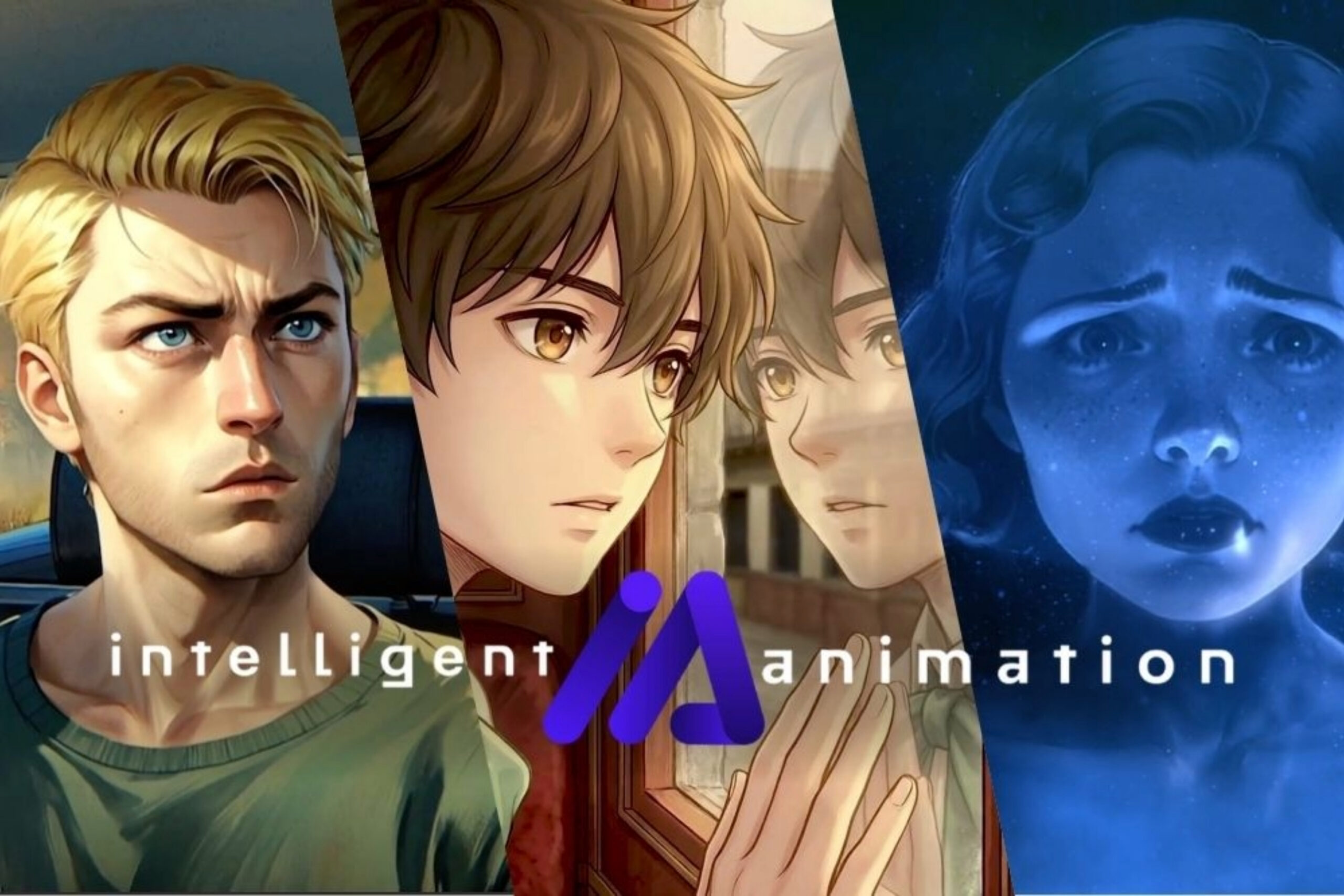
    Intelligent Animation, a new studio dedicated to artificial intelligence-driven animation, has been launched by former Syfy executive Mark Stern and entertainment industry veteran Lloyd Braun. This development signifies a growing trend in the entertainment sector to integrate advanced AI technologies into the creative process, potentially revolutionizing how animated content is conceived, produced, and distributed. The studio’s formation immediately ignites widespread debate about the future of human artists, the definition of creativity, and the economic implications for traditional animation roles across the globe.

    The announcement, made public on 2026-06-25, positions Stern and Braun at the forefront of a technological movement within Hollywood. Their combined experience in television production, network management, and digital media brings substantial industry weight to the new enterprise. Intelligent Animation aims to explore the efficiencies and creative possibilities unlocked by AI, venturing into territory that many traditional animators view with both curiosity and apprehension.

    The Architects Behind the Vision

    Mark Stern brings a significant background in genre entertainment to Intelligent Animation. During his tenure at Syfy, Stern was instrumental in developing and overseeing numerous original series, contributing to the network’s identity as a hub for science fiction and fantasy content. His experience includes working with complex visual effects and innovative storytelling techniques, which now provide a foundation for understanding the potential applications of AI in animation.

    Lloyd Braun is a seasoned executive with a career spanning major networks and digital platforms. Braun’s past roles include leadership positions at ABC Entertainment and Yahoo!, where he navigated evolving media landscapes and spearheaded strategic initiatives. His business acumen and understanding of content distribution and audience engagement are critical assets for a venture like Intelligent Animation, which seeks to innovate not just in production but also in market penetration.

    Their collaboration suggests a strategic alignment of creative vision and business strategy. Both executives have a history of adapting to industry shifts and embracing new technologies. Their decision to focus on AI animation reflects a belief in its transformative power for the entertainment industry.

    The Promise of AI in Animation

    Artificial intelligence offers several potential advantages for animation studios. One primary benefit is the acceleration of production timelines. Traditional animation is notoriously labor-intensive and time-consuming, requiring extensive resources for character design, storyboarding, modeling, rigging, animation, rendering, and post-production.

    AI tools can automate many of these repetitive or data-driven tasks. For instance, AI algorithms can generate background elements, assist with in-betweening frames, or even create initial character models based on prompts. This automation could drastically reduce the time and cost associated with producing animated series and films.

    Another promise of AI lies in its capacity for rapid iteration and exploration. Artists could use AI to quickly generate multiple design variations or animation sequences, allowing for more experimentation in the pre-production phase. This could lead to a broader range of creative options and more refined final products.

    AI also holds potential for personalized content. Algorithms could analyze viewer preferences to create bespoke animated experiences or dynamically alter storylines. This level of customization could open new avenues for interactive entertainment and audience engagement, moving beyond traditional linear storytelling models.

    Concerns and Cultural Defense

    The emergence of studios like Intelligent Animation, however, is not without controversy. A central point of contention is the potential impact on human jobs within the animation industry. Artists, animators, writers, and voice actors express legitimate concerns that AI could displace large segments of the workforce. If AI can perform tasks traditionally done by humans, the demand for human labor may decrease, leading to widespread unemployment in creative fields.

    The concept of ‘cultural defense’ arises from these anxieties. It frames the debate as a need to protect human artistic expression and cultural heritage from technological overreach. Critics argue that relying heavily on AI could lead to a homogenization of artistic styles or a reduction in the unique, human touch that defines compelling animation.

    “The question isn’t just about efficiency; it’s about the soul of the art form,” stated one anonymous animation veteran during a recent industry panel. “Can an algorithm truly capture human emotion or cultural nuance in the same way a human artist can?”

    The debate extends to questions of artistic integrity and originality. If AI generates content, who holds the intellectual property rights? What constitutes authorship when a machine plays a significant role in creation? These are complex legal and philosophical questions that the industry is only beginning to address.

    The Economic and Creative Landscape

    The economic implications of AI in animation are far-reaching. While studios may see cost savings and increased production capacity, the broader economic impact on the creative workforce could be severe. This could lead to a restructuring of the animation industry, favoring those with technical AI skills over traditional artistic talents.

    From a creative standpoint, proponents of AI argue that it can free artists from tedious tasks, allowing them to focus on higher-level creative decisions. AI could become a powerful tool in the artist’s arsenal, rather than a replacement. The success of this integration will depend on how studios like Intelligent Animation choose to implement AI – as a collaborative partner or as a primary creator.

    The current landscape of creative industries is already undergoing significant change due to technological advancements. Streaming wars, global production pipelines, and evolving audience consumption habits have reshaped the business model. AI represents the next frontier in this ongoing transformation, demanding new skills, new ethical considerations, and new business strategies.

    The Road Ahead for Intelligent Animation

    Intelligent Animation faces the challenge of proving that AI can enhance, rather than diminish, the quality and originality of animated content. Their initial projects will be closely scrutinized by both industry insiders and the public. The studio will need to demonstrate not only technical proficiency but also a commitment to artistic excellence and ethical AI practices.

    The reception of their work will likely influence the broader adoption of AI in animation. If Intelligent Animation produces compelling and critically acclaimed content, it could accelerate the integration of AI across the industry. Conversely, if their output is perceived as derivative or soulless, it could reinforce the arguments of cultural defense advocates.

    The partnership of Stern and Braun indicates a serious intent to navigate these complexities. Their experience suggests an understanding of both the creative demands of storytelling and the business realities of content production. Intelligent Animation is poised to be a significant player in the evolving dialogue about AI and the arts.

    Redefining Creativity in the Digital Age

    The discussion around AI in animation extends beyond mere job displacement; it touches upon the very definition of creativity. Can a machine truly be creative, or is it merely executing complex algorithms based on existing data? This philosophical debate has profound implications for how society values artistic output and recognizes genius.

    Some argue that AI, by learning from vast datasets of human-created art, is merely a sophisticated imitator. Others contend that if the output evokes emotion, tells a story, or presents novel ideas, the source of its creation becomes secondary to its impact. This redefinition of creativity is central to the cultural shift that AI is prompting across all creative sectors.

    The role of the human artist may evolve from direct creator to curator, prompt engineer, or ethical overseer of AI-generated content. This shift requires a new set of skills and a different approach to artistic training and collaboration. Educational institutions and industry guilds are beginning to grapple with how to prepare the next generation of creatives for this hybrid human-AI environment.

    As Intelligent Animation begins its work, it will inevitably contribute to this ongoing re-evaluation. Its projects will serve as case studies in the practical application of AI in a commercial creative setting, offering tangible examples for the philosophical and ethical discussions that continue to unfold.

    Executives launched. Debates commenced. Futures considered. Animation.