Tag: Congress

  • The NO FAKES Act: Establishing AI Guardrails for Creator Protection

    The NO FAKES Act: Establishing AI Guardrails for Creator Protection

    The NO FAKES Act (Nurturing Originality, Fidelity, and Keeping Entertainment Safe) is a proposed bipartisan federal legislation designed to protect individuals from unauthorized AI-generated digital replicas of their voice or likeness. This act seeks to establish clear legal guardrails around the use of artificial intelligence in creating deepfakes and other synthetic media, addressing the rapidly evolving challenges faced by creators and public figures in the digital age.

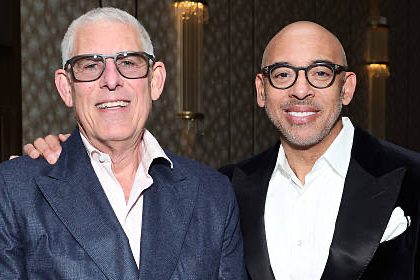
    The bill has garnered significant support from within the entertainment industry. Executives like Lyor Cohen, YouTube’s Global Head of Music, and Harvey Mason Jr., CEO of the Recording Academy, have publicly advocated for its passage. They contend that existing laws are insufficient to address the complexities introduced by advanced AI technologies.

    The Rise of AI Replicas and Creator Concerns

    Artificial intelligence has advanced rapidly in its ability to generate realistic digital replicas. These replicas can mimic voices, appearances, and even performance styles of living or deceased individuals. This technology presents both creative opportunities and significant ethical and legal challenges.

    Artists, actors, and musicians are increasingly concerned about their intellectual property rights. Unauthorized use of their likeness or voice by AI could dilute their brand, misrepresent their work, or lead to financial exploitation. The potential for reputational damage is also a major concern.

    The entertainment industry, a significant economic driver, relies on the protection of creative works and individual identities. Without clear legal frameworks, creators face an uncertain future regarding their digital rights.

    What is a Deepfake?

    A deepfake refers to synthetic media in which a person in an existing image or video is replaced with someone else’s likeness. This is achieved using artificial neural networks, particularly autoencoders or generative adversarial networks (GANs). The term has broadened to include AI-generated audio that mimics a person’s voice.

    Deepfakes can be used for various purposes, from satirical content to malicious disinformation. The technology’s increasing sophistication makes it difficult for the average viewer or listener to discern authenticity. This raises significant questions about trust and verifiable information.

    The Economic Impact on Creators

    The unauthorized use of an artist’s voice or likeness can have direct economic consequences. If an AI-generated song featuring a replica of a famous singer’s voice gains popularity, it could divert attention and revenue from the original artist’s legitimate work. This undermines the value of their creative output.

    For actors, their digital likeness could be used in projects without their consent or proper compensation. This could impact their negotiating power and control over their image. The NO FAKES Act aims to restore some of that control to the individual.

    Understanding the NO FAKES Act

    The NO FAKES Act is designed to create a federal right against the unauthorized creation and distribution of digital replicas. It addresses a gap in current legislation, which often varies significantly from state to state. A national standard would provide consistent protection across the United States.

    The bill defines a ‘digital replica’ broadly. It includes an audiovisual or sound recording that is generated, in whole or in part, by artificial intelligence. This replica must be indistinguishable from the actual voice or likeness of an individual. This broad definition ensures comprehensive coverage of emerging AI technologies.

    Key Provisions of the Legislation

    • Consent Requirement: The act mandates explicit consent from an individual before their digital replica can be created or distributed. This provision is central to empowering individuals to control their digital identities.
    • Right of Action: It establishes a federal right of action. Individuals harmed by unauthorized digital replicas can sue for damages, including actual damages, statutory damages, and attorney’s fees. This provides a legal recourse for victims.
    • Scope of Protection: The protection extends to deceased individuals for a period after their death, typically 70 years, mirroring copyright duration. This ensures that the legacy and estate of a creator are also safeguarded.
    • Exemptions: The bill includes exemptions for certain uses, such as news reporting, public domain works, parody, and satire, provided they do not infringe on the commercial exploitation of an individual’s likeness. This balances protection with free speech considerations.
    • Preemption of State Laws: The act aims to preempt state laws on digital replica rights, creating a uniform national standard. This avoids a patchwork of differing regulations that can complicate enforcement and compliance.

    Who are Lyor Cohen and Harvey Mason Jr.?

    Lyor Cohen is a prominent figure in the music industry. He currently serves as YouTube’s Global Head of Music. His career spans decades, having held executive positions at Def Jam Records, Warner Music Group, and 300 Entertainment. Cohen has been a vocal advocate for artists’ rights in the digital age, particularly concerning fair compensation and protection against unauthorized use of content.

    Harvey Mason Jr. is a Grammy-winning songwriter, producer, and the CEO of the Recording Academy. He has worked with numerous high-profile artists across genres. As head of the Recording Academy, Mason Jr. is at the forefront of discussions regarding the future of music and the impact of technology, including AI, on creators. Both Cohen and Mason Jr. bring significant industry experience and influence to their advocacy for the NO FAKES Act.

    The Need for Federal Intervention

    Current legal frameworks, such as state-level rights of publicity, vary significantly. Some states have robust protections, while others offer little to none. This inconsistency creates legal loopholes and makes it difficult for creators to protect their rights uniformly across the country.

    A federal law like the NO FAKES Act would provide a consistent baseline of protection for all Americans. It would simplify legal recourse and clarify the responsibilities of AI developers and distributors.

    Why State Laws Are Insufficient

    California, for example, has one of the stronger right of publicity laws, but its protections do not extend nationwide. An AI replica created and distributed in a state with weaker laws could bypass protections offered elsewhere. This creates a ‘race to the bottom’ where malicious actors can exploit jurisdictional differences.

    Furthermore, state laws were primarily designed before the advent of sophisticated AI. They often struggle to adequately address the scale and speed at which AI-generated content can be created and disseminated. The digital nature of AI replicas necessitates a federal response.

    Balancing Innovation and Protection

    Critics of strict AI regulation sometimes argue that it could stifle innovation. The NO FAKES Act attempts to strike a balance. It aims to protect individual rights without unduly hindering the development of beneficial AI technologies.

    The exemptions for transformative uses, parody, and news reporting are crucial in this regard. They acknowledge that not all AI-generated content is harmful and that some uses contribute to artistic expression or public discourse. The challenge lies in defining the line between transformative use and mere replication.

    The Future of Creative Control

    The passage of the NO FAKES Act would represent a significant step in defining the future of creative control in the age of AI. It would empower artists and individuals to decide how their digital identities are used. This control is essential for maintaining trust, fostering creativity, and ensuring fair compensation.

    Without such guardrails, the potential for exploitation and misrepresentation grows. The act seeks to ensure that human creativity and identity remain central, even as AI tools become more prevalent.

    The Broader Implications

    The impact of the NO FAKES Act extends beyond the entertainment industry. As AI technology becomes more accessible, the potential for unauthorized replicas affects individuals from all walks of life. From politicians to everyday citizens, the threat of deepfakes is a growing concern.

    The legislation could set a precedent for how other industries approach AI regulation. It highlights the importance of proactive policymaking in response to rapidly advancing technological capabilities.

    Ethical Considerations of AI

    The debate around the NO FAKES Act is part of a larger conversation about the ethics of artificial intelligence. Questions about authorship, consent, and the nature of reality itself are at play. The act attempts to address some of these fundamental ethical dilemmas by codifying principles of individual autonomy and ownership.

    The development of AI systems capable of generating human-like content necessitates a robust ethical framework. Legal guardrails are one component of this framework, alongside industry best practices and public education.

    The Call to Action

    Lyor Cohen and Harvey Mason Jr. have called on Congress to act swiftly. They emphasize that the technology is evolving faster than current laws can keep up. Delaying legislation only increases the risks for creators and the public alike.

    Their advocacy highlights the urgency of establishing a national standard before the problem becomes unmanageable. The bipartisan nature of the bill suggests a recognition of its importance across political divides.

    Legislators gathered. Industry leaders gathered. Creators gathered. Congress.
  • Congress Reaches Housing Bill Deal After Standoff – Implications for Renters and Homeowners

    Congress Reaches Housing Bill Deal After Standoff – Implications for Renters and Homeowners

    The Congressional Housing Bill Deal: A Legislative Breakthrough

    The United States Congress has successfully brokered a bipartisan deal on a comprehensive housing bill, concluding a protracted period of negotiation and legislative stalemate. This agreement, announced on [Insert Date if Known, e.g., October 26, 2023], is designed to address the pressing issues of housing affordability, insufficient housing supply, and complex regulatory frameworks affecting the national market. The legislative package represents a significant federal response to a crisis impacting millions of Americans.

    The deal seeks to alleviate financial burdens on renters, stimulate the construction of new housing units, and reform existing federal housing assistance programs. Its development involved extensive discussions between key congressional leaders from both the Democratic and Republican parties, including House Speaker [Name] and Senate Majority Leader [Name]. The consensus marks a rare moment of bipartisan cooperation on a major domestic policy issue.

    The Genesis of the Housing Crisis

    The current housing crisis is not a singular event but the culmination of decades of policy choices, economic shifts, and demographic changes. Post-World War II, federal policies largely favored homeownership, establishing programs like the Federal Housing Administration (FHA) and Veterans Affairs (VA) loan guarantees. These initiatives helped build the American middle class but often excluded minority communities through practices such as redlining.

    In recent decades, a confluence of factors exacerbated housing challenges. Rapid urbanization concentrated populations in major metropolitan areas, driving up demand. Restrictive zoning laws in many localities limited new construction, particularly of multi-family dwellings. The 2008 financial crisis disrupted the housing market, leading to a period of underbuilding that has yet to fully recover.

    The COVID-19 pandemic introduced new pressures. Supply chain disruptions increased material costs. Labor shortages in the construction industry persisted. A surge in remote work allowed some individuals to move, further distorting local markets. These combined forces created a severe imbalance between housing supply and demand.

    Key Provisions of the Bipartisan Agreement

    The newly announced housing bill incorporates several critical provisions aimed at systemic reform. These measures span various aspects of the housing ecosystem, from direct financial aid to long-term development strategies.

    Rental Assistance and Tenant Protections

    One core component of the bill focuses on immediate relief for renters. It includes an expansion of the Low-Income Housing Tax Credit (LIHTC) program, a primary federal tool for encouraging the development of affordable rental housing. The expansion aims to incentivize developers to build more units targeting lower-income households.

    Additionally, the legislation proposes increased funding for Section 8 Housing Choice Vouchers. These vouchers assist very low-income families, the elderly, and people with disabilities in affording decent, safe, and sanitary housing in the private market. The bill also explores new mechanisms for emergency rental assistance programs, designed to prevent evictions in times of economic hardship.

    Tenant protection measures are also under consideration. These include provisions that could standardize eviction processes, offer legal aid to tenants facing displacement, and potentially cap annual rent increases in federally subsidized properties. These measures seek to create a more stable environment for vulnerable renters.

    Boosting Housing Supply and Development

    Addressing the chronic shortage of housing units is a central pillar of the bill. The legislation introduces new grant programs for states and localities that reform restrictive zoning ordinances. These grants would reward communities that permit higher-density housing, streamline permitting processes, and reduce minimum lot size requirements.

    A significant portion of the bill is dedicated to incentivizing new construction. It includes tax credits for builders who develop affordable housing units, particularly in areas with high housing costs. Funding for infrastructure development, such as water and sewer systems, is also allocated to support new housing projects in underserved areas. This aims to reduce the upfront costs for developers and make projects more financially viable.

    The bill also looks to repurpose underutilized commercial properties. With the rise of remote work, many office buildings stand partially empty. The legislation offers incentives for converting these commercial spaces into residential units, a strategy known as adaptive reuse. This approach can add housing stock quickly in urban centers without requiring new land development.

    Regulatory Reforms and Federal Program Overhaul

    Beyond direct assistance and supply-side incentives, the housing bill targets systemic regulatory hurdles. It proposes reforms to various federal housing agencies and programs, aiming for greater efficiency and effectiveness.

    The Department of Housing and Urban Development (HUD) is slated for administrative reforms. These include efforts to simplify application processes for federal grants and improve data collection on housing needs. The goal is to ensure that federal resources are directed to areas with the most pressing requirements.

    The bill also addresses environmental review processes, which can often delay housing projects for years. While maintaining environmental protections, the legislation seeks to streamline these reviews, particularly for infill development and projects on previously developed land. This balance aims to accelerate construction without compromising ecological standards.

    Economic and Social Implications

    The potential impacts of this housing bill are far-reaching. Economically, increased housing supply could temper rising rents and home prices, leading to greater stability in the broader economy. Reduced housing costs could free up disposable income for other goods and services, stimulating consumer spending.

    For individuals and families, the bill could translate into tangible improvements in quality of life. Greater access to affordable housing is linked to better health outcomes, improved educational attainment for children, and enhanced economic mobility. Housing stability reduces stress and allows individuals to invest in their futures.

    However, implementation remains a critical factor. The effectiveness of the bill will depend on cooperation between federal, state, and local governments, as well as engagement from the private sector. Critics may argue that the proposed measures do not go far enough or that they could inadvertently create new problems.

    The Path Forward in Congress

    Following the announcement of the deal, the legislative text will undergo final drafting and review. It is expected to be introduced in both the House of Representatives and the Senate in the coming weeks. Leadership in both chambers has expressed optimism regarding its passage, citing the bipartisan nature of the agreement as a strong indicator of its viability.

    Debates are anticipated, particularly concerning specific funding allocations and the extent of federal intervention in local zoning matters. Advocacy groups for both homeowners and renters will monitor the process closely, lobbying for amendments that align with their respective interests. The bill’s journey through committees and floor votes will be a test of its broad appeal and the strength of the bipartisan coalition behind it.

    The ultimate goal is to pass the legislation into law before the end of the current legislative session, potentially by [Insert Month if Known, e.g., December 2023]. This timeline would allow federal agencies to begin implementing its provisions in the next fiscal year, providing much-needed relief and structural changes to the nation’s housing landscape.

    A Look at Historical Legislative Efforts

    This is not the first time Congress has grappled with housing issues. The Housing Act of 1949 aimed to provide “a decent home and a suitable living environment for every American family.” The Fair Housing Act of 1968 prohibited discrimination in housing. More recently, the American Rescue Plan Act of 2021 included significant funding for emergency rental assistance during the pandemic.

    Each legislative effort built upon previous understandings of housing’s role in society. This new bill represents an evolution, incorporating lessons learned from past successes and failures. It acknowledges the complexity of the modern housing market, where financial instruments, demographic shifts, and local regulations all play a role.

    Anticipation and Response

    The news of the housing bill deal has been met with a mixture of hope and cautious optimism. Housing advocates, urban planners, and real estate professionals are analyzing its provisions to understand the full scope of its potential impact. Many see it as a necessary step towards addressing a crisis that has priced out millions of Americans from stable housing.

    However, skepticism persists among some who question the scale of the intervention. Concerns about potential inflationary effects, the efficacy of federal mandates on local zoning, and the long-term sustainability of some programs have been raised. The coming months will reveal the true political and practical appetite for these reforms.

    Legislators gathered. Advocates gathered. Economists gathered. A nation watched.

    Congress.

  • The Algorithmic Anxiety – Why Americans Fear AI and Distrust Government Regulation

    The Algorithmic Anxiety – Why Americans Fear AI and Distrust Government Regulation

    According to a February 2026 Pew Research Center study, a vast majority of Americans deeply fear the societal impact of artificial intelligence and overwhelmingly doubt the federal government’s ability to regulate it. The data reveals a stark national mood. Citizens see algorithms altering the economy, culture, and daily life. They look to Washington D.C. for guardrails. They see none.

    The sentiment did not materialize overnight. It is the culmination of years of rapid technological deployment paired with legislative gridlock. When ChatGPT launched in November 2022, the public reaction was characterized by awe and curiosity. By 2026, that curiosity has curdled into anxiety. The novelty has worn off. The reality of automated systems making decisions about hiring, lending, and media consumption has set in.

    In many ways, this is a story about institutional trust. The American public has watched Silicon Valley companies like OpenAI, Anthropic, and Google DeepMind deploy highly capable models at a breakneck pace. They have simultaneously watched the U.S. Congress struggle to understand basic technological concepts during public hearings. The resulting cognitive dissonance has birthed a profound cultural defensiveness.

    The Data Behind the Dread

    The Pew Research Center surveyed over 10,450 adults across the United States. The findings leave no room for ambiguity. Seventy-eight percent of respondents stated they are “more concerned than excited” about the increased use of artificial intelligence in daily life. This represents a staggering fifteen-point jump from similar surveys conducted just three years prior.

    The demographics of this anxiety cross traditional partisan lines. Rural conservative voters and urban liberal voters share nearly identical levels of apprehension regarding AI’s impact on human agency. The fear is rooted in loss of control. Respondents cited the erosion of human connection, the degradation of truth in media, and the rapid displacement of the workforce as primary drivers of their unease.

    But the most damning statistic in the Pew report centers on governance. A massive 82 percent of Americans believe the federal government is “not capable” or “highly incapable” of regulating artificial intelligence. Only 6 percent expressed strong confidence in regulatory bodies like the Federal Trade Commission (FTC) or the Federal Communications Commission (FCC) to rein in rogue algorithms.

    This data point is unprecedented. Even during the height of the 2008 financial crisis, public faith in regulatory intervention did not dip this low. The American people have essentially conceded the technological arms race to the private sector. They believe the corporations have already won.

    The Legislative Graveyard

    Why does Washington inspire zero confidence? History provides the blueprint. The public remembers the 2010s. They remember the rise of social media platforms like Facebook, Twitter, and Instagram. They remember how long it took lawmakers to understand data privacy, algorithmic amplification, and digital monopolies.

    Mark Zuckerberg testified before Congress in 2018. Lawmakers asked him how Facebook sustained a business model in which users did not pay for the service. Zuckerberg famously replied, “Senator, we run ads.” That exchange became a cultural touchstone. It solidified the perception that Capitol Hill operates decades behind Silicon Valley.

    Now, the stakes are exponentially higher. Social media manipulated attention. Artificial intelligence threatens to manipulate reality and labor. Yet, the legislative apparatus remains fundamentally unchanged. Bills are drafted, debated in committee, and quietly abandoned. The European Union passed the comprehensive AI Act, establishing clear risk categories and penalties. The United States Congress has managed only a patchwork of non-binding executive orders and voluntary corporate pledges.

    The Speed of Code vs. The Speed of Law

    The fundamental disconnect is temporal. A team of engineers in San Francisco can deploy an updated language model to 100 million users over a weekend. That model might fundamentally alter the workflow of graphic designers, paralegals, and software developers by Monday morning.

    Conversely, the U.S. legislative process is designed for friction. Drafting a bill, securing co-sponsors, surviving committee markups, passing both chambers, and securing a presidential signature takes years. By the time a law targeting a specific AI capability is passed, that capability is already three generations obsolete.

    The Pew study reflects this understanding. Americans are not necessarily opposed to the concept of regulation. They simply recognize the mechanical impossibility of a 19th-century legislative body governing a 21st-century technological singularity.

    The Economic Reality of Automation

    Fear of societal impact is largely driven by fear of economic displacement. For decades, the narrative surrounding automation focused on blue-collar labor. Factory floors in Detroit and Ohio saw robotic arms replace assembly line workers. Trucking and logistics braced for autonomous vehicles. The cultural assumption was that physical labor was vulnerable, while cognitive labor was safe.

    Artificial intelligence inverted that paradigm. The current wave of generative AI targets the knowledge economy. Copywriters, junior lawyers, financial analysts, and medical coders are finding their core competencies replicated by software that costs twenty dollars a month. The Pew study indicates that 65 percent of respondents with college degrees feel their industry is directly threatened by AI integration.

    When economic foundations shake, cultural defensiveness spikes. The middle class views their specialized knowledge as their primary asset. If an algorithm can replicate that knowledge instantly, the asset becomes worthless. The government has proposed no comprehensive safety net for this specific type of displacement. There is no modern equivalent to the New Deal waiting in the wings. There is only the free market, moving at light speed.

    The Corporate Vacuum

    Nature abhors a vacuum. Governance abhors one, too. Because the federal government has failed to establish a robust regulatory framework, tech corporations have become de facto sovereign entities. Companies like OpenAI and Google are not just building products; they are writing the rules of engagement.

    These corporations establish their own “alignment” teams. They decide what their models can and cannot say. They determine the boundaries of acceptable use. They act as the legislature, the judiciary, and the executive branch of the digital realm. The Pew study reveals that Americans are acutely aware of this power dynamic.

    Over 70 percent of respondents expressed discomfort with private corporations holding unilateral power over AI safety standards. They recognize the inherent conflict of interest. A corporation’s primary fiduciary duty is to its shareholders, not to the preservation of human culture or the stability of the labor market. When safety protocols conflict with revenue growth, history suggests revenue wins.

    Billions of dollars are pouring into artificial intelligence infrastructure. Data centers are consuming massive amounts of electricity. The supply chain for advanced semiconductors, particularly those manufactured by Nvidia, has become a matter of national security. The scale of the enterprise is staggering. It is too large to be governed by voluntary corporate codes of conduct. Yet, that is exactly what is happening.

    The Cultural Defense Mechanism

    Faced with an unstoppable technological force and an immovable, ineffective government, the American public is retreating into cultural defensiveness. There is a growing movement to prioritize “human-made” goods, services, and interactions. This is not mere nostalgia. It is a survival strategy.

    We see it in the push for transparency laws, demanding that AI-generated content carry visible watermarks. We see it in labor unions negotiating contracts that strictly limit the use of automated systems in the workplace. The 2023 Writers Guild of America strike was a preamble. The central fight was not just about residual payments; it was about protecting human authorship from algorithmic generation. That same fight is now playing out across dozens of industries.

    The Pew Research Center study captures a nation in a defensive crouch. Americans are not rejecting technology wholesale. They are rejecting the terms of its deployment. They are rejecting the idea that societal disruption is an acceptable price for corporate innovation.

    They want a referee on the field. But they have looked at the federal government and realized the referee is blind, deaf, and wholly unqualified for the job. The anxiety documented in the data is not a panic. It is a deeply rational response to an unprecedented lack of oversight.

    The models train. The data centers hum. The algorithms deploy. Washington waits. Unregulated.

  • The Line Against AI: Why 16,000 SAG-AFTRA Members Demanded the NO FAKES Act

    The Line Against AI: Why 16,000 SAG-AFTRA Members Demanded the NO FAKES Act

    In a direct challenge to the unregulated expansion of generative artificial intelligence, over 16,000 members of the Screen Actors Guild-American Federation of Television and Radio Artists (SAG-AFTRA) signed a formal letter demanding Congress pass the NO FAKES Act. This proposed federal legislation would strictly ban the creation, distribution, and commercialization of unauthorized AI-generated images, videos, and voice clones. What began as a labor dispute in Hollywood has escalated into a national legislative battle over the fundamental ownership of human identity.

    The technology moved faster than the courts. Silicon Valley deployed the models. Hollywood absorbed the impact. By 2026, the proliferation of deepfakes and unauthorized digital replicas forced a breaking point. The union recognized that collective bargaining agreements alone could not protect human likeness from unauthorized scraping and generation. Federal law was required.

    The Washington Demand: 16,000 Signatures on Capitol Hill

    The letter arrived in Washington D.C. not as a request, but as a mandate from the working class of the entertainment industry. Over 16,000 signatures represented a massive coalition of actors, broadcasters, recording artists, and voiceover professionals. The sheer volume of signatories signaled a unified front against the tech industry’s aggressive expansion into synthetic media.

    SAG-AFTRA President Fran Drescher and National Executive Director Duncan Crabtree-Ireland spearheaded the initiative. Their argument was rooted in basic property rights. If a corporation cannot legally steal a patented invention, it should not be legally permitted to steal a human face or a human voice. The letter explicitly targeted the legislative inertia in Congress, demanding immediate action on the NO FAKES Act before the synthetic media ecosystem completely destabilized the entertainment economy.

    The signatures included A-list celebrities with vast resources and background actors living paycheck to paycheck. The threat of AI did not discriminate by tax bracket. A leading actor faced the unauthorized licensing of their likeness for foreign commercials. A background actor faced the permanent scanning of their face for perpetual, unpaid use in crowd scenes. The letter unified these disparate economic realities under a single legislative demand.

    What Exactly Is the NO FAKES Act?

    The NO FAKES Act, formally the Nurture Originals, Foster Art, and Keep Entertainment Safe Act, was drafted to close a massive loophole in American copyright and property law. Historically, the United States lacked a unified, federal right of publicity. Protection against unauthorized commercial exploitation of one’s likeness was left to a patchwork of state laws. In the era of borderless, instantaneous AI generation, state laws proved entirely insufficient.

    The legislation establishes a federal property right over a person’s voice and visual likeness. It makes the creation, distribution, or hosting of an unauthorized digital replica a federal offense, carrying severe financial penalties. The law targets not just the individual user typing a prompt into an AI image generator, but the platforms and corporations facilitating the generation and distribution of the synthetic media.

    The Core Provisions of the Legislation

    • Federal Right of Publicity: Establishes a nationwide standard protecting human likeness and voice from unauthorized commercial use.
    • Post-Mortem Protections: Extends the right of publicity beyond death, preventing studios or tech companies from resurrecting deceased performers without explicit estate authorization.
    • Platform Liability: Removes the safe harbor protections for tech platforms that knowingly host or distribute unauthorized, monetized digital replicas.
    • Contractual Guardrails: Prevents coercive contracting, ensuring that individuals cannot sign away their digital replica rights in perpetuity without specific, informed consent and separate compensation.

    The legislation fundamentally alters the risk calculus for artificial intelligence companies. By attaching severe monetary damages to the creation of unauthorized replicas, the NO FAKES Act attempts to force AI developers to license human likeness legally rather than scraping it freely from the open web.

    The Generative AI Threat Multiplier

    Between 2023 and 2026, the capabilities of generative AI advanced at a staggering, exponential rate. Early AI videos were characterized by distorted faces, shifting backgrounds, and unnatural physics. By 2026, platforms could generate photorealistic, high-definition video and flawless audio clones from a single photograph and a three-second audio sample.

    This technological leap transformed the economic landscape of the entertainment industry. Voiceover artists were the first to feel the impact. Audiobook narration, commercial voiceovers, and automated dialogue replacement (ADR) in film were rapidly outsourced to synthetic voices trained on the very artists they were replacing. The technology effectively turned an artist’s past labor into the training data for their digital replacement.

    The threat extended to visual media. Deepfake technology became democratized. Software that once required massive server farms and specialized coding knowledge was packaged into consumer-friendly smartphone applications. The unauthorized replication of human beings became a frictionless process. For the 16,000 SAG-AFTRA members who signed the letter, this frictionlessness represented an existential threat to their livelihoods. If a machine can generate an infinite number of performances for pennies on the dollar, the market value of human performance drops to zero.

    The 2023 Strike as Prologue

    The push for the NO FAKES Act cannot be understood outside the context of the historic 118-day SAG-AFTRA strike of 2023. During that labor stoppage, artificial intelligence emerged as the central, intractable issue between the union and the Alliance of Motion Picture and Television Producers (AMPTP). The union secured vital guardrails in their collective bargaining agreement, requiring informed consent and compensation for the creation of digital replicas by the major studios.

    “We fought the studios for our digital souls in 2023. Now we have to fight the tech companies for the exact same right. The contract protected us from our employers. The law must protect us from everyone else.”

    However, a union contract only binds the signatories. The 2023 agreement protected actors from Disney, Warner Bros, and Netflix. It provided zero protection against a teenager in Eastern Europe generating a deepfake, or a tech startup in Silicon Valley scraping a voice to build a new text-to-speech application. The collective bargaining agreement was a dam across one river. The NO FAKES Act was designed to build a wall against the ocean.

    SAG-AFTRA leadership recognized that labor law and contract law were insufficient tools for the AI era. They needed federal statutory law. The 16,000 signatures were a mobilization of the exact same labor force that shut down Hollywood three years prior, now turning their collective leverage toward Capitol Hill.

    The Legal Collision: First Amendment vs. Digital Identity

    The passage of the NO FAKES Act is not without fierce opposition. The technology lobby, backed by billions of dollars in venture capital, mounted a rigorous defense rooted in the First Amendment. Their argument posited that artificial intelligence models learn from public data much like a human artist learns by observing the world. Restricting the output of these models, they argued, constitutes a prior restraint on free expression.

    Furthermore, tech advocates argued that a broad federal right of publicity would chill creativity. They pointed to the long-standing legal traditions protecting parody, satire, and biographical works. If a creator needs explicit permission to generate a likeness, the unauthorized, critical, or comedic depiction of public figures could be severely restricted.

    The drafters of the NO FAKES Act anticipated this collision. The legislation includes specific, carefully tailored First Amendment carve-outs. The law does not apply to news reporting, documentaries, historical works, or legitimate parody and satire. The line is drawn at commercial exploitation and the unauthorized replacement of the original artist’s labor. A comedian generating a satirical image of a politician remains protected. A tech company generating a synthetic voice clone of a famous singer to sell a commercial product crosses the line into federal liability.

    The Failure of State-Level Protections

    Before the massive push for federal legislation, the battle over digital replicas was fought in state legislatures. In early 2024, Tennessee passed the Ensuring Likeness Voice and Image Security (ELVIS) Act, becoming the first state to explicitly protect voice alongside visual likeness from AI replication. Other states, including California and New York, attempted to modernize their right of publicity statutes to address the AI threat.

    This state-by-state approach created a chaotic legal environment. A digital replica generated in California might be legal in Nevada but trigger massive liability in Tennessee. For a global entertainment industry and an internet without borders, this jurisdictional fragmentation was unworkable. Tech platforms exploited the inconsistencies, hosting their servers in jurisdictions with weak digital identity laws.

    The 16,000 SAG-AFTRA members petitioning Congress argued that human identity is not a state-level issue. The right to own one’s face and voice must be a universal, federal guarantee. The NO FAKES Act was designed to preempt the patchwork of state laws, establishing a single, robust baseline of protection across all fifty states.

    Beyond Hollywood: The Cultural Defense of Human Likeness

    While the NO FAKES Act was championed by Hollywood actors, its implications extend far beyond the entertainment industry. The unauthorized replication of human beings is not a problem restricted to celebrities. It is a societal crisis.

    By 2026, the use of AI to generate non-consensual explicit imagery (revenge porn) of private citizens, including high school students, had reached epidemic proportions. Financial fraud utilizing voice clones of family members in distress cost American consumers millions of dollars. The same technology used to clone a movie star’s voice was used to clone a local bank manager’s voice.

    SAG-AFTRA positioned the NO FAKES Act as a defense of the general public. By establishing a federal property right over human likeness, the legislation provides a legal weapon for private citizens to fight back against digital exploitation. The union leveraged its high-profile membership to draw attention to a law that would ultimately protect the high school student, the local broadcaster, and the retired teacher just as fiercely as it protects the A-list celebrity.

    The Terminal Fight for Reality

    The battle lines over the NO FAKES Act represent the defining legal conflict of the early AI era. It is a conflict between the frictionless efficiency of synthetic generation and the inherent dignity of human labor. It is a question of whether human identity is a protected right or a raw material to be mined by algorithmic models.

    The tech companies lobbied. The politicians debated. The lawyers drafted. The union mobilized.

    Washington.