Tag: Cisa

  • Christopher Krebs: No Evidence of 2020 Election Tampering

    Christopher Krebs: No Evidence of 2020 Election Tampering

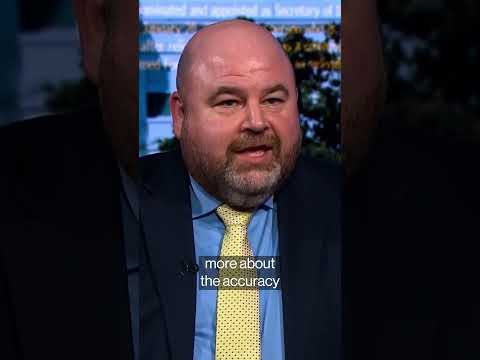
    Christopher Krebs, the former Director of the Cybersecurity and Infrastructure Security Agency (CISA), has publicly stated that there was no evidence of widespread voter fraud or tampering that would have altered the outcome of the 2020 presidential election. Krebs, who was terminated from his position by then-President Donald Trump on November 17, 2020, has consistently maintained this position. His affirmation aligns with the findings of numerous state and federal investigations, audits, and recounts conducted in the wake of the election. Krebs’ testimony contributes to the body of evidence supporting the integrity and security of the 2020 electoral process.

    The 2020 Presidential Election and Its Aftermath

    The 2020 presidential election concluded on November 3, 2020. Joseph R. Biden Jr. emerged as the winner, defeating then-President Donald Trump. Following the election, allegations of widespread voter fraud and irregularities surfaced from various sources, primarily from the Trump campaign and its allies.

    These allegations spurred significant legal challenges and calls for investigations across several states. Recounts were conducted in key battleground jurisdictions, including Georgia and Arizona. Audits were initiated to examine voting machines, ballots, and election procedures in detail.

    The period following the election was characterized by intense public debate and political polarization. Election officials nationwide faced unprecedented scrutiny and pressure regarding the administration of the vote. Many officials, including Christopher Krebs, became central figures in the discourse surrounding election integrity and security.

    Christopher Krebs’ Role at CISA

    Christopher Krebs was appointed as the first director of CISA in November 2018. CISA operates within the Department of Homeland Security. Its mission is to protect the nation’s critical infrastructure from physical and cyber threats. This includes safeguarding election infrastructure.

    Under Krebs’ leadership, CISA played a crucial role in securing the 2020 election. The agency worked with state and local election officials to identify and mitigate cyber threats. CISA also provided information to the public to counter misinformation about election processes.

    On November 12, 2020, CISA released a joint statement with the Election Infrastructure Government Coordinating Council (EIS-GCC) and the Election Infrastructure Sector Coordinating Council (EIS-SCC). This statement famously declared the 2020 election to be “the most secure in American history.” It asserted there was “no evidence that any voting system deleted or lost votes, changed votes, or was in any way compromised.”

    Official Investigations and Findings

    Numerous governmental bodies and independent organizations investigated the claims of election fraud. Their findings consistently supported the integrity of the 2020 election.

    Department of Justice Investigations

    Attorney General William Barr, serving under then-President Trump, stated on December 1, 2020, that the Justice Department had not found evidence of widespread fraud that would change the outcome of the election. This declaration came after the department had pursued and investigated various allegations across multiple states.

    Barr’s statement was a significant blow to the efforts to overturn the election results. He elaborated that the Department of Justice had looked into claims of voting machine manipulation and other forms of fraud. These investigations did not yield evidence of systemic issues.

    State-Level Audits and Recounts

    Individual states conducted their own extensive audits and recounts. These processes were often mandated by law or initiated in response to specific challenges.

    • Georgia: A statewide hand recount of nearly 5 million ballots confirmed Biden’s victory. A subsequent machine recount also upheld these results. Secretary of State Brad Raffensperger, a Republican, publicly defended the integrity of Georgia’s election.
    • Arizona: Maricopa County, Arizona’s largest county, conducted a comprehensive audit following the election. This audit, often referred to as the “forensic audit,” was led by a private firm. It ultimately affirmed the accuracy of the county’s election results and found no evidence of widespread fraud.
    • Wisconsin: Recounts in Milwaukee and Dane counties, requested by the Trump campaign, confirmed Biden’s victory with only minor changes in vote totals.
    • Michigan: State election officials and a bipartisan state Senate committee investigated claims of fraud. They found no evidence of widespread irregularities that would have impacted the outcome.

    Legal Challenges and Court Rulings

    The Trump campaign and its allies filed more than 60 lawsuits challenging the election results in various state and federal courts. These lawsuits alleged a range of issues, from procedural irregularities to outright fraud. The vast majority of these cases were unsuccessful.

    Judicial Dismissals

    Judges, including many appointed by then-President Trump, repeatedly dismissed these cases. They cited a lack of compelling and credible evidence to support the claims of fraud or significant irregularities. In many instances, the courts found that the plaintiffs failed to demonstrate any actual harm or widespread fraud that would warrant overturning election results.

    For example, in Donald J. Trump for President, Inc. v. Boockvar, a federal judge dismissed a lawsuit seeking to block certification of Pennsylvania’s results. The judge stated that the campaign presented “strained legal arguments without merit and speculative accusations.”

    Supreme Court’s Stance

    The Supreme Court of the United States declined to hear several high-profile cases challenging the election results. This included a lawsuit filed by the state of Texas against Pennsylvania, Georgia, Michigan, and Wisconsin. The Court’s refusal to intervene effectively ended the legal avenues for challenging the election outcome at the highest level.

    The Role and Pressure on Election Officials

    Election officials at all levels played a critical role in the 2020 election. They were responsible for administering the vote, ensuring accuracy, and addressing any issues that arose. Many of these officials, both Republican and Democrat, publicly defended the integrity of the election process.

    Pressure and Threats Faced by Officials

    These officials often faced significant pressure, harassment, and even threats for upholding election laws and certifying results. Figures like Georgia Secretary of State Brad Raffensperger and Arizona Secretary of State Katie Hobbs received national attention for their steadfast defense of election procedures.

    Christopher Krebs’ termination from CISA exemplifies the professional repercussions faced by some officials. His adherence to established procedures and commitment to accurate vote counts were central to the democratic process. His continued public statements reinforce the findings of his agency and other investigative bodies.

    Consequences for Christopher Krebs

    President Trump announced Krebs’ termination via Twitter on November 17, 2020. This occurred shortly after CISA issued its statement on election security. Trump cited Krebs’ statement as “highly inaccurate.” Krebs, however, stood by his agency’s assessment. He stated he was “honored to serve” and to “defend the 2020 election from attack.”

    Since his termination, Krebs has continued to be an outspoken advocate for election integrity and security. He co-founded a consulting firm, Krebs Stamos Group, focused on cybersecurity. He has also testified before Congress and appeared in media to reiterate his findings regarding the 2020 election. His consistent message has been that the 2020 election was secure, and its results were accurate.

    The Broader Impact on Election Integrity Discourse

    The discussions surrounding the 2020 election have had a lasting impact on the discourse regarding election integrity. Public confidence in electoral processes became a significant point of contention. Efforts to reform election laws and procedures have continued into 2026, with states implementing various changes.

    These changes range from new voting machine requirements to updated voter registration protocols. They often aim to address perceived vulnerabilities or enhance public trust. However, the fundamental findings regarding the 2020 election’s security have remained consistent across official reviews and expert analysis.

    The continued affirmation by election professionals, including those who faced personal and professional consequences like Christopher Krebs, reinforces the official narrative. Their consistent testimonies underline the resilience of the American electoral system against unsubstantiated claims of widespread malfeasance. The focus now shifts to future elections and the ongoing efforts to ensure their security and public confidence.

    Election integrity remains a priority. Transparency in voting processes is paramount. Trust in institutions is essential. The consistent message from election officials, including Christopher Krebs, has been clear. The 2020 election was secure. The results were accurate. The system withstood the pressure. Democracy prevailed.

  • The Kali365 Directive – Inside the FBI’s Urgent Warning for Microsoft 365 Users

    The Kali365 Directive – Inside the FBI’s Urgent Warning for Microsoft 365 Users

    The Federal Bureau of Investigation has issued an urgent security advisory regarding “Kali365,” a sophisticated cyber threat campaign actively targeting Microsoft 365 applications, specifically Microsoft Teams, Outlook, and OneDrive, to steal corporate credentials and bypass multi-factor authentication. The alert signals a dangerous evolution in enterprise phishing, moving away from traditional email spam and directly into the trusted, internal communication channels of global corporations and government contractors.

    The perimeter has shifted. The firewall is no longer a physical barrier. The firewall is the identity of the user. When that identity is compromised, the entire corporate infrastructure becomes vulnerable.

    For decades, network security relied on keeping outsiders out. Today, the outsiders are already inside. They wear the digital faces of trusted colleagues. They send meeting invites. They share documents. They use the very tools designed for modern collaboration to dismantle modern security.

    The Architecture of the Kali365 Threat

    Kali365 is not a traditional malware strain. It is a highly organized credential-harvesting architecture. The campaign relies on a technique known as Adversary-in-the-Middle (AiTM) phishing. The goal is not simply to steal a password. The goal is to steal the session token.

    When a user logs into Microsoft 365, they provide a username and password. They then approve a multi-factor authentication (MFA) prompt on their mobile device. Once approved, Microsoft issues a session token. This token is stored in the browser. It tells the system that the user is authenticated. It allows the user to move seamlessly between Outlook, Teams, and OneDrive without logging in repeatedly.

    Kali365 intercepts this exact process. The attackers deploy reverse-proxy servers. They route the victim’s traffic through these malicious servers. The victim sees a pixel-perfect replica of the Microsoft login page. They enter their credentials. They approve the MFA prompt. The legitimate Microsoft server grants access. But the Kali365 infrastructure captures the session token in transit.

    With the token secured, the attacker no longer needs the password. They no longer need the victim’s phone. They possess the digital keys to the kingdom. They inject the stolen token into their own browser. To Microsoft’s security algorithms, the attacker is indistinguishable from the legitimate employee.

    The Microsoft Teams Vector

    The most alarming aspect of the FBI’s Kali365 warning is the primary vector of attack. Email phishing is a known quantity. Employees are trained to spot suspicious external emails. They are not trained to suspect internal chat messages.

    Microsoft Teams is built on implicit trust. When a message arrives in Teams, it carries the name and photo of a colleague. It feels safe. Kali365 exploits this psychological blind spot.

    The attack sequence is methodical. First, the threat actors compromise a single, low-level account. This is often a vendor, a contractor, or a subsidiary with federated access to the target organization’s Teams environment. Once inside, they do not immediately launch an attack. They observe. They study communication patterns. They identify key personnel in finance, human resources, and IT administration.

    Then, the trap is sprung. The compromised account sends a direct Teams message to a high-value target. The message is casual. It contains a link to an “urgent project update” or a “revised contract.” The link points to a malicious domain hosting the Kali365 reverse-proxy. Because the link arrives via Teams, security filters often bypass it. Because it comes from a known colleague, the victim clicks without hesitation.

    Lateral Movement Through Outlook and OneDrive

    The Teams message is merely the breach. The true damage occurs in the lateral movement. Once a session token is stolen, the attacker gains full access to the victim’s Microsoft 365 suite.

    They open Outlook. They configure hidden inbox rules. These rules automatically forward emails containing keywords like “invoice,” “wire transfer,” “password,” or “confidential” to an external address. The rules also delete the forwarded emails, hiding the attacker’s tracks from the legitimate user.

    Simultaneously, the attacker accesses OneDrive and SharePoint. They deploy automated scripts to scrape sensitive documents. Financial records, intellectual property, employee data, and strategic blueprints are downloaded in bulk. This data serves a dual purpose. It can be sold on the dark web. It can also be used for extortion, threatening public release if a ransom is not paid.

    The Economics of Business Email Compromise

    The FBI’s urgency regarding Kali365 is rooted in cold, hard economics. This is not vandalism. This is an industry.

    The threat actors behind campaigns like Kali365 are engaged in Business Email Compromise (BEC). BEC is the most financially devastating cybercrime in the world. According to the FBI’s Internet Crime Complaint Center (IC3), BEC attacks resulted in over $2.7 billion in adjusted losses in a single calendar year. The actual number is likely much higher, as many corporate intrusions go unreported to protect shareholder value and brand reputation.

    Kali365 streamlines the BEC process. By bypassing MFA and hijacking trusted communication channels, attackers can insert themselves into multi-million dollar financial transactions. They monitor email threads between a company and its suppliers. When a legitimate invoice is generated, the attacker intercepts it. They alter the routing and account numbers. They send the modified invoice from the compromised internal account. The finance department processes the payment. The money vanishes into a network of offshore cryptocurrency mixers.

    The financial toll extends beyond direct theft. Regulatory fines, legal liabilities, incident response costs, and reputational damage compound the losses. A single successful Kali365 intrusion can cost an enterprise tens of millions of dollars.

    The Federal Response and CISA Directives

    The FBI does not issue specific threat warnings lightly. The public advisory regarding Kali365 indicates that the campaign has reached a critical mass. It is affecting critical infrastructure, defense contractors, and major financial institutions.

    The Cybersecurity and Infrastructure Security Agency (CISA) has echoed the FBI’s concerns. CISA has long warned that standard, SMS-based or push-notification MFA is no longer sufficient to protect enterprise networks. The Kali365 campaign provides undeniable proof of this vulnerability.

    Federal agencies are actively sharing Indicators of Compromise (IOCs) with private sector partners. These include known malicious IP addresses, fraudulent domain names associated with the Kali365 reverse-proxies, and specific behavioral patterns observed in compromised Microsoft 365 tenants. However, the infrastructure of Kali365 is highly dynamic. Domains are registered and abandoned in hours. IP addresses are rotated continuously. Reactive blocklists are insufficient. A proactive defensive posture is required.

    Hardening the Perimeter: Moving Beyond Basic MFA

    The defense against Kali365 requires a fundamental shift in how organizations manage identity and access. The legacy approach of relying on passwords and simple MFA prompts has failed.

    Security architects must implement phishing-resistant multi-factor authentication. The gold standard is FIDO2-compliant hardware security keys. These physical devices use cryptographic protocols to verify both the user’s identity and the legitimacy of the login portal. If a user is tricked into visiting a Kali365 reverse-proxy site, the FIDO2 key will recognize the domain mismatch. It will refuse to authenticate. The attack is neutralized before the session token can be stolen.

    Furthermore, organizations must enforce strict Conditional Access policies within their Microsoft 365 environments. Conditional Access evaluates the context of a login attempt. It looks at the user’s location, the device they are using, and the time of day. If a user normally logs in from a corporate laptop in Chicago, and suddenly a login attempt originates from an unknown device in Eastern Europe, the system must block the access, even if the credentials and session token are valid.

    Restricting the Teams Environment

    To specifically counter the Teams vector exploited by Kali365, administrators must lock down external communications. Organizations should disable the ability for external, unmanaged domains to initiate Teams chats with internal employees. If external collaboration is necessary, it must be restricted to a strictly vetted whitelist of approved partner organizations.

    User education must also evolve. Security awareness training has traditionally focused heavily on email. Employees must now be trained to apply the same level of skepticism to internal chat platforms. A request for a password, an unexpected file transfer, or an urgent demand for financial action must be verified out-of-band. A phone call. A face-to-face conversation. Trust, but verify.

    The Future of the Identity Perimeter

    The Kali365 campaign is a harbinger. As organizations continue to migrate their operations to cloud-based platforms like Microsoft 365, the value of a compromised identity will only increase. Threat actors will continue to refine their AiTM architectures. They will find new ways to exploit the inherent trust built into collaboration tools.

    The security industry is engaged in a perpetual arms race. Microsoft is continually updating its detection algorithms. The FBI and CISA are actively hunting the infrastructure of groups behind Kali365. But the ultimate responsibility lies with the enterprise.

    The tools exist to defeat these attacks. FIDO2 keys. Conditional Access. Zero Trust architecture. The challenge is not technological. The challenge is implementation. It requires investment. It requires a willingness to introduce friction into the user experience in the name of security.

    The alerts are issued. The architecture is exposed. The vulnerabilities are known. The perimeter dissolves.

    Adapt.