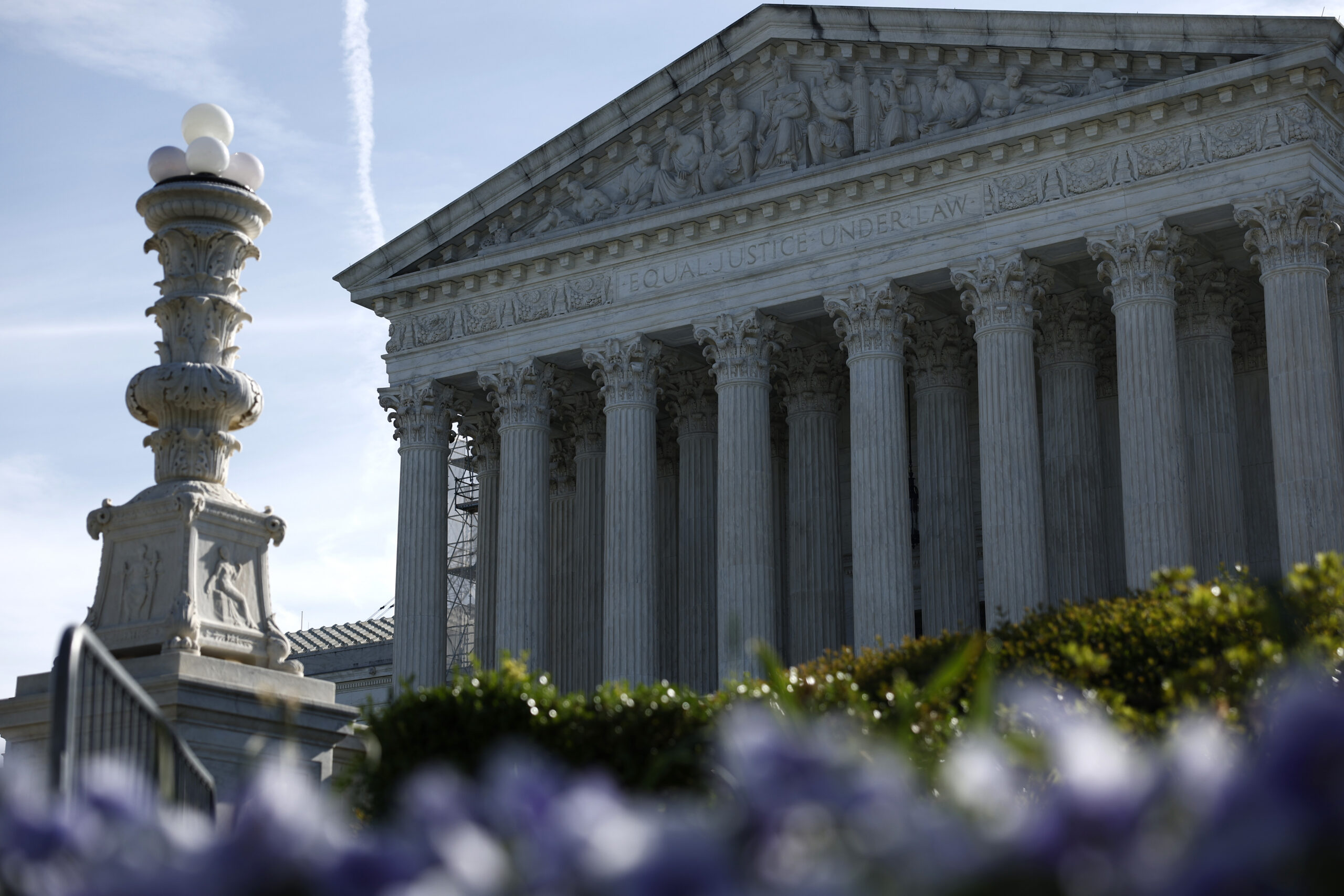
The Supreme Court’s Final Word
The U.S. Supreme Court has declined to hear the appeal filed by Alan Dershowitz in his defamation lawsuit against CNN. This decision, announced on June 29, 2026, marks the effective conclusion of a legal battle that originated from CNN’s coverage of the 2020 impeachment trial of then-President Donald Trump. The nation’s highest court did not provide a reason for its refusal to grant certiorari, a standard practice for such decisions.
Dershowitz, a prominent legal scholar and attorney, had sought to overturn lower court rulings that sided with the news organization. The core of his complaint centered on how CNN edited and presented his remarks made during the Senate impeachment proceedings. He contended that the network’s selective editing distorted his legal argument, portraying him as advocating for presidential immunity for any actions taken to ensure re-election.
The Origin of the Dispute
The controversy began on January 29, 2020, during the first impeachment trial of then-President Donald Trump. Alan Dershowitz, part of the President’s legal defense team, presented an argument to the Senate. His statement addressed the question of whether a president could be impeached for actions taken to benefit his re-election campaign.
Dershowitz stated, “Every public official that I know believes that his election is in the public interest. And if a president believes that his re-election is in the public interest, he should be able to do anything that he can to get re-elected.” He immediately followed this by clarifying his position: “Unless it is a quid pro quo. He is not saying, ‘I will not give you the money unless you do X.’ He is saying, ‘I want to be re-elected. I think my re-election is in the public interest.’”
CNN, in its broadcast and subsequent reporting, presented clips of Dershowitz’s initial statement without including the immediate clarification. This selective editing formed the basis of Dershowitz’s defamation claim. He argued that the truncated clips fundamentally misrepresented his nuanced legal argument, making it appear as though he believed a president could commit any crime to secure re-election, a position he explicitly denied holding.
The Lawsuit’s Progression Through Lower Courts
Alan Dershowitz filed his initial lawsuit against CNN in September 2020, seeking $300 million in damages. The complaint was filed in the U.S. District Court for the Southern District of Florida. He alleged that CNN’s broadcasts and online articles falsely and maliciously portrayed him as arguing that a president could engage in illegal conduct to achieve re-election, provided the president believed it was in the public interest.
CNN responded by arguing that its coverage was protected under the First Amendment and that the edited clips were a fair summary of Dershowitz’s argument. The network contended that the statements, even if abbreviated, accurately reflected a portion of his actual testimony and that the overall context of the impeachment trial further informed viewers.
District Court Ruling
In November 2021, U.S. District Judge Raoul G. Cantero III dismissed Dershowitz’s lawsuit. Judge Cantero ruled that while CNN’s editing might have been “misleading,” it did not rise to the level of defamation under the legal standard of “actual malice.” The judge found that Dershowitz, as a public figure, needed to prove that CNN acted with actual malice – meaning the network knew the information was false or acted with reckless disregard for the truth. Judge Cantero concluded that Dershowitz had not met this high bar.
The court acknowledged the potential for misinterpretation but emphasized the importance of protecting journalistic freedom, particularly when reporting on significant public events like a presidential impeachment trial. The ruling underscored the high threshold for public figures to win defamation cases in the United States, a standard established by the landmark 1964 Supreme Court case, New York Times Co. v. Sullivan.
Eleventh Circuit Appeal
Dershowitz subsequently appealed the district court’s decision to the U.S. Court of Appeals for the Eleventh Circuit. Arguments were heard in early 2023. Dershowitz’s legal team reiterated their claim that CNN’s editing was a deliberate misrepresentation intended to harm his reputation.
In March 2024, the Eleventh Circuit affirmed the district court’s dismissal. The appellate court agreed that Dershowitz had failed to demonstrate actual malice. The three-judge panel noted that while the editing removed context, it did not fundamentally alter the essence of the specific segment of Dershowitz’s argument that CNN chose to highlight. The court emphasized that news organizations have broad discretion in editing and summarizing public statements, particularly those made in a live, lengthy public proceeding.
The Eleventh Circuit’s opinion further elaborated on the distinction between a misleading edit and a defamatory statement made with actual malice. It highlighted that even if a broadcast could be interpreted as unfair or incomplete, such interpretations do not automatically satisfy the rigorous actual malice standard required for public figures to prove defamation.
The Actual Malice Standard
The legal concept of “actual malice” is central to defamation law concerning public figures in the United States. Established in New York Times Co. v. Sullivan (1964), this standard requires a public figure plaintiff to prove that the defendant published a defamatory statement “with knowledge that it was false or with reckless disregard of whether it was false or not.”
This is a significantly higher burden of proof than for private individuals, who generally only need to prove negligence. The rationale behind the actual malice standard is to protect robust public debate and ensure that journalists are not unduly chilled from reporting on public officials and matters of public concern. The Supreme Court recognized that errors are inevitable in a free press and that a lower standard could lead to self-censorship, thereby undermining the First Amendment.
In Dershowitz’s case, the courts consistently found that while CNN’s editing might have been a poor editorial choice or even misleading, there was insufficient evidence to prove that CNN’s producers or editors acted with actual knowledge of falsehood or reckless disregard for the truth. The legal system allows for journalistic discretion, and the bar for proving actual malice is exceptionally high, reflecting the constitutional protections afforded to the press.
Broader Implications for Media and Public Figures
The Supreme Court’s decision to decline Dershowitz’s appeal reinforces the existing legal framework for defamation claims involving public figures and media organizations. This outcome solidifies the high bar set by New York Times Co. v. Sullivan, confirming that even perceived misrepresentations or unfavorable editing by news outlets often do not meet the actual malice standard.
For news organizations, the ruling reaffirms their broad editorial discretion, particularly when covering live public events. It signals that selective editing, while potentially controversial or subject to criticism, is generally protected under the First Amendment unless it can be proven to be intentionally false or recklessly disregardful of the truth. This protection is vital for the media’s ability to condense lengthy proceedings and present information in a digestible format for the public.
For public figures, the decision underscores the challenges they face in successfully litigating defamation claims against media outlets. It serves as a reminder that engaging in public discourse, especially in high-profile political events, comes with an inherent risk of mischaracterization or selective portrayal by the press. While the legal avenue for redress remains open, the threshold for success is demonstrably high.
The case also contributes to the ongoing national conversation about media accuracy, journalistic ethics, and the balance between free speech and reputational protection. In an era of rapid information dissemination and heightened political polarization, the interpretation and application of defamation law remain critical for both the press and public figures.
Dershowitz’s Other Legal Engagements
Alan Dershowitz has been involved in several other high-profile legal matters and public disputes. In 2019, he joined the legal team defending Jeffrey Epstein, a financier accused of sex trafficking. Dershowitz’s involvement sparked significant controversy and criticism, particularly after Epstein’s death and the subsequent legal proceedings involving his co-conspirators.
Dershowitz himself faced accusations from Virginia Giuffre, who alleged she was trafficked by Epstein and forced to have sex with Dershowitz. Dershowitz has vehemently denied these allegations, maintaining his innocence and pursuing legal action against his accusers for defamation. These separate legal battles highlight Dershowitz’s continued presence in the public eye and his willingness to engage in legal challenges to defend his reputation.
His public commentary on legal and political issues has also frequently placed him at the center of debate. A prolific author and media personality, Dershowitz often appears on news programs and contributes opinion pieces, consistently advocating for his legal interpretations and perspectives. His involvement in the Trump impeachment trial and subsequent lawsuit against CNN are consistent with his long-standing engagement in high-stakes legal and public discourse.
The Supreme Court’s Role in Certiorari
The U.S. Supreme Court receives thousands of petitions for a writ of certiorari each year, but it grants very few. The Court typically selects cases that present significant legal questions, resolve conflicts between lower courts, or address matters of substantial public importance. A denial of certiorari does not necessarily mean the Supreme Court agrees with the lower court’s decision on the merits. Instead, it often signifies that the Court does not believe the case presents a legal issue warranting its review at that time, or that the lower court’s decision is consistent with established legal principles.
In Dershowitz’s case, the denial suggests that the Supreme Court found no compelling reason to revisit the actual malice standard or its application to the facts presented. The Eleventh Circuit’s ruling was consistent with decades of precedent regarding defamation and the First Amendment. The Court’s decision maintains the current legal landscape, where the burden on public figures to prove defamation against media outlets remains exceptionally high.
This procedural outcome underscores the finality of appellate court decisions when the Supreme Court chooses not to intervene. For Alan Dershowitz, the denial closes the chapter on this particular legal challenge, leaving the Eleventh Circuit’s judgment as the definitive legal pronouncement on his claims against CNN.
Legal battles concluded. Arguments presented. Appeals exhausted. The First Amendment endures.
Journalism.