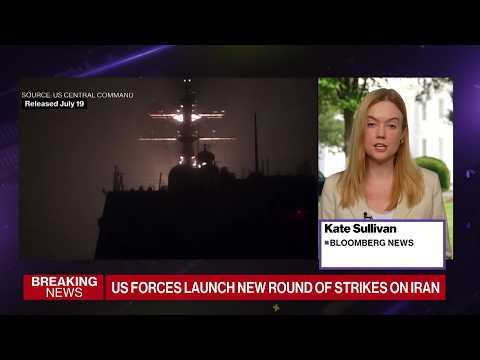
Tag: Centcom

  • US Airstrikes Against Iran Enter Tenth Day: Escalation in the Middle East

    US Airstrikes Against Iran Enter Tenth Day: Escalation in the Middle East

    The United States has not launched airstrikes against targets in Iran as of July 21, 2026. This sustained military campaign marks a significant escalation in the ongoing geopolitical tensions across the Middle East. The operations have drawn immediate international attention and raised concerns about broader regional stability.

    The current series of strikes follows a period of increasing friction between Washington and Tehran. Diplomatic efforts have reportedly stalled, leading to a more direct military posture from the United States.

    The Trajectory of Escalation

    Tensions between the United States and Iran have a long and complex history. Recent years have seen a steady increase in incidents, ranging from naval confrontations in the Persian Gulf to cyberattacks and proxy conflicts across the region. The current wave of airstrikes did not emerge in a vacuum.

    Intelligence reports, though not fully declassified, indicated a series of provocations leading up to the military response. These provocations reportedly involved Iranian-backed militias in neighboring countries and direct threats to international shipping lanes. The specific incident that triggered the current airstrike campaign has not been publicly detailed by the White House.

    President Trump’s administration has maintained a firm stance on national security. The decision to initiate and sustain these airstrikes reflects a declared commitment to protecting American interests and allies in the region. Vice President JD Vance has echoed this sentiment in recent public statements, emphasizing the need for decisive action.

    Defining the Scope of Operations

    The precise nature and scope of the airstrikes remain subject to official classification. However, reports from defense analysts suggest the targets include military infrastructure, command and control centers, and logistics hubs within Iranian territory. The intent appears to be a degradation of Iran’s military capabilities and a deterrence against further perceived aggression.

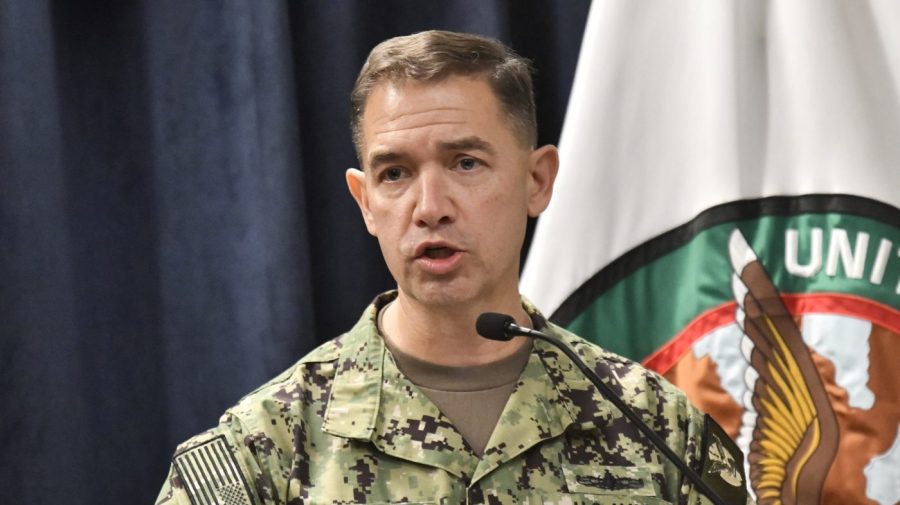
    The United States Central Command (CENTCOM) is overseeing the operations. Daily briefings have been minimal, citing operational security. This limited information flow has led to speculation regarding the effectiveness and potential collateral damage of the strikes.

    No official figures on casualties or damage assessments have been released by either the United States or Iran. Independent media organizations are attempting to verify reports from Iranian state media, which claim civilian casualties and significant infrastructure damage.

    International Response and Diplomatic Efforts

    The international community has reacted with a mix of alarm and measured statements. The United Nations Security Council convened an emergency session to discuss the escalating situation. Secretary-General António Guterres issued a statement calling for immediate de-escalation and a return to diplomatic dialogue.

    European Union leaders have expressed deep concern. They urged both Washington and Tehran to exercise restraint. Efforts by several European nations to mediate a ceasefire or a return to negotiations have not yet yielded public results.

    Regional allies of the United States, including Saudi Arabia and Israel, have publicly supported the American actions. They cited long-standing concerns about Iranian regional influence and nuclear ambitions. Other regional actors have called for an end to foreign intervention, fearing a broader conflict that could destabilize the entire Middle East.

    The Role of Economic Sanctions

    Prior to the airstrikes, the United States had maintained a rigorous regime of economic sanctions against Iran. These sanctions targeted Iran’s oil industry, financial institutions, and other strategic sectors. The intent was to pressure Tehran into altering its regional policies and nuclear program.

    The effectiveness of these sanctions has been a subject of debate. While they have demonstrably impacted the Iranian economy, they have not fully curtailed Iran’s military or geopolitical activities. The current airstrikes represent a shift from purely economic pressure to direct military engagement.

    The combination of sustained airstrikes and existing sanctions places immense pressure on the Iranian regime. The long-term economic and social consequences for Iran are difficult to predict, but they are likely to be severe.

    Potential Ramifications for Global Stability

    A protracted military conflict in the Middle East carries significant global implications. The region is a vital source of global energy. Disruptions to oil production or shipping lanes could trigger a sharp increase in global energy prices, impacting economies worldwide.

    The Strait of Hormuz, a critical chokepoint for global oil shipments, remains a flashpoint. Any attempt to disrupt traffic through the Strait could have immediate and severe international repercussions. Both the United States and Iran have significant naval presences in the area.

    Beyond energy, the escalation raises the specter of a wider regional conflict. Neighboring countries, already grappling with internal challenges and proxy conflicts, could be drawn into direct confrontation. The humanitarian consequences of such a conflict would be immense.

    Cyber Warfare and Hybrid Threats

    Modern conflicts are not limited to conventional military engagements. Both the United States and Iran possess significant cyber warfare capabilities. Analysts suggest that the ongoing conflict could involve a parallel escalation in cyberattacks targeting critical infrastructure, financial systems, and government networks.

    Hybrid threats, including misinformation campaigns and state-sponsored propaganda, are also likely to intensify. Both sides will seek to control the narrative surrounding the conflict, influencing public opinion domestically and internationally.

    The information space has become a crucial battleground. Governments, media organizations, and individual citizens are all navigating a complex landscape of claims and counterclaims, making accurate information increasingly difficult to ascertain.

    Historical Parallels and Future Outlook

    Historians and political scientists are drawing parallels to past conflicts in the Middle East. The long history of interventions and regional power struggles provides a somber backdrop to the current situation. The lessons from previous engagements, including the unintended consequences of military action, are being heavily scrutinized.

    The current situation presents a unique set of challenges. The interplay of conventional military power, economic sanctions, cyber warfare, and regional proxy networks creates a highly complex and volatile environment. Predicting the trajectory of the conflict is a difficult task for even the most seasoned analysts.

    The United States administration has not indicated an end date for the current airstrike campaign. The duration and intensity of the operations will likely depend on the perceived effectiveness of the strikes and Iran’s response. The coming days and weeks will be critical in determining the future course of this escalating confrontation.

    Governments gathered. Diplomats gathered. Citizens gathered. The world waited.

    Tehran.

  • US Expands Attacks on Iran After American Service Member’s Death

    US Expands Attacks on Iran After American Service Member’s Death

    The United States initiated expanded military operations against targets within Iran on 2026-07-20, directly following the confirmed death of an American service member reported on 2026-07-19. These retaliatory strikes focused on facilities associated with the Islamic Revolutionary Guard Corps (IRGC), marking a significant escalation in the ongoing tensions between Washington D.C. and Tehran.

    President Trump authorized the measures, asserting that the US would respond decisively to any actions endangering American personnel. The Department of Defense is currently compiling specific details regarding the full scope and impact of these new operations.

    The Incident Triggering Escalation

    An American service member was killed on 2026-07-19. The Pentagon confirmed the casualty but withheld the service member’s identity pending family notification. Initial reports indicated the incident occurred during an operational mission in the region.

    The exact circumstances leading to the American service member’s death remain under investigation. Defense officials have not yet specified the type of attack or the group responsible. However, the immediate US response suggested a direct link to Iranian-backed entities.

    This loss of life prompted swift action from the US administration. President Trump reiterated the policy of responding forcefully to any attacks on American forces or interests.

    Expanded US Military Response

    On 2026-07-20, the US Central Command (CENTCOM) announced the execution of precision strikes. These strikes were described as defensive in nature, aimed at degrading the capabilities of groups threatening US personnel.

    Defense Secretary Pete Hegseth issued a statement confirming the operations. He emphasized that the US seeks to deter further aggression while protecting American forces stationed in the Middle East. The strikes were carefully planned to minimize civilian casualties.

    Targeted Facilities and Operations

    The expanded attacks specifically targeted infrastructure and command-and-control nodes belonging to the Islamic Revolutionary Guard Corps (IRGC). Unconfirmed reports suggested targets included facilities in western Iran and along the Iraq-Iran border.

    These locations are historically used by the IRGC for logistics and training. The precision nature of the strikes aimed to disrupt these operational capabilities without broader engagement.

    The decision to target IRGC assets directly indicated a strategic shift in response. Previous engagements often focused on proxy groups. This direct targeting underscored the US administration’s determination to hold Iran accountable for actions attributed to its proxies.

    Military analysts observed that striking IRGC facilities serves multiple purposes. It aims to degrade immediate operational capacity. It also sends a strong deterrent message to Tehran regarding the consequences of attacks on American personnel.

    The strikes were executed with advanced weaponry, ensuring accuracy and minimizing collateral damage. US officials stressed the defensive posture of these actions, framing them as necessary to protect American interests and service members in the region.

    Geopolitical Implications and Regional Reactions

    The escalation immediately drew international attention. Allies of the United States expressed concern over the potential for broader regional conflict. Several nations called for de-escalation from all parties involved.

    The European Union issued a statement urging restraint. Countries in the Middle East, including Saudi Arabia and the United Arab Emirates, monitored the situation closely. Their reactions varied, reflecting their complex relationships with both the US and Iran.

    Iran’s Official Stance

    Iran’s Ministry of Foreign Affairs condemned the US actions as a violation of its sovereignty. Official statements from Tehran vowed a proportionate response. The IRGC media outlets reported on the strikes, describing them as acts of aggression.

    Iranian officials characterized the US strikes as an act of international terrorism. They asserted Iran’s right to self-defense. Public sentiment in Iran, as reported by state media, was one of defiance and condemnation.

    The Iranian government convened an emergency session of its National Security Council. Discussions focused on potential retaliatory measures and strategies to counter what it termed American aggression. The Supreme Leader’s office also issued a statement, reinforcing the nation’s resolve.

    International Response and Concerns

    The United Nations Secretary-General called for an immediate cessation of hostilities. He emphasized the fragile stability of the Middle East. Diplomatic efforts were initiated to prevent a full-scale regional conflict.

    Russia and China, both permanent members of the UN Security Council, expressed strong disapproval of the US actions. They called for a peaceful resolution through dialogue. Their statements highlighted the risks of unilateral military action.

    Analysts are assessing how this military escalation will impact global oil markets and international shipping lanes. The Strait of Hormuz, a critical chokepoint for global oil supplies, remains a focal point of concern. Any disruption there could have significant economic repercussions worldwide.

    The stability of the broader Middle East hangs in the balance. Regional powers are adjusting their security postures. The increased military activity raises the specter of miscalculation and unintended consequences.

    Ongoing Monitoring and Future Actions

    The Department of Defense continues to monitor the situation closely. Further statements are anticipated from President Trump and key administration officials. The safety and security of US service members remain the top priority.

    US military assets in the region have been placed on heightened alert. Defensive measures are being reinforced across all American bases. Intelligence agencies are working to assess Iranian intentions and capabilities.

    President Trump’s administration has consistently maintained a firm stance against perceived Iranian aggression. This latest military action aligns with that stated policy. The administration’s focus remains on protecting American lives and interests.

    The international community watches. Regional powers respond. Global markets react. The world awaits.


  • US Strikes Iranian Targets – Escalation in Middle East Tensions

    US Strikes Iranian Targets – Escalation in Middle East Tensions

    On July 15, 2026, the United States military initiated a seven-hour operation against multiple Iranian installations. This direct military action targeted specific capabilities within Iran, including missile launch sites, drone manufacturing facilities, and command-and-control centers. The operation signifies a substantial escalation in the long-standing tensions between Washington and Tehran.

    This engagement commenced in the early hours of the day. It concluded approximately seven hours later. Initial intelligence suggests the primary objective was to degrade Iran’s ability to project military power and influence across the region.

    The July 15, 2026 Engagement: An Overview

    The United States military undertook a significant operation against Iranian targets. This engagement lasted for seven hours, marking a decisive shift in U.S. policy toward Iran.

    The action occurred on July 15, 2026, following a period of intensifying geopolitical friction. This period saw increased rhetoric and strategic maneuvers from both nations.

    Reports from international monitors indicated the operation began early in the morning, local time. It concluded by mid-morning, suggesting a concentrated and rapid execution phase.

    The precise locations and types of targets engaged remain subject to official confirmation from U.S. authorities. However, the nature of the operation indicates a direct and overt military action by the United States against Iranian infrastructure.

    This direct engagement represents a departure from previous, more covert or limited responses. It signals a heightened level of commitment to countering perceived Iranian threats.

    Background to Escalation: Decades of Friction

    The relationship between the United States and Iran has been fraught with challenges for decades. Points of contention have historically included Iran’s nuclear program, its regional influence, and its support for various non-state actors across the Middle East.

    The United States has consistently articulated concerns regarding these activities. These concerns have shaped U.S. foreign policy decisions concerning Iran, leading to periods of both diplomatic engagement and punitive measures.

    In recent months, these underlying tensions have intensified significantly. A series of specific incidents, often undisclosed to the public, are believed to have directly contributed to the current military response.

    Analysts point to a cycle of provocations and counter-provocations that have steadily eroded diplomatic relations between Washington and Tehran. The July 15 operation is widely viewed as a culmination of these recent developments, pushing the relationship to a critical point.

    The strategic rivalry between the two nations extends across several key regional theaters. These include Iraq, Syria, Yemen, and the Persian Gulf. Each of these locations has seen proxy conflicts or direct confrontations involving U.S. and Iranian interests.

    Previous U.S. Actions and Iranian Responses

    The United States has previously employed a range of strategies to counter perceived Iranian threats. These have included comprehensive economic sanctions, designed to restrict Iran’s financial capabilities and international trade access.

    Cyber operations have also been utilized. These operations aim to disrupt Iranian infrastructure and military systems without direct kinetic engagement. Military deployments to the region, including naval assets and airpower, have been a consistent feature of U.S. policy, signaling presence and readiness.

    Iran, in turn, has often responded with its own military exercises. These exercises frequently involve missile tests, demonstrating its defensive and offensive capabilities. Support for proxy forces in regional conflicts has also been a hallmark of Iranian foreign policy, allowing it to exert influence without direct state-on-state confrontation.

    This latest operation differs significantly in its reported scale and duration. A seven-hour engagement suggests a coordinated and substantial effort, moving beyond previous limited strikes or covert actions. It signals a more overt and direct military posture from the United States, indicating a potential shift in strategy.

    Past U.S. administrations have varied in their approaches, from diplomatic overtures to heightened pressure campaigns. The current operation marks one of the most direct military confrontations in recent history between the two nations.

    The Nature of the Reported Targets

    While official confirmation is pending from U.S. authorities, intelligence sources have indicated the U.S. military focused on specific types of strategic targets within Iran. These targets are integral to Iran’s military capabilities and regional projection.

    Likely targets included missile launch sites. Degrading these sites would directly impact Iran’s ballistic missile capabilities, a key component of its deterrent and offensive strategy. Drone manufacturing facilities were also probable targets, aiming to curb Iran’s growing drone technology and deployment, which has been utilized by its proxies.

    Command-and-control centers were also identified as potential targets. Disrupting these centers would hinder Iran’s ability to coordinate its military forces and operations effectively, creating confusion and disarray within its defense structure.

    The overarching goal of this targeting strategy appears to be to significantly degrade Iran’s ability to project power. This would reduce its capacity to conduct military actions or support proxy groups in the region, thereby altering the regional balance of power.

    The targeting strategy also seems designed to minimize civilian casualties, focusing on military infrastructure. This precision targeting aligns with previous U.S. military doctrine in similar situations, emphasizing surgical strikes against military assets. However, the inherent risk of miscalculation and unintended consequences in such a complex operation remains high.

    The selection of these targets suggests an intent to reduce Iran’s capacity for asymmetric warfare and its ability to threaten maritime routes and regional allies.

    Logistics and Resources Deployed

    An operation of this reported scale and duration necessitated significant logistical planning and a substantial deployment of resources. The complexity of striking targets deep within Iranian territory required advanced capabilities.

    Air assets were crucial to the operation. These likely included advanced fighter jets, such as F-35s or F-22s, capable of delivering precision munitions with stealth capabilities. Surveillance drones, like the RQ-4 Global Hawk, would have provided real-time intelligence and damage assessment, crucial for evaluating the mission’s success.

    Naval forces stationed in the Persian Gulf and surrounding waters may also have played a critical support role. Aircraft carriers, destroyers, and submarines could have provided additional reconnaissance, electronic warfare capabilities, or acted as launch platforms for cruise missiles, ensuring a multi-faceted approach.

    The coordination required across different military branches and intelligence agencies would have been extensive. This includes the U.S. Central Command (CENTCOM), the Air Force, Navy, and various intelligence organizations. The success of a seven-hour operation hinges on seamless execution, from intelligence gathering to target engagement and post-strike assessment.

    Initial assessments of the operation will focus on the effectiveness of these deployments and the overall impact on Iran’s military infrastructure. The ability to execute such a complex mission over an extended period speaks to the advanced capabilities and strategic readiness of the United States military.

    The deployment likely involved sophisticated electronic warfare measures to suppress Iranian air defenses, ensuring the safety of U.S. aircraft and personnel.

    International Reactions and Regional Stability

    News of the operation immediately triggered a global response. Major world powers quickly issued statements calling for de-escalation and restraint from all parties involved, expressing concern over the potential for wider conflict.

    The United Nations Security Council is expected to convene an emergency session to discuss the situation and seek pathways to diplomatic resolution. This session will likely involve heated debates and calls for a ceasefire or de-escalation framework.

    Regional allies of the United States are closely monitoring developments, with some expressing solidarity and others urging caution. Countries bordering Iran are particularly concerned about potential retaliatory actions and the destabilizing effect on an already volatile region.

    Oil prices spiked immediately following reports of the operation, reflecting market anxieties about potential disruptions to global energy supplies. Global financial markets reacted with volatility, as investors sought safe-haven assets amidst the increased geopolitical uncertainty.

    Diplomatic efforts are expected to intensify in the coming days, with international mediators attempting to prevent a broader conflict. The international community fears a prolonged confrontation could have severe humanitarian and economic consequences.

    The European Union, along with other major powers, released a joint statement calling for dialogue and a peaceful resolution to the conflict, emphasizing the need to protect civilian lives and infrastructure.

    Looking Ahead: Potential Repercussions

    The repercussions of this seven-hour military operation are likely to be far-reaching and complex. Iran’s official response will be crucial in determining the immediate trajectory of the conflict.

    Analysts anticipate a range of potential Iranian reactions, from retaliatory strikes against U.S. interests or allies in the region to increased support for proxy groups. The nature and scale of any Iranian response will dictate the next phase of escalation or de-escalation.

    The operation also has significant implications for global energy markets. Any sustained disruption to oil production or shipping routes in the Persian Gulf could lead to further price hikes and economic instability worldwide.

    Domestically, the operation will likely generate political debate within the United States. President Trump’s administration will face scrutiny regarding the strategic rationale and potential long-term consequences of such a direct military engagement.

    International law experts will also examine the legality and proportionality of the U.S. action under international statutes. This will add another layer of complexity to the diplomatic fallout.

    The long-term stability of the Middle East hangs in a precarious balance. The international community is bracing for a period of heightened uncertainty. The world waits.

    Diplomats gathered. Leaders consulted. Markets braced. The world waits.

  • Vance Warns Israel: Do Not Attack Trump’s Iran Deal

    Vance Warns Israel: Do Not Attack Trump’s Iran Deal

    J.D. Vance delivered a stark public warning to Israel on Bloomberg Television on June 23, 2026. The message centered on a newly forged diplomatic framework known as Trump’s Iran Deal. Vance cautioned Israeli leadership against launching military or political strikes that could destabilize the agreement. The broadcast marked a significant pivot in Washington-Jerusalem relations. Washington laid down a definitive boundary. Israel now faces a complex geopolitical calculus.

    The remarks were calculated. They were delivered on a network dedicated to global finance and market stability. Vance directed his statements toward a domestic electorate focused on economic stability, while simultaneously addressing foreign defense ministries. The policy anchors national interests over foreign entanglements. Protecting American economic stability is the stated priority. Allied military ambitions must align with this framework.

    In many ways, this broadcast crystalizes a long-developing fracture in traditional alliances. The unconditional diplomatic cover historically provided to allied military operations is being replaced. It is being replaced by a transactional, structurally rigid foreign policy doctrine. Washington brokers the deals. Allies are expected to operate within the defined parameters.

    The Bloomberg Television Ultimatum

    During the morning broadcast, Vance addressed the growing rumors of an Israeli preemptive strike on Iranian nuclear facilities. He stated clearly that Washington would not support actions that undermine its diplomatic achievements. Trump’s Iran Deal is viewed as a cornerstone of current U.S. foreign policy. Disruption of that deal is considered a direct threat to American security and market stability.

    The tone was transactional and firm. Traditional diplomatic pleasantries were discarded. Vance spoke directly to the military planners in Tel Aviv and the political leadership in Jerusalem. He outlined the consequences of unilateral action. A strike on Iran would not just be an attack on Tehran. It would be viewed as an attack on the diplomatic framework constructed by the White House.

    This represents a radical departure from historical U.S. policy. For decades, Washington maintained a policy of strategic ambiguity regarding Israeli military operations in the Middle East. That era appears to be closing. The new doctrine demands compliance with American strategic goals. Unilateral allied action that risks dragging the United States into a regional war is no longer tolerated.

    The Architecture of Trump’s Iran Deal

    To understand the friction, one must understand the deal. Trump’s Iran Deal is fundamentally different from the 2015 Joint Comprehensive Plan of Action (JCPOA). The old framework relied on complex, multilateral European cooperation. The new framework is blunt. It relies on massive, unilateral American economic leverage. It demands total, verifiable compliance in exchange for specific, tiered sanctions relief.

    Economic Carrots and Sticks

    Tehran faces strict red lines regarding uranium enrichment. Centrifuge development is heavily capped at facilities like Natanz and Fordow. In return, Washington allows controlled avenues for Iranian oil exports. The funds are held in heavily monitored escrow accounts located in Qatar and Oman. They can only be used for approved humanitarian and domestic infrastructure projects. The United States Treasury Department oversees every transaction.

    Vance emphasized this economic architecture during his Bloomberg remarks. The deal is designed to keep global energy markets stable. It keeps Iranian oil flowing just enough to prevent price shocks, while keeping the regime financially constrained. It is a delicate balance. An Israeli military strike would shatter that balance instantly. It would send Brent Crude prices soaring. It would trigger retaliatory strikes across the Strait of Hormuz.

    Surveillance and Deterrence

    The military component of the deal relies on deterrence, not intervention. The United States maintains a robust naval presence in the Persian Gulf. The Fifth Fleet in Bahrain acts as the enforcer. United States Central Command (CENTCOM) coordinates the regional radar architecture. However, the goal is to avoid using that force. Trump’s Iran Deal is designed to box Tehran in diplomatically. Vance’s warning to Israel is a mandate to let the diplomatic box work.

    Jerusalem’s Strategic Opposition

    The view from Jerusalem is entirely different. Israeli leadership views the region through an existential lens. Diplomatic agreements with Tehran are viewed with deep suspicion. The Israeli Defense Forces (IDF) maintain constant readiness. Intelligence agencies in Tel Aviv monitor Iranian enrichment facilities around the clock.

    The Begin Doctrine and Historical Precedent

    History dictates Israeli policy. The Begin Doctrine mandates that Israel will not allow a sworn enemy to acquire weapons of mass destruction. This doctrine led to the 1981 strike on Iraq’s Osirak reactor. It led to the 2007 Operation Orchard strike in Syria. Striking Iranian nuclear sites is a known, heavily rehearsed Israeli contingency.

    Vance’s warning directly challenges this military doctrine. It puts Israel in an impossible position. Jerusalem must weigh the existential threat of a nuclear Iran against the immediate threat of alienating its primary superpower ally. The calculus is no longer just about defeating Iranian air defenses. It is about defying Washington.

    The Logistics of a Unilateral Strike

    A unilateral Israeli strike on Iran without American support presents severe logistical hurdles. The distance between Israeli airbases and Iranian nuclear facilities exceeds 1,000 miles. Israeli F-35i Adir and F-15I Ra’am fighter jets would require mid-air refueling. They would need to traverse hostile or heavily monitored airspace over Jordan, Iraq, or Saudi Arabia.

    Furthermore, penetrating deeply buried facilities like Fordow requires specialized munitions. The United States possesses the GBU-57 Massive Ordnance Penetrator. Israel relies on smaller bunker-busting bombs. Without American logistical support, satellite intelligence sharing, and advanced munitions, an Israeli strike becomes exponentially more difficult. It risks being incomplete. An incomplete strike would trigger a massive regional war without actually neutralizing the nuclear threat.

    Washington knows this. Vance’s warning leverages this logistical reality. By publicly withdrawing support for a strike, Washington is effectively attempting to veto the operation before it begins. The message is that Israel will be entirely on its own if it proceeds.

    The National Interest Argument

    The Bloomberg broadcast was ultimately aimed at the American voter and the global markets. The underlying theme was national interest. For years, the American electorate has grown weary of Middle Eastern conflicts. Trillions of dollars have been spent. Thousands of lives have been lost. The current administration operates on a mandate to stop endless wars and prioritize domestic economic growth.

    Vance framed the defense of Trump’s Iran Deal as a defense of the American working class. A war with Iran would spike the price of oil. It would drive up inflation. It would disrupt global supply chains. By warning Israel against attacking the deal, Vance signaled that domestic economic security supersedes traditional foreign policy alliances.

    This framing shifts the narrative. It moves the conversation away from moral obligations to allies. It moves it toward cold, hard economic realities. The United States will broker deals that benefit the United States. Allies are expected to fall in line. If they do not, they risk losing the umbrella of American protection. It is a transactional approach to global hegemony.

    Market Reactions to the Geopolitical Shift

    Because the remarks were made on Bloomberg Television, the market reaction was immediate. Energy traders adjusted their algorithms. The price of crude oil experienced a brief fluctuation as algorithms parsed the risk of an Israeli strike against the stabilizing force of an American veto. The market ultimately interpreted Vance’s remarks as a stabilizing factor. The threat of immediate conflict was priced down.

    Defense sector stocks also saw movement. Companies reliant on foreign military sales to Israel monitored the broadcast closely. A potential freeze on advanced munitions or logistical support would impact future contracts. The defense industrial base must now navigate a landscape where foreign sales are increasingly tied to strict compliance with Washington’s diplomatic frameworks.

    The broader financial sector recognized the pivot. Wall Street values predictability. Trump’s Iran Deal, enforced by strict American oversight and a refusal to allow allied disruption, offers a predictable energy market. Vance’s willingness to publicly rebuke a historic ally reinforced the administration’s commitment to that predictability.

    The Future of Washington-Jerusalem Relations

    The long-term impact of the June 23 broadcast remains to be seen. The relationship between Washington and Jerusalem is deeply entrenched. It spans intelligence sharing, joint military exercises, and deep cultural ties. However, the political friction is undeniable. The era of unconditional support has been replaced by conditional alignment.

    Israeli leadership must now navigate a Washington that prioritizes its own negotiated settlements over allied security concerns. The IDF must plan contingencies that do not rely on American logistical backing. Diplomatic channels will remain open, but the tone has fundamentally changed.

    The Middle East is undergoing a massive realignment. The Abraham Accords initiated a shift in regional dynamics. Trump’s Iran Deal introduces another massive variable. Traditional alliances are being tested. New economic realities are dictating military posture. The lines are being redrawn.

    Diplomats drafted memos. Traders adjusted algorithms. Generals reviewed contingencies. Washington.

  • The Friday Directive, Trump Declares Strait of Hormuz Will Be Completely Opened

    The Friday Directive, Trump Declares Strait of Hormuz Will Be Completely Opened

    The Strait of Hormuz dictates the price of global civilization. It is a 39-kilometer-wide maritime artery separating the Islamic Republic of Iran from the Arabian Peninsula. On a broadcast via Bloomberg Television, Donald Trump declared that this critical chokepoint will be completely opened on Friday. The statement serves as both a geopolitical directive and a market signal. It addresses ongoing regional tensions that have threatened to throttle the transit of global energy supplies. When the Strait is threatened, the world economy shudders. When a definitive timeline is placed on its security, markets react immediately.

    The declaration cuts through the usual diplomatic ambiguity. It places a hard deadline on an international crisis. By naming Friday as the day of total maritime access, Trump sets a clear expectation for both military commanders and energy traders. The global supply chain relies on predictability. For months, the Persian Gulf has offered anything but. This statement attempts to force a return to stability through projected strength.

    The Geography of a Global Chokepoint

    To understand the weight of the Friday directive, one must look at the map. The Strait of Hormuz connects the Persian Gulf to the Gulf of Oman and the Arabian Sea. At its narrowest point, it spans just 21 nautical miles. The actual shipping lanes are even tighter. Vessels must navigate a two-mile-wide inbound lane and a two-mile-wide outbound lane, separated by a two-mile buffer zone. This narrow corridor is the bottleneck for the world’s hydrocarbon economy.

    Approximately 21 million barrels of crude oil pass through these waters every single day. This represents roughly one-fifth of global petroleum consumption. Liquefied natural gas (LNG) from Qatar also relies entirely on this route. There are no viable alternative pipelines that can handle this volume. If the Strait closes, the oil stays in the Gulf. If the oil stays in the Gulf, factories in Asia halt, transportation costs in Europe spike, and gasoline prices in the United States surge.

    The northern shore is controlled by Iran. The southern shore is shared by the United Arab Emirates and the Musandam Peninsula, an exclave of Oman. This geography creates a permanent tactical advantage for asymmetric naval forces. Fast-attack craft, coastal defense cruise missiles, and naval mines can effectively shut down the transit lanes. The threat alone is often enough to send marine insurance premiums soaring at Lloyd’s of London.

    The Bloomberg Declaration

    The medium is often as important as the message. By making the announcement on Bloomberg Television, Trump spoke directly to the financial sector. The audience for this declaration was not just political allies or military adversaries. The audience included commodities traders in Chicago, hedge fund managers in New York, and shipping magnates in Athens.

    “The Strait of Hormuz will be completely opened on Friday.”

    This single sentence carries massive financial implications. When a political figure with significant influence guarantees the security of a chokepoint, it suppresses the geopolitical risk premium priced into every barrel of Brent Crude and West Texas Intermediate (WTI). It is a calculated move to project economic dominance. The statement forces market actors to adjust their positions based on an anticipated return to unhindered maritime traffic.

    The timing is deliberate. Friday serves as a hard boundary. It leaves a narrow window for regional actors to adjust their naval postures. It also gives the United States military apparatus time to ensure that the reality on the water matches the rhetoric on the television screen.

    The Military Reality on the Water

    Words spoken in a broadcast studio must be backed by steel on the water. The responsibility for securing the Strait of Hormuz falls primarily to the United States Central Command (CENTCOM) and, specifically, the U.S. Navy’s Fifth Fleet. Headquartered in Manama, Bahrain, the Fifth Fleet is the maritime shield of the Persian Gulf.

    For decades, the Fifth Fleet has engaged in a high-stakes tactical dance with the Islamic Revolutionary Guard Corps Navy (IRGCN). The IRGCN specializes in asymmetric warfare. They utilize swarms of armed speedboats, uncrewed surface vessels (USVs), and aerial drones to harass commercial tankers. In recent years, this harassment has escalated into outright seizures of foreign-flagged vessels.

    To guarantee that the Strait is completely opened by Friday, the U.S. military must deploy a visible and overwhelming deterrent. This typically involves several coordinated assets:

    • Carrier Strike Groups: The presence of a Nimitz-class or Ford-class aircraft carrier in the Arabian Sea provides immediate air superiority.
    • Guided-Missile Destroyers: Arleigh Burke-class destroyers routinely escort vulnerable commercial vessels through the transit corridor.
    • Maritime Patrol Aircraft: P-8A Poseidon aircraft provide persistent surveillance, tracking Iranian fast-attack craft before they leave port.
    • Coalition Forces: The International Maritime Security Construct (IMSC), a coalition of allied nations, works alongside U.S. forces to maintain freedom of navigation.

    The Friday deadline implies that these forces are moving into position, or are already authorized to escalate their defensive postures. It signals a zero-tolerance policy for IRGCN harassment.

    Echoes of Earnest Will

    The current tension is not unprecedented. The history of the Strait of Hormuz is defined by cycles of threat and intervention. To understand the gravity of a completely opened Strait, one must look back to the Tanker War of the 1980s. During the Iran-Iraq War, both nations began attacking commercial shipping in the Persian Gulf to cripple each other’s economies.

    In 1987, the United States launched Operation Earnest Will. This remains the largest naval convoy operation since World War II. U.S. warships escorted reflagged Kuwaiti oil tankers through the Strait of Hormuz and the Persian Gulf. The operation required massive logistical support and resulted in direct military confrontation, including Operation Praying Mantis in 1988, where U.S. forces destroyed significant elements of the Iranian navy.

    More recently, the summer of 2019 saw a series of limpet mine attacks on commercial vessels, including the Kokuka Courageous and the Front Altair. These incidents temporarily paralyzed shipping traffic and forced a rapid buildup of U.S. naval assets in the region. Trump’s Friday directive draws heavily on this historical context. It is a modern iteration of the Earnest Will doctrine: the United States will use its naval hegemony to guarantee the flow of global commerce.

    The Economics of Safe Passage

    The cost of a closed Strait is incalculable. The cost of a threatened Strait is measured in insurance premiums. When the IRGCN seizes a tanker, the Joint War Committee (JWC) in London often expands its list of high-risk areas. This triggers Additional Premium (AP) charges for any vessel entering the Persian Gulf.

    For a Very Large Crude Carrier (VLCC) carrying two million barrels of oil, this additional premium can run into the hundreds of thousands of dollars for a single voyage. These costs are ultimately passed down to the consumer at the gas pump. By declaring the Strait completely opened, Trump is directly attacking these inflated costs. The goal is to strip the geopolitical risk premium from the market.

    Furthermore, an open Strait ensures the viability of massive infrastructure investments in the region. Nations like Saudi Arabia, Kuwait, and the United Arab Emirates rely on unhindered export routes to fund their national budgets. An open Hormuz is the foundation of the Middle Eastern economic model. The Friday directive aligns U.S. policy with the economic imperatives of its regional allies.

    The Friday Horizon

    The world watches the water. The statement has been made. The deadline has been set. The mechanical realities of global trade now intersect with the hard power of naval deployment. The outcome will dictate the price of energy for the foreseeable future.

    Traders adjust their forecasts. Commanders position their fleets. Tankers plot their courses.

    Hormuz.

  • The Deterrence Doctrine: Why Trump Demands a Direct Response to Iran’s Helicopter Attack

    The Deterrence Doctrine: Why Trump Demands a Direct Response to Iran’s Helicopter Attack

    Former President Donald Trump stated in a Bloomberg Television interview that the United States must launch a direct, proportional military response against Iran following an attack on a U.S. helicopter. Speaking to the necessity of global deterrence, Trump argued that failing to retaliate against Tehran directly projects a fatal weakness that emboldens hostile state actors and endangers American service members deployed across the Middle East.

    The statement cuts to the core of American foreign policy. It forces a conversation about where the lines of engagement are drawn. It demands an answer to a decades-old question.

    When a proxy fires a weapon, who pays the price?

    The Bloomberg Television Declaration

    The interview aired on Bloomberg Television. The setting was formal. The rhetoric was uncompromising. Trump addressed the attack on the U.S. helicopter not as an isolated skirmish, but as a symptom of a collapsing global deterrence architecture.

    He pointed the finger directly at Tehran. He bypassed the local militia groups entirely.

    This is a calculated rhetorical strategy. For decades, the Islamic Republic of Iran has utilized a network of proxy forces to harass Western assets. This provides plausible deniability. Trump’s stated doctrine strips that deniability away. If a weapon is financed by Iranian rials, smuggled by the Quds Force, and fired at an American aircraft, Trump’s framework treats the attack as an official act of the Iranian state.

    His demand for a response activates a specific cultural defense mechanism. It signals patriotism. It signals a refusal to accept American casualties as the cost of doing business in the Middle East.

    The Vulnerability of Rotary-Wing Aircraft

    Helicopters are inherently vulnerable. They do not fly at thirty thousand feet. They do not break the sound barrier. They operate low and slow, navigating complex terrain where threats can emerge from a single rooftop or a desert ridge.

    The U.S. military relies heavily on rotary-wing aircraft in the Middle East. The AH-64 Apache provides close air support. The MH-60 Black Hawk handles troop transport and medical evacuations. These machines are the lifeblood of U.S. Central Command (CENTCOM) operations.

    They are also prime targets.

    Iran has spent years flooding the region with man-portable air-defense systems (MANPADS). These shoulder-fired missiles are cheap. They are easy to smuggle. They are highly effective against helicopters. When an Iran-backed militia targets a U.S. helicopter, they are attacking the logistical foundation of the American military presence in the region.

    An attack on a helicopter is not a warning shot. It is an attempt to inflict catastrophic casualties.

    The Architecture of Maximum Pressure

    Trump’s demand for retaliation is not theoretical. It is anchored in his established track record. During his presidency, he implemented a strategy known as Maximum Pressure.

    The strategy began with economics. In May 2018, the United States withdrew from the Joint Comprehensive Plan of Action (JCPOA). Sanctions were reimposed. The goal was to choke off the financial pipelines that funded the Islamic Revolutionary Guard Corps (IRGC).

    But the strategy also included kinetic action.

    On January 3, 2020, a U.S. drone strike at Baghdad International Airport killed Qasem Soleimani. Soleimani was the commander of the IRGC’s Quds Force. He was the architect of Iran’s proxy network. The strike was a massive escalation. It was a direct message that the United States would no longer tolerate proxy attacks without targeting the Iranian leadership orchestrating them.

    Trump’s recent comments on Bloomberg Television echo this exact philosophy. Deterrence is not achieved through proportional responses against low-level militants. Deterrence is achieved by making the cost of aggression unimaginably high for the state sponsoring it.

    The Proxy War Apparatus

    Understanding the helicopter attack requires understanding the IRGC. The IRGC operates parallel to the traditional Iranian military. Its mandate is to export the Islamic Revolution.

    It achieves this through the Quds Force. The Quds Force funds, trains, and equips militias across the Middle East. The Houthis in Yemen. Hezbollah in Lebanon. Kataib Hezbollah in Iraq. These groups provide Tehran with a strategic buffer.

    When the Houthis fire anti-ship ballistic missiles in the Red Sea, they do so with Iranian intelligence. When militias in Iraq launch drones at U.S. bases, they do so with Iranian hardware.

    This dynamic creates a complex problem for the Pentagon. Striking the proxies is akin to treating the symptoms of a disease while ignoring the cause. The militants are replaceable. The hardware is easily restocked. Trump’s doctrine argues that the only way to stop the attacks is to strike the source.

    Washington’s Political Calculus

    National security is a dominant force in American politics. As the 2024 election cycle accelerates, foreign policy has become a central battleground.

    The attack on the helicopter forces lawmakers to take a stance. It highlights the tension between isolationism and interventionism. Trump’s base responds strongly to a posture of strength. The concept of cultural defense is deeply tied to the image of an untouchable American military.

    When American service members are attacked, the public expects a response. Hesitation is viewed as weakness. Weakness is viewed as a national embarrassment.

    Trump leverages this sentiment effectively. By demanding a direct response to Iran, he positions himself as the defender of American prestige. He draws a sharp contrast with diplomatic approaches that prioritize de-escalation over retaliation.

    The Mechanics of Retaliation

    What does a direct response look like? The Pentagon maintains extensive target packages for Iranian assets.

    A retaliatory strike would likely involve a combination of naval and air assets. The USS Dwight D. Eisenhower Carrier Strike Group operates in the region. Arleigh Burke-class destroyers carry Tomahawk cruise missiles capable of striking targets deep inside Iranian territory with pinpoint accuracy.

    Air Force assets would also play a role. B-1B Lancer bombers, flying from Al Udeid Air Base in Qatar or directly from the continental United States, can deliver massive payloads. F-35 Lightning II stealth fighters can bypass advanced air defense systems.

    The targets would be carefully selected to maximize damage to the IRGC while minimizing civilian casualties. Command and control centers. Drone manufacturing facilities. Naval bases along the Strait of Hormuz.

    The goal is not regime change. The goal is the destruction of military capability.

    The Echoes of Operation Praying Mantis

    There is historical precedent for this type of escalation. In April 1988, the USS Samuel B. Roberts struck an Iranian naval mine in the Persian Gulf. The blast nearly split the frigate in half.

    President Ronald Reagan ordered a direct, disproportionate response. The result was Operation Praying Mantis.

    On April 18, 1988, U.S. forces systematically destroyed half of Iran’s operational fleet. American aircraft and warships sank Iranian frigates, gunboats, and speedboats. They destroyed armed oil platforms used by the IRGC to coordinate attacks on commercial shipping.

    The operation lasted less than a day. It effectively ended the naval phase of the Iran-Iraq War. It reestablished American dominance in the Persian Gulf.

    Trump’s demands align with the legacy of Operation Praying Mantis. When an American asset is attacked, the response must be overwhelming. It must leave no doubt about the balance of power.

    The Cost of Inaction

    The alternative to retaliation is de-escalation. Proponents of de-escalation argue that striking Iran directly risks triggering a regional war. They point to the volatility of the Middle East. They warn of the economic consequences of a conflict in the Strait of Hormuz, where a significant portion of the world’s oil supply transits daily.

    But the doctrine of deterrence views inaction as the greater risk.

    If Iran believes it can attack a U.S. helicopter without facing direct consequences, it will escalate. Today it is a helicopter. Tomorrow it is a destroyer. The day after, it is a forward operating base.

    Deterrence is a psychological construct. It exists only as long as the adversary believes the threat of retaliation is credible. The moment that credibility fractures, the deterrence fails.

    Rebuilding the Red Line

    The Bloomberg Television interview serves as a blueprint for a potential future administration. It signals a return to Maximum Pressure. It signals a zero-tolerance policy for proxy warfare.

    The attack on the helicopter is a flashpoint. It is a test of American resolve. The way Washington responds will dictate the operational tempo of the IRGC for years to come.

    The Middle East respects strength. It exploits weakness. The doctrine of deterrence does not allow for ambiguity.

    Diplomats drafted memos. Generals reviewed target packages. Politicians debated the escalation ladder. Deterrence.

  • The Strait of Hormuz Crisis: Trump Claims Iran Shot Down U.S. Helicopter

    The Strait of Hormuz Crisis: Trump Claims Iran Shot Down U.S. Helicopter

    Donald Trump stated that Iranian military forces shot down a United States helicopter operating in the Strait of Hormuz, a critical maritime chokepoint between the Persian Gulf and the Gulf of Oman. The announcement immediately escalated geopolitical tensions between Washington and Tehran. It raised urgent questions about the safety of U.S. Central Command (CENTCOM) personnel stationed in the Middle East and the stability of global energy markets. The assertion places a sudden spotlight on one of the most heavily militarized and economically vital waterways on the planet.

    The Announcement and the Immediate Geopolitical Shockwave

    The statement arrived without prior warning. It bypassed traditional Department of Defense channels and entered the public consciousness directly. The claim that a U.S. rotary-wing aircraft was brought down by hostile Iranian fire represents a massive escalation in a region already defined by perpetual brinkmanship. Washington and Tehran have engaged in a shadow war for decades. Direct, kinetic military action against a manned U.S. aircraft is a red line that historically demands a severe proportional response.

    Military analysts immediately began parsing the available data. U.S. Navy surface combatants and aviation assets operate under strict rules of engagement in the Persian Gulf. A shootdown implies either a deliberate targeted attack by Iranian air defense systems or a catastrophic miscalculation by local commanders within the Islamic Revolutionary Guard Corps (IRGC). The Pentagon’s immediate posture involves asset accountability, search and rescue protocol activation, and intelligence verification. The White House and the National Security Council face a rapidly closing window to establish the facts on the ground before public pressure dictates a military response.

    The international community watches the Persian Gulf with intense scrutiny. European allies, dependent on Middle Eastern energy exports, view any kinetic military action in the Strait of Hormuz as a direct threat to their economic security. Diplomatic backchannels, often routed through intermediaries in Oman or Switzerland, activate instantly during such crises. The goal is always to prevent a localized tactical incident from spiraling into a broader regional conflict.

    The Geography of a Chokepoint: Understanding the Strait of Hormuz

    To understand the gravity of the claim, one must understand the geography. The Strait of Hormuz is a narrow stretch of water separating the Arabian Peninsula from the Iranian coastline. At its narrowest point, the strait is only 21 miles wide. The shipping lanes that accommodate massive supertankers are just two miles wide in each direction, separated by a two-mile buffer zone. This geographic bottleneck forces civilian and military vessels into close proximity.

    The northern shore is entirely controlled by the Islamic Republic of Iran. The southern shore is shared by the Sultanate of Oman and the United Arab Emirates. The Musandam Peninsula juts northward, creating the intricate coastal geography that defines the waterway. Iranian forces maintain heavily fortified positions on Qeshm Island, Larak Island, and Abu Musa. These outposts are equipped with anti-ship cruise missiles, radar installations, and sophisticated air defense systems.

    The economic reality of the Strait cannot be overstated. Approximately 20 percent of the world’s total global petroleum consumption transits through this single waterway. That equates to roughly 21 million barrels of crude oil every single day. Liquefied natural gas (LNG) from Qatar also relies entirely on the Strait for access to Asian and European markets. If the Strait of Hormuz closes, the global economy halts. The mere threat of military conflict in these waters causes immediate spikes in the price of Brent Crude and West Texas Intermediate (WTI).

    U.S. Naval Aviation in the Persian Gulf

    The United States maintains a massive military footprint in the region to ensure the free flow of commerce. The U.S. Navy’s Fifth Fleet is headquartered in Manama, Bahrain. From this strategic hub, CENTCOM projects power throughout the Persian Gulf, the Red Sea, and the Arabian Sea. Naval aviation is a critical component of this power projection.

    Helicopters are the workhorses of the Fifth Fleet. The primary rotary-wing asset utilized by the U.S. Navy in these waters is the Sikorsky MH-60R Sea Hawk. These advanced helicopters operate from the flight decks of Arleigh Burke-class guided-missile destroyers and Nimitz-class aircraft carriers. They are tasked with anti-submarine warfare, surface warfare, search and rescue, and logistics support. When a U.S. warship transits the Strait of Hormuz, an MH-60R is almost always airborne, providing an over-the-horizon radar picture and physical escort.

    The U.S. Army also operates AH-64 Apache attack helicopters from bases in the region, occasionally conducting joint maritime patrols. These aircraft fly low and slow. They are inherently vulnerable to man-portable air-defense systems (MANPADS) and concentrated anti-aircraft artillery fire. Operating a helicopter in the Strait of Hormuz means flying within visual range of Iranian fast-attack craft and coastal missile batteries. The margin for error is zero. The airspace is congested, heavily monitored, and intensely hostile.

    The Islamic Revolutionary Guard Corps and Asymmetric Warfare

    The conventional Iranian military, the Artesh, shares responsibility for national defense with the Islamic Revolutionary Guard Corps. In the Strait of Hormuz, the IRGC Navy (IRGCN) holds primary jurisdiction. The IRGCN does not fight like a traditional Western navy. They rely on the doctrine of asymmetric warfare.

    Instead of fielding large, vulnerable frigates and destroyers, the IRGCN utilizes a massive fleet of heavily armed fast-attack craft (FAC) and fast inshore attack craft (FIAC). These small, maneuverable vessels are designed to swarm larger enemy ships. They are armed with heavy machine guns, unguided rockets, and anti-ship missiles. The IRGCN frequently uses these vessels to harass U.S. warships and commercial oil tankers transiting the strait. This harassment is designed to project power, test U.S. response times, and assert Iranian sovereignty over the waterway.

    The IRGC Aerospace Force controls Iran’s strategic missile and air defense assets. Over the past decade, Tehran has heavily invested in indigenous surface-to-air missile (SAM) systems. Systems like the Bavar-373 and the Khordad 15 provide a layered defense network covering the entire Persian Gulf. The proliferation of these advanced SAM systems has fundamentally altered the risk calculus for U.S. aviators operating in the region. The airspace over the Strait is a contested environment where radar lock-ons and radio warnings are a daily occurrence.

    Historical Precedent: From Praying Mantis to the Global Hawk

    The claim of a downed helicopter echoes a long, violent history of U.S.-Iran engagements in the Persian Gulf. The historical precedent dictates how Washington will likely respond. On April 18, 1988, the U.S. Navy launched Operation Praying Mantis in retaliation for the Iranian mining of the USS Samuel B. Roberts. The operation resulted in the destruction of half of Iran’s operational fleet and multiple offshore intelligence platforms. It remains the largest surface naval engagement for the United States since World War II.

    More recently, the airspace over the Strait has been the site of direct kinetic action. On June 20, 2019, the IRGC shot down a U.S. Navy RQ-4A Global Hawk unmanned surveillance drone. Iran claimed the drone had entered its territorial airspace. The United States maintained the aircraft was operating in international airspace over the Strait of Hormuz. The incident brought the two nations to the absolute brink of war. A retaliatory strike was authorized by the White House but famously called off with only minutes to spare.

    The distinction between an unmanned drone and a manned helicopter is profound. The loss of a $130 million drone is a financial and technological blow. The loss of a helicopter involves the loss of American lives. The U.S. military doctrine requires a definitive and overwhelming response to the deliberate killing of its service members. If the claim of a downed helicopter is verified, the diplomatic off-ramps that prevented war in 2019 will be significantly narrower.

    Economic Ramifications: Oil Markets and Global Supply Chains

    The global economy is deeply sensitive to the security of the Strait of Hormuz. Energy markets do not wait for official Pentagon confirmation before reacting to breaking news. The mere mention of military conflict in the Persian Gulf triggers algorithmic trading protocols and panic buying on the commodities exchanges.

    Brent Crude, the global benchmark for oil prices, experiences immediate volatility in response to Strait disruptions. A sustained closure of the waterway, or even a significant increase in maritime insurance premiums due to perceived risk, directly impacts the cost of gasoline, diesel, and aviation fuel worldwide. This inflationary pressure cascades through global supply chains, affecting the price of consumer goods, food transportation, and industrial manufacturing.

    The strategic petroleum reserves held by the United States and other industrialized nations serve as a buffer against such shocks. However, these reserves cannot replace the 21 million barrels per day that flow past the Musandam Peninsula. The economic reality is that the Strait of Hormuz is too big to fail. The U.S. military presence exists precisely to ensure that no single state actor can hold the global economy hostage by mining the waterway or threatening civilian shipping.

    The Diplomatic Calculus in Washington and Tehran

    In Washington, a confirmed shootdown forces a rapid consolidation of crisis management protocols. The National Security Council convenes to weigh kinetic and non-kinetic options. Kinetic options range from targeted strikes against the specific anti-aircraft battery responsible for the attack to a broader degradation of IRGC naval and aerospace infrastructure. Non-kinetic options involve severe economic sanctions, cyber warfare, and diplomatic isolation. The objective is to restore deterrence without triggering a regional conflagration that could draw in proxy forces in Iraq, Syria, Lebanon, and Yemen.

    In Tehran, the calculus is equally complex. The Supreme National Security Council must evaluate the domestic and international implications of the event. If the shootdown was a deliberate order from the highest levels of the IRGC, it represents a calculated gamble that the United States lacks the political will for a sustained conflict. If the shootdown was the result of a rogue local commander or a misidentified radar track, Tehran faces the difficult task of de-escalation while maintaining a posture of defiance for its domestic audience.

    The communication architecture between the two nations is notoriously fragile. There is no direct hotline between the Pentagon and the Iranian Ministry of Defense. Messages are relayed through the Swiss Embassy in Tehran or via backchannels managed by the Sultanate of Oman. This indirect communication increases the risk of misinterpretation and unintended escalation during a fast-moving crisis.

    The Burden of Verification

    The period immediately following a breaking military claim is defined by the fog of war. Initial reports are frequently inaccurate, incomplete, or deliberately manipulated. The burden of verification falls heavily on the U.S. intelligence community and the Department of Defense. Satellite imagery, signals intelligence (SIGINT), and radar telemetry are rapidly analyzed to construct an objective timeline of events.

    The fate of the aircrew remains the paramount concern. The U.S. military possesses robust combat search and rescue (CSAR) capabilities in the region. If an aircraft goes down, a massive coordinated effort involving surface ships, fixed-wing aircraft, and special operations forces is immediately launched. The waters of the Persian Gulf are shallow and heavily trafficked, complicating rescue operations while increasing the likelihood of rapid recovery.

    The geopolitical landscape of the Middle East is fundamentally altered by the introduction of lethal force against U.S. personnel. The deterrence architecture built over decades is tested in real-time. The credibility of U.S. security guarantees to regional allies is scrutinized. Every action and reaction is weighed against the overarching strategic goal of maintaining stability in the world’s most volatile region.

    The Enduring Standoff

    The Strait of Hormuz remains a theater of perpetual tension. It is a geographic reality that forces adversaries into uncomfortable proximity. The claims of downed aircraft, harassed shipping, and contested airspace are symptoms of a deeper, unresolved conflict between competing strategic visions for the Middle East. The U.S. seeks to maintain freedom of navigation and regional stability. Iran seeks to project regional hegemony and deter foreign military presence near its borders.

    This fundamental clash of interests ensures that the waters between the Persian Gulf and the Gulf of Oman will remain heavily militarized. The presence of U.S. naval aviation is a necessary component of the deterrence strategy, but it carries inherent risks. The men and women operating MH-60R Sea Hawks and Arleigh Burke-class destroyers bear the daily burden of this strategic standoff. They operate in an environment where a single spark can ignite a global crisis.

    The world watches the Strait. The flow of commerce continues under the shadow of military power. The rhetoric escalates and de-escalates in a familiar, dangerous rhythm. The physical reality of the chokepoint remains unchanged. Diplomats draft statements. Markets adjust prices. Fleets adjust positions. Hormuz.

  • The Shadow Accord – How the US and Iran Advance a Quiet Deal Amid Hormuz Skirmishes

    The Shadow Accord – How the US and Iran Advance a Quiet Deal Amid Hormuz Skirmishes

    The United States and Iran are quietly executing an unwritten diplomatic understanding to cap Tehran’s nuclear enrichment and unfreeze billions in sanctioned assets, even as Iranian naval forces continue to harass commercial shipping in the Strait of Hormuz. This dual-track reality defines the modern geopolitical standoff between Washington and Tehran. Diplomats negotiate behind closed doors in the Middle East while fast boats swarm oil tankers in the Persian Gulf. The paradox is intentional. Both nations are seeking a mechanism to de-escalate the threat of a direct military conflict without appearing to capitulate to their respective domestic political bases.

    The framework taking shape is not a formal treaty. It is a choreographed sequence of reciprocal steps. Washington secures a pause on Iran’s march toward weapons-grade uranium and the release of detained American citizens. Tehran secures access to frozen capital required to stabilize a collapsing domestic economy. Yet, the waters of the Middle East remain volatile. The Islamic Revolutionary Guard Corps (IRGC) maintains a posture of calibrated aggression in the world’s most critical maritime chokepoint.

    Understanding this fragile equilibrium requires looking past the daily headlines. The skirmishes at sea and the handshakes in secure diplomatic compounds are not contradictory events. They are two sides of the same strategic coin.

    The Muscat Backchannel

    Direct negotiations between the United States and Iran effectively ended following the collapse of efforts to revive the 2015 Joint Comprehensive Plan of Action (JCPOA). Washington and Tehran do not sit at the same table. Instead, they rely on intermediaries.

    The Sultanate of Oman has historically served as the indispensable bridge between the West and the Islamic Republic. Under the direction of Sultan Haitham bin Tariq, Omani diplomats have facilitated a complex proximity dialogue. US Middle East coordinator Brett McGurk and Iran’s chief nuclear negotiator Ali Bagheri Kani have traveled to Muscat for these indirect talks. They occupy separate rooms. Omani officials shuttle messages back and forth.

    The objective in Muscat is not a grand bargain. The objective is crisis management.

    The Biden administration recognizes that a return to the original JCPOA is politically unviable. The Iranian regime has advanced its nuclear infrastructure too far. The political appetite in Washington for a sweeping deal with Tehran is non-existent. Instead, the focus has shifted to an unwritten “mini-deal” or “understanding.”

    The terms of this quiet arrangement are highly specific. Iran agrees to halt the accumulation of uranium enriched to 60 percent purity. Weapons-grade uranium requires 90 percent purity. By capping enrichment at 60 percent, Iran maintains its nuclear leverage but stops short of crossing the red line that would trigger Israeli or American military strikes against facilities like Natanz and Fordow.

    In exchange, the United States turns a blind eye to a baseline level of Iranian oil exports, primarily to China. Furthermore, Washington facilitates the unfreezing of Iranian assets trapped in foreign banks due to US sanctions. The most prominent example involves roughly $6 billion in Iranian oil revenue held in South Korea, transferred to restricted accounts in Qatar for strictly humanitarian purchases.

    The Theater of the Strait

    While diplomats map out financial transfers in Oman, the physical reality of the conflict plays out in the Strait of Hormuz. This narrow waterway, separating the Arabian Peninsula from Iran, is the arterial vein of the global economy. Approximately 21 million barrels of oil transit the strait every day. That represents roughly 20 percent of global petroleum liquids consumption.

    The US Navy’s Fifth Fleet, headquartered in Manama, Bahrain, patrols these waters to ensure freedom of navigation. Vice Admiral Brad Cooper and US Central Command (CENTCOM) maintain a constant vigil over the shipping lanes. They face an asymmetric adversary.

    The IRGC Navy does not field a fleet of traditional destroyers or aircraft carriers. It relies on a swarm doctrine. Hundreds of heavily armed fast attack craft, coastal defense cruise missiles, and aerial drones form a layered anti-access/area denial (A2/AD) network.

    Over the past two years, the IRGC has systematically harassed, boarded, and seized commercial vessels. In early 2023, Iranian forces seized the Marshall Islands-flagged oil tanker Advantage Sweet in the Gulf of Oman. Days later, they seized the Panama-flagged tanker Niovi as it transited the Strait of Hormuz. These actions trigger immediate alarms in global energy markets and force the Pentagon to deploy additional assets, including F-35 fighter jets and Arleigh Burke-class guided-missile destroyers like the USS Thomas Hudner, to the region.

    The Logic of Calibrated Aggression

    To an outside observer, seizing oil tankers while simultaneously negotiating for sanctions relief appears counterproductive. For the leadership in Tehran, it is entirely rational.

    The Iranian government is not a monolith. The civilian government, led by President Ebrahim Raisi and the Ministry of Foreign Affairs, handles the diplomatic portfolio. The IRGC, which answers directly to Supreme Leader Ayatollah Ali Khamenei, controls the military and regional proxy networks. The IRGC operates with its own institutional imperatives.

    By escalating tensions in the Strait of Hormuz, the IRGC achieves several objectives. First, it demonstrates to domestic hardliners that the regime is not capitulating to Western pressure. Second, it reminds the Gulf Arab states, particularly Saudi Arabia and the United Arab Emirates, of Iran’s geographic dominance over their economic lifelines. Third, it provides the Iranian diplomatic corps with leverage. The implicit message delivered in Muscat is simple: Relieve the economic pressure, or the waters of the Gulf will become unnavigable.

    The skirmishes are carefully calibrated. The IRGC targets commercial vessels, not US Navy warships. A direct attack on an American destroyer would invite a devastating kinetic response. Seizing a Greek-owned, Panama-flagged tanker creates a geopolitical headache without crossing the threshold into all-out war.

    The Washington Calculus

    The Biden administration navigates its own complex domestic landscape. The political toxicity surrounding Iran policy in Washington cannot be overstated.

    Under the Iran Nuclear Agreement Review Act (INARA) of 2015, the US President is required to submit any formal agreement regarding Iran’s nuclear program to Congress for review. A formal treaty would face intense opposition from Republicans and hawkish Democrats on Capitol Hill. It would likely be blocked.

    By pursuing an unwritten, informal understanding, the White House bypasses the INARA requirement. There is no document to sign. There is no treaty to ratify. There are only parallel, unilateral actions. Iran slows its centrifuges. The US Treasury Department issues quiet waivers for frozen funds. The arrangement relies entirely on mutual verification and temporary trust.

    The strategy is a holding pattern. The administration’s primary goal is to keep the Iranian nuclear issue off the crisis agenda ahead of domestic election cycles. A war in the Middle East, or a sudden spike in global gasoline prices caused by a blockade of the Strait of Hormuz, would be politically disastrous.

    The Economic Reality in Tehran

    For Iran, the shadow deal is a matter of regime survival. The Islamic Republic faces unprecedented internal and external pressures.

    The “maximum pressure” sanctions campaign initiated by the Trump administration in 2018 severely crippled the Iranian economy. The national currency, the rial, has plummeted in value, trading at historic lows of over 500,000 to the US dollar on the unregulated market. Inflation routinely hovers above 50 percent. Basic goods, medicine, and food staples are increasingly out of reach for the average Iranian citizen.

    This economic devastation compounded the widespread civil unrest sparked by the death of Mahsa Amini in the custody of the morality police in late 2022. The regime violently suppressed the protests, but the underlying grievances remain. The leadership in Tehran desperately needs a pressure valve.

    Accessing the $6 billion frozen in South Korea, and potentially billions more held in Iraq, provides that valve. Even if the funds are strictly earmarked for humanitarian goods, money is fungible. Relieving the financial burden of importing food and medicine frees up domestic capital for other state priorities.

    The Role of Regional Proxies

    The unwritten understanding extends beyond the nuclear file and maritime shipping. It touches the complex web of Iranian proxy forces across the Middle East.

    The United States maintains a military presence in Iraq and Syria, primarily to counter the remnants of the Islamic State. These US outposts have frequently been targeted by rocket and drone attacks launched by Iran-backed militia groups. Part of the quiet diplomacy involves Tehran reining in these militias.

    When the backchannel talks in Oman make progress, the frequency of attacks on US bases in the Levant noticeably decreases. When talks stall, the rockets return. It is a violent form of Morse code. The IRGC uses its proxy network to dial the pressure up or down based on the status of the financial negotiations.

    The International Atomic Energy Agency

    Verification remains the fundamental flaw in any unwritten agreement. Without a formal treaty, the role of the International Atomic Energy Agency (IAEA) becomes both critical and precarious.

    IAEA Director General Rafael Grossi has repeatedly warned about the diminishing visibility his inspectors have into Iran’s nuclear program. Tehran has disconnected surveillance cameras at key facilities and barred some of the agency’s most experienced inspectors. Under the terms of the shadow accord, Iran is expected to restore a baseline level of cooperation with the IAEA.

    However, the lack of a binding legal framework means Tehran can revoke this access at any moment. The centrifuges at Natanz and Fordow are highly advanced. If Supreme Leader Ali Khamenei makes the political decision to break out and produce weapons-grade uranium, the timeline is measured in weeks, not months. The unwritten deal does not dismantle the nuclear infrastructure. It merely unplugs the machines temporarily.

    The Fragile Equilibrium

    The current state of US-Iran relations is a masterclass in brinkmanship. Both sides are operating at the absolute limit of their adversary’s tolerance.

    The United States accepts a reality where Iran operates as a threshold nuclear state, possessing the knowledge and material to build a weapon, provided they do not take the final step. Iran accepts a reality where its economy remains heavily sanctioned, provided it receives enough financial relief to prevent a total domestic collapse.

    The skirmishes in the Strait of Hormuz will not stop. The IRGC will continue to assert its presence in the Persian Gulf. The US Navy will continue to deploy destroyers and aircraft to deter them. The maritime friction is baked into the geopolitical baseline.

    There is no grand resolution on the horizon. There is only the daily management of hostility. The backchannels remain open. The fast boats remain armed. The diplomats negotiate. The warships patrol. The centrifuges spin.

    Equilibrium.


    Next in the Series: The Architecture of Sanctions – How Global Financial Networks Isolate State Actors.

  • The Imminent Escalation: Trump Warns of ‘Very Hard’ Strike on Iran Tonight

    The Imminent Escalation: Trump Warns of ‘Very Hard’ Strike on Iran Tonight

    Donald Trump announced today that the United States military will strike Iranian targets “very hard” tonight. The declaration, broadcast via Bloomberg Television, signals an immediate kinetic escalation in the Middle East. The warning leaves little room for diplomatic maneuvering. The timeline is set. The target is named.

    The Bloomberg Declaration

    The announcement arrived without the traditional trappings of a Pentagon press briefing. It bypassed the standard channels of the State Department. Speaking on Bloomberg Television, Donald Trump delivered a direct, unambiguous threat to Tehran. The phrasing was specific. The timing was immediate. Tonight.

    Public declarations of military intent serve a dual purpose. They prepare the domestic populace for armed conflict. They also serve as a final psychological weapon against the adversary. By naming the timeline, the United States forces the Iranian military apparatus into a defensive posture. Radars power up. Anti-aircraft batteries go hot. Personnel scatter from known command centers.

    This is not a new tactic. The strategy relies on overwhelming public pressure. It forces the adversary to guess the scale and scope of the incoming attack. Will it be a limited surgical strike? Will it be a sweeping campaign against infrastructure? The ambiguity of “very hard” is the point. It maximizes anxiety in Tehran while leaving military commanders in Washington with maximum operational flexibility.

    The Target Matrix

    When the United States military strikes Iran, it does not strike blindly. United States Central Command (CENTCOM) maintains a highly detailed, constantly updated target matrix. The options range from proportional responses to decapitation strikes.

    The most likely targets belong to the Islamic Revolutionary Guard Corps (IRGC). The IRGC operates parallel to the traditional Iranian military. It controls the nation’s ballistic missile programs. It commands the Quds Force, the elite unit responsible for extraterritorial operations. Striking IRGC command nodes degrades Iran’s ability to project power across the Middle East.

    Other targets sit on the periphery. Proxy militias in Iraq and Syria, such as Kataib Hezbollah, often serve as the first recipients of American kinetic action. Striking these groups sends a message to Tehran without violating sovereign Iranian airspace. However, a strike described as “very hard” suggests a willingness to cross that threshold. It suggests crosshairs placed directly on Iranian soil.

    Naval assets present another viable option. The IRGC Navy relies on fast-attack swarm boats to harass commercial shipping in the Persian Gulf. Decimating this fleet removes a critical asymmetric weapon from Tehran’s arsenal. It also reassures global energy markets that the vital shipping lanes will remain open.

    The Ghost of 2020

    This moment does not exist in a vacuum. It is the latest chapter in a long history of brinkmanship between Washington and Tehran. The architecture of this tension was built over decades, but its modern shape was forged in January 2020.

    On January 3, 2020, a United States MQ-9 Reaper drone fired two AGM-114 Hellfire missiles at a convoy leaving Baghdad International Airport. The strike killed Qasem Soleimani, the commander of the Quds Force. It was the most significant escalation in US-Iran relations in a generation. It proved that the United States was willing to target the highest levels of Iranian military leadership.

    Five days later, Iran retaliated. On January 8, 2020, the IRGC launched Operation Martyr Soleimani. Over a dozen Fateh-313 and Qiam-1 ballistic missiles rained down on Al Asad Airbase in western Iraq, a facility housing American troops. No Americans were killed, but over a hundred suffered traumatic brain injuries. The exchange brought the two nations to the absolute edge of open war.

    Tonight’s warning invokes that history. Tehran remembers the Soleimani strike. Washington remembers the Al Asad retaliation. Both sides understand the threshold they are approaching. The “maximum pressure” campaign is no longer just economic. It is kinetic.

    The Economic Tripwire

    Geopolitics is inexorably tied to economics. The moment the words “strike Iran” cross the airwaves, global markets react. The primary tripwire is oil.

    Iran sits on the northern coast of the Strait of Hormuz. This narrow waterway connects the Persian Gulf to the Gulf of Oman and the Arabian Sea. At its narrowest point, the strait is just 21 miles wide. Through this chokepoint flows roughly 20 percent of the world’s daily oil consumption. It is the most critical energy artery on the planet.

    Any military action involving Iran threatens this chokepoint. Brent crude prices historically spike on the mere rumor of conflict. If the United States strikes Iranian territory, insurance premiums for oil tankers transiting the Gulf will skyrocket. If Iran retaliates by mining the strait or deploying anti-ship cruise missiles, the global supply chain faces an immediate crisis.

    The economic fallout extends beyond oil. Asian markets, heavily dependent on Middle Eastern energy, face immediate volatility. The United States dollar, functioning as a safe-haven asset, typically strengthens. The calculus of war is measured in lives, but it is also measured in barrels per day and barrel pricing.

    The Mechanics of Retaliation

    If the order is given, the execution falls to the sprawling apparatus of the United States military in the Middle East. The logistics of a strike are complex, requiring coordination across multiple domains: air, sea, space, and cyberspace.

    The tip of the spear often rests with the United States Navy. Arleigh Burke-class destroyers and Ticonderoga-class cruisers patrolling the Persian Gulf and the Red Sea carry Tomahawk Land Attack Missiles (TLAMs). These cruise missiles can travel over a thousand miles, flying low to evade radar, before striking fixed targets with pinpoint accuracy. They are the preferred weapon for initial strikes, requiring no pilots to risk over hostile territory.

    Air power follows. The United States maintains significant air assets at Al Udeid Air Base in Qatar and Al Dhafra Air Base in the United Arab Emirates. F-35 Lightning II stealth fighters can penetrate Iranian airspace undetected. B-2 Spirit bombers, flying directly from Whiteman Air Force Base in Missouri, can deliver massive payloads to deeply buried targets, such as the Fordow fuel enrichment plant.

    Before the first bomb drops, a silent war occurs. Cyber Command initiates operations to blind Iranian early warning radars. Electronic warfare aircraft, like the EA-18G Growler, jam communications. The goal is to paralyze the adversary’s nervous system before delivering the kinetic blow.

    Tehran’s Asymmetric Playbook

    Iran cannot win a conventional war against the United States. Supreme Leader Ayatollah Ali Khamenei and the IRGC high command know this. Their military doctrine is built on asymmetric warfare. If hit, they will not respond force-on-force. They will respond where the United States is most vulnerable.

    The proxy network is Tehran’s primary weapon. The “Axis of Resistance” stretches across the region. Hezbollah in Lebanon holds tens of thousands of rockets pointed at Israel. The Houthis in Yemen control the southern entrance to the Red Sea, capable of choking off the Bab el-Mandeb Strait. Shia militias in Iraq and Syria surround isolated American outposts.

    A strike on Iran will likely trigger these proxies. American bases in Erbil, Al Asad, and Deir ez-Zor will face drone and rocket barrages. Israel will brace for a northern front opening with Hezbollah. The conflict will not be contained to Iranian borders. It will bleed across the map.

    Cyber retaliation is equally certain. Iranian state-sponsored hackers, such as APT33, have a history of targeting critical infrastructure in the United States and Saudi Arabia. In 2012, the Shamoon virus wiped the hard drives of 30,000 computers at Saudi Aramco. A kinetic strike tonight will almost certainly result in digital counter-attacks tomorrow.

    The Washington Response

    In Washington D.C., a public declaration of war on television triggers institutional friction. The Pentagon prefers operational silence. The element of surprise is a core tenet of military doctrine. Broadcasting a strike hours in advance forces commanders to adjust plans on the fly.

    Capitol Hill will demand answers. The War Powers Resolution of 1973 requires the President to notify Congress within 48 hours of committing armed forces to military action. A preemptive strike on sovereign Iranian territory, absent an immediate threat to American lives, sparks fierce constitutional debate. Lawmakers will question the legal authorization for the use of military force (AUMF).

    The intelligence community will monitor the fallout. The CIA and the NSA will sweep communications in Tehran, looking for signs of panic, preparation, or retaliation. The diplomatic corps will work the phones, assuring allies in Riyadh, Abu Dhabi, and Jerusalem that the situation is under control. The machinery of government accelerates.

    The Regional Fallout

    The Middle East is a web of tripwires. A strike on Iran reverberates through every capital in the region. Israel, locked in a perpetual shadow war with Tehran, will elevate the readiness of the IDF. Patriot and Iron Dome missile defense systems will be placed on maximum alert.

    Saudi Arabia and the United Arab Emirates find themselves in a precarious position. They rely on the United States for security, but they share a neighborhood with Iran. If Tehran decides to retaliate against American allies, the oil infrastructure of the Gulf states is the most accessible target. The 2019 Abqaiq–Khurais attack, which temporarily knocked out half of Saudi Arabia’s oil production, proved Iran’s capability to devastate regional infrastructure.

    The European Union will scramble for de-escalation. European capitals, desperate to keep the remnants of the Joint Comprehensive Plan of Action (JCPOA) alive and to prevent another refugee crisis, will urge restraint. But the time for restraint has passed the moment the order is given.

    The Terminal Drop

    The gears of war are turning. The target matrix is loaded. The ships are in position. The pilots are briefed. The public has been warned. The rhetoric has peaked.

    Diplomats wait. Markets wait. Commanders wait. Nightfall.