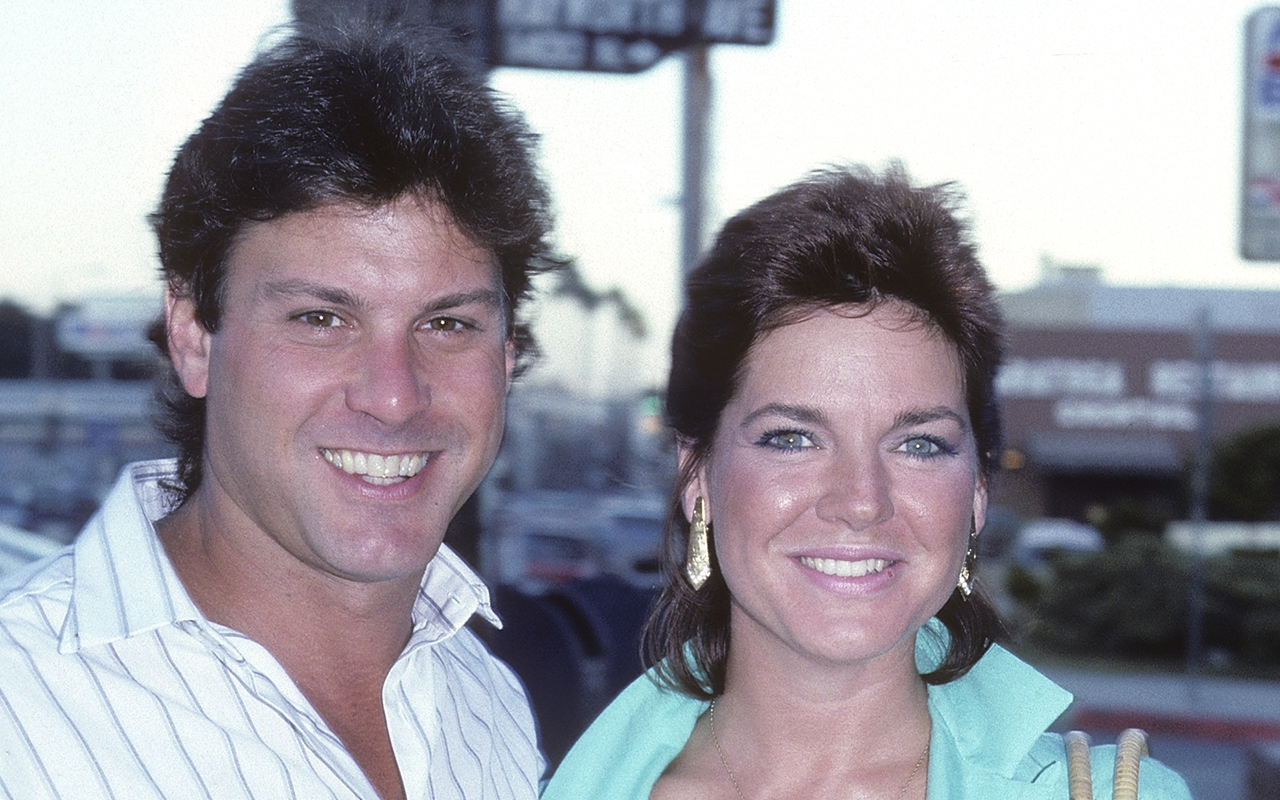
William Hasley, a veteran Hollywood screenwriter best known for co-authoring a prominent book project with Caitlyn Jenner, died suddenly of a suspected cardiac event on a Runyon Canyon hiking trail in Los Angeles on June 6, 2026. He was 78 years old. Paramedics from the Los Angeles Fire Department pronounced him dead at the scene shortly after sunrise. The incident occurred near the popular Fuller Avenue entrance, a dusty stretch of the Santa Monica Mountains where the entertainment industry goes to see and be seen.
The death of a ghostwriter is a quiet event in a loud city. Hasley spent his professional life invisible by design. He structured the narratives of others. He shaped the memories of the famous into digestible, marketable prose. He took the chaotic lives of public figures and anchored them to a three-act structure.
But the story of his final morning does not begin in a writer’s room. It begins on a steep incline overlooking the Los Angeles basin. What looks like a simple outdoor tragedy actually highlights the strange dichotomy of Hollywood. The man who wrote from the shadows died on the most visible stage in Southern California.
The Incident on the Trail
The Los Angeles Fire Department received the emergency dispatch at 7:14 a.m. on a Saturday. The temperature in the Hollywood Hills was already 74 degrees. A group of early morning hikers found a man unresponsive on the dirt path roughly a quarter-mile up from the southern gates of Runyon Canyon Park.
First responders arrived within eight minutes. They navigated the steep, uneven terrain carrying heavy medical equipment. Despite immediate intervention and advanced life support protocols, resuscitation efforts failed. The Los Angeles County Medical Examiner-Coroner later arrived to transport the body. Preliminary reports point to a massive cardiac event, a common but lethal occurrence on the exposed, sun-baked trails of the Hollywood Hills.
Runyon Canyon is not a wilderness. It is a 160-acre urban park. It functions as an open-air gymnasium and an unofficial networking hub for actors, agents, and writers. On any given morning, millions of dollars in television and film deals are discussed on the walk up to Inspiration Point. Hasley was a regular on these trails. He walked them for decades. He understood the geography of the city just as he understood the architecture of a screenplay.
The Geography of a Tragedy
The specific location of the collapse matters. The Fuller Avenue approach is notoriously steep. It lacks shade. It demands immediate cardiovascular output. For a 78-year-old man, even one accustomed to the elevation, the physical toll is absolute. The trail does not negotiate.
- Elevation gain: 500 feet in the first half-mile.
- Average morning trail traffic: 300 to 500 hikers per hour.
- Emergency access: Limited to off-road utility vehicles and foot traffic.
Witnesses reported that Hasley simply stopped walking, sat on a wooden retaining tie, and collapsed backward. There was no struggle. There was no warning. The biological mechanism simply failed.
The Jenner Collaboration
William Hasley’s most publicly recognized contribution to literature came through his association with Caitlyn Jenner. When high-profile figures transition from private reality to public literature, they rarely write the manuscripts alone. They rely on architects. Hasley was an architect.
The publishing industry operates on a strict set of economics. A celebrity name secures the advance. A ghostwriter secures the deadline. Hasley worked closely with Jenner to distill decades of Olympic history, family dynamics, and personal identity into a cohesive narrative. The project required hundreds of hours of interviews. It required trust. It required the ability to listen to a highly scrutinized public figure and translate their voice onto the page without leaving fingerprints.
“The job of the ghostwriter is to be a mirror. You do not exist. You only reflect what the subject wishes the world to see, but you make the reflection sharper, cleaner, and infinitely more readable.”
This collaboration placed Hasley at the center of a cultural flashpoint. The intersection of reality television, transgender visibility, and traditional publishing created a massive media footprint. The book generated millions in revenue. It sparked endless daytime television debates. Through it all, Hasley remained exactly where he preferred to be. Invisible. He collected his fee. He paid his dues to the Writers Guild of America. He moved on to the next project.
The Architecture of a Ghostwriter
The transition from screenwriting to ghostwriting is a well-worn path in Los Angeles. Hasley began his career in the late 1980s and 1990s. He pitched scripts to studios. He sat in development meetings at Warner Bros. and Paramount Pictures. He understood the brutal mathematics of the film industry. A script can be purchased, rewritten by six different people, and shelved forever.
Publishing offered a different kind of certainty. A celebrity memoir is a guaranteed product. If a New York publishing house pays a $500,000 advance to a reality star, the book will be printed. The book will be distributed. The ghostwriter, working for a flat fee ranging from $75,000 to $150,000, or a small percentage of royalties, is guaranteed a payday.
Hasley mastered this shadow economy. He signed ironclad Non-Disclosure Agreements. He surrendered his right to claim credit. In return, he gained financial stability in a city that actively destroys it. He lived comfortably in a mid-century home in the Hollywood Hills. He sent his children to private schools. He funded a life built entirely on the words he gave away to other people.
The Economics of Anonymity
The modern celebrity industrial complex cannot function without people like William Hasley. The demand for content outpaces the ability of celebrities to produce it. When a major agency like Creative Artists Agency (CAA) or William Morris Endeavor (WME) packages a book deal, the ghostwriter is attached before the ink on the contract dries.
Hasley understood the assignment. He never argued over the truth. He argued over the pacing. If a celebrity wanted to gloss over a scandal, Hasley smoothed the edges. If a publisher demanded more conflict in chapter four, Hasley manufactured the tension. He was a mechanic working on the engines of fame.
Runyon Canyon: The Public Stage
There is a profound irony in the location of Hasley’s death. Runyon Canyon is the antithesis of the ghostwriter’s life. It is a place designed entirely for visibility. People wear branded athletic gear. They carry expensive dogs. They speak loudly into their phones about streaming numbers and box office returns.
Hasley died surrounded by the very culture he documented. As paramedics worked on his chest, hikers were forced to detour around the scene. Some paused to look. Some checked their smartwatches to monitor their heart rates. The machinery of Los Angeles paused for a few minutes, acknowledged the interruption, and immediately resumed its pace.
The park rangers cordoned off a small section of the trail with yellow tape. By 10:00 a.m., the coroner’s van had departed down the steep, winding curves of Fuller Avenue. By noon, the yellow tape was gone. The dust settled back onto the path. The evidence of a life ending was entirely erased by the footprints of a thousand afternoon hikers.
A Career Forged in Scripts
Before the memoirs, there were the scripts. Hasley was a proud, dues-paying member of the Writers Guild of America West. He walked the picket lines during the strikes. He understood the collective power of labor in a town run by capital. His early television work in the 1990s taught him how to write under extreme pressure. Television demands pages immediately. There is no time for writer’s block.
This training made him an exceptional ghostwriter. When a celebrity missed an interview session, Hasley kept writing. When a publisher moved a deadline up by three months to capitalize on a news cycle, Hasley delivered the manuscript. He treated writing not as a divine calling, but as a blue-collar trade. He was a carpenter of sentences.
His colleagues in the WGA remember him as a pragmatist. He did not romanticize the industry. He did not complain about the lack of recognition. He viewed his lack of fame as a shield. Fame attracts scrutiny. Fame attracts lawsuits. Anonymity only attracts steady paychecks.
The Final Act
The sudden nature of a cardiac event leaves no room for final words. There is no drafted conclusion. There is only the abrupt cessation of the narrative. For a man who spent his life structuring perfect endings for other people, his own ending was violently unscripted.
The Los Angeles medical examiner will file a report. The Writers Guild will publish a brief in memoriam in their monthly newsletter. The celebrities whose books he wrote will likely release statements engineered by their publicists. The machinery will process his absence exactly as he taught it to.
The sun rose higher over the Santa Monica Mountains. The marine layer burned off. The temperatures climbed into the eighties. The trail reopened. The hikers returned. The city moved on. Silence.