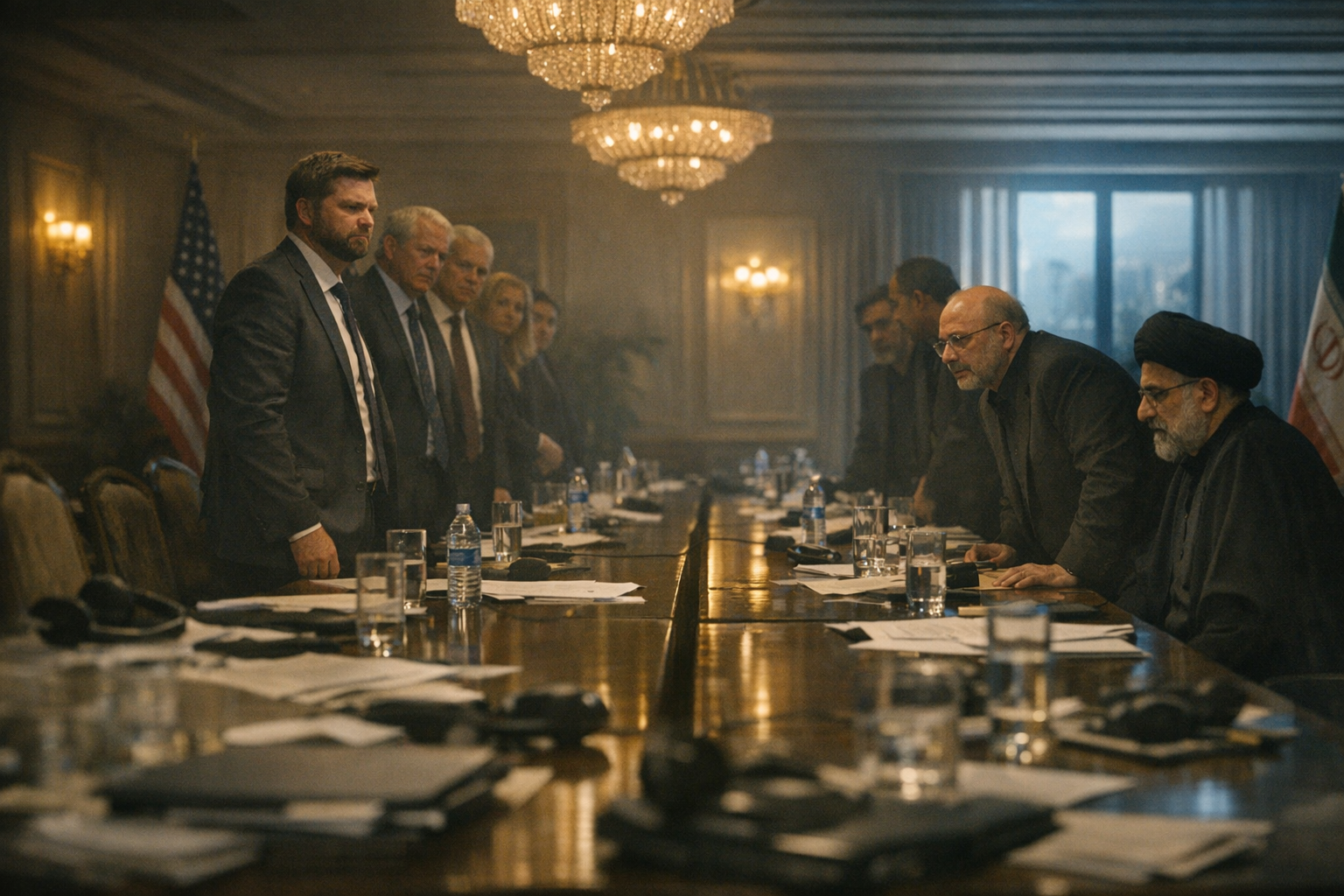
Twenty-one hours of direct negotiations between the United States and Iran ended without an agreement on Sunday morning, leaving a fragile two-week ceasefire in serious doubt and raising new questions about the future of a six-week war that has reshaped the Middle East.
Vice President JD Vance led the U.S. delegation into face-to-face talks at the Serena Hotel in Islamabad, Pakistan, in what became the highest-level in-person engagement between Washington and Tehran since the 1979 Islamic Revolution. The Iranian delegation, led by Parliament Speaker Mohammad Bagher Ghalibaf, arrived dressed in black in mourning for Supreme Leader Ayatollah Ali Khamenei and others killed during the conflict.
Why the Talks Failed
The core demand from the United States was a firm commitment from Iran not to develop nuclear weapons. Iran refused. Vance told reporters before boarding Air Force Two that the American side had made its position clear throughout the negotiations.
Iran refused to meet that demand. Vance told reporters before boarding Air Force Two that the U.S. side had presented what he described as a final and best offer, and that it was now up to Iran to decide whether to accept it.
Iran’s chief negotiator blamed the United States for the breakdown. Ghalibaf said his delegation raised forward-looking proposals during the talks but that the opposing side failed to gain their trust. Iran’s Foreign Ministry added that the two sides had reached a measure of understanding on some issues but that gaps remained on several major points, including control of the Strait of Hormuz, sanctions relief, and war reparations.
The Strait of Hormuz Remains the Pressure Point
The Strait of Hormuz sits at the center of the entire standoff. Iran has maintained a chokehold on the strait since the start of the war, blocking roughly 20 percent of the world’s oil and liquefied natural gas shipments. The resulting disruption has sent energy prices climbing globally and placed pressure on the economies of U.S. allies across Europe and Asia.
Three supertankers passed through the strait on Saturday in what appeared to be the first vessels to exit the Gulf since the ceasefire was announced, according to shipping data. Iran has not committed to fully reopening the passage, and according to multiple reports, Iran also lost track of mines it planted in the strait, complicating any timeline for clearing it. The U.S. Navy has begun a mine-clearing operation in the area.
Trump Threatens a Naval Blockade
Within hours of Vance departing Islamabad, President Trump posted on social media that the United States would impose a full naval blockade on Iran. Trump stated that the talks had failed because Iran was unwilling to give up its nuclear ambitions. He had previously downplayed the importance of the negotiations, telling reporters in Washington that whether a deal was reached made no difference to him.
The threat of a blockade marks a significant escalation in rhetoric, though it is not yet clear whether military action will follow. The two-week ceasefire is set to expire on April 22, and neither side has signaled whether it will hold beyond that date. Pakistan, which served as the primary mediator throughout the process, urged both parties to maintain the ceasefire and said it intends to continue playing a role in peace efforts.
Where Things Stand Now
The collapse of the Islamabad talks does not mean negotiations are permanently over. Vance left open the possibility of continued discussions before departing, and Iran’s Foreign Ministry described the current stage as critical and sensitive. What happens in the days before April 22 will determine whether diplomacy remains viable or whether the conflict resumes at full scale.
Israel’s continued military campaign against Hezbollah in Lebanon added another layer of complication throughout the proceedings. Tehran had insisted the ceasefire included Lebanon, a position the United States and Israel both rejected. Israel killed more than 350 people in Lebanon in a single day earlier in the week, and Prime Minister Benjamin Netanyahu stated publicly that his country’s military campaign against Iran was not over.
The war began on February 28, 2026, with a surprise joint U.S. and Israeli strike on Iran involving hundreds of coordinated attacks. The ceasefire that created space for these talks was announced on April 7. With that window closing and no agreement in hand, the coming days carry significant weight for the region and for global energy markets alike.