Tag: Bafta

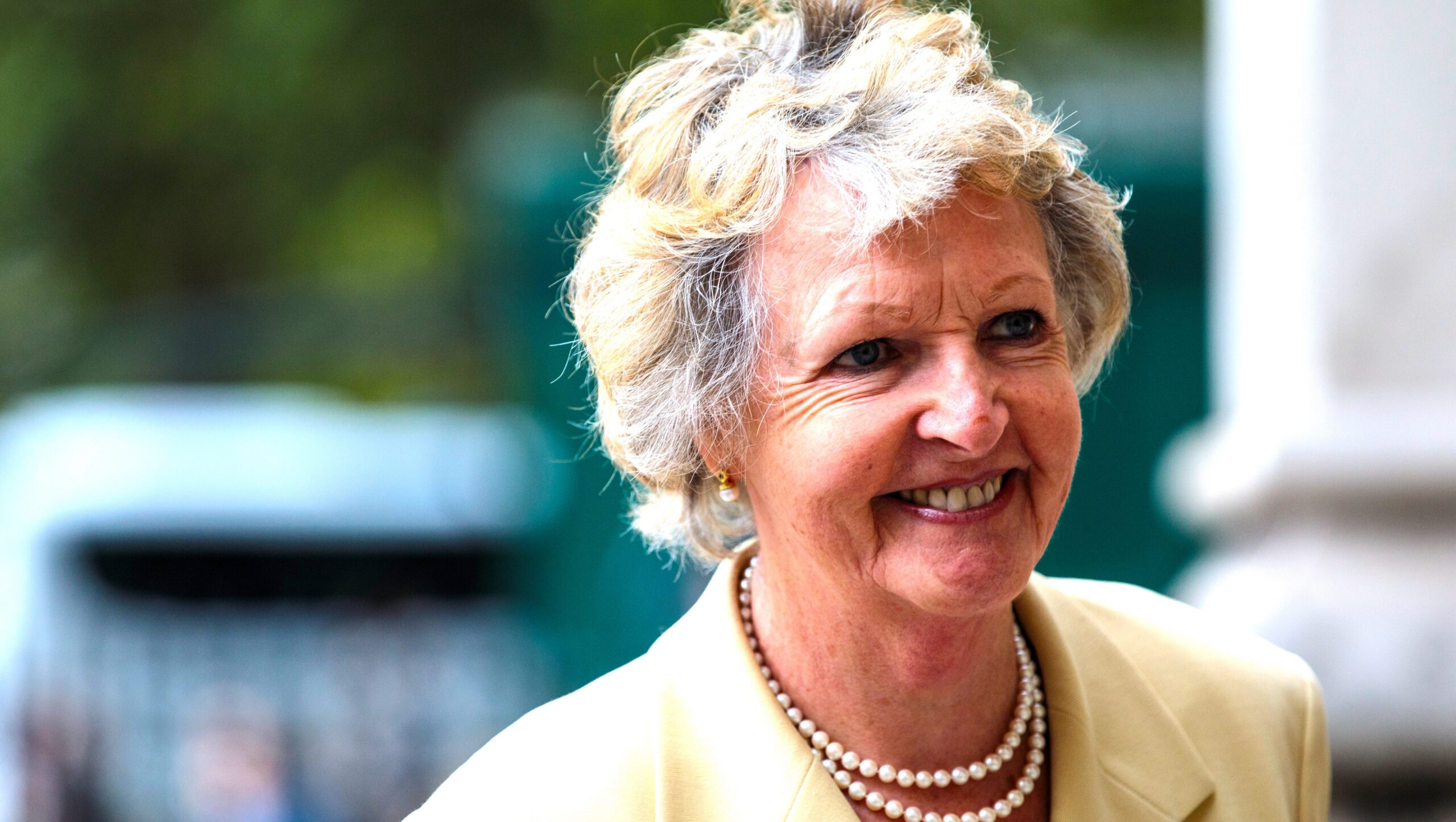
  • Penelope Keith Dies at 86 – Remembering a BAFTA-Winning Career

    Penelope Keith Dies at 86 – Remembering a BAFTA-Winning Career

    A Legacy of Refined Comedy: Penelope Keith’s Enduring Impact

    British actress Dame Penelope Keith, celebrated for her distinctive portrayals of upper-class characters, passed away on June 29, 2026, at the age of 86. Her death marks the end of a career that cemented her status as a beloved figure in British entertainment, particularly through her memorable roles in the classic television comedies ‘The Good Life’ and ‘To the Manor Born’. Her contributions to acting were recognized with multiple BAFTA awards and a Damehood, reflecting a profound impact on both screen and stage.

    What looks like a simple passing actually signifies the loss of a foundational talent in British comedic acting. Keith’s ability to imbue seemingly haughty characters with depth, vulnerability, and immense comedic timing created roles that resonated with millions of viewers across generations. Her work defined an era of British television, becoming synonymous with sophisticated humor and impeccable performance.

    Early Life and Theatrical Roots

    Penelope Keith was born Penelope Anne Constance Keith on February 2, 1940, in Chichester, West Sussex, England. Her early life was marked by a keen interest in performance, leading her to pursue formal training at the Webber Douglas Academy of Dramatic Art in London. This rigorous classical training provided the foundation for a career that would encompass a wide range of dramatic and comedic roles.

    Her professional debut came in the early 1960s, quickly establishing her presence on the British theatrical stage. Keith performed with the Royal Shakespeare Company and the National Theatre, working alongside some of the most respected figures in British drama. Her stage work honed her craft, developing the precise diction and commanding presence that would become her trademarks.

    Throughout the 1960s and early 1970s, Keith balanced her stage commitments with smaller television roles. These early appearances provided crucial experience, preparing her for the breakout success that awaited her in the mid-1970s.

    ‘The Good Life’: A Cultural Phenomenon

    The role that would catapult Penelope Keith to national stardom was that of Margot Leadbetter in the BBC sitcom ‘The Good Life’. The series, which first aired in 1975, followed the lives of Tom and Barbara Good, who decide to abandon the rat race and become self-sufficient in their suburban Surbiton home. Keith’s character, Margot, was their snobbish, social-climbing next-door neighbor, whose meticulously ordered world was constantly disrupted by the Goods’ unconventional lifestyle.

    Margot Leadbetter became an instant icon. Keith’s portrayal perfectly captured the anxieties and aspirations of the middle class, delivering lines with a clipped, aristocratic precision that masked an underlying vulnerability. The dynamic between Margot and the Goods, particularly Richard Briers’ Tom Good and Felicity Kendal’s Barbara Good, formed the comedic heart of the show.

    The series was a massive success, running for four seasons until 1978 and attracting millions of viewers. Its popularity was not just confined to the United Kingdom; it gained a significant following internationally. Keith’s performance earned her the BAFTA TV Award for Best Entertainment Performance in 1977, solidifying her status as a leading comedic actress.

    From Surbiton to the Manor: ‘To the Manor Born’

    Following the conclusion of ‘The Good Life’, Keith quickly found another defining role in ‘To the Manor Born’. This BBC sitcom, which began in 1979, was specifically written for her by Peter Spence. Keith starred as Audrey fforbes-Hamilton, an aristocratic widow forced to sell her ancestral home, Grantleigh Manor, after her husband’s death leaves her financially destitute. She then moves into the smaller lodge on the estate, determined to reclaim her former position.

    The series explored the comedic clash between Audrey and the new owner of the manor, Richard DeVere (played by Peter Bowles), a self-made millionaire from Czechoslovakia. The witty banter and simmering romantic tension between the two characters captivated audiences. ‘To the Manor Born’ was an immediate hit, with its first episode attracting an astonishing 23.95 million viewers in the UK, a record for a British sitcom that still stands today as of 2026.

    Keith’s portrayal of Audrey earned her another BAFTA TV Award, this time for Best Actress in 1978, further cementing her comedic prowess. The series ran for three seasons, concluding in 1981, with a one-off special in 2007 that revisited the characters.

    A Distinguished Career Beyond Sitcoms

    While ‘The Good Life’ and ‘To the Manor Born’ brought her widespread fame, Penelope Keith’s career was far more extensive and varied. She continued to work extensively in theatre, performing in West End productions and touring with various companies. Her stage credits included roles in plays by Noël Coward, William Shakespeare, and Alan Ayckbourn, showcasing her versatility as an actress.

    Diverse Television and Film Work

    Throughout the 1980s, 1990s, and 2000s, Keith appeared in numerous television dramas, comedies, and films. Notable television roles included ‘Executive Stress’ (1986-1988), where she played a high-powered businesswoman, and ‘Next of Kin’ (1995-1997). She also lent her distinctive voice to various narrations and radio plays.

    Her film appearances, though less frequent than her television and stage work, included roles in ‘Catch Me a Spy’ (1971) and ‘The Hound of the Baskervilles’ (1978). She also appeared in ‘The Old Guys’ (2009-2010), a BBC comedy series, demonstrating her continued engagement with contemporary television.

    Philanthropy and Public Service

    Beyond her acting career, Penelope Keith was a dedicated philanthropist and advocate for various causes. She served as President of the Actors’ Benevolent Fund for many years, working to support actors in need. Her commitment to public service and the arts was widely recognized.

    In 1989, she was appointed an Officer of the Order of the British Empire (OBE). This was followed by her appointment as a Commander of the Order of the British Empire (CBE) in 2007. In 2014, she was elevated to Dame Commander of the Order of the British Empire (DBE) for services to the arts and to charity, a testament to her extensive contributions both on and off screen.

    The Enduring Appeal of Penelope Keith

    Penelope Keith’s appeal lay in her unique ability to portray characters who were often perceived as formidable or aloof, yet always managed to reveal a relatable human core. Her precise comedic timing, elegant demeanor, and resonant voice made her performances unforgettable. She brought a sense of dignity and intelligence to every role, whether it was a grand dame or a suburban snob.

    Her characters, particularly Margot Leadbetter and Audrey fforbes-Hamilton, have remained popular through decades of reruns and streaming, introducing her work to new generations of viewers. The humor of ‘The Good Life’ and ‘To the Manor Born’ is timeless, largely due to the strength of her performances and the sharp writing.

    Keith’s legacy is one of comedic excellence, theatrical dedication, and unwavering commitment to her craft and community. She received numerous accolades throughout her career, including the Lifetime Achievement Award at the British Comedy Awards in 2009, acknowledging her significant impact on British comedy.

    A Fond Farewell

    The news of Dame Penelope Keith’s passing on June 29, 2026, has prompted an outpouring of tributes from across the entertainment industry and from her many admirers. Colleagues remember her professionalism, wit, and kindness. Fans recall the laughter and joy she brought into their homes.

    Her passing leaves a void in the landscape of British acting. Her contribution to comedic roles, her dedication to the stage, and her philanthropic efforts will be remembered for years to come. She was a true grande dame of British entertainment.

    Tributes poured in from fellow actors. Directors praised her unwavering commitment. Audiences mourned a beloved figure. Penelope Keith.

  • Roger Cook, BAFTA-Winning Investigative Reporter, Dies at 83

    Roger Cook, BAFTA-Winning Investigative Reporter, Dies at 83

    Roger Cook, the pioneering British investigative journalist, died at the age of 83. Cook was widely recognized for his distinctive confrontational approach to reporting, often ambushing individuals suspected of wrongdoing to expose scams and injustices. His legacy includes numerous high-profile investigations that profoundly impacted British media and public awareness.

    Cook’s career encompassed decades of tireless work, primarily with BBC Radio 4’s ‘Checkpoint’ and later with ITV’s ‘The Cook Report’. His methods, while sometimes controversial, were consistently aimed at uncovering fraud, corruption, and exploitation, earning him both accolades and a unique place in broadcast history.

    The Early Life and Career Beginnings of Roger Cook

    Roger Cook was born on April 4, 1940, in Chapel-en-le-Frith, Derbyshire, England. His early education provided a foundation for a career that would later challenge established norms. Before entering journalism, Cook explored various fields, gaining diverse experiences that would inform his later reporting.

    His initial foray into media began in radio. Cook worked for the BBC, where he honed his skills in interviewing and storytelling. This early period was crucial for developing the sharp analytical mind and incisive questioning that would become his trademarks.

    Cook’s early work laid the groundwork for his specialization in investigative journalism. He developed a keen eye for detail and a persistent nature, essential qualities for uncovering hidden truths. These formative years shaped the methodology he would later employ to great effect.

    ‘Checkpoint’ and the Rise of a New Investigative Style

    Roger Cook gained significant national prominence through his work on BBC Radio 4’s ‘Checkpoint’. This program, launched in 1973, provided a platform for in-depth investigative reports. Cook became synonymous with the show’s uncompromising style.

    On ‘Checkpoint’, Cook perfected his signature confrontational technique. This often involved tracking down individuals accused of fraud or other illicit activities and confronting them directly, sometimes with hidden cameras or microphones. The element of surprise was central to his strategy, designed to elicit immediate, unvarnished reactions.

    His investigations covered a vast array of topics. These included consumer scams, dubious business practices, and organized crime. Cook’s reports frequently led to arrests, prosecutions, and significant changes in public policy, demonstrating the tangible impact of his journalism.

    The program’s success cemented Cook’s reputation as a fearless reporter. He became a household name, with the phrase ‘Are you Roger Cook?’ becoming a popular cultural reference, often used with a mixture of fear and admiration.

    ‘The Cook Report’ and BAFTA Recognition

    In 1987, Roger Cook transitioned to television with ‘The Cook Report’ on ITV. This move brought his distinctive investigative style to a much wider audience. The visual medium amplified the drama and impact of his confrontations.

    The program quickly became a ratings success. Viewers were captivated by Cook’s relentless pursuit of justice and his dramatic encounters with wrongdoers. Each episode typically focused on a single, compelling investigation, meticulously researched and presented.

    ‘The Cook Report’ tackled larger and more complex cases than ‘Checkpoint’ often could. These included international scams, drug trafficking, and serious organized crime. Cook and his team often faced significant risks in their pursuit of information.

    His work on ‘The Cook Report’ earned him critical acclaim. In 1989, he received a prestigious BAFTA (British Academy Film and Television Arts) award for his exceptional contributions to television journalism. This award recognized the profound influence and groundbreaking nature of his investigative work.

    Methodology and Controversy

    Roger Cook’s investigative methods were characterized by their directness and often by their confrontational nature. He believed in presenting evidence directly to those accused, forcing them to respond on the spot. This approach was designed to circumvent evasions and denials.

    His use of hidden cameras and microphones, while effective, sometimes generated ethical debates within the journalistic community. Critics argued that such tactics could infringe on privacy or be seen as sensationalist. However, Cook consistently defended his methods as necessary tools for exposing individuals who operated in secrecy.

    Despite the criticisms, Cook’s work was widely praised for its results. His investigations often led to victims recovering lost money, fraudulent schemes being shut down, and legal action being taken against perpetrators. The public largely viewed him as a champion for the vulnerable and exploited.

    The impact of his methods extended beyond individual cases. Cook’s approach influenced a generation of investigative journalists, demonstrating the power of direct engagement and persistent inquiry in holding power to account.

    Notable Investigations and Impact

    Throughout his career, Roger Cook uncovered a multitude of significant stories. His investigations ranged from exposing rogue traders and cowboy builders to dismantling large-scale international fraud operations. Each report aimed to shed light on hidden injustices and protect the public.

    One notable investigation involved exposing a widespread timeshare scam operating in Spain. Cook’s fearless reporting brought the plight of many British holidaymakers to national attention, leading to increased consumer protection measures and legal actions against the fraudsters.

    Another impactful series of reports focused on fraudulent charity organizations. Cook’s team meticulously tracked how donations were being misused, confronting those responsible and exposing their deception. These investigations prompted greater scrutiny of charitable fundraising practices.

    His work on ‘The Cook Report’ also delved into issues of public safety, such as exposing dangerous construction practices and inadequate safety standards. These reports often led to immediate corrective actions by authorities and greater public awareness of potential hazards.

    Cook’s commitment to holding individuals accountable extended to various sectors, including finance, healthcare, and property. His reports frequently featured dramatic confrontations, where he would present irrefutable evidence to those he was investigating, often resulting in confessions or public apologies.

    Legacy and Influence on Journalism

    Roger Cook’s influence on investigative journalism is profound and enduring. He established a template for direct, confrontational reporting that many journalists have since emulated. His style emphasized the importance of verifiable evidence and direct engagement with subjects.

    He demonstrated that investigative journalism could be both informative and engaging for a mass audience. By bringing complex issues of fraud and corruption into the public eye through compelling narratives, Cook elevated the genre.

    His legacy is not without its complexities. The debates surrounding his methods continue to inform discussions about journalistic ethics and the boundaries of public interest reporting. However, his dedication to uncovering truth and giving a voice to victims remains undisputed.

    Cook’s work inspired a generation of reporters to pursue difficult stories and challenge powerful interests. His programs served as a training ground for many aspiring journalists, teaching them the value of persistence, thoroughness, and courage in the face of adversity.

    The impact of his investigations contributed to a more informed public and greater accountability from individuals and organizations. Roger Cook’s career stands as a testament to the power of fearless journalism in a democratic society.

    The End of an Era

    Roger Cook’s passing marks the end of a significant chapter in British investigative journalism. His career spanned decades, evolving with changes in media and technology, but his core principles remained constant.

    Even after stepping back from regular broadcasting, Cook’s influence continued. His work is regularly cited in discussions about media ethics, the role of the press, and the importance of independent scrutiny.

    Tributes from colleagues, former subjects, and the public highlighted his unique character and his unwavering commitment to justice. He was remembered as a tenacious, courageous, and often intimidating figure, but always driven by a moral compass.

    His contributions to exposing wrongdoing saved countless individuals from financial ruin and brought perpetrators to justice. The impact of his investigations resonated across the United Kingdom and beyond.

    Roger Cook leaves behind a body of work that serves as a powerful reminder of the essential role of investigative journalism in a free society.

    Remembering Roger Cook

    Journalists remember. Victims remember. The public remembers. Roger Cook.