Tag: Argentina

  • Spain Claims Second FIFA World Cup Title, Defeating Argentina 1-0 in 2026 Final

    Spain Claims Second FIFA World Cup Title, Defeating Argentina 1-0 in 2026 Final

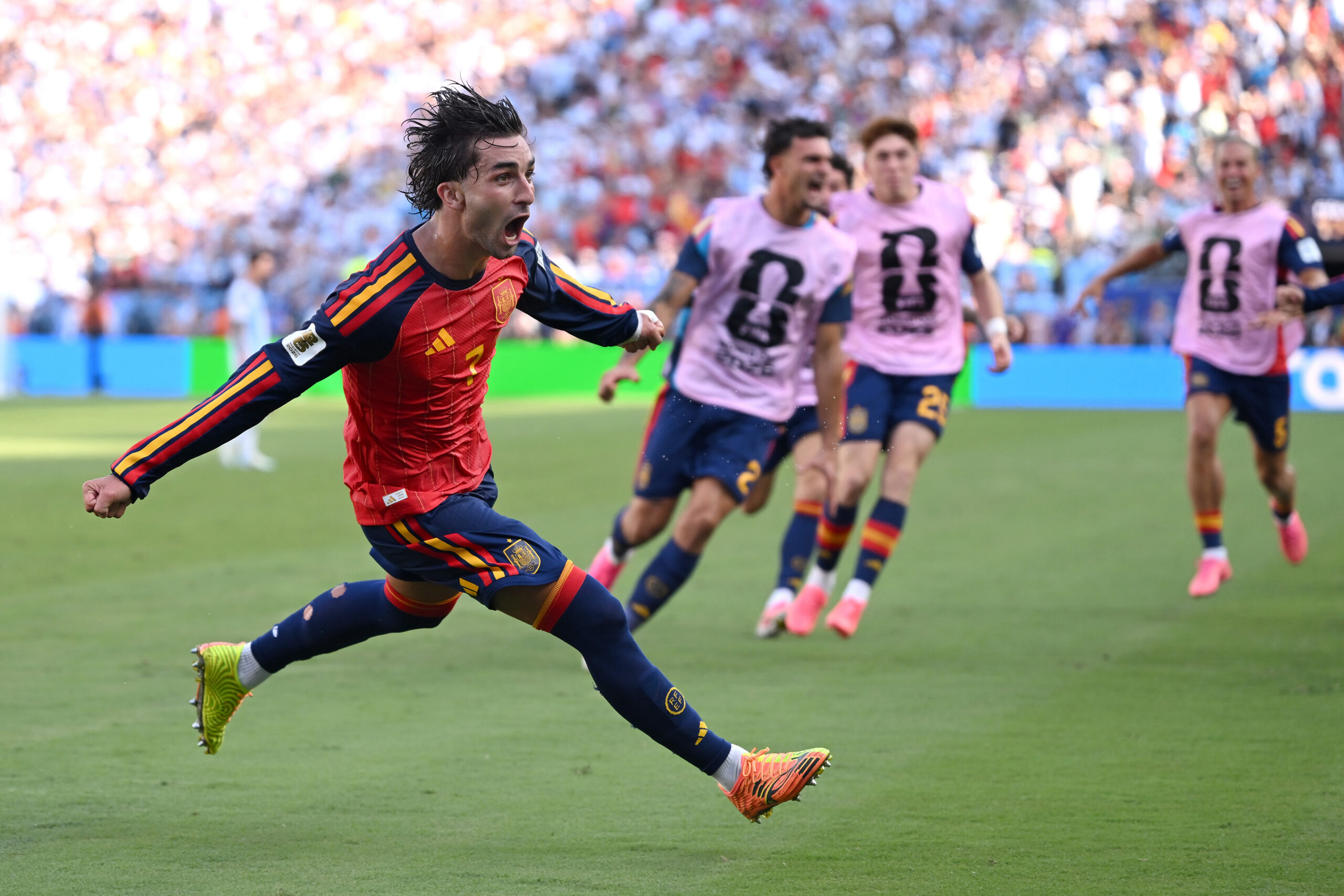
    Spain secured the 2026 FIFA World Cup title on July 19, 2026, with a 1-0 victory over Argentina. This triumph marks Spain’s second World Cup win, solidifying their place in football history. The decisive goal came in the second half, breaking a deadlock that had persisted through much of the championship match, held in a North American stadium.

    The victory concludes a month of intense competition across North America. Spain navigated a challenging tournament bracket. They consistently demonstrated their technical prowess and tactical discipline on the global stage.

    Spain’s Path to World Cup Glory

    Spain’s journey to the 2026 World Cup final was marked by strong performances. They emerged from a competitive group stage. Subsequent knockout rounds saw them overcome several highly-ranked national teams. The Spanish squad showcased a blend of experienced veterans and emerging talents.

    Their midfield controlled possession in many matches. The attacking players created numerous scoring opportunities throughout the tournament. Early reports indicate that the team’s cohesion and strategic depth were key factors. Head Coach Luis de la Fuente’s tactical decisions received widespread praise. The team’s robust defense also played a critical role in their success.

    The tournament began on June 11, 2026, with opening ceremonies and matches held across the host nations. Spain entered the competition as one of the favorites, given their strong performances in the lead-up to the event, including a solid showing in the UEFA Nations League campaigns of 2024 and 2025.

    Their group stage matches saw them face diverse opponents, testing their adaptability. They demonstrated a capacity to adjust tactics based on the opposition, a hallmark of De la Fuente’s coaching philosophy. Key players in defense, midfield, and attack contributed consistently, ensuring progression to the knockout stages without significant setbacks.

    Navigating the Knockout Rounds

    The knockout phase presented Spain with increasingly difficult challenges. Their Round of 16 match required a disciplined performance against a well-organized European rival. The quarter-final saw them overcome a South American powerhouse in a tightly contested affair, showcasing their ability to perform under pressure.

    In the semi-final, Spain faced another formidable contender, widely regarded as one of the tournament’s strongest teams. This match was a tactical battle, with Spain’s ability to maintain possession and exploit defensive weaknesses proving crucial. The 2026 squad demonstrated a collective resilience, a quality often attributed to their 2010 World Cup-winning predecessors.

    The Final Match: Spain vs. Argentina

    The final against Argentina was a tense affair. Both teams started cautiously, feeling out their opponents. The first half ended scoreless, with few clear-cut chances for either side. Spain increased its intensity in the second half. They pushed higher up the pitch. This led to a surge in their shot count and increased pressure on the Argentine goal.

    Spain registered an impressive 12 shots on goal throughout the match. Argentina’s defense, while resilient for long stretches, ultimately conceded to Spain’s sustained offensive efforts. The winning goal arrived midway through the second half. The stadium erupted as the ball found the back of the net. This moment proved to be the turning point in the championship.

    Details regarding the exact minute and the goal scorer are still being confirmed by official FIFA reports. However, the impact of the goal was immediate, shifting the momentum decisively in Spain’s favor. The final minutes of the match saw Argentina press for an equalizer, but Spain’s defense held firm, denying them any clear opportunities.

    Key Tactical Decisions and Player Performances

    Coach Luis de la Fuente’s decision to maintain an attacking posture in the second half, despite the scoreless first half, paid dividends. His substitutions were also noted for their effectiveness, bringing fresh legs and renewed energy to the Spanish attack and midfield. The collective effort of the Spanish players was evident, with no single individual dominating the headlines but rather a cohesive unit achieving success.

    The Spanish midfield, known for its intricate passing and ball retention, was instrumental in controlling the tempo of the game. They limited Argentina’s ability to build attacks from the back, forcing them into less comfortable positions on the field. The defensive line, anchored by experienced center-backs and supported by diligent wing-backs, successfully neutralized Argentina’s potent attacking threats.

    Argentina’s Valiant Campaign Concludes

    Argentina entered the final as a formidable opponent. They had demonstrated exceptional skill and determination throughout the 2026 World Cup. Their path to the final included several dramatic victories. The South American giants showcased their characteristic flair and attacking talent.

    Lionel Messi, in what was widely anticipated to be his final World Cup appearance, led the team with distinction. Despite their efforts, they could not find an equalizer after Spain’s goal. The Argentine squad displayed sportsmanship in defeat. They acknowledged Spain’s superior performance on the day. Their tournament run was still considered a success by many fans and analysts.

    Argentina’s journey to the final was marked by their characteristic blend of individual brilliance and collective grit. They overcame challenging group stage opponents and navigated tough knockout rounds, often relying on moments of individual magic from their star players. Their quarter-final and semi-final victories were particularly hard-fought, showcasing their resilience.

    Messi’s Enduring Legacy

    For Lionel Messi, this final appearance further cemented his legendary status in football. Having won the World Cup in 2022, his leadership in 2026, guiding Argentina back to the final, was a testament to his enduring talent and dedication. Though the ultimate prize eluded him in this tournament, his contributions throughout his career and this competition will be remembered.

    The Argentine team, under their coach, had built a strong squad around Messi, integrating younger talents with experienced players. Their attacking prowess, particularly their ability to create chances from tight spaces, was a constant threat throughout the tournament. The 2026 World Cup saw many memorable moments from the Argentine side, confirming their status as one of the world’s premier footballing nations.

    The Legacy of the 2026 FIFA World Cup

    The 2026 FIFA World Cup will be remembered for several reasons. It was the first World Cup hosted across three nations: the United States, Canada, and Mexico. The expanded format featured 48 teams, leading to more matches and diverse competition. Spain’s victory adds another chapter to their footballing legacy.

    Their 2010 win in South Africa was a landmark achievement. This second title cements their status as a modern footballing dynasty. The tournament generated immense global interest. Billions of viewers tuned in to watch the matches. The economic impact on the host cities and nations was substantial.

    The decision to host across three North American countries marked a significant shift in FIFA’s approach to major tournaments. This multi-national hosting model allowed for a broader distribution of economic benefits and showcased diverse cultures. The expanded 48-team format, introduced for the first time, provided more opportunities for national teams to participate on the global stage, leading to a wider array of matchups and narratives.

    Economic and Cultural Impact

    Host cities across the United States, Canada, and Mexico experienced significant economic boosts through tourism, infrastructure development, and increased consumer spending. The tournament’s global reach, broadcast to billions, reinforced football’s position as the world’s most popular sport. Cultural exchanges and celebrations were prevalent throughout the month-long event, fostering international goodwill.

    The 2026 World Cup also served as a proving ground for new technologies in broadcasting and fan engagement. Innovations in stadium experiences and digital content delivery enhanced the viewing experience for millions worldwide. The tournament set new benchmarks for sustainability and logistical coordination for future large-scale sporting events.

    Spain’s Place in Football History

    Spain’s first World Cup victory in 2010, achieved in South Africa, was a culmination of a golden generation of players. That team, known for its ‘tiki-taka’ style of play, revolutionized international football. The 2026 squad, while perhaps employing slightly different tactics under Luis de la Fuente, carried forward the tradition of technical excellence and strategic acumen.

    This second title places Spain in an exclusive club of multiple World Cup winners, alongside nations like Brazil, Germany, Italy, Argentina, Uruguay, and France. It underscores the depth of talent within Spanish football and the effectiveness of their youth development programs. The consistent investment in coaching and player development has clearly paid off on the international stage.

    The final whistle blew. Celebrations erupted among the Spanish supporters. Disappointment settled over the Argentine fans. The 2026 FIFA World Cup concluded with Spain as the undisputed champions. A new chapter in football history.

  • Valentina Cervantes Navigates World Cup Loyalties: “Britain Has Given Us a Lot”

    Valentina Cervantes Navigates World Cup Loyalties: “Britain Has Given Us a Lot”

    Valentina Cervantes, the partner of Chelsea’s £106 million midfielder Enzo Fernández, has publicly acknowledged her family’s deep ties to Britain ahead of a significant World Cup match involving Argentina. Her statement, “Britain ‘has given us a lot,’” highlights the complex personal dilemmas faced by football families during international tournaments. Cervantes has reportedly prohibited her son from participating in anti-England chants, emphasizing a desire for respect amidst competitive national allegiances.

    This situation underscores the nuanced perspectives often held by individuals at the intersection of international sports and personal gratitude. It brings to the forefront the human element behind professional sports, often overlooked amidst nationalistic fervor. The family’s experiences since Fernández’s move to London in 2023 have shaped their outlook.

    Valentina Cervantes Addresses Dual Loyalties

    Valentina Cervantes, partner of Argentina international Enzo Fernández, openly discussed her feelings regarding the impending World Cup fixture. Her comments reflect a nuanced perspective. She balances national pride with personal gratitude towards her adopted home.

    Fernández became a pivotal player for both Chelsea and the Argentina national team. He moved to London in 2023. This relocation established strong ties for his family in England.

    Cervantes’s remarks about Britain having ‘given us a lot’ highlight the positive experiences and opportunities the family found. They have lived in the country since Fernández’s transfer. Her words suggest a genuine appreciation for their life in the UK.

    The reported ban on anti-England chants for her son further illustrates her desire for respect. She aims to foster an environment of sportsmanship. This stance is maintained even amidst competitive international sports.

    The Public Eye on Football Families

    Wives and girlfriends (WAGs) of prominent footballers often find themselves under intense public scrutiny. Their actions and statements can attract significant media attention. This is especially true during major tournaments like the World Cup.

    Cervantes’s situation exemplifies how personal loyalties and national allegiances become topics of public discussion. Her position as the partner of a high-profile player for both an English club and the Argentine national team places her in a unique spotlight.

    The pressure on these families to align perfectly with nationalistic fervor can be immense. Fans and media often expect unwavering support for one nation. Cervantes’s approach offers a different perspective.

    She emphasizes personal connections over strict adherence to national rivalries. This challenges traditional expectations. Her stance suggests a more globalized view of identity within modern football.

    Enzo Fernández’s Role and the World Cup Context

    Enzo Fernández was acquired by Chelsea for £106 million. He is a key figure in both club and international football. His performances are crucial for Argentina’s World Cup ambitions.

    The specific World Cup match involving Argentina prompted Cervantes’s comments. While the opponent is not explicitly named in all reports, the context suggests a fixture with significant implications or rivalries. These matches often intensify nationalistic sentiments.

    International football tournaments frequently intensify nationalistic sentiments. Players and their families often become symbols of their respective nations. This can create immense pressure.

    Cervantes’s statements introduce a layer of complexity to this narrative. They remind the public that personal lives and loyalties extend beyond the football pitch. This offers a more humanized view of professional athletes.

    Impact on Team Dynamics and Player Well-being

    While Cervantes’s comments are personal, they resonate within the broader football community. The well-being and emotional state of players’ families can indirectly influence their performance on the field. A stable home life often contributes to a player’s focus and success.

    Maintaining a balanced perspective can be challenging for players like Fernández. He must navigate the expectations of his national team, his English club, and his family life. These multiple demands can create significant stress.

    The public conversation around Cervantes’s loyalties reflects a growing understanding. This understanding acknowledges the global nature of modern football. Players and their families often have diverse backgrounds and connections. They live in various countries throughout their careers.

    This story underscores the human element behind professional sports. It highlights the personal choices and considerations that often remain unseen by the wider public. These choices shape the lives of those involved in elite athletics.

    Navigating Dual Identities in Modern Football

    The experience of living and working in a foreign country often leads to the formation of dual identities. For football families, this is particularly common. They immerse themselves in new cultures while retaining ties to their home nations.

    Fernández’s move to London in 2023 marked a significant transition for his family. They have since built a life in England. This includes their son attending local schools and forming friendships.

    Cervantes’s gratitude towards Britain is a testament to this integration. She acknowledges the opportunities and support they have received. This perspective contrasts with the often-simplistic narratives of national rivalry.

    The prohibition on anti-England chants for her son further exemplifies this. It’s an active choice to foster respect. It promotes understanding over animosity. This decision reflects a desire for a harmonious existence.

    This approach challenges the notion that national identity must always supersede personal experience. It suggests that individuals can hold multiple allegiances. These allegiances can coexist peacefully, even in highly competitive environments.

    The Role of WAGs in Public Discourse

    The lives of footballers’ wives and girlfriends (WAGs) are increasingly part of public discourse. Their social media activities and public statements garner significant attention. This is especially true during major sporting events.

    Cervantes’s comments were not made in isolation. They form part of a broader trend. WAGs are becoming more vocal about their experiences. They share insights into the personal side of professional football.

    This increased visibility brings both opportunities and challenges. It allows WAGs to shape narratives. They can advocate for issues important to them. However, it also exposes them to intense scrutiny and criticism.

    The media’s focus on Cervantes’s loyalties demonstrates this. Her personal sentiments became a news story. This highlights the pressure on individuals associated with high-profile athletes. Every word and action can be analyzed.

    Her decision to speak out, and to guide her son’s behavior, serves as a model. It shows how families navigate complex national and personal identities. It offers a counter-narrative to purely nationalistic sentiment.

    Economic and Cultural Integration

    Enzo Fernández’s transfer to Chelsea for £106 million was a major economic event in football. This move brought him and his family to London. Their integration into British society is a direct result of this professional opportunity.

    The family’s experience in Britain extends beyond just football. They engage with local communities. They participate in daily life. This cultural integration deepens their connection to the country.

    Cervantes’s statement, “Britain ‘has given us a lot,’” acknowledges these benefits. It speaks to the quality of life, the opportunities, and the sense of belonging they have found. This goes beyond mere financial gain.

    The global nature of professional football often means players and their families reside in various countries. They form connections wherever they go. These connections become part of their personal histories.

    This story illustrates the profound impact of such moves. It shows how professional careers shape personal lives. It forms new loyalties and perspectives. It creates a globalized identity.

    Future Implications for Football Families

    The situation involving Valentina Cervantes could set a precedent. It might encourage other football families to express their complex loyalties. This could lead to a more nuanced public understanding.

    As football continues to globalize, players will increasingly move between countries. Their families will follow. They will form strong ties to multiple nations. This trend is unlikely to reverse.

    The media and public will need to adapt to these evolving dynamics. Expecting monolithic nationalistic fervor from individuals with international lives may become less common. A more inclusive perspective might emerge.

    Cervantes’s stand for respect and gratitude, even towards a rival nation, offers a path forward. It promotes sportsmanship and understanding. These values are crucial in an interconnected world.

    Her actions highlight the personal agency of individuals within the football ecosystem. They are not just extensions of their athlete partners. They have their own voices and perspectives.

    Families adapt. Loyalties shift. Respect endures. The game evolves.

  • The Cost of the False Scoop – Presenter Resigns After Fabricating Death of Jorge Messi

    The Cost of the False Scoop – Presenter Resigns After Fabricating Death of Jorge Messi

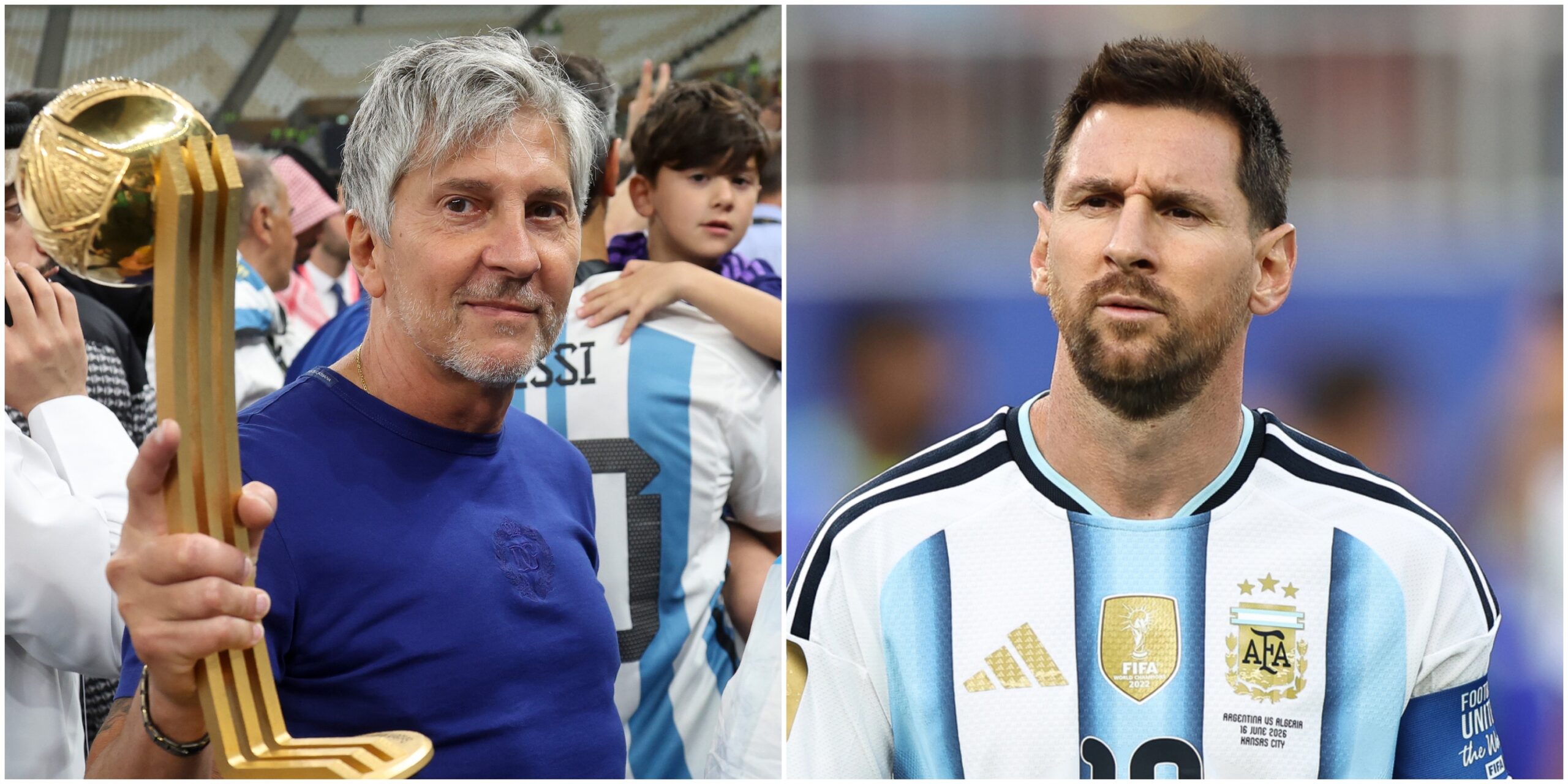
    In June 2026, a prominent television presenter abruptly resigned and issued a public apology after broadcasting a false report claiming that Jorge Horacio Messi, the father and long-time agent of international football star Lionel Messi, had died. The unverified broadcast triggered immediate global panic across sports media before being rapidly debunked by the Messi family’s representatives operating out of Miami, Florida. The incident resulted in the immediate termination of the broadcast anchor’s career at the network. The rush to be first superseded the obligation to be accurate. The consequences were absolute.

    The Breaking Point on Live Television

    Live television operates on a razor’s edge. The red light illuminates. The anchor speaks. The information becomes reality for millions of viewers in an instant. When the breaking news graphic flashed across the screen in June 2026, the anchor delivered the report with solemn gravity. Jorge Horacio Messi was reportedly dead. No secondary sources were cited. No official medical bulletins were referenced. The report relied entirely on an unverified whisper that had bypassed the network’s traditional editorial safeguards.

    The mechanics of the error reveal a systemic failure in modern broadcast journalism. In the race to beat global aggregators and rival networks, the standard protocol of dual-source verification was abandoned. The control room allowed the bulletin to air. The presenter read the prompter. Within seconds, the clip was isolated, clipped, and uploaded to X, TikTok, and Instagram. The algorithmic machinery of the internet took over. The localized broadcast transformed into a global digital wildfire.

    But the subject of the report was not a peripheral figure. Jorge Messi is a central pillar of the global sporting economy. Reporting his death without absolute certainty was not merely an editorial slip. It was an act of profound journalistic negligence that threatened to destabilize a massive commercial ecosystem. The pushback was inevitably swift. The pushback was merciless.

    Jorge Horacio Messi: The Billion-Dollar Patriarch

    To understand the gravity of the false report, one must understand the entity that is Jorge Messi. He is not simply the father of a famous athlete. He is the architect of the most lucrative sporting career in the history of global football.

    Born in January 1958 in Rosario, Santa Fe, Argentina, Jorge managed a section of the Acindar steel factory. His life was defined by industrial labor and weekend football. When his third son, Lionel, demonstrated preternatural ability on the pitch but suffered from a growth hormone deficiency, Jorge became a relentless advocate. The medical treatments cost roughly $1,000 a month. The Argentine economy was collapsing. Local clubs like Newell’s Old Boys could not, or would not, foot the bill.

    Jorge took his son across the Atlantic. On December 14, 2000, inside the Pompeia tennis club in Barcelona, Jorge sat across from FC Barcelona sporting director Carles Rexach. The resulting agreement, famously drafted on a paper napkin, changed the trajectory of modern sports. From that moment, Jorge Messi ceased to be just a father. He became the sole manager, agent, and fierce protector of the Messi brand.

    The Managerial Empire

    For over two decades, Jorge Messi has negotiated every major contract his son has signed. He does not employ massive sporting agencies. He operates a tight, family-run syndicate. His negotiations are legendary for their quiet ruthlessness and absolute loyalty to his son’s interests. Consider the milestones of his managerial tenure:

    • The Barcelona Era: Negotiating successive record-breaking contract renewals that eventually saw Lionel earning upwards of $160 million annually at the peak of his time at Camp Nou.
    • The Paris Saint-Germain Transfer: Orchestrating the complex, emotionally charged move to Paris in 2021 when Barcelona’s financial ruin made a contract renewal impossible.
    • The Inter Miami MLS Deal: Engineering the unprecedented 2023 move to Major League Soccer. Jorge negotiated a package that included not just a base salary, but revenue-sharing agreements with Apple TV and Adidas, fundamentally altering how athlete compensation is structured in North America.

    Reporting the death of a man who controls a billion-dollar commercial nexus requires more than a rumor. It requires irrefutable proof. The presenter possessed none.

    The Mechanics of a Digital Wildfire

    The false report lived unchallenged for roughly twenty-two minutes. In the ecosystem of 2026 digital media, twenty-two minutes is an eternity. The news hit the aggregate accounts. Fans of the Argentine national team, La Albiceleste, began posting tributes. Major European and South American sporting dailies began drafting obituaries. The financial markets tied to Inter Miami and associated sponsors experienced a brief, localized jitter.

    The speed of the spread highlights the terrifying efficiency of modern misinformation. The original broadcast acted as the spark. Social media algorithms, designed to amplify high-engagement emotional content, acted as the accelerant. The truth was still putting its boots on while the lie had circled the globe twice.

    Then the hammer fell. Representatives from the Messi camp in Miami issued a stark, unequivocal denial. Jorge Messi was alive. He was well. He was actively working. The denial was distributed directly to top-tier journalists and official channels, bypassing the network that originated the falsehood. The narrative snapped back with violent force. The mourning turned instantly to outrage.

    The Swift Hammer of Celebrity Accountability

    The audience of 2026 does not forgive easily. The era of the untouchable television pundit has passed. When the denial was confirmed, the public crosshairs locked onto the presenter and the network. The demand was not for a correction. The demand was for professional execution.

    Audiences today harbor a deep-seated desire for celebrity accountability. Public figures, including prominent journalists, wield massive influence. When that influence is weaponized by incompetence, the public expects a proportional penalty. The outrage over the Jorge Messi report was fueled by a sense of justice. The presenter had caused unnecessary trauma to a globally beloved family. An on-air retraction would not suffice. The audience demanded a resignation.

    The network executives understood the calculus. Defending the presenter would mean adopting the presenter’s liability. It would mean alienating the Messi family, a fatal move for any sports broadcasting entity. It would mean facing a boycott from viewers and a potential exodus of advertisers. The decision was made before the presenter even left the studio building.

    The Apology and the Exit

    Within hours of the broadcast, the presenter released a formal statement. There was no attempt to shift blame to an unnamed producer. There was no attempt to cite a malicious source. The statement was a complete capitulation to the facts.

    “In the pursuit of speed, I abandoned the fundamental duty of verification. I broadcast a report regarding Jorge Messi that was entirely false. I apologize unreservedly to the Messi family for the distress this caused. I also apologize to the viewers who trust this network. Effective immediately, I have tendered my resignation. Accountability must be absolute.”

    The resignation was accepted immediately by the network’s board of directors. The presenter’s social media accounts went dark. The network scrubbed the original broadcast from their digital archives. The swiftness of the exit was designed to cauterize the wound, to stop the bleeding of credibility.

    The Future of Sports Journalism

    The fallout from the Jorge Messi incident serves as a grim case study for sports journalism. The industry is trapped in a paradox. The economic model demands immediate breaking news. The ethical model demands rigorous verification. When the two collide, the resulting explosion destroys careers.

    Newsrooms across the globe watched the resignation with a collective shudder. Memos were circulated. Editorial protocols regarding high-profile deaths were quietly updated. The requirement for dual-source verification, preferably including an official family representative or medical authority, was reinforced. The cost of being wrong had been vividly demonstrated on the global stage.

    For the Messi family, the incident was a brief, jarring intrusion. They returned to their operations in Miami. The business of football continued. But for the broadcasting industry, the scar remains. The public memory is long. The trust deficit is wide. The audience watches, waits, and demands perfection. The margin for error is gone.

    The red light goes off. The studio empties. The career ends. Accountability.