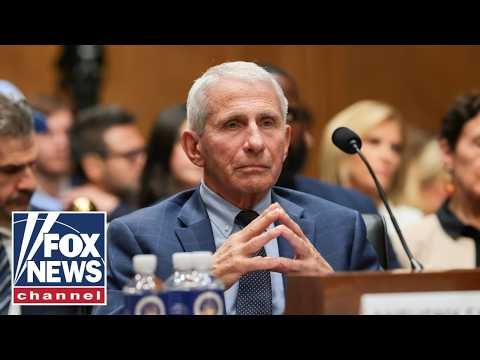
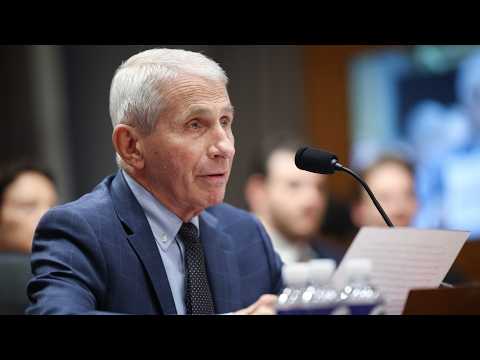
Dr. Anthony Fauci invoked his Fifth Amendment right against self-incrimination today, July 29, 2026, during a Senate hearing in Washington D.C. This action occurred as the Senate committee scrutinized aspects of the federal government’s handling of the COVID-19 pandemic, with Fauci declining to answer questions posed by senators.
The invocation of this constitutional right allows a witness to refuse to provide testimony that might be used against them in a criminal proceeding. It is a legal protection and does not automatically imply guilt, but it prevents forced self-incrimination.
Fauci’s appearance was highly anticipated. He previously served as the Director of the National Institute of Allergy and Infectious Diseases (NIAID) for decades. He also held the role of Chief Medical Advisor to the President during the initial phases of the COVID-19 pandemic.
The Senate’s Ongoing Investigation
The Senate committee conducting this hearing has been engaged in a multi-month investigation. Its mandate includes examining various facets of the COVID-19 response. This encompasses the origins of the SARS-CoV-2 virus, the accelerated development of vaccines, the implementation of public health mandates, and the allocation of federal funding.
Witnesses have been called to provide testimony on these critical matters. The committee’s work aims to establish a comprehensive record of decisions made and actions taken during the public health crisis.
Today’s session was expected to be a pivotal moment. Public interest in Fauci’s testimony had been substantial leading up to the hearing.
Scope of the Inquiry
The investigation has cast a wide net. Senators have pursued questions regarding the scientific basis for certain public health recommendations. They have also examined the processes behind vaccine approval and distribution.
Federal funding for research, both domestic and international, has also been a key area of focus. The committee seeks to understand the oversight mechanisms in place for these expenditures.
The role of various federal agencies, including the National Institutes of Health (NIH) and the Centers for Disease Control and Prevention (CDC), has been under review. The committee aims to identify strengths and weaknesses in the national response framework.
Understanding the Fifth Amendment
The Fifth Amendment to the United States Constitution provides several fundamental protections for individuals. These protections are designed to safeguard liberty and ensure due process.
One of the most recognized provisions is the right against self-incrimination. This right is enshrined in the clause stating that no person shall be “compelled in any criminal case to be a witness against himself.”
This protection extends beyond criminal trials to various legal proceedings, including congressional hearings. A witness can invoke the Fifth Amendment if they reasonably believe their testimony could furnish evidence that might lead to their prosecution.
Legal Implications of Invocation
Invoking the Fifth Amendment is a legal right. It is not an admission of guilt, nor does it create a presumption of guilt in a court of law. The Supreme Court has affirmed that a person’s silence cannot be used as evidence of guilt in a criminal trial.
However, in civil proceedings or congressional hearings, the invocation can carry different implications. While not proof of guilt, it can sometimes be interpreted by the public as an indication that the witness has something to hide.
Legal scholars often emphasize that the right is a crucial safeguard. It prevents the government from coercing individuals into providing testimony that could be used to convict them.
Fauci’s Role in the Pandemic Response
Dr. Anthony Fauci became a prominent figure during the COVID-19 pandemic. As the Director of NIAID, a position he held from 1984 until his retirement in 2022, he was a key scientific voice.
He also served as Chief Medical Advisor to the President for a period. In this capacity, he advised on public health strategies and communicated scientific information to the public.
His public appearances and briefings were frequent. He often explained complex scientific concepts and public health measures to a broad audience.
Key Areas of Influence
Fauci’s influence extended across several critical areas. He played a significant role in advising on vaccine development and deployment. His input was sought on strategies for mitigating virus transmission, such as masking and social distancing.
He also contributed to discussions around the origins of the virus. This included debates about natural emergence versus laboratory leak theories.
His career at NIAID spanned multiple public health crises, including HIV/AIDS, Ebola, and Zika. This extensive experience positioned him as a leading authority during the COVID-19 outbreak.
Public and Political Reactions
News of Fauci’s invocation of the Fifth Amendment quickly circulated. Bloomberg Television was among the first outlets to report the development.
The event immediately sparked significant public and political reactions. Social media platforms showed a rapid increase in discussion surrounding the hearing.
Members of the Senate committee expressed various sentiments. Some senators indicated that the invocation complicated their investigative efforts. Others underscored the constitutional right of any witness to decline to testify.
The Broader Context of Scrutiny
The hearing is part of a larger, ongoing scrutiny of the pandemic response. This scrutiny comes from various sectors. It includes governmental bodies, scientific organizations, and the general public.
Questions about decision-making processes, the effectiveness of interventions, and the economic impact of policies continue to be debated. The long-term consequences of the pandemic are still being assessed.
Fauci’s testimony was anticipated as a moment to gain further insight. His decision to invoke the Fifth Amendment has altered the immediate trajectory of this particular line of inquiry.
Developing Story: Limited Details
This is a developing story. Initial reports confirm the invocation of the Fifth Amendment by Dr. Anthony Fauci. However, many specific details remain undisclosed.
The exact questions posed by senators that led to the invocation have not been fully released. The committee’s immediate response and any subsequent procedural actions are also pending further information.
Additional details are expected to emerge in the coming hours and days. These details will likely include official statements from the committee and further reporting from news organizations.
Anticipated Next Steps
The Senate committee will likely continue its investigation. They may pursue other avenues of inquiry or call additional witnesses.
The legal implications for Fauci are not yet clear. The invocation protects against self-incrimination in criminal proceedings. However, the committee could explore other legal options, though specifics are not currently available.
Public interest in the proceedings remains exceptionally high. The event marks a significant turn in the ongoing public and political discourse surrounding the pandemic response.
A Senate committee convened. Witnesses were called. Questions were asked. The Fifth Amendment was invoked.
Washington D.C.