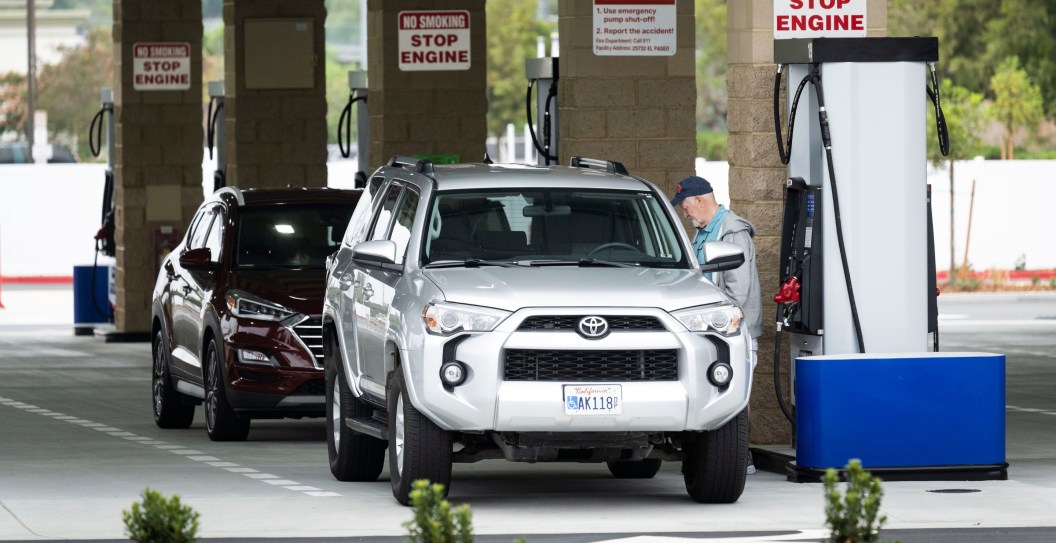
Multiple U.S. states are implementing new gas taxes during 2026, leading to widespread public outcry from motorists and consumer groups concerned about increased fuel costs and the associated economic burden.
The new taxes, varying in percentage and structure by state, are largely justified by legislative bodies as necessary funding mechanisms.
These funds are earmarked for critical infrastructure projects, including road maintenance, bridge repairs, and public transportation upgrades.
Some states also frame the taxes as a step toward environmental sustainability, aiming to reduce reliance on fossil fuels and encourage the adoption of electric vehicles.
But the public reaction has been swift and largely negative, with many citizens expressing frustration over the timing and necessity of these additional levies.
The Rationale Behind New Gas Taxes
State governments cite various reasons for introducing or increasing gas taxes in 2026.
A primary driver is the significant deterioration of existing infrastructure. The American Society of Civil Engineers (ASCE) has consistently graded U.S. infrastructure poorly, highlighting a multi-trillion-dollar investment gap.
For example, a report by the ASCE in 2025 indicated that over 40% of U.S. roads are in poor or mediocre condition, costing motorists hundreds of dollars annually in vehicle repairs and wasted fuel.
Another factor is the long-term decline in traditional gas tax revenues. Fuel-efficient vehicles and the gradual transition to electric vehicles mean less gasoline is purchased per mile driven, eroding the tax base.
States like California, Washington, and New York have been at the forefront of exploring alternative revenue models, including mileage-based user fees, though these have seen limited adoption.
Environmental goals also play a role. Some states are leveraging gas taxes to incentivize cleaner transportation options. The revenue can fund rebates for electric vehicle purchases, expand charging infrastructure, or invest in public transit systems.
Legislators argue that the taxes are a user fee, ensuring that those who use the roads most contribute proportionally to their upkeep.
Public Reaction and Economic Concerns
The implementation of new gas taxes has been met with considerable public resistance.
Motorists, already contending with rising inflation and fluctuating fuel prices, view these taxes as an additional financial strain. Consumer advocacy groups have voiced strong opposition, arguing that the taxes disproportionately affect lower-income households and rural communities.
For instance, the American Automobile Association (AAA) issued a statement in April 2026, expressing concern that the new taxes would further squeeze household budgets, especially for those with long commutes.
Small businesses, particularly those reliant on transportation for goods and services, also anticipate increased operating costs. Trucking companies and delivery services, for example, will see their fuel expenditures rise, potentially leading to higher prices for consumers.
Protests and online petitions have emerged in several states where the new taxes are taking effect. Social media platforms have become forums for citizens to organize opposition and share their frustrations.
The debate often centers on transparency and accountability. Citizens demand clear assurances that the collected funds will be used exclusively for their stated purposes and not diverted to other state coffers.
State-Specific Implementations in 2026
Several states have enacted changes to their gas tax structures effective in 2026.
- State A: Implemented a 5-cent per gallon increase, projected to generate an additional $300 million annually for road and bridge repair.
- State B: Introduced a new variable tax indexed to inflation, aiming to provide a more stable funding source for infrastructure projects. This change is expected to add approximately 3 cents per gallon initially.
- State C: Approved a 7-cent per gallon hike, with 75% of the revenue dedicated to public transit expansion and 25% to highway maintenance.
- State D: Adopted a carbon tax component, adding 2 cents per gallon specifically for climate change mitigation efforts and electric vehicle incentives.
These changes are not uniform. Some states have maintained their existing gas tax rates, while others have explored different funding mechanisms entirely.
The varying approaches reflect diverse political landscapes and different infrastructure priorities across the nation.
Historical Context of Gas Taxes
Gasoline taxes have a long history in the United States, first implemented at the state level in Oregon in 1919.
The federal government followed suit in 1932, establishing a federal gas tax to fund the national highway system.
For decades, the gas tax was considered a reliable and equitable way to fund transportation infrastructure, operating on the principle that those who use the roads should pay for their upkeep.
However, the purchasing power of the gas tax has eroded significantly over time due to inflation and increased fuel efficiency. The federal gas tax, for instance, has remained at 18.4 cents per gallon since 1993.
This stagnation, combined with rising construction costs, has created a funding shortfall for infrastructure projects nationwide.
States have increasingly taken on the burden, leading to the current wave of state-level tax adjustments. The shift reflects a growing recognition that federal funding alone is insufficient to meet modern infrastructure demands.
The Future of Transportation Funding
The current outcry over new gas taxes highlights a broader challenge for states: how to fund transportation infrastructure in an evolving automotive landscape.
As electric vehicles become more prevalent, the traditional gas tax model becomes less sustainable. States are actively researching and piloting alternative funding mechanisms.
Mileage-based user fees (MBUF), where drivers pay based on the number of miles they travel, are gaining traction as a potential long-term solution. Oregon has been a pioneer in this area with its OReGO program.
Other proposals include congestion pricing, where drivers pay a fee to access certain roadways during peak hours, and increased reliance on general sales taxes or dedicated infrastructure bonds.
The debate over gas taxes in 2026 is therefore not just about immediate fuel costs. It is a symptom of a larger systemic shift in how the nation plans to pay for its roads, bridges, and public transit systems in the 21st century.
Legislators grapple with public resistance. Infrastructure needs persist. Funding models evolve.
The road ahead remains uncertain.