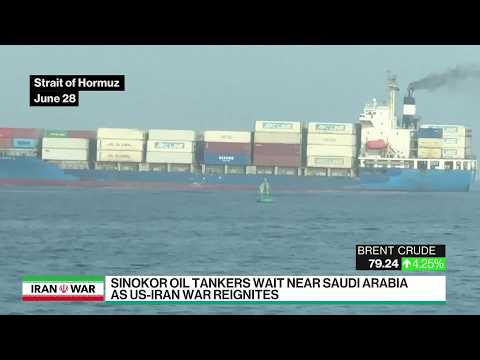
The Covert Passage Through a Critical Chokepoint
Commercial ships are covertly navigating the Strait of Hormuz, a critical maritime chokepoint, in response to ongoing US-Iran attacks. This clandestine activity underscores the severe geopolitical tensions and the direct threat posed to international shipping in one of the world’s most vital waterways. The need for secrecy reflects the volatile security landscape that has emerged from the protracted conflict between the United States and Iran, impacting global energy supplies and maritime trade routes.
The Strait of Hormuz connects the Persian Gulf with the Arabian Sea and the open ocean. It is a narrow passage, approximately 21 nautical miles wide at its narrowest point. Over 20% of the world’s petroleum and a significant portion of its liquefied natural gas (LNG) pass through this strait daily.
Any disruption in this area has immediate and far-reaching consequences for the global economy. The current covert transits signify a new phase in managing risk within this contested zone.
Escalating Tensions Between the US and Iran
The relationship between the United States and Iran has been characterized by periods of intense friction for decades. Recent years, particularly since 2025, have seen a significant escalation of direct and indirect confrontations. These include targeted strikes, naval maneuvers, and cyber warfare.
The current phase of US-Iran attacks involves a complex interplay of military actions and retaliatory measures. These incidents often occur in the vicinity of the Strait of Hormuz and the broader Persian Gulf region. Both nations have deployed significant military assets to the area, increasing the potential for miscalculation and further escalation.
Naval patrols by the United States Fifth Fleet operate in the Gulf waters. Iran’s Islamic Revolutionary Guard Corps (IRGC) Navy also maintains a strong presence. These forces frequently engage in close encounters, some of which have resulted in minor skirmishes or warnings.
Recent Incidents and Their Impact
Several incidents have contributed to the current state of heightened alert. In early 2026, a series of drone attacks attributed to Iranian-backed groups targeted commercial vessels near the Strait. While specific details remain classified, these events prompted increased vigilance from international maritime security forces.
The United States responded with a series of precision strikes against what it identified as IRGC naval infrastructure. These actions were aimed at deterring further attacks on shipping. However, they have also fueled a cycle of retaliation.
These attacks have created an environment where routine maritime operations are no longer considered safe. Shipping companies must now weigh economic necessity against significant security risks. The decision to transit covertly is a direct consequence of this calculus.
The Mechanics of Secret Shipping
Secret shipping in the Strait of Hormuz involves a series of deliberate actions designed to obscure a vessel’s identity and movements. The primary method is the disabling of Automatic Identification System (AIS) transponders. AIS broadcasts a ship’s position, course, speed, and other data to other vessels and shore stations.
When a ship’s AIS is turned off, it effectively disappears from public tracking systems. This practice is often associated with illicit activities such as sanctions evasion or illegal fishing. However, in the Strait of Hormuz, it has become a survival strategy for legitimate commercial vessels.
Ships engaged in covert transit often operate under the cover of darkness. They may also alter their routes, using less conventional channels or hugging coastlines to avoid radar detection. Crew members are often briefed on enhanced security protocols, including blackout procedures and readiness for potential threats.
Risks and Ramifications of Dark Voyages
Operating without AIS significantly increases collision risks. Other vessels, unaware of a ship’s presence, may inadvertently steer into its path. This risk is particularly high in a congested waterway like the Strait of Hormuz, which sees thousands of transits annually.
Beyond collision, disabling AIS also makes vessels more vulnerable to piracy or other non-state actors. Without a visible signature, distress calls may not be immediately recognized or located. This compounds the dangers for the crew and cargo.
International maritime organizations, including the International Maritime Organization (IMO), strongly discourage the disabling of AIS. They recognize its importance for safety at sea. However, the current geopolitical climate has forced shipping companies into difficult choices.
The Economic Stakes of the Strait
The Strait of Hormuz is more than a geographical feature; it is a linchpin of the global energy economy. Approximately one-third of the world’s seaborne crude oil and petroleum products pass through this strait. This includes oil from Saudi Arabia, Iran, Iraq, Kuwait, Qatar, and the United Arab Emirates.
The volume of oil transported through the Strait of Hormuz averages around 21 million barrels per day. Any significant disruption can lead to a rapid spike in global oil prices. Such price increases impact consumers worldwide through higher fuel costs and increased inflation.
Beyond oil, the Strait is also crucial for liquefied natural gas (LNG) shipments. Qatar, a major LNG exporter, relies heavily on this passage. Disruptions here could impact energy security in Europe and Asia, which depend on these supplies.
Global Supply Chain Vulnerabilities
The covert shipping practices also highlight broader vulnerabilities in global supply chains. Companies are forced to absorb higher insurance premiums for vessels operating in the region. These increased costs are often passed on to consumers, further contributing to economic pressures.
Diversion of routes, while sometimes an option for some cargo, is not feasible for the sheer volume of oil and gas moving through the Strait. Alternative routes, such as pipelines, exist but have limited capacity compared to maritime transport.
The uncertainty surrounding shipping in the Strait of Hormuz also deters investment. Companies may be reluctant to commit to long-term contracts or projects that rely on stable passage through the region. This hesitancy can have long-term impacts on global trade patterns and energy infrastructure development.
International Responses and Future Outlook
The international community has expressed deep concern over the escalating tensions and their impact on maritime security. Calls for de-escalation have come from various international bodies, including the United Nations. Diplomacy, however, has yielded limited success in resolving the underlying US-Iran conflicts.
Several nations have deployed naval assets to the region to protect their commercial interests. These include forces from the United Kingdom, France, and other allies. These patrols aim to provide a deterrent presence and offer assistance to vessels in distress. However, their presence also adds to the complexity of the operational environment.
The future outlook for the Strait of Hormuz remains uncertain. The ongoing US-Iran attacks show no immediate signs of abatement. The reliance on covert shipping is likely to continue as long as the security threats persist.
Technological Solutions and Diplomatic Avenues
Some proposals involve enhanced technological solutions for maritime security. These include advanced surveillance systems and improved communication networks to track vessels without relying solely on AIS. However, these solutions face significant technical and political hurdles.
Diplomatic efforts continue behind the scenes, often mediated by third-party nations. These discussions aim to establish de-escalation mechanisms and confidence-building measures. The goal is to prevent further military confrontations and ensure the free flow of commerce through the Strait.
The current situation in the Strait of Hormuz serves as a stark reminder of the interconnectedness of global security and economic stability. The covert voyages of commercial ships are a testament to the enduring challenges posed by geopolitical rivalries in critical maritime zones.
The tankers moved.
The freighters moved.
The world watched.
The oil flowed.
The Strait.