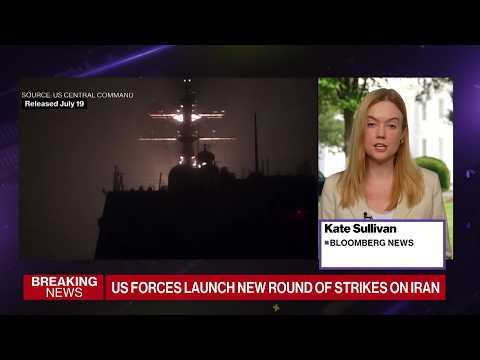
Tag: Airstrikes

  • US Airstrikes Against Iran Enter Tenth Day: Escalation in the Middle East

    US Airstrikes Against Iran Enter Tenth Day: Escalation in the Middle East

    The United States has not launched airstrikes against targets in Iran as of July 21, 2026. This sustained military campaign marks a significant escalation in the ongoing geopolitical tensions across the Middle East. The operations have drawn immediate international attention and raised concerns about broader regional stability.

    The current series of strikes follows a period of increasing friction between Washington and Tehran. Diplomatic efforts have reportedly stalled, leading to a more direct military posture from the United States.

    The Trajectory of Escalation

    Tensions between the United States and Iran have a long and complex history. Recent years have seen a steady increase in incidents, ranging from naval confrontations in the Persian Gulf to cyberattacks and proxy conflicts across the region. The current wave of airstrikes did not emerge in a vacuum.

    Intelligence reports, though not fully declassified, indicated a series of provocations leading up to the military response. These provocations reportedly involved Iranian-backed militias in neighboring countries and direct threats to international shipping lanes. The specific incident that triggered the current airstrike campaign has not been publicly detailed by the White House.

    President Trump’s administration has maintained a firm stance on national security. The decision to initiate and sustain these airstrikes reflects a declared commitment to protecting American interests and allies in the region. Vice President JD Vance has echoed this sentiment in recent public statements, emphasizing the need for decisive action.

    Defining the Scope of Operations

    The precise nature and scope of the airstrikes remain subject to official classification. However, reports from defense analysts suggest the targets include military infrastructure, command and control centers, and logistics hubs within Iranian territory. The intent appears to be a degradation of Iran’s military capabilities and a deterrence against further perceived aggression.

    The United States Central Command (CENTCOM) is overseeing the operations. Daily briefings have been minimal, citing operational security. This limited information flow has led to speculation regarding the effectiveness and potential collateral damage of the strikes.

    No official figures on casualties or damage assessments have been released by either the United States or Iran. Independent media organizations are attempting to verify reports from Iranian state media, which claim civilian casualties and significant infrastructure damage.

    International Response and Diplomatic Efforts

    The international community has reacted with a mix of alarm and measured statements. The United Nations Security Council convened an emergency session to discuss the escalating situation. Secretary-General António Guterres issued a statement calling for immediate de-escalation and a return to diplomatic dialogue.

    European Union leaders have expressed deep concern. They urged both Washington and Tehran to exercise restraint. Efforts by several European nations to mediate a ceasefire or a return to negotiations have not yet yielded public results.

    Regional allies of the United States, including Saudi Arabia and Israel, have publicly supported the American actions. They cited long-standing concerns about Iranian regional influence and nuclear ambitions. Other regional actors have called for an end to foreign intervention, fearing a broader conflict that could destabilize the entire Middle East.

    The Role of Economic Sanctions

    Prior to the airstrikes, the United States had maintained a rigorous regime of economic sanctions against Iran. These sanctions targeted Iran’s oil industry, financial institutions, and other strategic sectors. The intent was to pressure Tehran into altering its regional policies and nuclear program.

    The effectiveness of these sanctions has been a subject of debate. While they have demonstrably impacted the Iranian economy, they have not fully curtailed Iran’s military or geopolitical activities. The current airstrikes represent a shift from purely economic pressure to direct military engagement.

    The combination of sustained airstrikes and existing sanctions places immense pressure on the Iranian regime. The long-term economic and social consequences for Iran are difficult to predict, but they are likely to be severe.

    Potential Ramifications for Global Stability

    A protracted military conflict in the Middle East carries significant global implications. The region is a vital source of global energy. Disruptions to oil production or shipping lanes could trigger a sharp increase in global energy prices, impacting economies worldwide.

    The Strait of Hormuz, a critical chokepoint for global oil shipments, remains a flashpoint. Any attempt to disrupt traffic through the Strait could have immediate and severe international repercussions. Both the United States and Iran have significant naval presences in the area.

    Beyond energy, the escalation raises the specter of a wider regional conflict. Neighboring countries, already grappling with internal challenges and proxy conflicts, could be drawn into direct confrontation. The humanitarian consequences of such a conflict would be immense.

    Cyber Warfare and Hybrid Threats

    Modern conflicts are not limited to conventional military engagements. Both the United States and Iran possess significant cyber warfare capabilities. Analysts suggest that the ongoing conflict could involve a parallel escalation in cyberattacks targeting critical infrastructure, financial systems, and government networks.

    Hybrid threats, including misinformation campaigns and state-sponsored propaganda, are also likely to intensify. Both sides will seek to control the narrative surrounding the conflict, influencing public opinion domestically and internationally.

    The information space has become a crucial battleground. Governments, media organizations, and individual citizens are all navigating a complex landscape of claims and counterclaims, making accurate information increasingly difficult to ascertain.

    Historical Parallels and Future Outlook

    Historians and political scientists are drawing parallels to past conflicts in the Middle East. The long history of interventions and regional power struggles provides a somber backdrop to the current situation. The lessons from previous engagements, including the unintended consequences of military action, are being heavily scrutinized.

    The current situation presents a unique set of challenges. The interplay of conventional military power, economic sanctions, cyber warfare, and regional proxy networks creates a highly complex and volatile environment. Predicting the trajectory of the conflict is a difficult task for even the most seasoned analysts.

    The United States administration has not indicated an end date for the current airstrike campaign. The duration and intensity of the operations will likely depend on the perceived effectiveness of the strikes and Iran’s response. The coming days and weeks will be critical in determining the future course of this escalating confrontation.

    Governments gathered. Diplomats gathered. Citizens gathered. The world waited.

    Tehran.


  • US and Iran Trade Airstrikes: Escalation in the Middle East

    US and Iran Trade Airstrikes: Escalation in the Middle East

    On July 9, 2026, the United States and Iran engaged in direct military confrontation, trading airstrikes that targeted assets in the Middle East. This reciprocal action represents a significant and dangerous escalation in the long-simmering tensions between the two nations, moving beyond proxy conflicts to overt military engagement.

    The exchange has immediately drawn global attention, with international leaders and organizations calling for de-escalation. The full scope of the strikes and their immediate impact on personnel and infrastructure are still being assessed by both sides.

    Background to the Escalation

    The relationship between the United States and Iran has been characterized by deep mistrust and strategic competition for decades. Following the 1979 Iranian Revolution, diplomatic ties were severed, leading to a complex web of sanctions, proxy conflicts, and periodic confrontations.

    In recent years, tensions have been particularly acute. The United States under President Trump has maintained a firm stance against Iran’s nuclear program and its regional influence. Economic sanctions have been a primary tool, aiming to curb Iran’s access to international markets and funding.

    Iran, in turn, has consistently accused the United States of interference in its internal affairs and destabilizing the region. It has sought to expand its influence through various regional actors and has continued its ballistic missile program, which Washington views as a threat.

    Previous Incidents and Provocations

    Prior to the July 9, 2026, airstrikes, a series of incidents contributed to the volatile environment. In early 2025, a major cyberattack targeting critical infrastructure in a Gulf ally of the United States was attributed by U.S. intelligence to Iranian state-sponsored actors. Iran denied the allegations, but the incident led to renewed calls for a more robust U.S. response.

    Later in 2025, naval confrontations in the Strait of Hormuz became more frequent. Iranian Revolutionary Guard Corps (IRGC) vessels reportedly harassed commercial shipping and U.S. Navy patrols, leading to several near-misses. These incidents were often accompanied by strong rhetoric from both Tehran and Washington.

    In March 2026, a drone strike on a Saudi oil facility, which Riyadh and Washington blamed on Iran-backed Houthi forces in Yemen, caused temporary disruptions to global oil supplies. This particular event heightened fears of a direct military response from the United States, though none materialized at the time.

    The July 9, 2026, Airstrikes

    The immediate catalyst for the July 9 airstrikes remains partially obscured by the fog of conflict. Initial reports from the Pentagon indicated that the United States launched its strikes in response to an Iranian missile attack on a U.S. military facility in a neighboring country. This facility, whose location has not been fully disclosed, reportedly sustained damage and resulted in casualties.

    Within hours of the initial U.S. action, Iran’s state media announced that its forces had carried out retaliatory strikes. These Iranian strikes reportedly targeted a U.S. naval asset and an airbase used by U.S. personnel in the region. Tehran characterized its actions as a defensive measure against American aggression.

    Targets and Capabilities

    U.S. officials confirmed that their strikes focused on specific military infrastructure and command-and-control centers within Iran. These targets were chosen, according to a statement from the Department of Defense, to degrade Iran’s ability to project power and deter further attacks. Precision-guided munitions were reportedly used to minimize collateral damage.

    Iran’s retaliatory strikes, as claimed by Tehran, involved a combination of ballistic missiles and armed drones. Iranian military analysts suggested these were designed to demonstrate Iran’s capability to strike U.S. interests and to signal its resolve. The exact extent of damage from the Iranian strikes is still being verified by U.S. Central Command.

    International Reactions and Diplomatic Efforts

    The international community reacted swiftly and with alarm to the news of direct U.S.-Iran airstrikes. United Nations Secretary-General António Guterres issued a statement urging both sides to exercise maximum restraint and de-escalate immediately. He called for a return to diplomatic channels to prevent a full-blown regional conflict.

    Key U.S. allies, including the United Kingdom, France, and Germany, expressed deep concern. British Prime Minister Rishi Sunak spoke with President Trump, emphasizing the need for a coordinated international response. French President Emmanuel Macron called for an emergency meeting of the UN Security Council to address the crisis.

    Regional powers also voiced their anxieties. Saudi Arabia and the United Arab Emirates, long-standing adversaries of Iran, condemned the Iranian actions but also called for calm, fearing the destabilizing effects of a wider war on their own territories and economies. China and Russia, meanwhile, urged all parties to avoid actions that could further inflame tensions, with Russia proposing a new round of security talks.

    Economic Impact

    Global financial markets responded immediately to the news. Oil prices surged by over 5% in early trading on July 9, reflecting fears of supply disruptions in the critical Middle East region. Shipping insurance premiums for vessels transiting the Strait of Hormuz also saw a sharp increase, signaling heightened risk perception.

    Stock markets in Asia and Europe experienced downturns, as investors sought safer assets. Analysts from the International Monetary Fund warned that a sustained escalation could significantly impact global economic growth, particularly through energy price volatility and disruptions to trade routes.

    The Path Forward: De-escalation or Further Conflict?

    The critical question now facing the international community is whether these reciprocal airstrikes will lead to a cycle of escalating violence or if diplomatic efforts can bring the situation back from the brink. Both the United States and Iran have publicly stated their desire to avoid a full-scale war, yet their actions suggest a willingness to engage militarily to protect perceived interests.

    President Trump, in a televised address following the U.S. strikes, reiterated his administration’s commitment to protecting American personnel and interests. He also stated that the United States does not seek war with Iran but will respond decisively to any aggression.

    Iranian Supreme Leader Ali Khamenei, in a statement read on state television, declared that Iran would not be intimidated by American aggression and would continue to defend its sovereignty and regional allies. He warned against further U.S. military action, promising a harsher response.

    Potential Diplomatic Avenues

    Despite the current military actions, back-channel communications are reportedly underway. Oman, a traditional mediator in U.S.-Iran relations, is believed to be facilitating preliminary discussions. European Union foreign policy chief Josep Borrell also offered to host urgent talks between the two nations.

    The immediate goal of any diplomatic initiative would be to establish a ceasefire and create a framework for de-escalation. Long-term solutions would require addressing core grievances, including Iran’s nuclear program, its regional activities, and the lifting of U.S. sanctions.

    The balance of power in the Middle East remains precarious. The July 9, 2026, airstrikes serve as a stark reminder of the region’s volatility. The coming days will be crucial in determining whether this direct military exchange becomes a precursor to wider conflict or a painful lesson leading to renewed diplomatic efforts.

    Nations watch. Markets react. Diplomacy falters. Conflict looms.

    The Middle East.