Tag: Actor

  • Renny Harlin and Val Kilmer: The ‘Mindhunters’ Eyeglasses Dispute

    Renny Harlin and Val Kilmer: The ‘Mindhunters’ Eyeglasses Dispute

    Director Renny Harlin recently recounted a significant clash with actor Val Kilmer during the production of the 2004 film ‘Mindhunters,’ a dispute that revolved around a seemingly minor detail: a pair of eyeglasses.

    This incident, detailed in a recent interview, offers a behind-the-scenes look at the creative tensions that can arise on a Hollywood film set, even between seasoned professionals.

    The Genesis of ‘Mindhunters’

    ‘Mindhunters’ was a psychological thriller released in 2004. The film starred Val Kilmer, Christian Slater, LL Cool J, Jonny Lee Miller, and Kathryn Morris.

    It centered on a group of FBI profiler trainees sent to a remote island for their final exam. They soon discover that a serial killer is among them, systematically hunting them down.

    Renny Harlin, known for directing action films such as ‘Die Hard 2’ (1990) and ‘Cliffhanger’ (1993), took the helm. The production itself faced various challenges, including multiple release date changes.

    Filming primarily took place in the Netherlands, providing a distinct European backdrop for the isolated island setting.

    Val Kilmer’s Role and Reputation

    Val Kilmer, a prominent actor known for roles in ‘Top Gun’ (1986), ‘The Doors’ (1991), and ‘Heat’ (1995), played the character of Jake Harris in ‘Mindhunters.’

    Harris was the lead instructor overseeing the FBI trainees. Kilmer’s involvement brought significant star power to the project.

    Throughout his career, Kilmer has maintained a reputation for intense dedication to his roles. This intensity has sometimes been accompanied by reports of challenging on-set behavior.

    His portrayal of iconic characters often involved deep immersion, which could lead to strong opinions regarding character details.

    The Eyeglass Incident

    According to Renny Harlin’s recent recollection, the specific point of contention with Val Kilmer involved a pair of eyeglasses. Eyeglasses are often a subtle but crucial element of character design, conveying intellect, vulnerability, or distinct personality traits.

    The director and the actor found themselves at an impasse over the particular style or appearance of the eyewear. This seemingly small detail became a flashpoint for a larger disagreement.

    Harlin’s account suggests that the dispute was not easily resolved. It escalated beyond a simple discussion about costume choices.

    Such disagreements can disrupt production schedules and create an atmosphere of tension on set.

    Behind-the-Scenes Dynamics

    Film sets are complex environments. They involve numerous creative individuals, each with a vision for the final product.

    Directors like Harlin are responsible for the overall artistic and technical execution of the film. Actors, especially those of Kilmer’s caliber, bring their interpretation and experience to their roles.

    Clashes often arise from differing artistic perspectives or strong convictions about character portrayal. What one person views as a minor detail, another might see as fundamental to the character’s authenticity.

    The pressure of filmmaking, including tight schedules and large budgets, can amplify these creative differences.

    Impact on Production and Atmosphere

    A disagreement between a director and a lead actor can have ripple effects across an entire production. It can affect crew morale, slow down filming, and potentially alter the creative direction of scenes.

    While the exact duration and specific consequences of the ‘Mindhunters’ eyeglasses dispute are not fully detailed in Harlin’s initial account, such incidents typically require intervention or compromise.

    The film’s eventual release in 2004, after several delays, suggests a production process that navigated various hurdles.

    The ‘Mindhunters’ incident serves as a specific example of the challenges inherent in collaborative artistic endeavors.

    The Nature of Creative Conflict

    Creative conflict is not uncommon in Hollywood. Many iconic films have histories of intense disagreements between directors, actors, and other key personnel.

    Sometimes these clashes lead to creative breakthroughs. Other times, they result in strained relationships or compromises that impact the final product.

    For directors, managing strong personalities and divergent artistic opinions is a core part of the job. For actors, advocating for their character’s integrity is often seen as essential to their craft.

    The ‘Mindhunters’ episode highlights how even small props or costume elements can become symbols of larger artistic battles.

    Harlin’s Perspective on Filmmaking

    Renny Harlin’s career spans decades, marked by a proficiency in action and thriller genres. His directorial approach typically involves high energy and visual spectacle.

    His decision to share this anecdote about Kilmer suggests a reflection on the demanding nature of his profession.

    It also underscores the personal investment directors have in every aspect of a film, down to the smallest detail.

    Harlin has worked with numerous stars throughout his career, making his recollection of this particular incident noteworthy.

    Kilmer’s Approach to Acting

    Val Kilmer has consistently been lauded for his transformative performances. He is known for deep research and method acting tendencies.

    This dedication often means he forms strong opinions about how his characters should look, speak, and behave.

    His commitment to authenticity can be both a strength and a source of friction on set. The eyeglasses dispute fits within a broader narrative of actors deeply invested in their roles.

    Kilmer’s dedication often resulted in memorable and critically acclaimed performances.

    Lessons from the Set

    The ‘Mindhunters’ eyeglasses incident offers a micro-example of macro issues in filmmaking. It demonstrates that collaboration, even among professionals, is rarely seamless.

    Every element, from the script to a prop, can become a point of contention with significant implications.

    Filmmakers continually balance artistic vision with practical constraints and the personalities involved.

    The finished film often represents a complex tapestry woven from countless decisions, compromises, and occasional conflicts.

    The Legacy of ‘Mindhunters’

    ‘Mindhunters’ eventually grossed over $21 million worldwide against a production budget of approximately $27 million. Critical reception was mixed.

    Despite the behind-the-scenes challenges, the film found an audience, particularly in the home video market.

    The story of the eyeglasses, while a small detail, becomes part of the film’s larger production lore.

    It contributes to the ongoing narrative of Hollywood’s often tumultuous creative process.

    Reflecting on a Production

    Years after a film’s release, directors and actors often share anecdotes from their time on set. These stories provide valuable insights into the human element of filmmaking.

    They reveal the dedication, passion, and occasional friction that shape cinematic works.

    Renny Harlin’s recollection of his interaction with Val Kilmer adds another layer to the understanding of ‘Mindhunters’ and the careers of both individuals.

    It highlights the constant negotiation of art and commerce.

    Directors. Actors. Crews. Budgets. Schedules. Eyeglasses. Conflict.

    Hollywood.
  • Dustin Hoffman on American Division – Comparing Today to the Vietnam War Era

    Dustin Hoffman on American Division – Comparing Today to the Vietnam War Era

    Dustin Hoffman’s Assessment of American Division

    In 2026, actor Dustin Hoffman observed that the United States is experiencing a level of societal division comparable to the period of the Vietnam War. This statement draws a direct historical parallel, suggesting a contemporary fragmentation within American society that echoes one of its most contentious eras. Hoffman’s comments contribute to an ongoing public discourse regarding national unity and political polarization.

    His remarks were made in a public forum, reflecting a sentiment shared by many observers of the current social and political landscape. The comparison to the Vietnam War era is significant, as that period is widely remembered for its profound domestic unrest and ideological schisms.

    The Vietnam War Era: A Time of Intense Division

    The Vietnam War, which officially spanned from 1955 to 1975, became a major point of contention within the United States, particularly from the mid-1960s through the early 1970s. The conflict deeply polarized American society, dividing citizens along lines of politics, generation, class, and race. Protests against the war grew in frequency and intensity, often clashing with government policies and public support for military involvement.

    Key events such as the Tet Offensive in 1968, the Kent State shootings in 1970, and the publication of the Pentagon Papers in 1971 fueled anti-war sentiment. These events exposed deep rifts between different segments of the American population. The war’s impact extended beyond policy, affecting cultural norms, family dynamics, and individual identities across the nation.

    Social and Political Polarization

    The division during the Vietnam War was multifaceted. There were strong generational divides, with many young people actively opposing the war while older generations often supported the government’s stance. Economic disparities also played a role, as the draft disproportionately affected lower-income individuals. The Civil Rights Movement, occurring concurrently, further complicated the social fabric, linking issues of racial injustice with opposition to the war.

    Political leaders faced immense pressure from both pro-war and anti-war factions. Presidents Lyndon B. Johnson and Richard Nixon both saw their administrations heavily impacted by the conflict and the domestic unrest it generated. The credibility gap, referring to public skepticism about government statements and policies, became a prominent feature of the era.

    Contemporary Echoes of Historical Disunity

    Hoffman’s comparison suggests that many of the underlying causes and manifestations of division from the Vietnam War era are visible in 2026. Modern society grapples with its own set of polarizing issues. These include political ideology, economic inequality, social justice movements, and debates over national identity. The rise of digital media and fragmented information ecosystems has also been cited as a factor in exacerbating contemporary divisions.

    Discussions around these issues often become highly charged, mirroring the passionate debates of the 1960s and 1970s. Public discourse frequently reflects a lack of consensus on fundamental societal values and national direction. This can lead to increased social tension and a perception of a fractured populace.

    Impact of Social Media and Information Silos

    Unlike the Vietnam War era, the contemporary landscape is heavily influenced by social media platforms. These platforms can amplify differing viewpoints but also contribute to the formation of echo chambers and filter bubbles. Individuals may primarily encounter information that reinforces their existing beliefs, leading to deeper ideological divides and reduced empathy for opposing perspectives.

    Misinformation and disinformation campaigns, often spread rapidly through digital channels, further complicate efforts to foster common understanding. This environment can make it challenging to build consensus or engage in constructive dialogue across ideological lines. The speed and reach of modern communication differ significantly from the media landscape of the mid-20th century.

    Dustin Hoffman’s Career and Public Stance

    Dustin Hoffman is a celebrated American actor, known for his roles in iconic films such as The Graduate (1967), Midnight Cowboy (1969), and All the President’s Men (1976). His career has spanned several decades, placing him in a unique position to observe shifts in American society over time. Many of his early films were released during or immediately after the peak of the Vietnam War, making him a contemporary witness to that period of division.

    Hoffman’s public statements have occasionally touched on social and political issues. His recent comments on national division are consistent with a history of actors using their platforms to express observations on societal trends. His perspective, informed by a long career and personal experience, carries weight in public discourse.

    A Lifelong Search for Identity

    In addition to his observations on national division, Hoffman reportedly made a lighthearted comment about still trying to figure out who he is. This personal reflection adds a layer of introspection to his public remarks. It suggests a continuous process of self-discovery, even for individuals with established careers and public identities.

    The concept of identity, both personal and national, is often intertwined with periods of social change and upheaval. Hoffman’s joke may subtly hint at the broader human experience of navigating an evolving world. It can also be seen as an acknowledgment that understanding oneself is a lifelong journey, regardless of external circumstances or professional achievements.

    Historical Parallels and Future Trajectories

    Comparing current societal divisions to the Vietnam War era invites a deeper examination of historical patterns. While specific issues and contexts differ, the underlying dynamics of polarization, dissent, and a search for national cohesion can show similarities. Understanding these parallels can offer insights into navigating contemporary challenges.

    The Vietnam War ultimately concluded, and American society eventually began a process of healing and re-evaluation. However, the scars of that division remained. Whether current divisions will follow a similar trajectory, or manifest in entirely new ways, remains a subject of ongoing debate and observation. Dustin Hoffman’s comments serve as a prompt for this reflection.

    The Role of Cultural Figures in Social Commentary

    Public figures, including actors like Dustin Hoffman, often play a role in shaping or reflecting public opinion. Their statements can initiate conversations, draw attention to significant issues, and offer different perspectives on complex problems. This can be particularly true when they speak from a position of historical experience.

    Hoffman’s remarks exemplify how cultural figures can engage with broader societal concerns, leveraging their visibility to articulate sentiments that resonate with a wider audience. Such commentary often sparks further discussion among citizens and media outlets. This contributes to the ongoing dialogue about the state of the nation.

    Public figures offer observations. Journalists report. Citizens reflect.

    Society.

  • Dustin Hoffman’s Emotional Karlovy Vary Award Acceptance – ‘Feeling Alive’ Through Film

    Dustin Hoffman’s Emotional Karlovy Vary Award Acceptance – ‘Feeling Alive’ Through Film

    A Career Defined by Passion

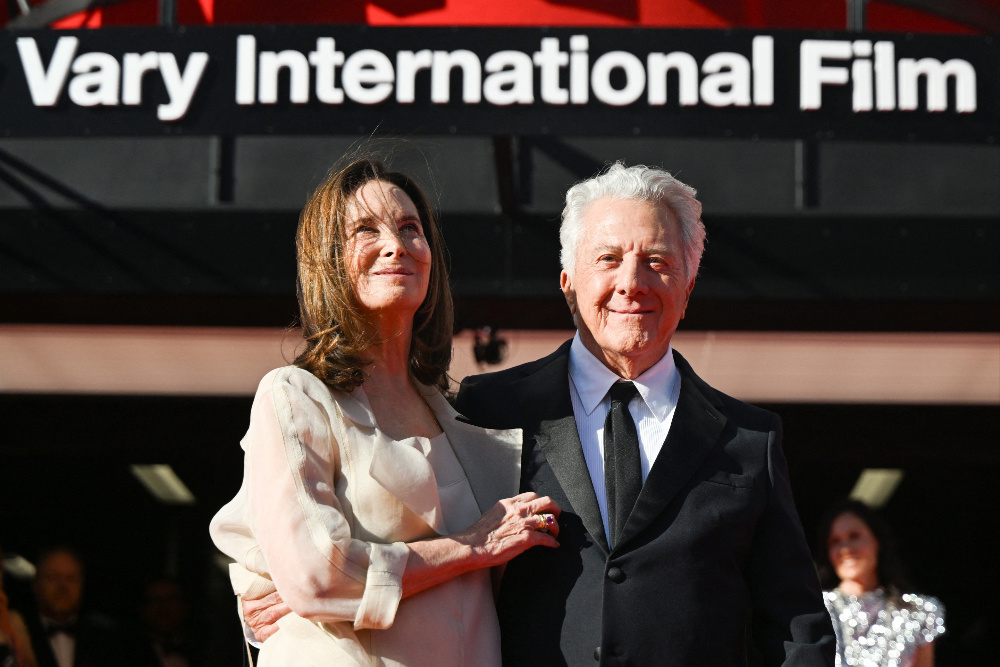
    Dustin Hoffman accepted an award at the Karlovy Vary International Film Festival in 2026. His acceptance speech was marked by profound emotion. He conveyed a deep gratitude for his career in filmmaking, articulating how the craft makes him ‘feel alive.’

    This sentiment resonated with the audience. It highlighted the actor’s enduring passion for his work. His words offered a rare glimpse into the personal connection he holds with his extensive filmography.

    The Karlovy Vary International Film Festival

    The Karlovy Vary International Film Festival is a prominent event in the global cinema calendar. It takes place annually in Karlovy Vary, Czech Republic. The festival is known for showcasing both established and emerging talent.

    It attracts filmmakers, actors, and industry professionals from around the world. Awards presented at the festival recognize significant contributions to cinematic art. Hoffman’s presence underscored the festival’s prestige and its role in celebrating film legends.

    Hoffman’s Legacy in Cinema

    Dustin Hoffman’s career spans over six decades. He is recognized for his versatility and intense character portrayals. His filmography includes a wide range of genres and roles.

    Notable performances include his breakout role as Benjamin Braddock in the 1967 film The Graduate. This performance garnered him his first Academy Award nomination. His portrayal captured the zeitgeist of a generation.

    He won his first Academy Award for Best Actor for the 1979 drama Kramer vs. Kramer. In this film, he depicted a father fighting for custody of his son. The role showcased his ability to convey complex emotional depth.

    His second Academy Award for Best Actor came for the 1988 film Rain Man. He played Raymond Babbitt, an autistic savant. This performance earned widespread critical acclaim and box office success.

    Defining Roles and Critical Acclaim

    Beyond his Oscar-winning roles, Hoffman has delivered numerous other memorable performances. He starred as Ratso Rizzo in the 1969 drama Midnight Cowboy. This film explored themes of friendship and survival in New York City.

    In 1976, he played Carl Bernstein in All the President’s Men. The film chronicled the Watergate scandal. It highlighted his capacity for portraying real-life figures with conviction.

    He also took on the titular role in the 1982 comedy Tootsie. Here, he played an actor who disguises himself as a woman to land a role. The film was a critical and commercial success, demonstrating his comedic timing.

    His career is marked by a consistent dedication to his craft. He often immersed himself deeply in his characters. This method acting approach contributed to the authenticity of his performances.

    The ‘Feeling Alive’ Sentiment

    Hoffman’s statement that filmmaking makes him ‘feel alive’ offers insight into his enduring motivation. It transcends the accolades and public recognition. It speaks to a fundamental connection with the creative process.

    Many artists articulate similar sentiments. The act of creation, of embodying a character, provides a unique sense of purpose. For Hoffman, this appears to be a driving force even after decades in the industry.

    His words underscore the intrinsic rewards of artistic pursuit. They suggest that the passion for the work itself is paramount. This deep-seated love for acting has sustained his career through various industry changes.

    Gratitude and Opportunity

    Hoffman also expressed gratitude for having had the opportunity to do what he loves. This acknowledgment highlights the competitive nature of the film industry. It recognizes the privilege inherent in a long and successful career.

    Many aspiring actors and filmmakers face significant challenges. The path to sustained success is often arduous. Hoffman’s reflection serves as a reminder of the value of persistence and fortune in a creative field.

    His speech resonated as a moment of genuine humility. It came from an actor who has achieved the highest levels of success. The sentiment of being grateful for the opportunity itself speaks volumes.

    The Impact on Audiences and Peers

    An emotional speech from a respected figure like Dustin Hoffman carries significant weight. It can inspire younger generations of actors and filmmakers. It reaffirms the artistic value of their chosen profession.

    For audiences, it reinforces the human element behind the iconic performances. It connects the actor’s personal journey with the characters they bring to life. This connection often deepens the appreciation for their work.

    Industry peers also likely found resonance in his words. The shared experience of the demanding yet rewarding nature of filmmaking creates a bond. Hoffman’s candidness fostered a moment of collective understanding.

    Enduring Talent in a Changing Industry

    The film industry has undergone significant transformations over Hoffman’s career. From the New Hollywood era to the rise of streaming platforms, he has adapted and remained relevant. His continued presence at major festivals like Karlovy Vary attests to his enduring appeal.

    His commitment to complex roles has remained constant. This dedication has allowed him to transition through different cinematic landscapes. He represents a generation of actors who prioritized craft over fleeting trends.

    The emotional core of his speech emphasized this commitment. It showcased that for some, the essence of acting remains a profound and life-affirming endeavor. This personal connection is what allows talent to endure.

    Looking Forward

    Even in 2026, Dustin Hoffman continues to be an active presence in cinema. His acceptance of the award signals ongoing recognition of his contributions. It also suggests a continued engagement with the world of film.

    His reflections offer a timeless message about pursuing one’s passion. They speak to the profound satisfaction derived from a life dedicated to art. The Karlovy Vary festival provided a significant platform for this message to be heard.

    Actors gather. Filmmakers gather. Audiences gather. Inspiration.

    FAQ

    • What award did Dustin Hoffman receive at Karlovy Vary in 2026?
      Dustin Hoffman received an award at the Karlovy Vary International Film Festival in 2026, where he delivered an emotional acceptance speech acknowledging his love for filmmaking.
    • What was the main theme of Dustin Hoffman’s acceptance speech?
      The main theme of Dustin Hoffman’s acceptance speech was his deep emotional connection to filmmaking, stating that it makes him ‘feel alive’ and expressing gratitude for his career opportunities.
    • Which famous films has Dustin Hoffman starred in?
      Dustin Hoffman has starred in numerous iconic films, including The Graduate (1967), Midnight Cowboy (1969), All the President’s Men (1976), Kramer vs. Kramer (1979), Tootsie (1982), and Rain Man (1988).
    • Why is the Karlovy Vary International Film Festival important?
      The Karlovy Vary International Film Festival is a significant international event that celebrates cinematic art, showcases diverse talent, and attracts global film industry professionals and audiences to the Czech Republic.
    • How long has Dustin Hoffman’s acting career spanned?
      Dustin Hoffman’s acting career has spanned over six decades, during which he has consistently delivered acclaimed performances and earned numerous awards, including two Academy Awards for Best Actor.

  • LaRoyce Hawkins Exited ‘Chicago P.D.’ After Season 13 – The Departure of Kevin Atwater

    LaRoyce Hawkins Exited ‘Chicago P.D.’ After Season 13 – The Departure of Kevin Atwater

    LaRoyce Hawkins, a central figure in the NBC police procedural ‘Chicago P.D.’ since its inception, concluded his tenure with the series following the Season 13 finale in May 2026. This move signals a significant shift for the long-running drama, which premiered on January 8, 2014, as part of Dick Wolf’s expanding ‘One Chicago’ universe. Hawkins portrayed Officer Kevin Atwater for over a decade, becoming one of the show’s most recognizable and enduring characters.

    His exit was a mutual decision between Hawkins and the production. It allowed the actor to pursue other creative opportunities after more than 250 episodes. The character of Officer Kevin Atwater was written off the show by accepting a transfer to a specialized federal task force. This narrative choice provided a conclusive yet open-ended departure, preserving the character’s life and allowing for potential future guest appearances.

    The Trajectory and Departure of Kevin Atwater

    Officer Kevin Atwater began his journey in ‘Chicago P.D.’ as a patrol officer. He quickly ascended to the Intelligence Unit under Sergeant Hank Voight (Jason Beghe). Atwater’s character often served as a moral compass within the often-ambiguous world of police work. He navigated personal and professional challenges, including grappling with his identity as a Black police officer in a city often fraught with racial tension.

    His storylines frequently explored the nuances of law enforcement. Atwater encountered systemic issues, community distrust, and the internal conflicts of upholding justice. These narratives provided depth to the series, moving beyond simple crime-of-the-week formats. Hawkins’ portrayal earned him critical attention for his nuanced approach to these sensitive topics.

    Over the years, Atwater developed strong bonds with his fellow unit members. These relationships formed the emotional backbone of the series. His departure necessitates a re-evaluation of these dynamics. It also raises questions about how the Intelligence Unit will function without his presence.

    The decision for Atwater’s character to join a federal task force was a strategic narrative choice. It offered a respectful and honorable exit for a beloved character. This type of departure avoids a tragic end, which has been common for other characters in the ‘One Chicago’ universe. It also leaves the door open for Hawkins to return for guest appearances in future seasons or crossover events, should the opportunity arise.

    The Final Storyline Arc for Atwater

    During Season 13, Atwater’s character experienced a significant professional turning point. He was increasingly disillusioned with the bureaucratic limitations of the Chicago Police Department. A series of cases highlighted systemic failures and the challenges of creating lasting change from within the existing structure. These experiences culminated in an offer from a newly formed federal task force. This task force focused on community-based policing initiatives across multiple cities.

    The opportunity presented a chance for Atwater to implement his progressive policing philosophies on a broader scale. It allowed him to move beyond the confines of the Intelligence Unit’s often reactive approach. The decision was not made lightly within the storyline. It involved emotional goodbyes with Sergeant Voight, Detective Hailey Upton (Tracy Spiridakos), and Officer Adam Ruzek (Patrick John Flueger).

    The Season 13 finale, which aired in May 2026, depicted Atwater’s final day with the unit. The episode featured a montage of his contributions and interactions. It concluded with a scene of him driving away from District 21, symbolizing his transition to a new chapter. This exit was presented as a professional advancement for the character, rather than a forced removal.

    Impact on the ‘One Chicago’ Franchise

    ‘Chicago P.D.’ is a key component of the ‘One Chicago’ franchise. This interconnected universe includes ‘Chicago Fire’ and ‘Chicago Med’. Character crossovers are a hallmark of the franchise, creating a shared narrative world across the three series. Hawkins’ exit from ‘Chicago P.D.’ has ripple effects across this interconnected universe.

    The character of Kevin Atwater occasionally appeared in ‘Chicago Fire’ and ‘Chicago Med’. These appearances often provided crucial links between storylines. His absence may impact future crossover events or the general continuity that fans have come to expect. The franchise thrives on the familiarity of its core characters, and a significant departure like this is noted by the extensive fan base.

    Dick Wolf, the executive producer behind the ‘One Chicago’ franchise, has a history of managing cast changes. The shows have seen other prominent actors depart over their runs. These departures have always led to new character introductions and evolving storylines. The challenge for the showrunners will be to maintain narrative coherence and audience engagement following Hawkins’ exit.

    The departure of a long-standing character like Atwater necessitates a recalibration of the unit’s internal dynamics. His role as a bridge between the community and the police, and his moral center, will need to be absorbed or replaced. Other characters may step into more prominent roles to address these narrative functions.

    Precedent for Character Exits

    The ‘One Chicago’ franchise has a history of main cast member departures. Sophia Bush, who played Detective Erin Lindsay, left ‘Chicago P.D.’ after Season 4 in 2017. Jon Seda, who portrayed Detective Antonio Dawson, departed multiple times before his final exit after Season 6 in 2019. Elias Koteas, playing Detective Alvin Olinsky, was killed off in Season 5 in 2018.

    Each of these exits prompted significant shifts in the show’s narrative direction. They demonstrated the production’s capacity to adapt and introduce new characters to fill the void. For example, Tracy Spiridakos joined the cast as Detective Hailey Upton following Bush’s departure, becoming a central figure. These precedents suggest that ‘Chicago P.D.’ will integrate new talent or expand existing roles to compensate for Hawkins’ absence.

    LaRoyce Hawkins’ Career Beyond ‘Chicago P.D.’

    LaRoyce Hawkins’ career has largely been defined by his role as Kevin Atwater since 2014. Before ‘Chicago P.D.’, Hawkins had roles in various television series and films. These included appearances in ‘The Express: The Ernie Davis Story’ (2008) and ‘Prison Break’ (2009). His consistent work on ‘Chicago P.D.’ established him as a recognized face in network television.

    His departure opens up new opportunities for his acting career. Actors often seek new challenges after long runs on successful shows. This could involve exploring different genres, taking on film roles, or pursuing stage work. Fans will be eager to see what projects Hawkins chooses next. His versatility as an actor suggests a range of potential future roles.

    Hawkins has also engaged in other creative endeavors. He is known for his spoken word poetry and musical pursuits. These artistic expressions could become more prominent in his post-‘Chicago P.D.’ career. His public profile has grown significantly through his television work, providing a platform for these diverse talents.

    Upcoming Projects and Artistic Pursuits

    Following his exit from ‘Chicago P.D.’, LaRoyce Hawkins confirmed plans to dedicate more time to his spoken word poetry. He has performed extensively in this medium, often exploring themes of identity, social justice, and personal growth. His poetry has gained a significant following online and through live performances.

    He is also expected to release new music. Hawkins has a background in music production and performance, often blending hip-hop and R&B elements. These artistic avenues represent a significant part of his creative identity beyond acting. The increased availability allows him to pursue these passions more fully.

    In terms of acting, industry speculation suggests Hawkins is actively considering film roles. He has expressed interest in projects that allow him to portray characters with different complexities than Atwater. Potential roles in independent films or streaming series are likely targets. His agent confirmed that discussions are underway for several new projects for late 2026 and early 2027.

    Fan Reactions and Speculation

    News of Hawkins’ departure generated considerable discussion among ‘Chicago P.D.’ fans. Social media platforms and fan forums were abuzz with speculation immediately after the Season 13 finale. Viewers contemplated how Officer Atwater’s storyline concluded. They also debated the future direction of the Intelligence Unit.

    Many fans expressed sadness at the loss of the character. Atwater had been a fan favorite due to his integrity and complex personal journey. Others were curious about the creative reasons behind the departure. The nature of the departure, a transfer to a federal task force, was largely well-received. It provided a sense of closure while maintaining hope for potential future appearances.

    The longevity of ‘Chicago P.D.’ is partly due to its stable core cast. Changes to this core often elicit strong reactions from the dedicated audience. Showrunners managed these expectations carefully as the final episodes of Season 13 aired. The narrative arc for Atwater’s exit was scrutinized by millions of viewers, and the resolution generally met with approval.

    The Future of ‘Chicago P.D.’

    The departure of a main cast member often signals a period of transition for a long-running series. ‘Chicago P.D.’ has faced such transitions before. Other actors have moved on, and new characters have been introduced to fill the void. The creative team will now be tasked with reimagining parts of the show’s structure for Season 14 and beyond.

    New characters may be brought into the Intelligence Unit. These additions could bring fresh perspectives and new dynamics to the team. The remaining characters, such as Sergeant Voight (Jason Beghe) and Detective Hailey Upton (Tracy Spiridakos), will likely see their roles evolve. Their character development may deepen as they navigate the changes within their unit.

    The series will continue to focus on the intricate crime cases of Chicago. It will also maintain its emphasis on the personal lives of its police officers. The challenge lies in evolving the show while retaining its core identity. ‘Chicago P.D.’ has built a reputation for gritty realism and character-driven storytelling. These elements will need to be preserved as the cast changes.

    Production for Season 14 of ‘Chicago P.D.’ is scheduled to begin in August 2026. Showrunners have indicated a focus on new character dynamics and expanded narrative arcs for the existing cast. The show aims to introduce a new detective to the Intelligence Unit early in the season. This new character will partially fill the void left by Atwater’s departure. The series continues to be a cornerstone of NBC’s primetime lineup, with a dedicated fan base anticipating its future direction.

    A long tenure. A significant character. A respectful exit. A new beginning.

    LaRoyce Hawkins.

  • Tom Hardy Returns to ‘MobLand’ – Season 3 Renewal Secured After Resolved Issues

    Tom Hardy Returns to ‘MobLand’ – Season 3 Renewal Secured After Resolved Issues

    Tom Hardy Confirms ‘MobLand’ Return

    Tom Hardy, the acclaimed actor, has officially resolved the issues that previously stalled his return to the crime drama series ‘MobLand’. This development, confirmed on June 30, 2026, directly secures the renewal of the series for a third season. The resolution allows production to move forward, ending speculation surrounding the show’s future and Hardy’s continued participation.

    The series, known for its gritty portrayal of organized crime and complex character arcs, has cultivated a dedicated global fanbase since its debut. Hardy’s central role is considered integral to its narrative and commercial success. His confirmed return is a significant victory for both the production studio and the network.

    The Road to Resolution

    The path to this resolution was not without its challenges. Reports emerged in late 2025 detailing significant disagreements between Hardy and the production team. These issues were never explicitly detailed in public statements. Industry insiders suggested they pertained to creative control, scheduling conflicts, or compensation disputes.

    Negotiations reportedly intensified during the first half of 2026. Representatives for Tom Hardy engaged in extensive discussions with network executives and the ‘MobLand’ production company. The objective was to find common ground that would satisfy all parties involved and ensure the series’ continuation.

    Multiple sources close to the production indicated that the primary sticking points involved contractual specifics. These included the actor’s availability for filming and the scope of his character’s storyline in future seasons. Creative differences often arise in long-running series, particularly with lead actors who become deeply invested in their roles.

    Impact on ‘MobLand’ Production

    The uncertainty surrounding Hardy’s involvement had placed the third season of ‘MobLand’ in limbo. Writers were reportedly hesitant to finalize scripts without a firm commitment from their lead. Casting directors faced challenges in securing supporting roles, given the potential for delays or even cancellation.

    With the issues now resolved, the production team can accelerate pre-production efforts. This includes script finalization, casting, and securing filming locations. The immediate focus will be on establishing a clear production timeline for Season 3.

    Industry analysts had previously warned that a departure by Hardy could severely impact the series’ viewership and critical reception. His performance is frequently cited as a cornerstone of the show’s appeal. The network’s commitment to resolving these issues underscores the value placed on his contribution.

    The ‘Spat’ and Public Perception

    The term ‘spat’ was used by some media outlets to describe the disagreements. While the exact nature of the dispute remains private, the public perception was one of significant friction. This type of high-profile disagreement can generate negative publicity, even if ultimately resolved.

    The resolution serves to reassure the audience and investors. It demonstrates the network’s ability to navigate complex talent relations. It also reinforces the idea that the series is a priority for all stakeholders.

    Public statements from Hardy’s representatives and the production company were brief but positive. They emphasized a mutual desire to continue the successful collaboration. This diplomatic approach helps to mend any perceived rifts and refocus attention on the upcoming season.

    Hardy’s Career Trajectory

    Tom Hardy has a distinguished career marked by versatile performances across film and television. His roles often feature intense, complex characters. This aligns with the demanding nature of his ‘MobLand’ character.

    Notable past projects include his work in films such as ‘Mad Max: Fury Road’ (2015), ‘The Revenant’ (2015), and ‘Venom’ (2018). His television roles, while less frequent, have also garnered critical acclaim. His commitment to ‘MobLand’ further solidifies his presence in the prestige television landscape.

    His ability to command significant audience attention makes him a valuable asset to any production. The network’s efforts to retain him reflect this market reality. The resolution of the ‘MobLand’ issues is a testament to his negotiating power and importance to the series.

    Anticipation for Season 3

    Fans of ‘MobLand’ have eagerly awaited news regarding the third season. Social media platforms have been abuzz with speculation. The official confirmation of Hardy’s return is expected to generate significant excitement.

    The series has received critical praise for its writing, direction, and ensemble cast. Its complex exploration of moral ambiguity and power dynamics has resonated with viewers. The continuation of these themes with Hardy at the helm is a key factor in fan anticipation.

    The network is expected to release further details about the third season’s plot and premiere date in the coming months. Marketing campaigns will likely leverage the resolved issues as a narrative of triumph and dedication to the series.

    The Business of Television

    The resolution of Tom Hardy’s contract issues highlights the intricate business aspects of modern television production. Major stars often have significant leverage due to their drawing power. Negotiations can be protracted and involve substantial financial and creative considerations.

    Networks and studios must balance creative integrity with financial viability. Retaining a lead actor of Hardy’s caliber often requires concessions. These might include increased salary, executive producer credits, or greater input on storylines.

    The successful conclusion of these negotiations sets a precedent. It demonstrates that even with high-profile talent, resolutions can be achieved. This ensures the continuity of popular series, satisfying both creative teams and the audience.

    The future of ‘MobLand’ now appears secure. Production will move forward. New storylines will develop. Audiences will once again watch Tom Hardy.

    Negotiations concluded. Contracts signed. Production begins.

    MobLand.

  • K. Bhagyaraj, Influential Tamil Filmmaker, Dies at 73

    K. Bhagyaraj, Influential Tamil Filmmaker, Dies at 73

    K. Bhagyaraj, the acclaimed Indian filmmaker, actor, and screenwriter, a central figure in Tamil cinema, died on 2026-06-27 at the age of 73. His passing marks the end of an era for an artist who profoundly influenced the trajectory of South Indian film through his distinctive narrative voice and multifaceted contributions as a director, writer, and performer.

    Bhagyaraj was celebrated for his ability to blend social commentary with commercial entertainment. His films often addressed complex issues with a light touch, making them accessible to a broad audience. This unique approach cemented his status as a cinematic innovator.

    The Early Life and Rise of a Storyteller

    K. Bhagyaraj was born in 1953 in Gobichettipalayam, Erode district, Tamil Nadu. His journey into cinema began with a fervent passion for storytelling and an innate understanding of rural life and its nuances. He arrived in Chennai, then Madras, with aspirations of making films.

    His initial years in the industry were spent assisting established directors. This period provided him with invaluable practical experience. He honed his craft under the tutelage of legendary filmmaker K. Balachander, known for his realistic and socially conscious films. Balachander’s influence is often cited as foundational to Bhagyaraj’s own directorial philosophy.

    Bhagyaraj also worked with Bharathiraja, another prominent director of the time. These apprenticeships were crucial. They allowed him to absorb different filmmaking techniques and develop his own unique voice.

    Breaking Through as a Writer and Director

    Bhagyaraj’s breakthrough came as a writer. His ability to craft compelling screenplays was recognized early on. He demonstrated a keen sense of dialogue and character development, which quickly set him apart in the competitive Tamil film industry.

    He transitioned to directing with the 1979 film Puthiya Vaarpugal. This film marked his debut as a leading actor as well. The film was a critical and commercial success, signaling the arrival of a new talent with a fresh perspective.

    His early directorial ventures established a pattern. Bhagyaraj often wrote, directed, and starred in his own films. This holistic approach allowed him complete creative control over his projects, ensuring his distinct vision was fully realized on screen.

    A Signature Style: Humor, Social Themes, and Realism

    K. Bhagyaraj developed a signature style characterized by its blend of humor, social commentary, and relatable realism. His films often explored themes pertinent to the common person. He tackled issues like rural poverty, class differences, and gender dynamics.

    He frequently used comedy as a vehicle for serious messages. This made his films entertaining while still provoking thought. This approach resonated deeply with audiences across Tamil Nadu and beyond.

    Many of his films featured protagonists who were ordinary individuals. These characters faced everyday challenges but found extraordinary ways to overcome them. This relatability was a cornerstone of his appeal.

    Notable Works and Commercial Success

    Bhagyaraj’s filmography includes numerous critically acclaimed and commercially successful titles. Films like Oru Kai Oosai (1980), Mundhanai Mudichu (1983), and Enga Chinna Rasa (1987) are considered classics of Tamil cinema.

    Mundhanai Mudichu, in particular, was a blockbuster. It showcased his talent for crafting engaging narratives with strong emotional cores. The film was later remade in several other Indian languages, a testament to its universal appeal.

    His films were not just popular in Tamil Nadu. They often found success in other South Indian states and among the Tamil diaspora. This widespread appeal solidified his reputation as a pan-Indian filmmaker.

    Beyond Directing: Acting and Screenwriting

    While known for his directorial prowess, K. Bhagyaraj was also a prolific actor. He starred in many of his own films, often playing the everyman protagonist. His acting style was naturalistic and understated, complementing his directorial vision.

    He also acted in films directed by others, demonstrating his versatility as a performer. His screen presence was unique, marked by his expressive eyes and subtle comedic timing.

    As a screenwriter, Bhagyaraj was revered for his innovative plots and sharp dialogues. He penned stories that were often unconventional yet deeply rooted in cultural context. His scripts were sought after by other filmmakers.

    Impact on the Industry

    K. Bhagyaraj’s influence extended beyond his individual films. He is credited with inspiring a generation of filmmakers and actors. Many aspiring artists looked to his work as a blueprint for commercial and critical success.

    He also mentored several individuals who went on to become successful directors and writers themselves. His production house provided opportunities for new talent, contributing to the growth of the Tamil film industry.

    His narrative techniques, particularly his use of non-linear storytelling and unexpected plot twists, were often emulated. He demonstrated that films could be both entertaining and thought-provoking without sacrificing commercial viability.

    A Legacy of Innovation and Entertainment

    K. Bhagyaraj’s passing leaves a significant void in Indian cinema. His contributions as a director, actor, and screenwriter were immense. He consistently pushed boundaries, offering fresh perspectives on familiar themes.

    His films continue to be celebrated for their timeless appeal and relevant social messages. They are frequently re-watched and discussed, demonstrating their enduring impact on popular culture. His work remains a testament to his creative genius.

    The film fraternity and his fans mourn the loss of a true visionary. Tributes have poured in from across the industry, highlighting his pivotal role in shaping Tamil cinema.

    He crafted stories. He mentored artists. He entertained millions.

    K. Bhagyaraj.

  • Adam McKay on Will Ferrell Split and Axed ‘Talladega Nights 2’ Plot – Reconciliation Possible?

    Adam McKay on Will Ferrell Split and Axed ‘Talladega Nights 2’ Plot – Reconciliation Possible?

    Director Adam McKay recently revealed details about an unproduced sequel to 2006’s ‘Talladega Nights: The Ballad of Ricky Bobby’ and commented on his 2019 professional separation from long-time creative partner Will Ferrell, stating he is open to working together again.

    The Unproduced ‘Talladega Nights 2’ Script

    Adam McKay confirmed that a script for a sequel to ‘Talladega Nights: The Ballad of Ricky Bobby’ was indeed written. The director, known for his collaborations with Will Ferrell, provided insight into the potential storyline for the unmade film. This revelation offers a glimpse into a project that never saw the light of day, despite the original film’s commercial success and enduring popularity.

    The proposed plot for ‘Talladega Nights 2’ centered on Ricky Bobby’s life years after his racing career. According to McKay, the character would have been depicted as a washed-up former NASCAR driver. This narrative direction would have explored themes of past glory and present struggles, a common trope in sports-related sequels. The script aimed to revisit the beloved character in a new phase of his life, facing different challenges than those in the original.

    McKay elaborated on the concept, suggesting that Ricky Bobby would have been working at a car wash. This setting would provide a stark contrast to his previous life as a celebrated racing champion. The character’s fall from grace would have been a central element of the sequel’s comedic and dramatic tension. Such a premise would have allowed for both humor derived from Ricky Bobby’s fish-out-of-water situation and a deeper exploration of his character arc.

    The director did not specify the exact timeline for when this script was developed or why it ultimately did not move forward. However, the existence of a completed script indicates serious consideration for a follow-up to the 2006 comedy hit. ‘Talladega Nights’ grossed over $163 million worldwide upon its release, solidifying its place as a successful R-rated comedy.

    The 2019 Professional Split with Will Ferrell

    Adam McKay addressed his professional separation from actor Will Ferrell, which occurred in 2019. The split marked the end of a highly successful creative partnership that spanned decades and produced numerous hit films. McKay described the parting of ways as a “shame,” indicating a lingering sense of regret or disappointment over the dissolution of their collaboration.

    The professional breakup between McKay and Ferrell had significant implications for their joint production company, Gary Sanchez Productions. Founded in 2006, the company was responsible for producing a string of successful comedies, including ‘Anchorman 2: The Legend Continues,’ ‘The Other Guys,’ and ‘Step Brothers.’ The company also ventured into television, producing shows like ‘Eastbound & Down’ and ‘Succession.’

    The primary reason cited for the split at the time was creative differences and a shift in their individual career paths. While both individuals continued to work in Hollywood, their joint ventures largely ceased. The end of Gary Sanchez Productions in 2019 symbolized the formal conclusion of their partnership in many respects. This event was widely reported in entertainment news outlets, given the prominence of both figures in the film industry.

    McKay’s recent comments indicate that the separation remains a notable point in his career narrative. His use of the word “shame” suggests a personal impact beyond just the professional. The partnership had been built on a foundation of shared comedic sensibilities and a long-standing friendship, making the split particularly poignant for fans and industry observers.

    Openness to Future Collaboration

    Despite the 2019 professional separation, Adam McKay expressed openness to the idea of working with Will Ferrell again. This statement offers a potential pathway for reconciliation between the two influential figures in comedy filmmaking. McKay’s willingness to consider future projects together suggests that the door is not entirely closed on their creative partnership.

    The director’s comments indicate a desire to move past the circumstances that led to their initial split. While the specific details of a potential future collaboration were not outlined, the sentiment itself is notable. This openness contrasts with the definitive nature of their 2019 breakup, which many perceived as a permanent end to their joint work.

    A reunion between McKay and Ferrell would be highly anticipated by fans of their previous work. Their films together are often characterized by their unique brand of improvisational humor, sharp social commentary, and memorable characters. The prospect of them creating new content together could reignite interest in their collaborative dynamic.

    The statement comes at a time when both McKay and Ferrell have continued to pursue successful individual careers. McKay has earned critical acclaim for films like ‘The Big Short’ (2015) and ‘Don’t Look Up’ (2021), while Ferrell has maintained his status as a leading comedic actor. A potential future collaboration would likely draw on their evolved individual experiences and perspectives.

    The entertainment industry often sees creative partners reunite after periods of separation. The possibility of McKay and Ferrell following this pattern remains a topic of speculation and interest. McKay’s recent remarks provide the first concrete indication from either party that such a reunion is not out of the question.

    The Legacy of McKay and Ferrell’s Partnership

    The collaboration between Adam McKay and Will Ferrell profoundly impacted modern American comedy. Their joint efforts, primarily through Gary Sanchez Productions and their directorial/acting pairings, redefined comedic filmmaking for a generation. Their films often blended absurd humor with incisive satire, tackling various societal topics through a unique lens.

    Beginning with ‘Anchorman: The Legend of Ron Burgundy’ in 2004, their partnership quickly established a distinctive style. This film, directed by McKay and starring Ferrell, became a cult classic and spawned a successful sequel. It showcased their ability to create memorable characters and quotable dialogue that permeated popular culture.

    Subsequent films like ‘Talladega Nights: The Ballad of Ricky Bobby’ (2006) and ‘Step Brothers’ (2008) further cemented their reputation. These movies demonstrated a consistent ability to deliver both commercial success and critical appreciation within the comedy genre. They pushed boundaries with their improvisational techniques and often explored themes of masculinity, ambition, and dysfunctional relationships.

    Beyond directing and acting, their work as producers under Gary Sanchez Productions expanded their influence across film and television. They nurtured other comedic talents and brought a distinctive voice to a wide array of projects. The company’s output often reflected the duo’s shared comedic sensibilities, even in projects where they were not directly involved as director or actor.

    The impact of their partnership is evident in the continued discussion of their split and the ongoing speculation about a potential reunion. Their body of work remains a significant reference point for contemporary comedy. The enduring interest in their collaboration underscores its lasting legacy in Hollywood.

    Future Prospects for Both Artists

    Since their 2019 split, both Adam McKay and Will Ferrell have continued to build substantial careers. McKay has transitioned more prominently into directing and producing projects with a strong social and political commentary. His films ‘The Big Short’ and ‘Don’t Look Up’ garnered Academy Award nominations, showcasing his ability to blend complex themes with accessible storytelling.

    McKay’s recent work often tackles urgent global issues, from the 2008 financial crisis to climate change and political polarization. This shift indicates a continued evolution in his filmmaking approach, moving beyond pure comedy into more dramatic and satirical territory. His production company, Hyperobject Industries, continues to develop projects that align with this new focus.

    Will Ferrell, meanwhile, has continued to star in and produce comedic films and television series. He has maintained his status as one of Hollywood’s leading comedic actors, appearing in projects such as ‘Eurovision Song Contest: The Story of Fire Saga’ (2020) and ‘Spirited’ (2022). Ferrell has also expanded his production efforts through his company, Gloria Sanchez Productions, a spin-off from the original Gary Sanchez.

    Ferrell’s career continues to be defined by his unique brand of physical comedy and character-driven performances. He remains a sought-after talent for both mainstream comedies and more nuanced roles. His recent ventures also include voice acting and television production, demonstrating a diversified portfolio of work.

    Both artists have proven their ability to thrive independently, post-split. However, the potential for a reunion remains a compelling narrative. The creative synergy they once shared is a powerful draw, and McKay’s recent comments suggest that the possibility of rekindling that synergy is not entirely off the table. The future for both remains dynamic, whether together or apart.

    Directors spoke. Actors spoke. Industry analysts spoke.

    Hollywood.