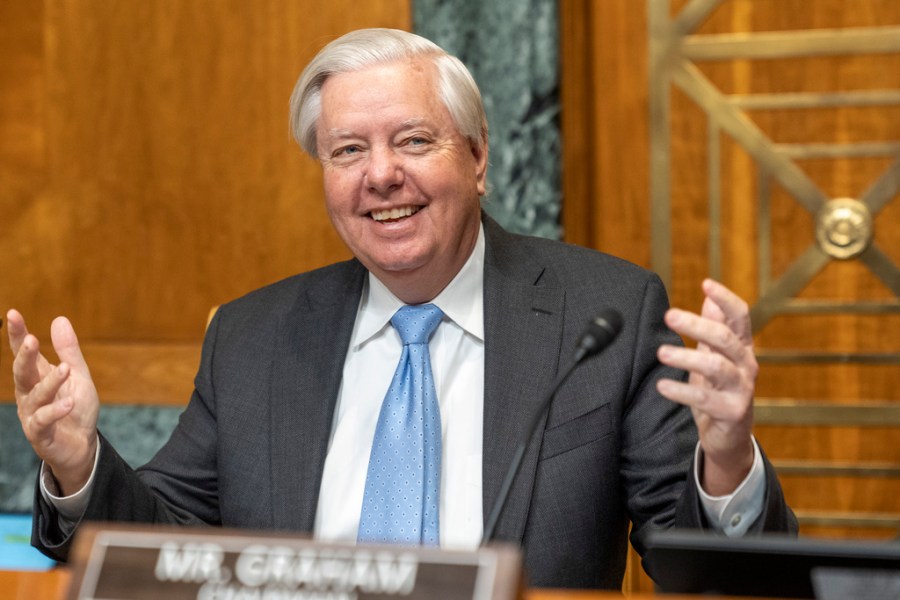
Lindsey Graham, a long-serving Republican Senator from South Carolina, became known for his significant political evolution. He transitioned from a traditional conservative and occasional bipartisan legislator into a vocal and staunch ally of President Donald Trump. This shift defined his later career in Washington D.C. and reflected broader changes within the Republican Party.
His journey through American politics presented a unique case study in adaptation and alliance. Graham navigated shifting political currents, maintaining influence across different eras of the Republican Party.
Early Congressional Career: A Traditional Conservative Voice
Lindsey Olin Graham began his political career in the South Carolina House of Representatives in 1992. He served one term before successfully seeking federal office.
In 1994, Graham won election to the U.S. House of Representatives. He represented South Carolina’s 3rd congressional district, a seat he held for four terms.
From 1995 to 2003, Graham established himself as a prominent conservative voice. His focus areas included national security and judicial matters.
He gained national attention for his work on the House Judiciary Committee. This committee played a central role during the impeachment proceedings against President Bill Clinton in 1998. Graham was one of the House Managers who presented the articles of impeachment to the Senate.
This early period solidified his image as a traditional Republican. He adhered to core conservative principles concerning fiscal responsibility and a strong national defense. His participation in such a high-profile event marked him as a rising figure in the party.
Bipartisan Reputation and Senate Ascent
During his time in the House, Graham cultivated a reputation for being willing to work across the aisle. This approach distinguished him from some of his more partisan colleagues.
His bipartisan efforts included support for campaign finance reform. He also engaged in efforts to find common ground on immigration policy, a complex issue that often divides Congress.
In 2002, Graham successfully ran for the U.S. Senate. He secured the seat vacated by long-serving Senator Strom Thurmond, who retired after 48 years in the Senate.
Graham assumed office in January 2003. This marked the beginning of a tenure that would see him become a significant national political figure, serving alongside influential senators.
His ability to bridge divides and seek common ground was a hallmark of this period. He believed in the legislative process as a means of achieving compromise, even on contentious issues. This earned him respect from both sides of the political spectrum, albeit sometimes with criticism from hardliners within his own party.
The Senate Years: Evolution and Shifting Allegiances
During his early years in the Senate, Graham often aligned with Republican centrists. He also associated with national security hawks within the party.
He was a vocal advocate for military intervention in Iraq and Afghanistan. Following the September 11, 2001, terrorist attacks, he supported a robust foreign policy.
Graham also became a proponent of enhanced interrogation techniques for suspected terrorists. This stance drew both support and criticism during the mid-2000s.
His relationships with figures like Senator John McCain were particularly influential. Graham and McCain often collaborated on foreign policy and defense issues, forming a notable duo within the Senate Republican caucus. They traveled together frequently and shared similar views on national security.
Graham’s voting record during this period reflected a more traditional Republican ideology. He supported tax cuts, conservative judicial appointments, and a strong national defense.
He was re-elected to the Senate in 2008, 2014, and 2020. Each election solidified his position as a key Republican voice in Washington. His tenure spanned multiple presidential administrations, allowing him to shape legislation and policy over decades.
Key Senate Roles and Legislative Focus
Graham served on several crucial Senate committees. These assignments provided platforms for his legislative priorities and influence.
- Senate Judiciary Committee: This committee was central to his focus on judicial appointments and constitutional law. He played a significant role in confirmation hearings for Supreme Court justices and federal judges.
- Senate Armed Services Committee: Reflecting his national security interests, this committee allowed him to influence defense policy, military spending, and oversight of the armed forces.
- Senate Budget Committee: Later in his career, he chaired this powerful committee, overseeing federal spending and fiscal policy.
- Senate Appropriations Committee: Membership on this committee gave him direct input into the allocation of funds for government agencies and programs.
His work on these committees demonstrated a consistent dedication to national security and judicial conservatism. He often championed legislation aimed at strengthening the military and upholding a conservative interpretation of the Constitution.
From Critic to Ally: The Trump Era Transformation
The 2016 presidential election marked a pivotal turn in Graham’s political trajectory. He initially emerged as a vocal critic of then-candidate Donald Trump.
Graham frequently expressed strong opposition to Trump’s rhetoric and policies during the Republican primaries. He called Trump’s proposed ban on Muslim immigration a ‘death blow’ to the Republican Party. He also stated that Trump was not fit to be commander-in-chief.
Following President Trump’s victory in November 2016, Graham’s stance underwent a dramatic shift. He moved from being a staunch critic to becoming one of President Trump’s most prominent and vocal supporters in Congress.
This alliance proved strategic for both figures. President Trump gained a seasoned legislative advocate, while Graham gained significant influence within the new administration and the Republican Party.
Graham emerged as a key defender of President Trump during various investigations. This included the Special Counsel investigation led by Robert Mueller, which examined Russian interference in the 2016 election and related matters.
He also played a crucial role in advocating for President Trump’s judicial appointments. This was a central focus of the Trump administration’s policy agenda.
Graham championed the Supreme Court nominations of Justices Neil Gorsuch, Brett Kavanaugh, and Amy Coney Barrett. His efforts were instrumental in their confirmations, reshaping the ideological balance of the Supreme Court for decades.
During President Trump’s first impeachment in 2019 and second impeachment in 2021, Graham remained a steadfast defender. He consistently argued against the articles of impeachment, framing them as politically motivated.
His public appearances on cable news and social media frequently featured strong defenses of President Trump and his policies. This solidified his image as a loyal ally. This transformation became one of the most discussed political shifts of the era, drawing both praise and criticism.
Influence and Legacy in the Modern Republican Party
Senator Graham passed away on July 11, 2026, and therefore did not hold influential positions in the Senate as of July 2026, nor did he serve as Chairman of the Senate Budget Committee at that time., a powerful role in shaping federal spending and fiscal policy.
He was also a member of the Senate Judiciary Committee, where he continued to play a role in judicial nominations and constitutional law. Additionally, he sat on the Senate Appropriations Committee, which controls discretionary spending for federal agencies.
These roles granted him considerable power in shaping legislative outcomes and influencing national policy debates. His capacity to adapt his political strategy and forge strong alliances cemented his position as a powerful voice within the Republican Party.
Graham’s public commentary frequently shaped media narratives and set policy discussions. He was a frequent guest on political talk shows and a prolific user of social media. His willingness to engage in political discourse, often with strong rhetoric, ensured his continued relevance.
His legacy is marked by a complex political journey. He demonstrated an ability to evolve his political identity and alliances in response to changing party dynamics. From his early days as a traditional conservative to his later role as a staunch Trump ally, Graham remained a central figure in American politics.
His career highlighted the pressures and transformations within the Republican Party. It also showcased the strategic choices individual politicians make to maintain relevance and influence. His impact on judicial appointments, national security policy, and the trajectory of the Republican Party will be subjects of ongoing analysis.
He championed conservative causes. He navigated partisan divides. He adapted to new political landscapes.
Lindsey Graham.
