
Tag: 2003

  • The Escapist Anthem: How ‘It’s Five O’Clock Somewhere’ Gave Jimmy Buffett His First No. 1

    The Escapist Anthem: How ‘It’s Five O’Clock Somewhere’ Gave Jimmy Buffett His First No. 1

    In the summer of 2003, Alan Jackson released “It’s Five O’Clock Somewhere,” a duet with Jimmy Buffett that spent eight weeks at No. 1 on the Billboard Hot Country Songs chart. The track cemented a permanent place in the American cultural lexicon. It defined the modern country summer anthem. It also delivered Jimmy Buffett the first No. 1 country hit of his legendary, three-decade career.

    The story of the modern summer anthem does not begin on a beach. It begins in a windowless writing room in Nashville, Tennessee. It begins with a rejected pitch. It ends with a Gulf Coast icon finally conquering Music Row.

    In 2003, country music was in a transitional phase. The genre was slowly moving away from the heavy, traditionalist ballads of the 1990s. Artists were looking for crossover appeal. They were looking for escapism. Alan Jackson, a stalwart of traditional country, needed a palate cleanser. Jimmy Buffett, a touring juggernaut with a billionaire lifestyle empire, needed a radio hit. A single song brought them together.

    The Anatomy of a Summer Anthem

    The phrase “it’s five o’clock somewhere” was not invented by songwriters. It existed in the cultural ether. It was a common excuse for day drinking, a blue-collar justification for clocking out early.

    Songwriter Don Rollins brought the phrase to Music Row. Rollins was a former high school band director. He had heard a colleague use the phrase during a rough day at school. He recognized the inherent musicality of the words. Rollins took the concept to his frequent co-writer, Jim “Moose” Brown. Brown was an established session musician and writer in Nashville.

    They sat down to write. They did not aim for profound storytelling. They aimed for a mood. The lyrics detailed a worker deciding to abandon his shift, head to a bar, and order a hurricane. The protagonist acknowledges the early hour but justifies the decision with the titular phrase.

    The writing process was fast. The melody was simple, leaning heavily on a traditional country shuffle mixed with a slight Caribbean lilt. Brown and Rollins knew they had a catchy hook. They needed an artist capable of selling the carefree narrative.

    The Pitch to Kenny Chesney

    In the early 2000s, Kenny Chesney was the undisputed king of island-themed country music. He had successfully branded himself as the genre’s beach bum. Hits like “No Shoes, No Shirt, No Problems” dominated the airwaves. Chesney was the obvious target for a song about drinking hurricanes in the middle of the day.

    Brown and Rollins pitched the demo to Chesney’s team. The response was a polite decline. Chesney reportedly felt the song did not quite fit his current project, or perhaps he felt he had already saturated the market with beach-themed anthems. The rejection sent the song back into the Nashville publishing machine.

    The Arista Nashville Connection

    Alan Jackson was not known for beach music. The Newnan, Georgia native built his career on honky-tonk shuffles, working-class anthems, and deeply traditional country instrumentation. He wore a white Stetson. He sang about pickup trucks, small towns, and the Chattahoochee River.

    But by 2003, Jackson was carrying a heavy artistic weight. Following the September 11 attacks, he wrote and released “Where Were You (When the World Stopped Turning).” The song was a massive cultural phenomenon. It won a Grammy. It defined the national mood. However, it also boxed Jackson into a corner of solemnity. He needed to remind his audience that he could still deliver a good time.

    Jackson was promoting his tenth studio album, Drive (released in 2002), and looking ahead to his next compilation, Greatest Hits Volume II. He told his producer, Keith Stegall, that he wanted something light. He wanted something that sounded like a Jimmy Buffett song.

    When Stegall heard the demo for “It’s Five O’Clock Somewhere,” he immediately took it to Jackson. The fit was unexpected but perfect. Jackson’s deadpan, traditional delivery grounded the song. It prevented the track from becoming a novelty act. It sounded like a tired worker making a rational decision to quit for the day.

    Bringing in the Mayor of Margaritaville

    Jackson recorded the lead vocals. The track sounded solid, but it lacked a final spark. The song’s bridge featured the protagonist asking himself a rhetorical question: “What would Jimmy Buffett do?”

    Jackson had an idea. Instead of just referencing Buffett, he wanted Buffett on the record. Jackson and Buffett had crossed paths before. They shared a mutual respect for songwriting and coastal living. Jackson reached out. He asked Buffett if he would be willing to record a guest vocal and engage in a bit of spoken-word banter at the end of the track.

    Buffett agreed. He recorded his parts, answering Jackson’s rhetorical question with his signature laid-back drawl. The banter at the end of the song, where Jackson asks Buffett what time it is, and Buffett confirms the hour, was improvised and natural. It elevated the song from a standard country track into a major musical event.

    A Legend Finally Hits Number One

    Jimmy Buffett was a cultural titan. He released “Margaritaville” in 1977. The song peaked at No. 8 on the Billboard Hot 100 and No. 13 on the Hot Country Singles chart. It launched a lifestyle brand that included restaurants, casinos, resorts, and merchandise. Buffett’s dedicated fanbase, the Parrotheads, ensured his summer tours were among the highest-grossing in the world year after year.

    Despite this massive success, Buffett had a complicated relationship with country radio. Nashville largely ignored him throughout the 1980s and 1990s. His music was considered too pop, too folk, or too coastal for mainstream country formatting. He had charted numerous times, but the No. 1 spot always eluded him.

    That changed on August 9, 2003.

    “It’s Five O’Clock Somewhere” reached No. 1 on the Billboard Hot Country Songs chart. It did not just touch the top spot; it dominated it. The song spent eight non-consecutive weeks at No. 1. It became the soundtrack of the summer. It crossed over to the pop charts, reaching No. 17 on the Billboard Hot 100, making it Jackson’s biggest pop hit and Buffett’s highest-charting pop hit since the 1970s.

    The Cultural Phenomenon and Awards Season

    The success of the single was staggering. Arista Nashville pushed the track hard, but organic fan demand drove the longevity. Bars across the country adopted the phrase. T-shirt sales skyrocketed. The song became a staple on both Jackson’s and Buffett’s tours.

    The Nashville establishment recognized the impact. On November 5, 2003, the Country Music Association (CMA) held its annual awards ceremony at the Grand Ole Opry House. Jackson and Buffett opened the show with a live performance of the song. Later that evening, “It’s Five O’Clock Somewhere” won the CMA Award for Vocal Event of the Year. It did not secure a nomination for Song of the Year.

    The following year, the track won a Grammy Award for Best Country Song (for its songwriters) and was not nominated for Best Country Collaboration with Vocals. It won the Academy of Country Music (ACM) Award for Single Record of the Year and Vocal Event of the Year.

    The Legacy of the Gulf and Western Movement

    The success of the Jackson-Buffett collaboration had lasting effects on the country music industry. It proved that beach-themed escapism was a highly lucrative subgenre. The “Gulf and Western” sound, pioneered by Buffett in the 1970s, was suddenly mainstream country doctrine.

    Artists like Zac Brown Band, Jake Owen, and eventually a new generation of “bro-country” stars would lean heavily into the aesthetic established by this single. The template was set: acoustic guitars, references to tropical drinks, and a rejection of the traditional 9-to-5 workweek. Kenny Chesney, who originally passed on the song, would go on to build an entire stadium-touring empire on this exact ethos.

    For Jim “Moose” Brown and Don Rollins, the song was a lottery ticket. The publishing royalties from an eight-week No. 1 hit that crosses over into pop culture are life-changing. Brown continued his successful career as a session keyboardist and producer. Rollins solidified his reputation as a premier Nashville writer.

    The Enduring Power of the Phrase

    Decades after its release, “It’s Five O’Clock Somewhere” remains in heavy rotation on country radio, satellite stations, and streaming playlists. It is a mandatory inclusion on any summer-themed compilation. It plays in dive bars in the Midwest and beach clubs in the Florida Keys.

    Alan Jackson continued his run as one of the most successful traditional country artists in history. He was inducted into the Country Music Hall of Fame in 2017. Jimmy Buffett continued to expand his Margaritaville empire, touring relentlessly until his passing in 2023. His legacy as a songwriter and cultural architect remains unmatched.

    The song stands as a testament to the power of a simple idea executed perfectly. It required no complex metaphors. It required no deep emotional vulnerability. It only required a universal feeling of exhaustion, a catchy melody, and the voices of two men who knew exactly how to sell the fantasy.

    The writers cashed their checks. Jackson added a permanent staple to his setlist. Buffett finally conquered Nashville. Five o’clock.
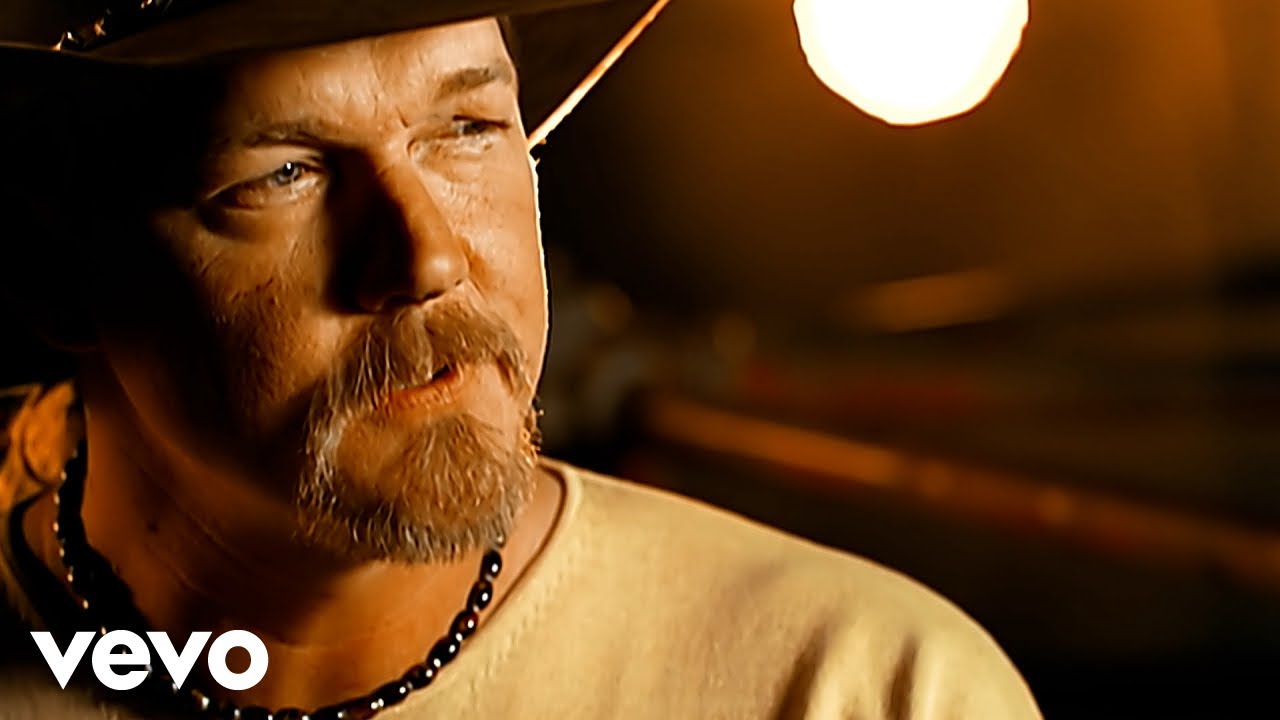
  • The Weight of the Circle: Trace Adkins and the 2003 Grand Ole Opry Induction

    The Weight of the Circle: Trace Adkins and the 2003 Grand Ole Opry Induction

    The Night the Circle Expanded

    Trace Adkins was officially inducted into the Grand Ole Opry on August 23, 2003, joining country music’s most prestigious institution after being invited two months earlier by Opry legend Little Jimmy Dickens. The ceremony took place at the Grand Ole Opry House in Nashville, Tennessee. Ronnie Milsap presented Adkins with his official Opry member award. This moment cemented the Louisiana native’s transition from a 1990s radio hitmaker to a permanent pillar of the country music establishment. The induction represented a critical juncture for both the artist and the institution.

    Country music in 2003 was changing. Pop-country crossovers dominated the FM dial. The traditional sound of steel guitars and fiddles was fighting for airtime. The Grand Ole Opry needed artists who could bridge the gap between the commercial demands of Music Row and the historical demands of the Ryman Auditorium. Trace Adkins possessed the baritone voice of a traditionalist and the platinum records of a modern star. He was the perfect candidate.

    The Opry is not simply a venue. It is a fraternity. Membership requires an invitation. It requires a commitment to return to Nashville and perform on Saturday nights. It requires an understanding of the ghosts who built the genre. On that August night, Adkins accepted the responsibility. The radio hits would come and go. The Opry membership was forever.

    A June Invitation from a Giant

    The story of the induction actually begins two months prior. June 14, 2003. Trace Adkins stood on the stage of the Grand Ole Opry House. He was performing a standard set. The crowd was engaged. The WSM radio broadcast was live. Then, the script vanished.

    Little Jimmy Dickens walked onto the stage. Dickens was a foundational figure in country music. He stood 4-foot-11. He wore a rhinestone suit. He carried a small wooden stepladder. The crowd realized what was happening before Adkins did. A low murmur turned into a roar. Dickens placed the stepladder on the oak floorboards. He climbed the steps. He needed the elevation to look the 6-foot-6 Adkins in the eye.

    Dickens spoke into the microphone. He formally invited Adkins to become the newest member of the Grand Ole Opry family. Adkins froze. The tough-guy persona evaporated. The man who had survived oil rig explosions and a gunshot wound to the chest removed his black cowboy hat. He lowered his head. He wept openly on the stage. The contrast was stark. The physical giant of modern country music was humbled by the diminutive giant of country music history. The photograph of Dickens on the ladder staring at a crying Adkins became an instant piece of Nashville lore.

    The Long Road to the Opry House

    The path to August 23, 2003, was not paved with immediate success. Tracy Darrell Adkins was born in Sarepta, Louisiana. He learned the guitar from his father. He sang in a gospel music group. He did not move to Nashville at eighteen. He went to work.

    Adkins worked on offshore oil rigs in the Gulf of Mexico. The labor was brutal. The environment was unforgiving. He lost his left pinky finger in an accident on the rig. He asked doctors to reattach the finger at an angle so he could still form chords on a guitar neck. He survived a severe tractor accident. In 1994, he survived being shot through the heart and lungs by his second wife. He spent days in intensive care. He refused to press charges. He simply recovered and kept singing.

    He arrived in Nashville in the early 1990s. He played the honky-tonks. He caught the attention of Capitol Records Nashville. In 1996, he released his debut album, Dreamin’ Out Loud. The record produced massive hits. “Every Light in the House” reached number three on the Billboard country charts. “(This Ain’t) No Thinkin’ Thing” hit number one. Adkins established himself as a dominant force. His voice was a subterranean rumble. His presence was intimidating. His traditionalist roots were undeniable.

    The Era of Chrome and Country Radio

    By the time the Opry invitation arrived in 2003, Adkins was navigating his second wave of massive commercial success. His 2001 album, Chrome, had redefined his career. The title track pushed boundaries. It incorporated slicker production while maintaining his signature vocal depth. The album reached the top five on the Top Country Albums chart. It achieved platinum status.

    During the summer of 2003, Adkins was actively recording his next project, Comin’ On Strong. He was a fixture on Country Music Television (CMT). He was touring relentlessly across the United States. His tour buses logged millions of miles. He was playing arenas and outdoor amphitheatres. Yet, despite the massive scale of his touring operation, the Grand Ole Opry remained the ultimate destination.

    Country radio in 2003 was dominated by Toby Keith, Kenny Chesney, and Alan Jackson. The post-9/11 cultural landscape heavily influenced the genre. Anthems of patriotism and rural pride were standard. Adkins fit perfectly into this cultural moment. But he also possessed a deep reverence for the music of the 1950s and 1960s. He understood the lineage of George Jones, Waylon Jennings, and Johnny Cash. The Opry management recognized this dual appeal.

    Pete Fisher and the Opry Modernization

    The man behind the scenes of Adkins’ induction was Pete Fisher. Fisher served as the Vice President and General Manager of the Grand Ole Opry from 1999 to 2017. When Fisher took over, the Opry was facing an existential crisis. The audience was aging. The legendary members were passing away. The current stars of country radio rarely made time to perform on the Opry stage. The institution was at risk of becoming a museum rather than a living, breathing broadcast.

    Fisher implemented a strategy of aggressive modernization. He actively recruited the biggest stars of the era to become members. He wanted artists who would commit to the institution while they were still at the peak of their commercial power. Trace Adkins was a primary target of this initiative. By bringing Adkins into the fold in 2003, Fisher signaled that the Opry was still relevant to the modern country music industry.

    The induction of Trace Adkins was part of a broader wave of new memberships. Brad Paisley had been inducted in 2001. Blake Shelton would be inducted a few years later. Fisher was building a new foundation. He was ensuring that when the legends like Little Jimmy Dickens and Porter Wagoner eventually passed, a new generation of traditionalists would be there to hold the line. Adkins was chosen to be one of the heavy beams supporting the roof of the Opry House.

    August 23, 2003: The Induction Ceremony

    The night of August 23, 2003, was humid in Nashville. The parking lot of the Grand Ole Opry House was packed. Inside, the pews were filled with tourists, locals, and industry insiders. The backstage area was a flurry of activity. The Opry operates on a strict broadcast schedule. Segments move rapidly. But time slowed down when Adkins took the stage.

    Ricky Skaggs was chosen to handle the official induction. Skaggs was a child prodigy who had grown into a bluegrass master. He understood the gravity of the Opry better than almost anyone. Skaggs stood at the microphone. He held the heavy, custom-designed Opry member trophy. He spoke about the responsibility that comes with the award. He spoke about the history of the WSM airwaves.

    Adkins stepped into the wooden circle. The circle is a six-foot piece of oak cut from the stage of the Ryman Auditorium and embedded into the stage of the modern Opry House. It is the exact spot where Hank Williams, Patsy Cline, and Roy Acuff stood. Adkins accepted the trophy from Skaggs. He addressed the crowd. His voice was thick with emotion. He spoke about his family. He spoke about his grandfather, who had listened to the Opry on a crackling AM radio in Louisiana decades earlier. Adkins performed. The applause shook the building. The broadcast faded to a commercial break. The deed was done.

    The Weight of the Wooden Circle

    Membership in the Grand Ole Opry is not an honorary title. It is a working relationship. Many artists accept the award and rarely return. Trace Adkins took a different path. Following his 2003 induction, he became a fixture at the Opry House.

    He understood the assignment. When he was off the road, he was at the Opry. He performed on Tuesday nights. He performed on Saturday nights. He mingled in the dressing rooms. He paid his respects to the elders. As the years passed, Adkins transitioned from the new inductee to the elder statesman. He began to take on the role that Little Jimmy Dickens had played for him.

    Adkins would eventually be the one to invite new members into the family. He would be the one to stand in the wooden circle and welcome the next generation. He understood that the institution only survives if the members actively participate in its preservation. The Opry is a fragile ecosystem of memory and commerce. Adkins became one of its fiercest protectors.

    A Legacy Forged in Baritone

    The 2003 induction of Trace Adkins remains a pivotal moment in the modern history of the Grand Ole Opry. It was the moment the institution embraced a man who had lived the very songs he sang. It was the moment a rugged survivor broke down in tears over a simple invitation. It was the moment a 4-foot-11 legend climbed a ladder to anoint a 6-foot-6 successor.

    The industry evolved. The record labels consolidated. The streaming platforms replaced the compact discs. The radio formats shifted toward pop and hip-hop influences. The commercial peaks of 2003 faded into the rearview mirror. But the institution held firm.

    The fans gathered. The broadcasters gathered. The ghosts gathered. The wooden circle remained. Nashville.