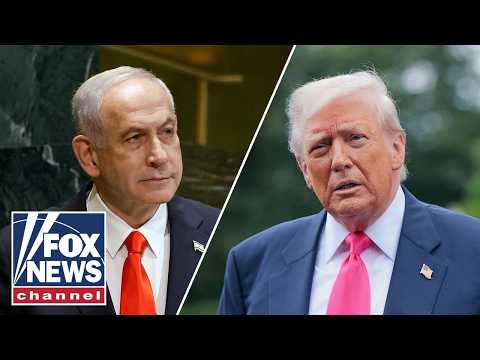
Israeli Prime Minister Benjamin Netanyahu publicly dismissed recent reports alleging a significant rift had emerged between him and President Donald Trump. Netanyahu’s statement served to directly counter media speculation, reaffirming the strong and consistent alliance between Israel and the United States under their respective leaderships.
The relationship between the two leaders has been a subject of intense scrutiny by international media and political analysts. Their interactions have often been characterized by a high degree of personal chemistry and alignment on key geopolitical issues. The recent reports, however, suggested a potential strain, prompting the Prime Minister’s direct intervention to clarify the situation.
Origin of Rift Speculation
Speculation regarding a potential deterioration in the relationship between Benjamin Netanyahu and Donald Trump gained traction through various media outlets. These reports often cited differences in approach or public comments made by either leader, interpreting them as signs of growing discord. One area of focus for these reports involved discussions surrounding regional security and specific diplomatic initiatives in the Middle East.
For example, some analyses pointed to perceived divergences in strategy concerning the ongoing conflict in Ukraine or the broader geopolitical landscape involving Iran. Public statements by officials from both administrations were sometimes dissected, with particular emphasis placed on any deviation from previously expressed unified positions. These interpretations fueled the narrative of a widening gap between the two long-standing allies.
<
Media Narratives and Diplomatic Nuances
Media narratives frequently highlight any perceived tension between world leaders. The relationship between Israel and the United States holds particular significance. Therefore, any suggestion of a fracture receives considerable attention. Diplomatic communications, even when routine, can be subject to extensive interpretation. Nuances in language or timing can be amplified by news cycles.
The history of the U.S.-Israel relationship is complex. It involves periods of close cooperation and occasional disagreements. However, the foundational alliance has consistently remained. Reports of a ‘rift’ often emerge from attempts to find conflict in what might be standard diplomatic discourse or differing strategic priorities that do not fundamentally undermine the alliance.
Netanyahu’s Direct Response
Prime Minister Netanyahu addressed the speculation directly. His comments sought to unequivocally refute the idea of a significant breakdown in his working relationship with President Trump. He emphasized the depth of their strategic partnership and the shared interests that bind the two nations.
Netanyahu’s statement highlighted the continuous communication channels between Jerusalem and Washington D.C. He pointed to ongoing cooperation across multiple sectors, including defense, intelligence, and economic development. This direct refutation aimed to restore confidence in the stability of the alliance, both domestically within Israel and internationally.
Reinforcing the Alliance
The Israeli Prime Minister’s denial serves a crucial diplomatic purpose. It reinforces the perception of a unified front. This perception is vital for regional stability and for signaling strength to adversaries. A public acknowledgment of a ‘rift’ could be interpreted as weakness or division. Netanyahu’s statement preempted such interpretations.
His remarks also underscored the personal connection and mutual respect that has characterized his interactions with President Trump. This personal rapport has often been cited as a significant factor in the strength of the U.S.-Israel relationship during Trump’s previous term and into his current presidency.
Historical Context of the Relationship
The relationship between Benjamin Netanyahu and Donald Trump extends back many years. It predates Trump’s initial entry into the White House in 2017. Their long-standing association has fostered a unique dynamic between the leaders of their respective countries.
During Trump’s first term (2017-2021), the U.S.-Israel relationship saw several significant developments. These included the relocation of the U.S. Embassy to Jerusalem in May 2018. This move was a long-standing demand from Israel. It was a departure from decades of U.S. policy. Another major development was the recognition of Israeli sovereignty over the Golan Heights in March 2019. These actions were widely seen as highly favorable to Israel and cemented a strong bond between the two administrations.
The Abraham Accords
A crowning achievement of the Trump administration’s Middle East policy, strongly supported by Netanyahu, was the Abraham Accords. These historic normalization agreements were signed in August and September 2020. They established diplomatic relations between Israel and several Arab nations: the United Arab Emirates, Bahrain, Sudan, and Morocco. These accords reshaped the geopolitical landscape of the region. They demonstrated a shared vision for peace and stability.
The Accords were a testament to the close coordination between the Trump and Netanyahu administrations. They highlighted their capacity to achieve significant diplomatic breakthroughs. These successes established a precedent for cooperation that both leaders often reference.
Implications of the Denial
Netanyahu’s explicit denial has several implications. It signals to both domestic and international audiences that the strategic partnership remains robust. This is particularly important in a volatile region like the Middle East, where alliances are closely watched.
The denial also attempts to manage media narratives. It seeks to prevent unverified reports from undermining diplomatic efforts. Public perception of leadership unity can influence investor confidence, regional security discussions, and international diplomatic leverage.
Future of U.S.-Israel Relations
The U.S.-Israel relationship is a cornerstone of American foreign policy in the Middle East. It has bipartisan support in the United States. However, the specific dynamics between the leaders can influence the pace and nature of policy implementation. Netanyahu’s statement ensures continuity in the public perception of this critical alliance.
As both administrations navigate complex global challenges, a clear message of unity is strategically beneficial. It reinforces deterrence against shared threats. It also facilitates ongoing diplomatic initiatives. The denial underscores a commitment to maintaining a strong, coordinated approach to regional and global issues.
Broader Context of International Relations
Reports of ‘rifts’ between allied leaders are not uncommon in international relations. Such reports can arise from genuine policy differences, misinterpretations, or deliberate attempts to sow discord. Effective diplomacy often involves managing these perceptions while navigating complex geopolitical realities.
The U.S. and Israel share deep historical, cultural, and strategic ties. These ties transcend individual political administrations. While leadership styles and priorities may vary, the fundamental interests often remain aligned. Netanyahu’s denial emphasizes this enduring foundation.
Leaders communicate constantly. Policy discussions are frequent. Differences of opinion can emerge. These are often resolved through diplomatic channels. Public denials, like Netanyahu’s, are sometimes necessary. They address and correct misleading public narratives. They protect the integrity of the alliance.
Diplomatic exchanges continue. Strategic planning persists. Shared security objectives remain. The alliance stands firm.