Author: bsn_admin

  • The Star Island Lawsuit – Inside the $100,000 Civil Case Against Dr. Lenny Hochstein

    The Star Island Lawsuit – Inside the $100,000 Civil Case Against Dr. Lenny Hochstein

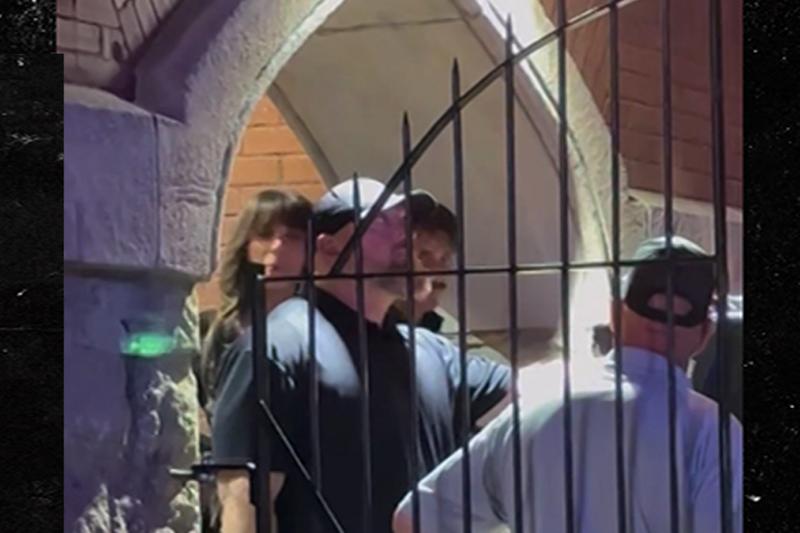
    A $100,000 civil lawsuit alleging sexual assault against Miami plastic surgeon and reality television star Dr. Lenny Hochstein has entered the Miami-Dade County court system, complicated immediately by the release of home surveillance footage. The video captures the unnamed accuser leaving Hochstein’s exclusive Star Island mansion. In the footage, the woman appears to be dancing as she walks down the driveway and exits the estate gates. This visual evidence has instantly transformed a private legal dispute into a highly publicized battle over optics, evidence, and the burden of proof in civil litigation. The case answers a modern legal question: how does ubiquitous home security footage alter the trajectory of a high-stakes sexual assault claim before it ever reaches a courtroom?

    The incident in question centers on the geography of Star Island. This artificial island in Biscayne Bay, connected to Miami Beach by the MacArthur Causeway, is one of the most exclusive residential enclaves in the United States. It contains roughly three dozen homes. Security is absolute. A guardhouse monitors all incoming and outgoing traffic. The estates themselves are heavily fortified with digital surveillance. Dr. Lenny Hochstein’s residence is no exception. Every angle of the property line is recorded. When the plaintiff exited the home on the night in question, multiple cameras tracked her departure. The resulting footage, which quickly found its way to international tabloids like the Daily Mail, shows a physical demeanor that the defense will inevitably weaponize. She is seen moving rhythmically. She is seen dancing. Days later, her legal team filed a formal complaint demanding $100,000 in civil damages for alleged sexual battery and assault.

    The Anatomy of a $100,000 Civil Lawsuit

    The legal mechanism at play is a civil lawsuit, not a criminal prosecution. This distinction is paramount. In the State of Florida, criminal charges are brought by the State Attorney’s Office. Criminal convictions require proof beyond a reasonable doubt. A civil lawsuit is brought by a private citizen. The burden of proof in a civil court is the preponderance of the evidence. This means a jury must only believe that it is more likely than not that the assault occurred. The $100,000 figure attached to the lawsuit is a specific jurisdictional marker. In Florida, civil cases demanding more than $50,000 are routed to the Circuit Court rather than the County Court. The $100,000 demand is likely a baseline for pleading purposes, opening the door for discovery, depositions, and potential settlement negotiations.

    Filing a civil suit initiates a rigid timeline of legal discovery. Both sides must exchange evidence. Text messages must be handed over. Ride-share receipts must be documented. Medical records must be submitted. And crucially, surveillance video must be entered into the record. The defense strategy in this case is already apparent. By highlighting the video of the accuser dancing upon her departure, Hochstein’s legal team aims to dismantle the plaintiff’s credibility. They will argue that her post-incident demeanor is entirely inconsistent with the trauma of a recent sexual assault. In the theater of a Miami-Dade courtroom, visual evidence holds immense sway over a jury. A video requires no translation. It offers a silent, timestamped narrative of the moments immediately following the alleged crime.

    The Psychology of Post-Incident Demeanor

    The plaintiff’s legal team faces a steep uphill battle in contextualizing the Star Island surveillance footage. However, legal precedent and forensic psychology offer a framework for their inevitable counterargument. Trauma responses are rarely uniform. While the defense will argue that dancing indicates a lack of distress, expert witnesses for the plaintiff will likely testify about the complexities of human shock. Psychologists frequently note that victims of trauma can exhibit erratic, seemingly contradictory behavior in the immediate aftermath of an event. The nervous system can default to a state of dissociation. Nervous energy can manifest in unusual physical movements. The “fawning” response, an instinct to appease or act normal to survive a perceived threat, is a recognized psychological phenomenon.

    The battle over this video will not just happen in the tabloids. It will happen during pre-trial motions. The defense will file motions to ensure the jury sees the footage early and often. The plaintiff’s attorneys may attempt to limit its framing, arguing that a few seconds of movement on a driveway cannot invalidate the events that allegedly occurred behind closed doors. This creates a classic legal collision. The defense relies on common-sense interpretations of visual evidence. The plaintiff relies on clinical, expert-driven explanations of trauma. The outcome often depends entirely on the demographic makeup and life experiences of the six jurors seated in the box.

    The Reality Television Crucible

    Dr. Lenny Hochstein is not an anonymous medical professional. He is a central figure in the Bravo network’s reality television universe. As a long-standing cast member of The Real Housewives of Miami, his personal life has been broadcast to millions of viewers for over a decade. Known professionally as the “Boob God” of Miami, his plastic surgery practice, Hochstein Medspa, is highly lucrative and heavily marketed. His recent, highly acrimonious divorce from Lisa Hochstein played out extensively on television, complete with hot-mic moments, financial disputes, and public screaming matches. This reality television pedigree significantly alters the landscape of the current civil lawsuit.

    For a reality star, public perception is a tangible asset. Scandal drives ratings, but serious allegations of sexual assault threaten professional licensing and brand viability. The media ecosystem surrounding Bravo stars is relentless. Blogs, podcasts, and digital tabloids dissect every legal filing. The leak of the surveillance video to the Daily Mail is a calculated move in the court of public opinion. It serves to instantly cast doubt on the accuser’s story before she ever takes the stand. In high-profile cases, the PR strategy is often just as aggressive as the legal strategy. Shaping the narrative early can influence potential jury pools. It can pressure the opposing side into dropping the suit. It can protect a lucrative medical practice from immediate reputational collapse.

    Surveillance Culture and Modern Litigation

    The Star Island incident underscores a massive shift in how civil litigation is conducted in the twenty-first century. Twenty years ago, a case like this would rely entirely on a “he said, she said” dynamic. The jury would be left to weigh the credibility of the two individuals on the stand. Today, the physical world is blanketed in digital sensors. Ring cameras capture front porches. Driveway sensors track vehicle speeds. Automated license plate readers record movement across causeways. Cell phone towers ping locations down to a three-foot radius. Smartwatches record elevated heart rates. The modern citizen leaves a vast, undeniable digital footprint.

    For high-net-worth individuals like Hochstein, residential surveillance is comprehensive. These systems are designed to protect property, but they increasingly serve as primary defense witnesses in civil and criminal disputes. The existence of the dancing footage changes the entire calculus of the plaintiff’s case. Her legal team must now build a narrative that specifically accommodates the video. They cannot ignore it. They cannot deny it exists. They must explain it. This shifts the burden of narrative construction heavily onto the accuser. The defense simply has to press play.

    The Financial Stakes of a Public Trial

    While the lawsuit demands $100,000, the actual financial stakes are substantially higher. Legal fees for a protracted civil defense in Miami-Dade County can easily exceed the cost of the damages sought. High-powered defense attorneys bill hundreds of dollars an hour. Expert witnesses charge massive retainers. Depositions require court reporters and videographers. For Hochstein, settling the case out of court might be cheaper mathematically, but a settlement often carries an implicit admission of guilt in the eyes of the public. For a prominent plastic surgeon whose business relies on the trust of female patients, a quiet settlement could be professionally devastating. Fighting the lawsuit to a jury verdict, armed with the surveillance video, may be viewed as an existential necessity.

    Conversely, the plaintiff faces immense risk. Filing a lawsuit against a wealthy, highly visible figure guarantees a brutal level of public scrutiny. Her past will be investigated by private detectives. Her social media history will be subpoenaed. Her personal relationships will be questioned. The release of the dancing video is merely the opening salvo in what promises to be a grueling process of character assassination. The $100,000 demand must be weighed against the immense personal toll of a public trial. The legal system is adversarial by design. It is built to test the breaking point of those who enter it.

    The Intersection of Wealth and Justice

    The backdrop of Star Island cannot be ignored. It is a symbol of extreme wealth and isolation. The gates that keep the public out also create an environment where power dynamics are heavily skewed. When an individual enters one of these estates, they are stepping into an environment entirely controlled by the homeowner. The security guards work for the residents. The cameras belong to the residents. The servers that store the footage are controlled by the residents. In a legal dispute, the wealthy property owner holds a distinct evidentiary advantage. They control the release of the data.

    The fact that the video of the accuser dancing was released to the media so quickly suggests a highly coordinated defense effort. It is a demonstration of power. It signals to the plaintiff that every piece of data collected on that property will be used against her. This dynamic raises broader questions about how justice operates across different economic strata. The surveillance footage is objective, but the control of that footage is entirely subjective. The narrative is shaped by the person who holds the hard drive.

    The court will eventually decide the merits of the case. A judge will rule on the admissibility of the video. A jury may eventually sit in a box and watch the footage of the woman leaving the Star Island estate. They will listen to the defense call it a fabrication. They will listen to the plaintiff call it a trauma response. They will weigh the $100,000 demand against the medical records, the text messages, and the reality television backdrop. The legal machinery will grind forward. Depositions will be taken. Motions will be filed. Statements will be drafted. The cameras will keep rolling. Miami.

  • Verdict Reached in the Karmelo Anthony Murder Trial

    Verdict Reached in the Karmelo Anthony Murder Trial

    The verdict in the Karmelo Anthony murder trial has been delivered, concluding a highly scrutinized legal process. The case, heavily influenced by Anthony’s celebrity status, generated significant public interest and sparked intense debate regarding accountability, media influence, and the pursuit of justice when a high-profile figure stands accused.

    The trial’s conclusion marks the end of a legal saga that captivated the nation. The proceedings highlighted the complexities inherent in cases involving prominent individuals. The intersection of fame and the justice system often creates a unique set of challenges. The public’s fascination with celebrity culture can sometimes overshadow the legal realities of a case.

    The outcome of the trial prompts a critical examination of celebrity accountability. When an individual with significant public influence faces serious criminal charges, the resulting legal process is often subject to intense scrutiny. The media’s role in shaping public perception cannot be understated. The coverage of the trial often reflected the broader cultural conversation surrounding fame and responsibility.

    The Intersection of Fame and Justice

    The Karmelo Anthony trial highlighted the unique challenges that arise when a celebrity enters the legal system. The public’s perception of the case is often shaped by the individual’s pre-existing public image. This pre-existing narrative can influence how the trial is covered by the media and perceived by the public.

    The legal teams involved in high-profile cases must navigate a complex landscape. They must manage the legal strategy while also considering the public relations implications of their actions. The intense media scrutiny can create a challenging environment for all parties involved. The pressure to secure a favorable outcome is often magnified in cases involving public figures.

    The concept of celebrity accountability is a recurring theme in high-profile legal cases. The public often demands that individuals with significant influence be held to the same standards as the general population. However, the reality of the legal system can sometimes differ from public expectations. The resources available to high-profile defendants can sometimes influence the trajectory of a case.

    Media Influence and Public Perception

    The media’s coverage of the Karmelo Anthony trial played a significant role in shaping public perception. The 24-hour news cycle and the proliferation of social media allow for continuous coverage and commentary on legal proceedings. This constant stream of information can sometimes blur the lines between fact and speculation.

    The media’s focus on the sensational aspects of a case can sometimes overshadow the legal nuances. The public’s understanding of the legal process is often filtered through the lens of media coverage. This filtration can lead to a distorted view of the proceedings and the ultimate outcome.

    The impact of media coverage on the legal system is a subject of ongoing debate. Some argue that intense media scrutiny can ensure transparency and accountability. Others contend that it can create a prejudicial environment that undermines the fairness of the trial. The Karmelo Anthony case serves as a prominent example of this complex dynamic.

    The Pursuit of Truth in the Spotlight

    The fundamental goal of the legal system is the pursuit of truth and the administration of justice. In high-profile cases, this pursuit is often complicated by the intense public scrutiny and media attention. The focus on the celebrity involved can sometimes detract from the core legal issues at hand.

    The legal process relies on the presentation of evidence and the application of the law. The objective evaluation of these elements is essential for a fair trial. However, the influence of public opinion and media narratives can sometimes challenge this objectivity. The Karmelo Anthony trial highlighted the tension between the legal process and public perception.

    The verdict in the Karmelo Anthony trial represents the culmination of the legal process. The outcome of the case will undoubtedly continue to be a subject of public discussion and analysis. The legacy of the trial will likely be shaped by the broader cultural conversation surrounding celebrity, accountability, and the justice system.

    The Broader Implications of the Verdict

    The conclusion of the Karmelo Anthony trial prompts reflection on the broader implications of the case. The trial serves as a case study in the intersection of fame and the legal system. The lessons learned from this case may inform future discussions regarding celebrity accountability and media influence.

    The public’s response to the verdict will likely reflect the diverse perspectives that exist within society. The case has sparked passionate debates regarding justice, privilege, and the role of the media. These debates are essential for a healthy and functioning democracy.

    The Karmelo Anthony trial is a reminder of the complex and often unpredictable nature of the legal system. The pursuit of justice is a continuous endeavor that requires vigilance and a commitment to fairness. The verdict in this case is a significant milestone, but the conversation surrounding the issues it raised will likely continue.

    Analyzing the Legal Strategy

    The legal strategies employed in the Karmelo Anthony trial were a subject of intense scrutiny. The defense team faced the challenge of managing the legal proceedings while also navigating the public relations implications of the case. The prosecution, on the other hand, had the burden of proving guilt beyond a reasonable doubt in a highly publicized environment.

    The presentation of evidence and the examination of witnesses were critical components of the trial. The legal teams carefully crafted their arguments to persuade the jury. The effectiveness of these strategies ultimately determined the outcome of the case. The trial serves as a compelling example of the complexities of legal advocacy in high-profile cases.

    The role of expert testimony was also a significant factor in the trial. The use of specialized knowledge to interpret complex evidence is often crucial in determining the facts of a case. The credibility and persuasiveness of these experts can have a profound impact on the jury’s decision.

    The Impact on Celebrity Culture

    The Karmelo Anthony trial had a significant impact on celebrity culture. The case highlighted the intense scrutiny that public figures face when they become involved in the legal system. The trial served as a reminder that fame and fortune do not provide immunity from the consequences of one’s actions.

    The public’s fascination with the trial reflects a broader cultural interest in the lives of celebrities. The case provided a glimpse into the complexities of fame and the challenges that public figures face. The trial also sparked discussions regarding the responsibilities that come with significant public influence.

    The legacy of the Karmelo Anthony trial will likely continue to shape the cultural conversation surrounding celebrity and accountability. The case serves as a cautionary tale regarding the potential consequences of a high-profile legal battle. The trial’s impact on celebrity culture will likely be felt for years to come.

    The Role of the Jury

    The jury played a critical role in the Karmelo Anthony trial. The responsibility of evaluating the evidence and determining the verdict rested solely with these individuals. The jury’s decision-making process is a fundamental component of the legal system.

    The selection of the jury was a crucial step in the trial. The legal teams carefully evaluated potential jurors to ensure a fair and impartial panel. The jury’s ability to remain objective in the face of intense media scrutiny was essential for a fair trial.

    The jury’s deliberations were a closely guarded secret. The process of reaching a verdict involves careful consideration of the evidence and the application of the law. The jury’s decision represents the culmination of the legal process and the administration of justice.

    The Aftermath of the Trial

    The aftermath of the Karmelo Anthony trial will likely be characterized by continued public discussion and analysis. The verdict will have significant implications for all parties involved. The legal process may have concluded, but the consequences of the case will likely continue to unfold.

    The trial’s impact on the lives of those involved will be profound. The legal battle has undoubtedly taken a toll on the individuals and their families. The process of moving forward after such a highly publicized event will be challenging.

    The Karmelo Anthony trial serves as a powerful reminder of the complexities of the legal system and the enduring impact of high-profile cases. The pursuit of justice is a continuous endeavor that requires vigilance and a commitment to fairness. The verdict in this case is a significant milestone, but the conversation surrounding the issues it raised will likely continue.

    The public watched. The media reported. The jury deliberated. The verdict. Accountability.

  • The Price of Retrospection – Why Tyra Banks is Suing Netflix Over ‘Reality Check’

    The Price of Retrospection – Why Tyra Banks is Suing Netflix Over ‘Reality Check’

    On June 12, 2026, television producer and former supermodel Tyra Banks filed a $50 million defamation lawsuit against Netflix in Los Angeles Superior Court. The filing claims the platform’s docuseries Reality Check maliciously edited archival footage to create a false narrative about her tenure as executive producer of America’s Next Top Model. The lawsuit marks a sharp escalation in the ongoing cultural reckoning over 2000s reality television.

    For years, the internet has debated the ethics of the era. Video essays and social media retrospectives have routinely dissected the power dynamics of early unscripted television. Now, the arguments are moving into the courtroom.

    But the story does not begin with a single documentary. It begins with a fundamental shift in how streaming platforms mine the past for modern content, and the legal liabilities that arise when nostalgia collides with accountability.

    The Los Angeles Superior Court Filing

    The 54-page complaint was filed by Banks’ legal team in downtown Los Angeles. It names Netflix, Inc. and the independent production company behind the docuseries as co-defendants. The core of the lawsuit hinges on Episode 3 of Reality Check, titled “The Top Model Factory.”

    The plaintiffs allege a systemic pattern of misrepresentation. The suit claims the documentary producers did not merely compile existing footage, but actively manipulated it. They allege the use of deceptive editing techniques designed to cast Banks not as a demanding executive producer, but as an abusive antagonist.

    “This was not a journalistic endeavor or a historical retrospective. It was a deliberate and calculated assassination of character, engineered to generate subscriber engagement through manufactured outrage,” the complaint reads.

    Banks is seeking $50 million in compensatory and punitive damages. Her company, Bankable Productions, is also listed as a plaintiff, citing severe reputational harm and the loss of future syndication revenue.

    The Premise of ‘Reality Check’

    Netflix released Reality Check globally on May 28, 2026. The six-part docuseries promised an unflinching look behind the scenes of the most dominant reality franchises of the early 2000s. It hit number one in 42 countries within 72 hours of its release.

    The series capitalized on a growing audience appetite for media deconstruction. Viewers who grew up watching these shows were now adults, ready to reevaluate the media of their youth through a modern lens. Netflix provided the platform. The documentary provided the thesis.

    Episode 3 focused exclusively on America’s Next Top Model. The show, co-created by Banks and Ken Mok, ran for 24 cycles between 2003 and 2018. It aired on UPN, transitioned to The CW, and finished its run on VH1. It was a global juggernaut. It was also a product of its time.

    The Mechanics of the Alleged Defamation

    Defamation in the context of a documentary is notoriously difficult to prove. The plaintiff must establish that the editing fundamentally altered the truth of the events, rather than simply presenting an unflattering opinion.

    Reality television relies heavily on a post-production technique known as “frankenbiting.” Editors splice disparate audio clips to create cohesive sentences or alter the context of a reaction shot. It is an industry standard. Banks’ legal team argues Reality Check weaponized this standard to cross the line into defamation.

    The lawsuit details 14 specific instances where audio from one season was allegedly laid over video from another. It claims these edits were designed to make Banks appear callous or cruel during sensitive moments with contestants.

    The Cycle 4 Incident

    A significant portion of the lawsuit focuses on the documentary’s portrayal of the infamous Cycle 4 elimination of contestant Tiffany Richardson in 2005. The moment, known for Banks shouting, “We were all rooting for you,” is a cornerstone of internet meme culture.

    The Netflix docuseries featured interviews with former crew members and overlaid them with previously unseen B-roll footage. Banks’ attorneys argue the documentary selectively omitted crucial context. They claim the producers possessed raw, unedited tapes that demonstrated Banks’ concern for the contestant’s well-being, but intentionally buried them to serve a predetermined “villain” narrative.

    The omission of exculpatory evidence is a central pillar of the plaintiff’s argument. If a producer has footage that contradicts their narrative and chooses to hide it, the legal argument for malice grows stronger.

    The Legal Standard for Public Figures

    Tyra Banks is a global celebrity. In the eyes of the law, she is a “public figure.” This designation drastically alters the legal battlefield.

    Under the precedent established by the 1964 Supreme Court case New York Times Co. v. Sullivan, public figures cannot win a defamation suit simply by proving a statement is false. They must prove “actual malice.”

    Actual malice does not mean ill will. It is a specific legal standard. Banks must prove that Netflix and the documentary producers either knew the narrative they were broadcasting was false, or that they acted with “reckless disregard” for the truth.

    The Burden of Proof

    Proving reckless disregard requires internal documentation. Banks’ legal team has already filed motions for discovery, seeking access to the documentary producers’ emails, text messages, and editing bay logs.

    They are looking for the smoking gun. They need a producer explicitly stating a desire to manipulate the footage to make Banks look worse. Without internal communications demonstrating a willful disregard for the truth, the First Amendment provides broad protection for documentary filmmakers.

    Netflix’s legal strategy will likely rely heavily on these First Amendment protections. The platform has a history of aggressively defending its true-crime and documentary properties against similar litigation.

    Precedents in Streaming Litigation

    The Reality Check lawsuit does not exist in a vacuum. It is part of a growing wave of litigation targeting streaming platforms over their unscripted content.

    In 2024, Netflix faced a massive defamation lawsuit over the hit series Baby Reindeer. The platform was sued by a woman claiming to be the real-life inspiration for the show’s stalker character. That case centered on the legal definition of the phrase “This is a true story.”

    Similarly, the subjects of true-crime documentaries like Making a Murderer and Tiger King have frequently threatened or pursued legal action over their portrayals. The platforms have historically argued that documentaries are protected speech, representing the filmmakers’ interpretation of events.

    The Banks lawsuit differs in its focus on archival manipulation. It challenges the specific editorial assembly of historical footage, rather than the dramatic reenactment of events.

    The Cultural Reckoning of the 2000s

    Beyond the courtroom, the lawsuit highlights a broader cultural shift. The 2000s were a notoriously brutal era for celebrity media. Tabloid culture was ruthless. Reality television thrived on exploitation.

    In recent years, audiences have begun to reevaluate the media they consumed during that decade. Documentaries reexamining the treatment of figures like Britney Spears and Janet Jackson have drawn massive viewership. There is a lucrative market for retroactive empathy.

    However, that empathy often requires a new villain. In the rush to reevaluate the past, streaming platforms are incentivized to find clear antagonists. The lawsuit alleges that Reality Check simply swapped one form of exploitation for another.

    The Shift in Audience Empathy

    The public reaction to the lawsuit has been fractured. Social media users remain divided on Banks’ legacy. Some view her as a pioneer who broke barriers in the fashion industry and provided unprecedented opportunities for young women.

    Others view her through the lens of modern sensibilities, criticizing the often harsh challenges and critiques featured on America’s Next Top Model. The Netflix documentary tapped directly into this existing polarization.

    The courtroom will not decide if Banks was a good producer. It will only decide if Netflix lied about her.

    The Business Impact on Netflix

    For Netflix, the lawsuit represents a calculated risk. The platform invests heavily in unscripted retrospectives because they are relatively cheap to produce and generate massive subscriber engagement.

    The budget for a series like Reality Check is a fraction of the cost of a scripted drama. The return on investment is astronomical. The legal fees associated with defending a defamation suit are often viewed as a cost of doing business.

    However, a $50 million judgment would alter the math. If Banks successfully proves actual malice and secures a massive payout, it could chill the entire documentary industry. Production companies would be forced to adopt far stricter legal vetting processes for archival footage.

    The Future of Unscripted Retrospectives

    The syndication market is also watching the case closely. America’s Next Top Model remains a valuable property in international syndication and on ad-supported streaming platforms. Bankable Productions claims the Netflix documentary has actively damaged the show’s market value.

    If a documentary can successfully devalue a legacy property, rights holders will become increasingly litigious to protect their assets.

    The lawsuit is in its infancy. Discovery will take months. A trial, if it happens, is likely years away. But the lines have been drawn.

    The court will decide the legal boundaries of a documentary. The public has already decided the cultural boundaries of the 2000s. Lawyers filed the briefs. Executives read the PR statements. Audiences queued up the next episode.

    Streaming.

  • The Midnight Erasure – Why Trump’s Name Was Stripped from the Kennedy Center

    The Midnight Erasure – Why Trump’s Name Was Stripped from the Kennedy Center

    In the early morning hours of October 27, 2026, private contractors removed former President Donald J. Trump’s name from the exterior architecture of the John F. Kennedy Center for the Performing Arts in Washington, D.C. The unannounced operation, authorized by the center’s board of trustees, erased the 18-inch bronze letters that marked a designated presidential recognition space. This midnight project concluded a relentless, multi-year pressure campaign by arts advocates and political organizers to sever the federal monument’s visible ties to the 45th president.

    The Mechanics of a Midnight Erasure

    Sparks fell toward the Potomac River. Heavy machinery arrived at the Foggy Bottom complex at exactly 2:00 AM. By 4:15 AM, the white Carrara marble facade was blank.

    The physical removal required precision. The Kennedy Center is a protected federal monument. Workers could not simply pry the bronze letters from the stone. They utilized thermal lances and specialized masonry solvents to dissolve the industrial epoxy binding the metal to the marble. The operation cost an estimated $45,000. Private philanthropic funds, not taxpayer dollars, covered the invoice.

    Security perimeters were established along Rock Creek and Potomac Parkway. Metropolitan Police Department cruisers blocked the immediate access roads. Only a handful of nocturnal joggers and late-shift hospital workers witnessed the cranes extending toward the building’s upper terraces. The letters were lowered into padded crates. They were loaded into an unmarked transit van. Their final destination remains undisclosed.

    Kennedy Center President Deborah F. Rutter did not attend the removal. The board of trustees issued a brief, 40-word statement at 6:00 AM. The statement confirmed the architectural modification. It offered no apologies. It offered no ideological justification. It simply stated that the facility’s naming conventions had been updated to reflect current institutional guidelines.

    The Architecture of Presidential Legacy

    To understand the erasure, one must understand the monument. The Kennedy Center is not a standard theater. It is a living memorial to a murdered president.

    The concept began under President Dwight D. Eisenhower. In 1958, Eisenhower signed the National Cultural Center Act. The legislation envisioned a grand national stage. It struggled to find funding. In 1964, following the assassination of John F. Kennedy in Dallas, Congress repurposed the project. They passed a bipartisan resolution. The cultural center became the official national memorial to Kennedy. Federal funds poured in. Private donations matched them.

    Architect Edward Durell Stone designed the massive, rectangular structure. It opened on September 8, 1971. For fifty years, the building maintained a careful bipartisan equilibrium. Presidents of both parties attended the annual Kennedy Center Honors. Presidents of both parties sat in the presidential box. Presidents of both parties saw their administrations recognized in the center’s various donor halls and expansion wings.

    The tradition held until the political tectonic plates shifted. The Trump administration routinely proposed eliminating funding for the National Endowment for the Arts (NEA) and the National Endowment for the Humanities (NEH). The Kennedy Center itself relies on a delicate financial formula. It receives approximately $40 million in annual federal appropriations for building maintenance. The artistic programming relies almost entirely on private ticket sales and corporate philanthropy.

    This financial tension created a cultural fault line. When Trump’s name was initially added to a secondary recognition pavilion following a mandatory federal protocol for sitting presidents, the arts community recoiled. By 2026, that recoil had solidified into an organized, well-funded ultimatum.

    The Pressure Campaign

    The campaign to remove the name did not begin in the halls of Congress. It began in the rehearsal rooms. It began with the musicians of the National Symphony Orchestra. It began with the chorus members of the Washington National Opera.

    In early 2025, a coalition of performing artists drafted a petition. They argued that a monument dedicated to John F. Kennedy, a president who famously championed the vital necessity of the arts in a free society, could not bear the name of a president who actively sought to defund those same arts. The petition gathered 14,000 signatures in three weeks. It landed on the desk of David M. Rubenstein, the billionaire philanthropist and long-time chairman of the Kennedy Center.

    Rubenstein is a pragmatist. He is a student of history. He has donated tens of millions of dollars to restore the Washington Monument and Monticello. He understands the permanence of stone and the impermanence of political favor.

    The board initially resisted. They cited the danger of historical revisionism. They pointed to the slippery slope of sanitizing public buildings based on shifting political winds. But the pressure escalated. Major corporate sponsors threatened to quietly withdraw their annual gala funding. High-profile actors and directors signaled they would boycott the Kennedy Center Honors. The institution faced a total cultural embargo.

    In September 2026, the board held a closed-door executive session. The vote was private. The mandate was clear. The name had to go.

    The Precedent of Erasure

    Washington D.C. is a city built on symbols. The removal of a name is never just a logistical update. It is an act of historical curation.

    There is precedent for architectural erasure in the capital. In 2022, the naming rights of various federal spaces were heavily scrutinized. The Defense Department stripped Confederate names from military bases. The Woodrow Wilson High School in the District was renamed due to Wilson’s segregationist policies. But removing a modern, living president’s name from a federal arts monument was unprecedented.

    The legal mechanics were complex. Because the Kennedy Center is a public-private partnership, the board had to navigate federal property laws. The General Services Administration (GSA) oversees the physical footprint. However, the specific architectural additions funded by private money fall under the board’s discretionary purview. Legal counsel determined that because the specific lettering was not mandated by a direct act of Congress, the board possessed the unilateral authority to order its removal.

    They chose the early morning hours to avoid a spectacle. They wanted to avoid protests. They wanted to avoid television cameras capturing the bronze letters swinging from a crane. They wanted the erasure to be a quiet, bureaucratic fact by the time the city woke up.

    The Cultural Fallout

    The sun rose over the Potomac. The news broke at 6:30 AM via a push alert from political newsletters. The reaction was immediate. The reaction was polarized.

    Conservative lawmakers framed the midnight operation as an act of cowardice. Members of the House Freedom Caucus drafted rapid-fire press releases. They accused the Kennedy Center of bowing to the radical left. They threatened to introduce legislation to strip the center of its $40 million federal appropriation. They called it cancel culture manifested in marble.

    Arts advocacy groups celebrated. They gathered outside the center’s plaza later that afternoon. They carried signs. They played brass instruments. They viewed the blank marble space not as an erasure, but as a reclamation. To them, the blank space was a victory for the cultural defense of the nation’s artistic soul.

    The Kennedy Center administration remained silent. The box office opened at 10:00 AM as usual. Rehearsals for the evening’s performance of a new American opera continued in the basement studios. The institution attempted to project an aura of business as usual. But the physical reality of the building had been fundamentally altered.

    The Blank Space

    The removal of the letters leaves a physical scar on the building. If you stand on the western terrace and look closely at the Carrara marble, you can see the faint outline of where the bronze used to sit. The stone beneath the letters is slightly cleaner, slightly less weathered by the humid Washington summers and the harsh winter winds coming off the river.

    It is a ghost in the architecture. It is a reminder that monuments are not permanent. They are arguments written in stone. And arguments can be revised.

    The debate over presidential legacy will continue. The funding battles in Congress will continue. The culture wars will find new battlegrounds, new buildings, and new bronze letters to contest.

    But on this specific Tuesday morning, the argument was settled with a crane and a blowtorch. The workers packed their tools. The politicians drafted their statements. The river kept moving. Blank space.

  • The Prop Gun Warning – How Leonardo DiCaprio Steered Claire Danes on the Set of Romeo + Juliet

    The Prop Gun Warning – How Leonardo DiCaprio Steered Claire Danes on the Set of Romeo + Juliet

    In 1996, during the chaotic filming of Baz Luhrmann’s William Shakespeare’s Romeo + Juliet, a 21-year-old Leonardo DiCaprio explicitly warned his 16-year-old co-star Claire Danes not to play with the production’s prop firearms. Danes had picked up one of the custom-engraved handguns used in the film and began twirling it on her finger. DiCaprio immediately stepped in. He looked at the young actress and delivered a firm directive: “Claire, we don’t do that.” The moment was brief. The lesson was permanent. The exchange highlights the stark reality of Hollywood production sets, where the line between a plastic toy and a lethal weapon is defined entirely by strict protocol.

    The story of that warning does not exist in a vacuum. It belongs to a specific era of Hollywood history. It belongs to a production that redefined the modern blockbuster. And it belongs to a cinematic landscape that had recently learned a devastating lesson about the dangers of prop weaponry.

    The Arsenal of Verona Beach

    Baz Luhrmann did not want swords. The Australian director envisioned a hyper-kinetic, neon-drenched modernization of Shakespeare’s classic tragedy. Set in the fictional, Miami-esque metropolis of Verona Beach, the film required a visual language that felt both ancient and immediate. To achieve this, production designer Catherine Martin and property master Justin Dix transformed the traditional weaponry of the Elizabethan stage into modern firearms.

    The text remained unchanged. The actors still spoke of “swords” and “longswords.” But the weapons they drew were custom-modified semi-automatic pistols. The Capulet family wielded sleek, silver weapons with ornate religious iconography. The Montague family carried rugged, tactical black firearms. The weapons were branded with names matching their Shakespearean counterparts. A “Sword” was a modified Para-Ordnance P-14.45 or a Taurus PT99 9mm. A “Dagger” was a compact Beretta.

    These were not cheap plastic molds. They were heavy, metallic, functioning prop guns. They featured custom grips adorned with the Holy Mary. They featured family crests stamped into the barrels. They required armorers. They required safety briefings. They required a level of respect that a 16-year-old Claire Danes, fresh off the television set of My So-Called Life, had not yet internalized. When she absentmindedly spun the weapon, DiCaprio recognized the breach in protocol. His intervention was not an act of arrogance. It was an act of preservation.

    The Shadow of The Crow

    DiCaprio’s strict adherence to set safety in 1996 was not an accident. The entire film industry was operating under a heavy, lingering shadow. Just three years earlier, on March 31, 1993, 28-year-old actor Brandon Lee was killed on the Wilmington, North Carolina, set of The Crow. A prop gun, improperly checked by the crew, fired a real projectile into Lee’s abdomen. The tragedy forced Hollywood to rewrite its safety manuals.

    By the time 20th Century Fox greenlit Romeo + Juliet, the rules had changed. Prop weapons were no longer viewed as harmless stage dressing. Armorers held absolute authority on set. Actors were trained to treat every weapon, loaded or unloaded, blank or dummy, as a lethal instrument. DiCaprio, who had been working steadily in Hollywood since the early 1990s in films like This Boy’s Life and What’s Eating Gilbert Grape, understood the stakes. He had absorbed the industry’s collective trauma.

    Danes, five years his junior and navigating her first massive studio feature, was still adjusting to the scale of the machinery around her. DiCaprio’s warning, “Claire, we don’t do that”, was a generational transfer of industry knowledge. It was a reminder that the fantasy of Verona Beach ended at the edge of the camera lens. The metal in her hand was governed by the laws of the real world.

    Chaos in Mexico City

    The need for strict discipline on the set of Romeo + Juliet was amplified by the sheer chaos of the production itself. Luhrmann chose to shoot the film in and around Mexico City and the coastal state of Veracruz. The locations provided the perfect blend of decaying grandeur and vibrant street culture. They also provided immense logistical nightmares.

    The production was a crucible. The cast and crew faced intense heat, severe illness, and staggering security threats. While filming in the coastal town of Boca del Río, the production was struck by Hurricane Dolly. Luhrmann famously kept the cameras rolling, capturing the actual storm for the dramatic scene where Mercutio, played by Harold Perrineau, is killed by Tybalt, played by John Leguizamo. The wind tearing through the Sycamore Grove was not a special effect. It was a Category 1 hurricane.

    The danger extended beyond the weather. Security was a constant concern. In a now-infamous incident, the film’s key hair and makeup artist, Aldo Signoretti, was kidnapped by armed men in Mexico City. The kidnappers demanded a ransom of $300,000. Luhrmann and the production team scrambled to secure the funds, eventually negotiating his release for a lower sum. Signoretti returned to the set the next day, physically unharmed but deeply shaken. He went on to earn an Academy Award nomination for his work on the film.

    In an environment where natural disasters and armed kidnappings were active threats, controlling the controllable became paramount. The prop guns were one of the few elements the production could entirely manage. DiCaprio’s insistence on prop discipline was a small anchor of order in a sea of operational chaos.

    The Casting of Star-Crossed Lovers

    The dynamic between DiCaprio and Danes was central to the film’s success, but it was not the original plan. 20th Century Fox had initially cast a 14-year-old Natalie Portman in the role of Juliet. DiCaprio, already a rising heartthrob, was secured as Romeo. However, during early screen tests, the age gap between the 21-year-old DiCaprio and the 14-year-old Portman proved visually jarring. The studio and the director agreed that the pairing felt inappropriate. Portman exited the project amicably.

    The search for a new Juliet was exhaustive. Luhrmann needed an actress who possessed both the innocence of youth and the emotional gravity to anchor a tragedy. Claire Danes, then 16, auditioned alongside DiCaprio. The chemistry was immediate. She did not treat DiCaprio with the reverence of a fan. She looked him directly in the eye. She held her ground. Luhrmann knew he had found his Juliet.

    That equal footing translated to the screen, but behind the scenes, the age and experience gap remained. DiCaprio was the seasoned professional guiding the production. Danes was the prodigy learning the ropes. The prop gun incident was a microcosm of their working relationship. He corrected her. She listened. They built the performance together.

    A Cultural Reset

    When William Shakespeare’s Romeo + Juliet opened in theaters on November 1, 1996, it defied all industry expectations. Shakespeare adaptations were historically difficult to market to teenage audiences. Luhrmann’s frenetic editing, the modern setting, and the explosive soundtrack changed the formula entirely.

    The film grossed $147.5 million at the worldwide box office against a modest budget of $14.5 million. It transformed DiCaprio into a global superstar, perfectly positioning him for his role in James Cameron’s Titanic the following year. It established Danes as a leading cinematic force. It sold millions of soundtrack albums, introducing bands like Radiohead, Garbage, and The Cardigans to a massive mainstream audience.

    The visual iconography of the film became deeply embedded in 1990s pop culture. The Hawaiian shirts. The neon crosses. The silver, engraved 9mm handguns. The weapons themselves became famous. Replicas of the “Sword 9mm” are still sought after by collectors today. The aesthetic choices made by Catherine Martin and Baz Luhrmann proved revolutionary.

    The Weight of the Metal

    Today, the anecdote about DiCaprio and Danes carries a renewed weight. The film industry is once again grappling with the reality of prop weaponry following the tragic 2021 death of cinematographer Halyna Hutchins on the set of the film Rust. The conversation around set safety, armorer protocols, and the handling of firearms by actors is louder than ever.

    Looking back at a 21-year-old Leonardo DiCaprio stopping a 16-year-old Claire Danes from spinning a prop gun reveals a quiet moment of professional responsibility. It was not a scene in the script. It was not captured on film. It was simply a working actor ensuring the safety of his environment. The production was wild. The locations were dangerous. The schedule was punishing. But the rules of the metal remained absolute.

    The sets were struck. The props were boxed. The film endured. Verona.

  • The Shadow Accord – How the US and Iran Advance a Quiet Deal Amid Hormuz Skirmishes

    The Shadow Accord – How the US and Iran Advance a Quiet Deal Amid Hormuz Skirmishes

    The United States and Iran are quietly executing an unwritten diplomatic understanding to cap Tehran’s nuclear enrichment and unfreeze billions in sanctioned assets, even as Iranian naval forces continue to harass commercial shipping in the Strait of Hormuz. This dual-track reality defines the modern geopolitical standoff between Washington and Tehran. Diplomats negotiate behind closed doors in the Middle East while fast boats swarm oil tankers in the Persian Gulf. The paradox is intentional. Both nations are seeking a mechanism to de-escalate the threat of a direct military conflict without appearing to capitulate to their respective domestic political bases.

    The framework taking shape is not a formal treaty. It is a choreographed sequence of reciprocal steps. Washington secures a pause on Iran’s march toward weapons-grade uranium and the release of detained American citizens. Tehran secures access to frozen capital required to stabilize a collapsing domestic economy. Yet, the waters of the Middle East remain volatile. The Islamic Revolutionary Guard Corps (IRGC) maintains a posture of calibrated aggression in the world’s most critical maritime chokepoint.

    Understanding this fragile equilibrium requires looking past the daily headlines. The skirmishes at sea and the handshakes in secure diplomatic compounds are not contradictory events. They are two sides of the same strategic coin.

    The Muscat Backchannel

    Direct negotiations between the United States and Iran effectively ended following the collapse of efforts to revive the 2015 Joint Comprehensive Plan of Action (JCPOA). Washington and Tehran do not sit at the same table. Instead, they rely on intermediaries.

    The Sultanate of Oman has historically served as the indispensable bridge between the West and the Islamic Republic. Under the direction of Sultan Haitham bin Tariq, Omani diplomats have facilitated a complex proximity dialogue. US Middle East coordinator Brett McGurk and Iran’s chief nuclear negotiator Ali Bagheri Kani have traveled to Muscat for these indirect talks. They occupy separate rooms. Omani officials shuttle messages back and forth.

    The objective in Muscat is not a grand bargain. The objective is crisis management.

    The Biden administration recognizes that a return to the original JCPOA is politically unviable. The Iranian regime has advanced its nuclear infrastructure too far. The political appetite in Washington for a sweeping deal with Tehran is non-existent. Instead, the focus has shifted to an unwritten “mini-deal” or “understanding.”

    The terms of this quiet arrangement are highly specific. Iran agrees to halt the accumulation of uranium enriched to 60 percent purity. Weapons-grade uranium requires 90 percent purity. By capping enrichment at 60 percent, Iran maintains its nuclear leverage but stops short of crossing the red line that would trigger Israeli or American military strikes against facilities like Natanz and Fordow.

    In exchange, the United States turns a blind eye to a baseline level of Iranian oil exports, primarily to China. Furthermore, Washington facilitates the unfreezing of Iranian assets trapped in foreign banks due to US sanctions. The most prominent example involves roughly $6 billion in Iranian oil revenue held in South Korea, transferred to restricted accounts in Qatar for strictly humanitarian purchases.

    The Theater of the Strait

    While diplomats map out financial transfers in Oman, the physical reality of the conflict plays out in the Strait of Hormuz. This narrow waterway, separating the Arabian Peninsula from Iran, is the arterial vein of the global economy. Approximately 21 million barrels of oil transit the strait every day. That represents roughly 20 percent of global petroleum liquids consumption.

    The US Navy’s Fifth Fleet, headquartered in Manama, Bahrain, patrols these waters to ensure freedom of navigation. Vice Admiral Brad Cooper and US Central Command (CENTCOM) maintain a constant vigil over the shipping lanes. They face an asymmetric adversary.

    The IRGC Navy does not field a fleet of traditional destroyers or aircraft carriers. It relies on a swarm doctrine. Hundreds of heavily armed fast attack craft, coastal defense cruise missiles, and aerial drones form a layered anti-access/area denial (A2/AD) network.

    Over the past two years, the IRGC has systematically harassed, boarded, and seized commercial vessels. In early 2023, Iranian forces seized the Marshall Islands-flagged oil tanker Advantage Sweet in the Gulf of Oman. Days later, they seized the Panama-flagged tanker Niovi as it transited the Strait of Hormuz. These actions trigger immediate alarms in global energy markets and force the Pentagon to deploy additional assets, including F-35 fighter jets and Arleigh Burke-class guided-missile destroyers like the USS Thomas Hudner, to the region.

    The Logic of Calibrated Aggression

    To an outside observer, seizing oil tankers while simultaneously negotiating for sanctions relief appears counterproductive. For the leadership in Tehran, it is entirely rational.

    The Iranian government is not a monolith. The civilian government, led by President Ebrahim Raisi and the Ministry of Foreign Affairs, handles the diplomatic portfolio. The IRGC, which answers directly to Supreme Leader Ayatollah Ali Khamenei, controls the military and regional proxy networks. The IRGC operates with its own institutional imperatives.

    By escalating tensions in the Strait of Hormuz, the IRGC achieves several objectives. First, it demonstrates to domestic hardliners that the regime is not capitulating to Western pressure. Second, it reminds the Gulf Arab states, particularly Saudi Arabia and the United Arab Emirates, of Iran’s geographic dominance over their economic lifelines. Third, it provides the Iranian diplomatic corps with leverage. The implicit message delivered in Muscat is simple: Relieve the economic pressure, or the waters of the Gulf will become unnavigable.

    The skirmishes are carefully calibrated. The IRGC targets commercial vessels, not US Navy warships. A direct attack on an American destroyer would invite a devastating kinetic response. Seizing a Greek-owned, Panama-flagged tanker creates a geopolitical headache without crossing the threshold into all-out war.

    The Washington Calculus

    The Biden administration navigates its own complex domestic landscape. The political toxicity surrounding Iran policy in Washington cannot be overstated.

    Under the Iran Nuclear Agreement Review Act (INARA) of 2015, the US President is required to submit any formal agreement regarding Iran’s nuclear program to Congress for review. A formal treaty would face intense opposition from Republicans and hawkish Democrats on Capitol Hill. It would likely be blocked.

    By pursuing an unwritten, informal understanding, the White House bypasses the INARA requirement. There is no document to sign. There is no treaty to ratify. There are only parallel, unilateral actions. Iran slows its centrifuges. The US Treasury Department issues quiet waivers for frozen funds. The arrangement relies entirely on mutual verification and temporary trust.

    The strategy is a holding pattern. The administration’s primary goal is to keep the Iranian nuclear issue off the crisis agenda ahead of domestic election cycles. A war in the Middle East, or a sudden spike in global gasoline prices caused by a blockade of the Strait of Hormuz, would be politically disastrous.

    The Economic Reality in Tehran

    For Iran, the shadow deal is a matter of regime survival. The Islamic Republic faces unprecedented internal and external pressures.

    The “maximum pressure” sanctions campaign initiated by the Trump administration in 2018 severely crippled the Iranian economy. The national currency, the rial, has plummeted in value, trading at historic lows of over 500,000 to the US dollar on the unregulated market. Inflation routinely hovers above 50 percent. Basic goods, medicine, and food staples are increasingly out of reach for the average Iranian citizen.

    This economic devastation compounded the widespread civil unrest sparked by the death of Mahsa Amini in the custody of the morality police in late 2022. The regime violently suppressed the protests, but the underlying grievances remain. The leadership in Tehran desperately needs a pressure valve.

    Accessing the $6 billion frozen in South Korea, and potentially billions more held in Iraq, provides that valve. Even if the funds are strictly earmarked for humanitarian goods, money is fungible. Relieving the financial burden of importing food and medicine frees up domestic capital for other state priorities.

    The Role of Regional Proxies

    The unwritten understanding extends beyond the nuclear file and maritime shipping. It touches the complex web of Iranian proxy forces across the Middle East.

    The United States maintains a military presence in Iraq and Syria, primarily to counter the remnants of the Islamic State. These US outposts have frequently been targeted by rocket and drone attacks launched by Iran-backed militia groups. Part of the quiet diplomacy involves Tehran reining in these militias.

    When the backchannel talks in Oman make progress, the frequency of attacks on US bases in the Levant noticeably decreases. When talks stall, the rockets return. It is a violent form of Morse code. The IRGC uses its proxy network to dial the pressure up or down based on the status of the financial negotiations.

    The International Atomic Energy Agency

    Verification remains the fundamental flaw in any unwritten agreement. Without a formal treaty, the role of the International Atomic Energy Agency (IAEA) becomes both critical and precarious.

    IAEA Director General Rafael Grossi has repeatedly warned about the diminishing visibility his inspectors have into Iran’s nuclear program. Tehran has disconnected surveillance cameras at key facilities and barred some of the agency’s most experienced inspectors. Under the terms of the shadow accord, Iran is expected to restore a baseline level of cooperation with the IAEA.

    However, the lack of a binding legal framework means Tehran can revoke this access at any moment. The centrifuges at Natanz and Fordow are highly advanced. If Supreme Leader Ali Khamenei makes the political decision to break out and produce weapons-grade uranium, the timeline is measured in weeks, not months. The unwritten deal does not dismantle the nuclear infrastructure. It merely unplugs the machines temporarily.

    The Fragile Equilibrium

    The current state of US-Iran relations is a masterclass in brinkmanship. Both sides are operating at the absolute limit of their adversary’s tolerance.

    The United States accepts a reality where Iran operates as a threshold nuclear state, possessing the knowledge and material to build a weapon, provided they do not take the final step. Iran accepts a reality where its economy remains heavily sanctioned, provided it receives enough financial relief to prevent a total domestic collapse.

    The skirmishes in the Strait of Hormuz will not stop. The IRGC will continue to assert its presence in the Persian Gulf. The US Navy will continue to deploy destroyers and aircraft to deter them. The maritime friction is baked into the geopolitical baseline.

    There is no grand resolution on the horizon. There is only the daily management of hostility. The backchannels remain open. The fast boats remain armed. The diplomats negotiate. The warships patrol. The centrifuges spin.

    Equilibrium.


    Next in the Series: The Architecture of Sanctions – How Global Financial Networks Isolate State Actors.

  • Russell Crowe Says ‘Gladiator II’ Failed Because It Lacked a Moral Core

    Russell Crowe Says ‘Gladiator II’ Failed Because It Lacked a Moral Core

    Russell Crowe believes Gladiator II failed because the film abandoned the “moral core” that defined the 2000 original. Speaking at the Taormina Film Festival in Italy, the Academy Award-winning actor offered a blunt assessment of Ridley Scott’s highly anticipated sequel. He argued that while the new film delivered on visual spectacle, it fundamentally misunderstood what made the story of Maximus Decimus Meridius resonate with audiences a quarter-century ago. The critique centers on a shift from traditional narrative values, duty, honor, and sacrifice, toward empty cinematic bombast.

    The original Gladiator was not just a sword-and-sandals epic. It was a story about a man who wanted only to go home. When that was taken from him, it became a story of righteous vengeance. The sequel, according to Crowe, missed this foundational element. The comments underscore a growing tension in modern filmmaking. Audiences and original creators alike are increasingly vocal when legacy franchises are resurrected without the philosophical grounding that made them successful.

    Crowe’s remarks at Taormina carry significant weight. He is not merely an observer; he is the architect of the franchise’s emotional center. His performance as Maximus earned him the Academy Award for Best Actor in 2001 and cemented the character in cinema history. When the man who gave the story its soul says the sequel lacks one, the industry listens.

    The Taormina Film Festival Critique

    The Taormina Film Festival, held annually in Sicily, often serves as a candid venue for industry veterans. Away from the tightly controlled press junkets of Los Angeles, actors and directors frequently speak with greater freedom. Crowe utilized this environment to address the elephant in the room regarding Gladiator II.

    He did not attack the actors. He did not criticize the technical execution. His focus was entirely thematic. The failure, in his view, was one of narrative architecture. The original film, released in May 2000 and grossing over $460 million worldwide, was built on a very specific moral framework. Maximus was a general who became a slave, a slave who became a gladiator, and a gladiator who defied an emperor. But his motivation was never power. It was justice.

    Crowe pointed out that the sequel lost sight of this. By prioritizing set pieces and expanding the scope of the Roman Empire’s political machinations, the film detached itself from the human element. A moral core requires a character driven by recognizable, traditional virtues. When those virtues are replaced by generic action-movie tropes, the story hollows out.

    The Absence of Maximus

    The challenge of Gladiator II was always going to be the absence of Maximus. The character dies at the end of the first film, his arc completely resolved. Ridley Scott chose to focus the sequel on Lucius, the nephew of Commodus, played by Paul Mescal. The narrative shift required a new emotional anchor.

    Crowe’s critique suggests that anchor was never established. In the original, the audience understands exactly why Maximus fights. He fights for his murdered wife and son. He fights for the true vision of Rome entrusted to him by Marcus Aurelius. These are tangible, moral imperatives. If the sequel failed to provide Lucius with an equally compelling moral imperative, the spectacular arena battles become meaningless.

    This is the crux of the “moral core” argument. Action without consequence is just noise. Spectacle without stakes is quickly forgotten. The original film anchored every swing of a sword to a specific moral outcome.

    The Hollywood Spectacle Problem

    Crowe’s comments tap into a broader cultural conversation about the state of Hollywood blockbusters. There is a pervasive sense among audiences that modern films prioritize visual effects and franchise building over storytelling. The “moral core” Crowe references is exactly what many viewers feel is missing from contemporary cinema.

    Traditional values in storytelling, clear distinctions between right and wrong, the nobility of sacrifice, the importance of family and duty, have often been discarded in favor of moral ambiguity or cynical deconstruction. While ambiguity has its place in cinema, the sword-and-sandals epic traditionally relies on starker contrasts. The hero must be heroic. The villain must be villainous.

    When Gladiator debuted, it was praised for resurrecting a dormant genre precisely because it played the tropes straight. It did not apologize for its earnestness. It embraced the classic hero’s journey. By abandoning that earnestness, a sequel risks alienating the very audience that made the franchise viable.

    The Financial Reality of Legacy Sequels

    The stakes for Gladiator II were massive. Reports indicate the production budget ballooned to somewhere between $250 million and $310 million. With marketing costs factored in, the film needed to gross near $700 million globally just to break even. When budgets reach this echelon, studios often mandate broader appeal, which can dilute specific thematic elements.

    This financial pressure frequently results in a “design by committee” approach. The moral core Crowe championed is usually the vision of a single, strong storyteller. When a film must appeal to every demographic in every global market, specific cultural and moral touchstones are often sanded down. The result is a product that is visually stunning but emotionally inert.

    Crowe’s critique highlights the danger of this approach. You can buy the best visual effects in the world. You can build massive physical sets in Malta and Morocco. But you cannot buy a soul for a story. That must be written into the script from day one.

    The Legacy of Maximus Decimus Meridius

    It is impossible to separate Crowe’s critique from his own legacy. Maximus is arguably the defining role of his career. The character resonated because he embodied archetypal masculinity and stoic virtue. He was a leader who led from the front, a father who loved his family, and a man who kept his word.

    In the decades since the film’s release, Maximus has become a cultural touchstone. Quotes from the film, “Are you not entertained?” and “What we do in life echoes in eternity”, are embedded in the public lexicon. This level of cultural penetration only happens when a character connects on a deep, moral level with the audience.

    Crowe is fiercely protective of that legacy. His comments at Taormina are not merely the grievances of an actor left out of a sequel. They are the observations of an artist defending the integrity of the work that defined him. He understands better than anyone why the first film worked.

    The Ridley Scott Factor

    The critique also casts a spotlight on director Ridley Scott. Scott is a master visual stylist, responsible for undisputed classics like Alien and Blade Runner. However, his recent historical epics, such as Napoleon, have faced criticism for prioritizing visual grandeur over historical accuracy and narrative cohesion.

    Scott and Crowe have collaborated multiple times, notably on A Good Year, American Gangster, Body of Lies, and Robin Hood. Their partnership is built on mutual respect. Therefore, Crowe’s public criticism of Scott’s latest work is significant. It suggests a fundamental disagreement about what the Gladiator franchise is actually about.

    For Scott, it may be about the grandeur of Rome, the brutality of the Colosseum, and the mechanics of ancient power. For Crowe, it is about the man in the dirt, fighting for his soul.

    The Audience Demand for Clarity

    The reaction to Crowe’s comments indicates that he is not alone in his assessment. There is a demonstrable audience appetite for stories with a clear moral compass. Films that deliver this, such as Top Gun: Maverick, frequently overperform at the box office. They offer a cinematic experience that is increasingly rare: unironic heroism.

    When a legacy sequel fails to deliver that experience, the disappointment is profound. It feels like a betrayal of the original contract between the filmmaker and the audience. The audience showed up for Gladiator II expecting to feel the way they felt in 2000. If the film lacked the moral core to elicit those feelings, the visual spectacle is irrelevant.

    The industry must grapple with this reality. Intellectual property is not just a title and a logo. It is a promise of a specific type of story. If you strip away the thematic elements that made the IP valuable in the first place, you are left with an empty shell.

    Conclusion

    Russell Crowe’s assessment from Taormina cuts through the marketing noise. It bypasses the box office numbers and the visual effects breakdowns. It strikes directly at the heart of storytelling. A film without a moral core cannot endure. It may entertain for two hours, but it will not echo in eternity. The sets were built. The swords were forged. The actors arrived. But the soul was missing.

    Hollywood.

  • Tyra Banks Sues Netflix for Defamation Over ‘ANTM’ Documentary

    Tyra Banks Sues Netflix for Defamation Over ‘ANTM’ Documentary

    Tyra Banks has officially filed a defamation lawsuit against Netflix, alleging that the streaming giant manipulated her into participating in an upcoming documentary about her reality television empire, America’s Next Top Model (ANTM). The legal filing, which surfaced on June 13, 2026, accuses the production team of securing her involvement under false pretenses and subsequently defaming her character.

    The Core Allegations Against Netflix

    The dispute centers on the framing and production tactics of the untitled ANTM documentary project. Banks claims she was deliberately misled about the documentary’s angle and intent. According to initial reports, the supermodel and executive producer believed she was contributing to a retrospective celebrating the show’s cultural impact. Instead, she alleges the final narrative was engineered to damage her reputation.

    This is a developing legal story. Details regarding the specific monetary damages sought, the exact venue of the court filing, and the names of individual producers involved are still emerging.

    The Legacy of America’s Next Top Model

    America’s Next Top Model debuted in 2003. It ran for 24 cycles, transforming the landscape of reality television and cementing Banks as a formidable media mogul. In recent years, the series has faced intense retroactive scrutiny. Social media platforms have amplified clips from older seasons, sparking debates about the show’s treatment of contestants and industry standards during the early 2000s.

    The Netflix documentary was positioned to explore this exact cultural shift. Now, it is the subject of a high-stakes legal battle before it even reaches the public.

    What Happens Next in the Legal Process

    Netflix has not yet issued a formal public statement regarding the lawsuit. Legal experts anticipate a rapid response from the streaming platform’s legal counsel, likely moving to dismiss the defamation claims.

    As facts emerge, the case will test the boundaries of documentary subject consent and editorial control in the streaming era.

    Lawyers mobilized. Publicists mobilized. Streaming executives mobilized.

    Litigation.

  • The Paranoia of Fame – How Anna Faris Survived Scary Movie, Hollywood Pay Gaps, and Clinical Anxiety

    The Paranoia of Fame – How Anna Faris Survived Scary Movie, Hollywood Pay Gaps, and Clinical Anxiety

    Anna Faris revealed that during the height of her early fame following the 2000 release of Scary Movie, severe anxiety manifested as a clinical paranoia where she was convinced she would be framed for murder. The actress, who built a Hollywood career playing oblivious and cheerfully naive characters, experienced profound psychological distress behind the scenes. She battled imposter syndrome, panic attacks, and a deep distrust of the sudden visibility that accompanied global stardom. What the public saw was a rising comedic genius. What Faris experienced was a terrifying loss of control.

    The contrast between public perception and private reality in Hollywood is rarely so stark. For nearly two decades, Faris operated within a studio system that demanded physical comedy, relentless promotional tours, and a smiling public face. Behind closed doors, the mechanics of fame were quietly dismantling her peace of mind. The transition from a quiet life in Washington state to the center of the Los Angeles entertainment complex triggered a psychological defense mechanism that bordered on the absurd.

    This is not simply a story about the pressures of acting. It is a case study in the economics of early 2000s comedy, the gendered pay disparities of major film studios, and the intense collateral damage of a high-profile Hollywood marriage. The machinery of fame operates without a safety net. For Faris, surviving it meant stepping entirely outside the frame.

    The Cindy Campbell Paradox

    The year 2000 fundamentally altered the trajectory of American comedy. Dimension Films released Scary Movie, directed by Keenen Ivory Wayans. The film was a razor-sharp spoof of the teen slasher genre that had dominated the late 1990s. It was produced on a modest budget of $19 million. It grossed $278 million at the global box office.

    At the center of this financial juggernaut was Anna Faris. Playing the role of Cindy Campbell, Faris anchored the film with a wide-eyed sincerity that made the chaotic, often vulgar humor work. She was twenty-three years old. She had grown up in Edmonds, Washington. Her previous acting experience consisted of local theater and a minor role in an independent slasher film called Lovers Lane. Overnight, she was the face of a massive global franchise.

    The suddenness of the transition was destabilizing. Scary Movie spawned three immediate sequels starring Faris, released in 2001, 2003, and 2006. The franchise generated hundreds of millions of dollars for Miramax and Dimension Films. Faris became a household name. But the financial success of the films did not insulate her from the psychological shock of sudden, inescapable visibility.

    Fame in the early 2000s was intensely invasive. The paparazzi culture was operating at its peak, fueled by the rise of tabloid blogs and aggressive celebrity journalism. Every public appearance was scrutinized. Every physical attribute was commented upon. For a young actress thrust into this ecosystem without a veteran public relations team or a seasoned Hollywood background, the environment was inherently hostile.

    Paranoia and the Mechanics of Fame

    Anxiety rarely manifests in rational ways. For Faris, the pressure of maintaining her position in the Hollywood hierarchy morphed into a specific, clinical paranoia. She developed an overwhelming fear that she was going to be framed for murder.

    This was not a passing thought. It was a persistent, intrusive fear that dictated her behavior. The logic of anxiety dictated that because she had suddenly acquired something valuable, fame, wealth, access, someone would inevitably try to take it away through malicious means. The fear of being framed for a heinous crime was a psychological projection of her profound lack of control over her own life and image.

    ‘I was convinced that I was going to be framed for murder,’ Faris admitted, detailing the darkest periods of her early career. ‘I felt so unmoored by the sudden shift in my reality that my brain created these catastrophic scenarios to try and make sense of the vulnerability.’

    This level of anxiety is often masked by the demands of the profession. Comedic actors, in particular, face a unique burden. The expectation is constant levity. Faris was expected to be funny on talk shows, funny on red carpets, and funny in interviews. The dissonance between her internal terror and her external obligations created a compounding cycle of stress. She was performing both on camera and off.

    The Economics of Comedy and Hollywood Pay Disparities

    The psychological toll was compounded by the financial realities of the industry. While Scary Movie was a massive financial success, the compensation structure for comedic actresses in the 2000s was deeply flawed. Faris navigated an industry that systematically undervalued female comedic leads compared to their male counterparts.

    Even as she carried the Scary Movie franchise, and later anchored films like the 2008 Happy Madison production The House Bunny, which grossed $70 million on a $25 million budget, her compensation rarely matched the box office leverage she provided. The Hollywood pay gap was not an abstract concept; it was a line item on every contract.

    Faris has been increasingly vocal about these disparities. The negotiation process for female stars often involves being labeled “difficult” for requesting parity. The studio leverage relies on the implication that comedic actresses are replaceable. For an actor already battling imposter syndrome, the negotiation table becomes another source of profound anxiety.

    This dynamic shifted slightly when Faris transitioned to network television. In 2013, she partnered with Chuck Lorre to star in the CBS sitcom Mom alongside Allison Janney. Network television offers a different economic model. A successful sitcom provides long-term financial stability and a predictable schedule. Mom ran for eight seasons, producing 152 episodes. It provided Faris with the leverage and the financial security that the feature film world had often denied her.

    Public Marriage, Public Divorce

    The intersection of anxiety and public life reached its apex during Faris’s relationship with actor Chris Pratt. The two met in 2007 on the set of the film Take Me Home Tonight. They married in 2009. At the time of their marriage, Faris was the established star, while Pratt was primarily known for supporting roles.

    The power dynamic shifted dramatically over the next decade. Pratt was cast in the NBC sitcom Parks and Recreation, and subsequently transformed into a global action star with leading roles in the 2014 Marvel film Guardians of the Galaxy and the 2015 blockbuster Jurassic World. They became a Hollywood power couple. Their every move, including the 2012 birth of their son Jack, was documented by the press.

    The pressure of maintaining a marriage under the microscope of global media is immense. When the couple announced their separation in August 2017, the public reaction was intense and invasive. The internet dissected their relationship, projecting narratives onto both actors. The divorce was finalized in 2018.

    For someone who had already battled severe paranoia regarding public perception, the divorce proceedings were a crucible. The end of the marriage forced Faris to reevaluate her relationship with fame, her career choices, and the boundaries she needed to set to protect her mental health. It was a catalyst for a massive professional pivot.

    Unqualified and the Pivot to Audio

    The traditional Hollywood model requires actors to wait for permission. They wait for a script. They wait for a casting director. They wait for a studio green light. In 2015, Faris stopped waiting.

    She launched the podcast Anna Faris is Unqualified. The premise was simple: Faris and celebrity guests would offer unqualified relationship advice to callers. The reality was a strategic masterstroke. Long before every celebrity had a podcast, Faris recognized the power of the medium. Audio offered intimacy without the intense physical scrutiny of film and television.

    The podcast allowed Faris to control her own narrative. She was the producer, the host, and the owner of the intellectual property. When her 2017 memoir, also titled Unqualified, was published, it debuted as a New York Times bestseller. She had built a media ecosystem that did not rely on the approval of studio executives.

    This pivot was essential for her mental health. By stepping away from the relentless grind of feature films and the rigid schedule of network television, she departed Mom prior to its final season, Faris reclaimed her time. She married cinematographer Michael Barrett in 2021. She shifted her focus toward projects that offered creative fulfillment without the collateral damage of global superstardom.

    The Architecture of Survival

    The trajectory of Anna Faris is a blueprint for surviving the modern entertainment complex. It requires acknowledging the toxicity of the environment. It requires recognizing the economic disparities built into the system. It requires the willingness to walk away from the table when the cost becomes too high.

    The paranoia faded. The anxiety was managed. The fear of being framed for murder was replaced by the quiet confidence of an executive producer who owns her own time. She built a new life outside the traditional Hollywood frame. She secured her assets. She protected her peace.

    Survival.

  • The 85 Percent Threshold – Inside the 2026 US-Iran Diplomatic Agreement

    The 85 Percent Threshold – Inside the 2026 US-Iran Diplomatic Agreement

    United States officials now assess an 80 to 85 percent probability that a new diplomatic agreement with the Islamic Republic of Iran will be signed before the end of 2026. The framework reportedly freezes Iranian uranium enrichment at existing levels in exchange for the unfreezing of billions in restricted international assets. This assessment, broadcast on Bloomberg Television’s Balance of Power on June 12, 2026, represents the highest level of official confidence in a diplomatic breakthrough since the collapse of the original nuclear pact. The Biden administration seeks quiet in the Middle East. Tehran seeks a lifeline for its battered economy. The intersection of those two desires forms the foundation of the current draft.

    But the story does not begin in the summer of 2026. It begins a decade earlier, in the aftermath of a shattered treaty. What looks like a sudden diplomatic breakthrough is actually the culmination of years of shadow diplomacy, proximity talks, and quiet concessions orchestrated in the deserts of the Persian Gulf.

    The Long Shadow of the JCPOA

    The original Joint Comprehensive Plan of Action (JCPOA) was signed on July 14, 2015. It was a sprawling, highly technical document. It dismantled Iran’s nuclear infrastructure, shipped tons of enriched uranium to Russia, and poured concrete into the core of the Arak heavy water reactor. In exchange, the United States, the European Union, and the United Nations lifted a suffocating web of economic sanctions.

    That architecture held for less than three years. On May 8, 2018, the United States formally withdrew from the agreement. The Trump administration launched a maximum pressure campaign, snapping sanctions back into place and targeting Iran’s lifeblood: crude oil exports. Tehran waited exactly one year before retaliating. Iranian scientists resumed enriching uranium. They activated advanced IR-6 centrifuges. They moved operations deep underground into the Fordow Fuel Enrichment Plant, a facility buried beneath a mountain near the holy city of Qom.

    By the time the Biden administration took office in 2021, the nuclear file was a crisis. Diplomacy stalled in Vienna. European mediators grew frustrated. The original JCPOA was dead, rendered obsolete by Iran’s technical advancements. A return to the 2015 parameters was no longer physically possible. A new framework was required. It took five years to build it.

    Decoding the 80-85 Percent Metric

    In Washington, probabilities are currency. An 80 to 85 percent confidence interval is not a guess. It is a formal intelligence and diplomatic assessment. When Bloomberg Television reported this metric on June 12, 2026, it signaled a fundamental shift in the status of the negotiations.

    An 85 percent probability means the text is written. It means the technical annexes are finalized. The brackets surrounding disputed clauses have been removed. The remaining 15 percent accounts for political volatility. It accounts for the possibility that Supreme Leader Ayatollah Ali Khamenei could reject the final draft at the eleventh hour. It accounts for the risk of a regional escalation that could force the United States to walk away.

    The 85 percent threshold indicates that the negotiators have finished their jobs. The text is locked. The remaining hurdles are entirely political, resting on the desks of the ultimate decision-makers in Washington and Tehran.

    Diplomatic officials do not leak high-confidence metrics unless they are preparing the public for an imminent announcement. The leak itself is a tool. It tests the waters. It allows the administration to gauge the reaction of Congress, the markets, and allied nations before the official signing ceremony.

    The Oman Backchannel and Proximity Diplomacy

    The 2026 agreement was not forged in a grand European hotel. It was built in the quiet rooms of the Middle East. Muscat, the capital of Oman, served as the primary conduit. Sultan Haitham bin Tariq continued the legacy of his predecessor, offering Omani territory as a neutral ground for hostile nations to communicate.

    The United States and Iran do not maintain formal diplomatic relations. Their diplomats do not sit in the same room. Instead, they practice proximity diplomacy. American officials, often led by White House coordinator Brett McGurk, sit in one villa. Iranian officials, led by their deputy foreign minister, sit in another. Omani and Qatari diplomats ferry written messages across the courtyards.

    • The Message Carriers: Qatari and Omani officials act as the physical bridge, translating nuance and ensuring messages are not misinterpreted.
    • The Financial Blueprint: Qatar also serves as the financial clearinghouse, managing the restricted bank accounts where Iran’s unfrozen assets are held.
    • The Security Guarantee: Oman provides the physical security and the absolute secrecy required for high-level intelligence officers to meet safely.

    This method is slow. It is agonizingly precise. But it prevents public posturing. In the absence of cameras and press pools, the two sides managed to construct a highly transactional arrangement.

    Uranium, Centrifuges, and the IAEA

    The core of the 2026 framework is a freeze, not a rollback. Iran has already enriched uranium to 60 percent purity. Weapons-grade uranium requires 90 percent purity. The technical jump from 60 to 90 percent is a matter of weeks, not years. The United States refers to this as the breakout time.

    The new agreement explicitly caps enrichment at 60 percent. It requires Iran to dilute a portion of its existing stockpile. More importantly, it reinstates the monitoring apparatus of the International Atomic Energy Agency (IAEA). For years, IAEA Director General Rafael Grossi fought a losing battle to keep cameras running in Iran’s nuclear facilities. Tehran systematically disconnected the cameras, creating what Grossi called a blind spot in international monitoring.

    Under the 2026 terms, the IAEA cameras return to Natanz and Fordow. Electronic seals will be placed on centrifuge rotors. Inspectors will regain daily access to the enrichment halls. The world will once again have a clear view of Iran’s nuclear ledger. In exchange, the United States will not demand the total destruction of the advanced centrifuges. They will be unplugged, but they will not be destroyed.

    The Economics of Sanctions Relief

    Iran does not want a treaty. Iran wants cash. The Iranian economy has been battered by inflation, currency devaluation, and widespread protests. The government in Tehran requires capital to stabilize the rial and fund its domestic subsidy programs.

    The 2026 agreement provides targeted, highly monitored financial relief. It builds on the blueprint established in 2023, when the United States allowed South Korea to transfer $6 billion in Iranian oil revenue to restricted accounts in Qatar. Under the new framework, billions more will be unfrozen from accounts in Iraq, Japan, and Europe. This money cannot be wired directly to the Central Bank of Iran. It must remain in escrow, strictly limited to humanitarian purchases: food, medicine, and agricultural goods.

    The broader economic impact lies in the energy markets. Iran holds an estimated 80 million barrels of crude oil on floating storage. Very Large Crude Carriers (VLCCs) sit anchored off the coasts of Singapore and China, waiting for the legal green light to unload. If the 2026 deal is signed, the United States will quietly relax its enforcement of oil sanctions. Iranian crude will flow more freely into Asian markets.

    Global markets reacted instantly to the Bloomberg Television report. Brent crude futures dipped as traders priced in the sudden influx of Iranian supply. A finalized deal could add up to one million barrels per day to the global market, providing a buffer against supply shocks and helping to stabilize global energy prices.

    The Domestic Political Minefield

    The hardest battle for the Biden administration will not be fought in Muscat. It will be fought in Washington. The Iran Nuclear Agreement Review Act (INARA) of 2015 requires the President to submit any nuclear agreement with Iran to Congress for a review period. During this time, Congress can pass a joint resolution of disapproval.

    Republicans will unanimously oppose the deal. They will argue that unfreezing assets effectively funds terrorism, pointing to Iran’s support for proxy groups across the Middle East. Hawkish Democrats will also express deep skepticism, questioning whether a freeze is sufficient to prevent a nuclear-armed Iran.

    To survive this political gauntlet, the White House will likely frame the 2026 arrangement as an understanding rather than a formal treaty. An understanding does not require a two-thirds ratification vote in the Senate. It is an executive action, implemented through the Treasury Department’s waiver authority. It is fragile. It can be reversed by the next president. But for now, it is the only viable path forward.

    Regional Shockwaves in the Middle East

    The Middle East of 2026 is not the Middle East of 2015. The geopolitical chessboard has been rewritten. Saudi Arabia and Iran restored diplomatic relations in a deal brokered by China. The United Arab Emirates has deepened its economic ties with Tehran. The Gulf states, once the loudest opponents of the original JCPOA, now quietly support a de-escalation agreement. They prefer a contained Iran over a desperate, unpredictable Iran.

    The exception is Israel. The Israeli government views any enrichment on Iranian soil as an existential threat. Israeli intelligence agencies have a long history of conducting covert operations inside Iran, targeting nuclear scientists and sabotaging facilities. The United States has spent months briefing Israeli officials on the parameters of the 2026 deal, attempting to secure a promise that Israel will not launch a preemptive military strike while the agreement is in place.

    The 85 percent probability metric suggests that Israel has, at least temporarily, agreed to stand down. The military option remains on the table, but the diplomatic window has been forced open.

    Diplomats finalized the text. Markets priced in the oil. Politicians prepared their talking points. Signatures.