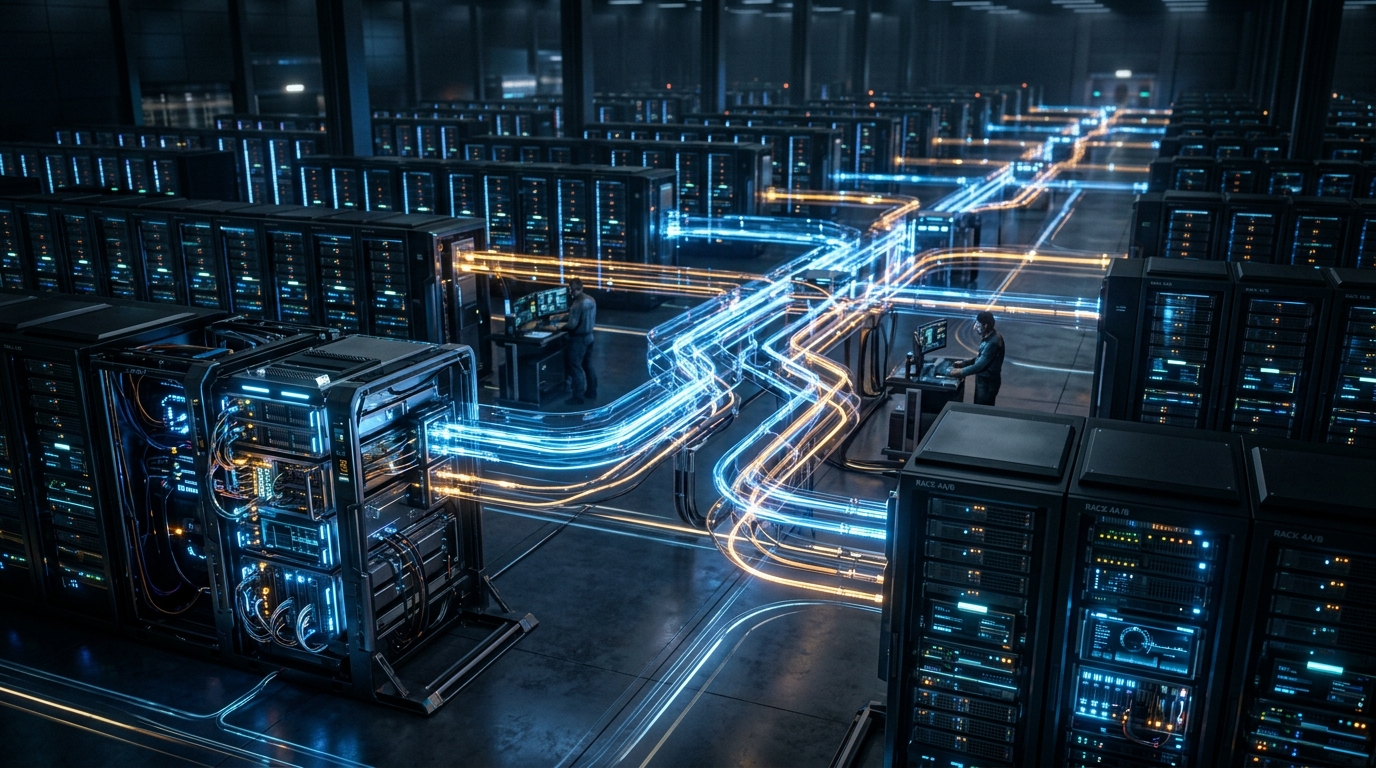
Building autonomous multi-agent systems often starts with a straightforward premise: chain specialized AI agents together in a sequential pipeline where each stage passes its output directly to the next. In prototype environments, this linear execution works flawlessly. But in production environments operating across 24/7 scheduling cycles, rigid pipeline coupling inevitably leads to catastrophic cascading stalls.
When an upstream scraping or ranking stage fails — whether due to transient network timeouts, rate limits, or zero candidate items, a coupled runner immediately aborts the entire execution cycle. As a result, downstream stages responsible for framing, fact-checking, and distribution are starved, leaving finished drafts and critical communications stranded indefinitely.
The Flaw of Monolithic Pipeline Chaining
In traditional software engineering, monolithic coupling is avoided through message queues and event buses. Yet, many autonomous AI frameworks continue to execute agents in tight synchronous loops. When Agent A fails, Agent B never wakes up. This creates three critical production vulnerabilities:
- Mailbox Starvation: Downstream agents with ready queues in their mailboxes remain idle simply because an unrelated upstream ingest stage encountered an error.
- False Positive Cascades: A minor failure in a peripheral data-gathering agent triggers system-wide watchdog alarms, masking healthy operational health across core services.
- Split-Brain Context: When agents depend on ephemeral in-memory state rather than durable database persistence, transient execution crashes erase in-flight progress and claim locks.
The Solution: Decoupled Stage Mailboxes and SQLite WAL Authority
To achieve true fault tolerance, autonomous agent fleets must transition to a decoupled mailbox pattern backed by a centralized SQLite Write-Ahead Logging (WAL) and Full-Text Search (FTS5) architecture:
- Independent Stage Execution: Each stage operates as a self-contained unit that reads exclusively from its designated input mailbox (e.g.
data/picks/) and writes strictly to its output mailbox (e.g.data/framed/). Upstream errors are logged and quarantined to a dead-letter queue (DLQ) without aborting downstream runs. - Durable State Authority: Eliminating flat JSON state files and external third-party vector databases in favor of a local SQLite WAL engine ensures ACID-compliant transaction safety, instant state recovery after system restarts, and unified semantic recall.
- Rolling Entity Cooldowns: Autonomous topic selection algorithms must enforce cross-run entity tracking across 48-hour windows, dynamically cooling down repetitive subjects to ensure rich content diversity while allowing breaking news overrides.
Operational Resilience in Practice
By decoupling stage runners and anchoring memory authority in local SQLite infrastructure, autonomous agent fleets eliminate single points of failure. The system can withstand partial outages, transient API limits, and external network blips while continuing to deliver consistent, high-value output across all distribution channels autonomously.
Featured Paid Dispatch & Source Code
The AI Fleet Architect Series • ByteSize Basic ($7.00/mo)
Looking for the unredacted Python code, SQLite WAL schemas, and production incident postmortems for this architecture? Read today’s full edition of The AI Fleet Architect Dispatch.
Leave a Reply