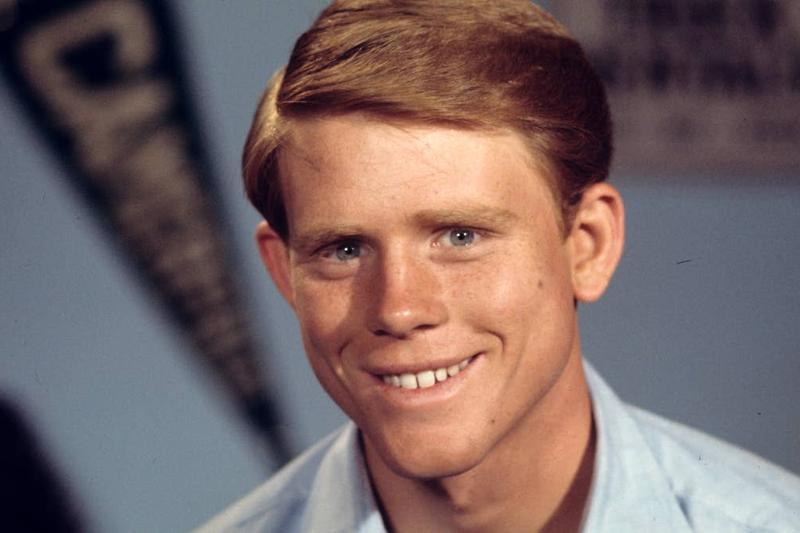
During the height of his fame as Richie Cunningham on ‘Happy Days,’ actor Ron Howard employed a surprising tactic to navigate public life. He frequently wore disguises, a method he recently recounted at the 2026 Hamptons International Film Festival. This approach allowed him to move through society largely unrecognized, a stark contrast to the wholesome, easily identifiable character he portrayed on television.
The need for such measures underscored the intense celebrity status Howard achieved during the sitcom’s run. ‘Happy Days,’ which aired from 1974 to 1980, transformed its cast into household names. Howard’s portrayal of the earnest, red-haired teenager became synonymous with 1950s nostalgia and family-friendly entertainment.
The Burden of Instant Recognition
Ron Howard’s career began long before ‘Happy Days.’ He first gained national recognition as Opie Taylor on ‘The Andy Griffith Show,’ a role he held from 1960 to 1968. This early exposure meant he was already a familiar face to American audiences by the time he landed the role of Richie Cunningham.
The success of ‘Happy Days’ amplified this recognition to an unprecedented level. The show’s premise, centered around the Cunningham family and their friends in 1950s Milwaukee, resonated deeply with viewers. It became a cultural phenomenon, cementing Howard’s image as the quintessential all-American boy.
This widespread adoration, however, came with its own set of challenges. Public appearances became difficult, and personal privacy diminished. Howard’s solution was to create alternate personas for his off-screen life.
Crafting an Alter Ego
The disguises Howard adopted were often elaborate. They allowed him to shed the Richie Cunningham image and blend into crowds. This freedom was crucial for a young actor attempting to live a normal life amidst extraordinary fame.
His experiences highlight the unique pressures faced by child and teen stars. The line between their public persona and private identity often blurs. For Howard, the disguises provided a necessary separation, a way to reclaim anonymity.
The details of these disguises, shared at the Hamptons International Film Festival, offered a glimpse into the actor’s resourcefulness. They ranged from simple changes in attire to more comprehensive alterations of his appearance. This allowed him to observe the world without being the constant subject of observation.
From Actor to Acclaimed Director
Howard’s career trajectory post-‘Happy Days’ saw a significant shift from acting to directing. This transition began even while he was still on the show, with his directorial debut in 1977’s ‘Grand Theft Auto.’ His ability to step behind the camera allowed him to control narratives rather than simply inhabit them.
His directorial filmography includes critically acclaimed works such as ‘Splash’ (1984), ‘Apollo 13’ (1995), and ‘A Beautiful Mind’ (2001). The latter earned him an Academy Award for Best Director, solidifying his reputation as a formidable filmmaker. This second act of his career demonstrated a versatility that extended far beyond his early acting roles.
The skills honed in navigating public attention during his acting days may have inadvertently prepared him for the demands of directing. The ability to observe, to understand different perspectives, and to manage complex situations are all vital in both fields. His journey from beloved sitcom star to Oscar-winning director is a testament to his enduring talent and adaptability.
Related: The Real Gina: Unmasking the Muse Behind Bon Jovi’s “Livin’ on a Prayer”
The Legacy of Richie Cunningham
Despite his success as a director, Ron Howard remains fondly remembered as Richie Cunningham. The character’s enduring appeal speaks to the show’s cultural impact. ‘Happy Days’ continues to be a touchstone for generations, evoking a sense of nostalgia for a simpler era.
Howard’s decision to employ disguises during that period offers a unique insight into the personal cost of widespread fame. It reveals a young man’s effort to protect his private self from the overwhelming demands of public adoration. His story serves as a reminder that even the most beloved figures seek moments of ordinary existence.
The Hamptons International Film Festival appearance provided a rare opportunity for Howard to reflect on these formative experiences. It connected his past as a teen idol with his present as a respected filmmaker. The narrative of the disguised actor adds another layer to the rich tapestry of his celebrated career.
Sources
Frequently asked questions
Why did Ron Howard wear disguises during 'Happy Days'?
Ron Howard wore disguises during the peak of 'Happy Days' popularity to avoid constant public recognition and maintain a sense of normalcy and privacy in his daily life, as he recounted at the 2026 Hamptons International Film Festival.
What character did Ron Howard play in 'Happy Days'?
Ron Howard played the lead character, Richie Cunningham, in the popular sitcom 'Happy Days.' He starred in the show from 1974 until 1980, becoming a widely recognized figure.
What are some notable films directed by Ron Howard?
Ron Howard has directed several acclaimed films, including 'Splash' (1984), 'Apollo 13' (1995), and 'A Beautiful Mind' (2001), for which he won an Academy Award for Best Director.
Sponsored · Put your business in front of ByteSize Network's readers, with every click measured. See advertising packages · Advertise on ByteSize Network