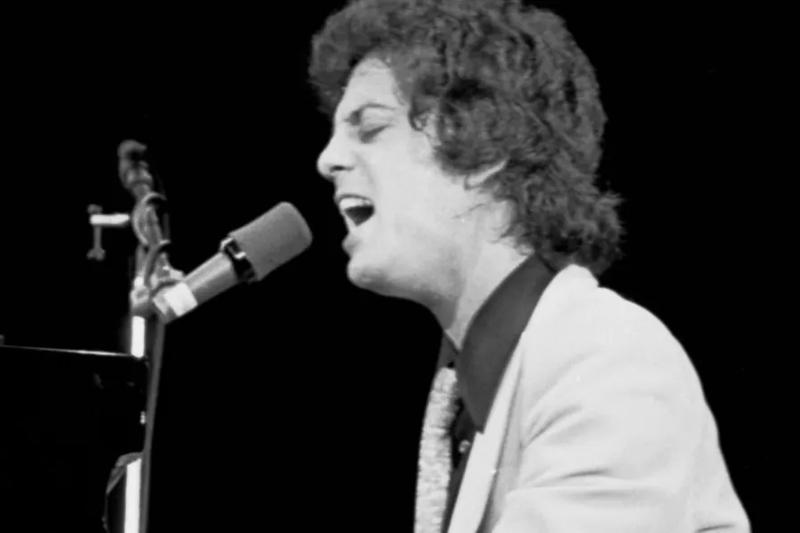
Billy Joel experienced a period of intense creative and commercial success between 1977 and 1982, releasing four albums that defined his career and established him as a global music icon. This prolific five-year span included The Stranger (1977), 52nd Street (1978), Glass Houses (1980), and The Nylon Curtain (1982).
Each album contributed distinctively to his legacy, demonstrating an evolving artistry that captivated audiences worldwide. This era is often cited as the pinnacle of Joel’s songwriting and performance prowess, yielding numerous hit singles and solidifying his place in music history.
The Breakthrough: The Stranger (1977)
The release of The Stranger in 1977 marked a significant turning point for Billy Joel. Produced by Phil Ramone, the album launched Joel into superstardom, transforming him from a respected singer-songwriter into a household name. It featured a string of enduring hits, including “Just the Way You Are,” “Movin’ Out (Anthony’s Song),” “Scenes from an Italian Restaurant,” and “Only the Good Die Young.”
The album’s success was immediate and profound, selling millions of copies and earning Joel his first Grammy Awards. Its intricate arrangements and narrative songwriting resonated deeply with listeners, establishing a benchmark for his subsequent work. The Stranger remains one of the best-selling albums of all time, a testament to its lasting impact.
Sustained Success: 52nd Street (1978)
Following the monumental success of The Stranger, Billy Joel released 52nd Street in 1978. This album continued his commercial and critical momentum, further solidifying his position in the music industry. It debuted at number one on the Billboard 200 chart and earned Joel two more Grammy Awards, including Album of the Year.
52nd Street showcased a more jazz-inflected sound, reflecting Joel’s diverse musical influences. Tracks like “My Life,” “Honesty,” and “Big Shot” became instant classics, demonstrating his ability to craft sophisticated pop songs with broad appeal. The album’s title paid homage to the legendary jazz street in New York City, underscoring its musical direction.
New Wave Experimentation: Glass Houses (1980)
With 1980’s Glass Houses, Billy Joel ventured into new sonic territory, embracing the burgeoning new wave sound of the era. This album represented a deliberate shift from his previous piano-centric ballads, featuring more prominent guitars and synthesizers. The change in direction proved successful, yielding hits such as “It’s Still Rock and Roll to Me,” which became his first number-one single in the United States.
Other notable tracks like “You May Be Right” and “Don’t Ask Me Why” further showcased his adaptability and willingness to experiment. Glass Houses demonstrated Joel’s capacity to remain relevant and innovative, proving he was not confined to a single musical style. The album’s edgier sound appealed to a new generation of listeners while retaining his established fanbase.
Conceptual Depth: The Nylon Curtain (1982)
The final album in this remarkable four-album run was The Nylon Curtain, released in 1982. This concept album explored themes of the American Dream, the Vietnam War, and the struggles of the working class, marking a more serious and introspective turn for Joel. It received strong critical reviews for its ambitious songwriting and intricate production.
Songs like “Allentown” and “Goodnight Saigon” became poignant anthems, reflecting the social and economic anxieties of the early 1980s. While perhaps less commercially driven than its predecessors, The Nylon Curtain is often regarded by critics and fans as one of Joel’s most artistically significant works. It showcased his growth as a lyricist and composer, tackling complex subjects with depth and sincerity. More information on Billy Joel’s discography can be found on his official website.
Billy Joel’s Enduring Legacy and Current Status
The period from 1977 to 1982 solidified Billy Joel’s place as one of the most successful and influential musicians of his generation. His ability to blend pop sensibilities with profound lyrical content and diverse musical styles created a body of work that continues to resonate decades later. His albums from this era are frequently cited in discussions of classic rock and pop music.
As of October 2026, Billy Joel continues to perform and has not canceled all upcoming tour dates due to a diagnosis of normal pressure hydrocephalus. Despite this, his extensive catalog, particularly the output from this golden era, continues to be celebrated by fans and critics alike. His contributions to music remain indelible, influencing countless artists across genres. For further details on his career and impact, resources like Wikipedia offer comprehensive overviews.
Related: Australia’s Country Music Industry Just Crossed $1 Billion. Here’s How It Got There
Songwriters composed. Producers engineered. Audiences listened. A legend was forged.
Billy Joel.
Sources
Frequently asked questions
What are the four albums in Billy Joel's fantastic run from 1977 to 1982?
The four albums released by Billy Joel between 1977 and 1982 are <em>The Stranger</em> (1977), <em>52nd Street</em> (1978), <em>Glass Houses</em> (1980), and <em>The Nylon Curtain</em> (1982). This period is widely considered a creative and commercial peak for the artist.
Which Billy Joel album launched him into superstardom?
<em>The Stranger</em>, released in 1977, is widely credited with launching Billy Joel into superstardom. It featured multiple hit singles and earned him critical acclaim, significantly elevating his public profile and commercial success.
How did Billy Joel experiment with new wave music?
Billy Joel experimented with new wave influences on his 1980 album, <em>Glass Houses</em>. This album featured a more guitar and synthesizer-driven sound, departing from his earlier piano-focused style, and produced hits like "It's Still Rock and Roll to Me."
What is the concept behind Billy Joel's album <em>The Nylon Curtain</em>?
<em>The Nylon Curtain</em> (1982) is a concept album that explores themes related to the American Dream, the Vietnam War, and the struggles of the working class. It is noted for its serious tone and introspective lyrics, receiving strong critical reviews for its artistic ambition.
What is Billy Joel's current health status as of October 2026?
As of October 2026, Billy Joel has canceled all upcoming tour dates due to a diagnosis of normal pressure hydrocephalus. This condition affects his ability to perform live.
Sponsored · Put your business in front of ByteSize Network's readers, with every click measured. See advertising packages · Advertise on ByteSize Network