
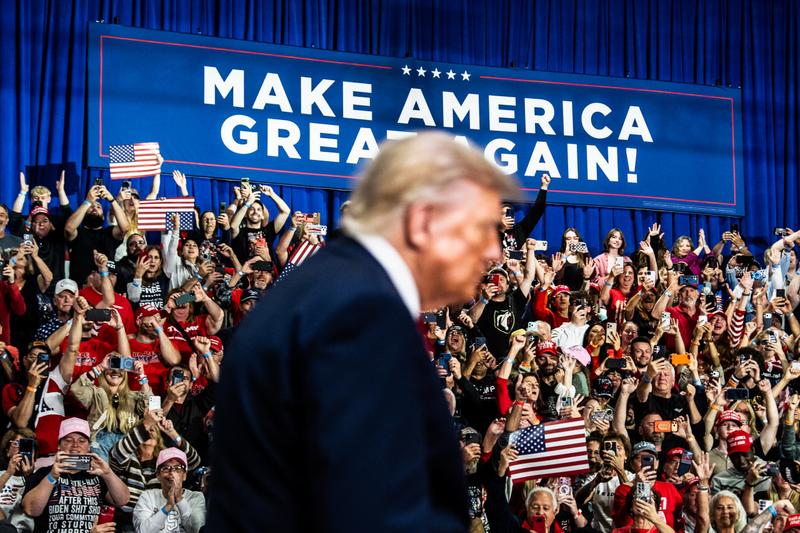
European right-wing political movements are increasingly distancing themselves from the Make America Great Again (MAGA) movement, marking a significant geopolitical realignment. This shift, observed across various European nations, indicates a strategic re-evaluation by conservative and populist leaders regarding their international affiliations and public image.
The MAGA movement, originating with Donald Trump‘s 2016 presidential campaign, became a prominent force in American politics. It is closely associated with Trumpism, a set of ideologies and beliefs centered around the 45th President of the United States, Donald Trump, whose term ended on January 20, 2021.
The Initial Alignment and Shared Ideals
For several years, a perceived ideological kinship existed between the MAGA movement and various right-wing populist parties in Europe. Shared platforms often included skepticism towards globalism, emphasis on national sovereignty, and a critical view of established political elites. Figures like Marine Le Pen in France and Viktor Orbán in Hungary were often cited as examples of European leaders who found common ground with Trump’s political rhetoric and agenda.
These early alignments were often characterized by mutual admiration and public endorsements. European leaders sought to leverage the perceived success and anti-establishment appeal of the MAGA movement to bolster their own domestic political standing. The shared narrative of reclaiming national identity and challenging multilateral institutions provided a powerful, unifying message.
Evolving Political Landscapes in Europe
The political landscape within Europe has continued to evolve. Domestic concerns, including economic stability, immigration policies, and the ongoing war in Ukraine, have reshaped national priorities. These issues often necessitate pragmatic policy approaches that may not always align with the more isolationist or protectionist aspects of the MAGA platform.
Furthermore, the electoral cycles and coalition dynamics within European parliamentary systems differ significantly from the American presidential model. European right-wing parties often need to form broader alliances to govern, which can temper more extreme ideological positions. This practical necessity encourages a more nuanced approach to international relations and alliances.
Strategic Distancing and National Interests
The decision by European right-wing parties to distance themselves from MAGA is largely a strategic one, rooted in national interests. Public opinion in many European countries remains wary of perceived American political interference or ideological exports. Aligning too closely with a specific American political faction can become a liability, particularly in countries with strong traditions of independent foreign policy.
Leaders are increasingly prioritizing their own national brands and political narratives. They aim to demonstrate their capacity for independent thought and action on the global stage. This includes forging relationships with a broader spectrum of international partners, rather than being seen as solely aligned with one particular American political movement. For more context on the MAGA movement’s origins, refer to Wikipedia’s entry on Make America Great Again.
The Impact of Geopolitical Realities
Geopolitical realities also play a crucial role in this realignment. The ongoing conflict in Eastern Europe and the broader shifts in global power dynamics have underscored the importance of strong, unified European action. This often requires cooperation with traditional allies and adherence to international norms, which can sometimes conflict with the ‘America First’ tenets of MAGA.
Related: Trump Waives Key Russia Sanctions as New Law Takes Effect
European leaders are navigating a complex international environment where economic stability and security partnerships are paramount. The perception of a reliable and consistent foreign policy is vital for maintaining influence and protecting national interests. This necessitates a careful calibration of international relationships, including those with the United States.
Looking Ahead: A New Era of European Conservatism
The shift away from MAGA alignment suggests a new era for European conservatism and right-wing populism. These movements are seeking to define themselves on their own terms, rooted in European values and priorities, rather than as reflections of American political trends. This does not necessarily signal a rejection of conservative principles, but rather an assertion of European political autonomy.
The future will likely see European right-wing parties continuing to champion national sovereignty and cultural identity, but within a framework that emphasizes European cooperation and strategic independence. This evolving dynamic will shape international relations and the transatlantic alliance for years to come. For further analysis on this topic, a detailed report can be found on The Wall Street Journal.
- What is the MAGA movement?
The MAGA movement, or Make America Great Again, is an American right-wing political movement that originated with Donald Trump’s 2016 presidential campaign and is closely associated with Trumpism. - Why are European right-wing parties distancing themselves from MAGA?
European right-wing parties are distancing themselves due to evolving domestic political landscapes, a desire to assert national interests and independent political identities, and the impact of current geopolitical realities. - Who is Donald Trump currently?
Donald Trump was the 45th President of the United States, and his term ended on January 20, 2021. - What shared ideals initially connected European right-wing parties with MAGA?
Initial connections were based on shared skepticism towards globalism, emphasis on national sovereignty, and a critical view of established political elites.
Next in the Series: The Economic Implications of European Political Realignment.
Sponsored · Put your business in front of ByteSize Network's readers, with every click measured. See advertising packages · Advertise on ByteSize Network