Presented by JL Group. Our newsroom reported this story independently; JL Group sponsors its publication.
Automated bidding strategies run the modern digital advertising ecosystem. Platforms promise higher conversion volumes and lower cost-per-acquisition rates through machine learning. Yet, when major retail spikes hit, those automated systems frequently miscalculate consumer behavior.
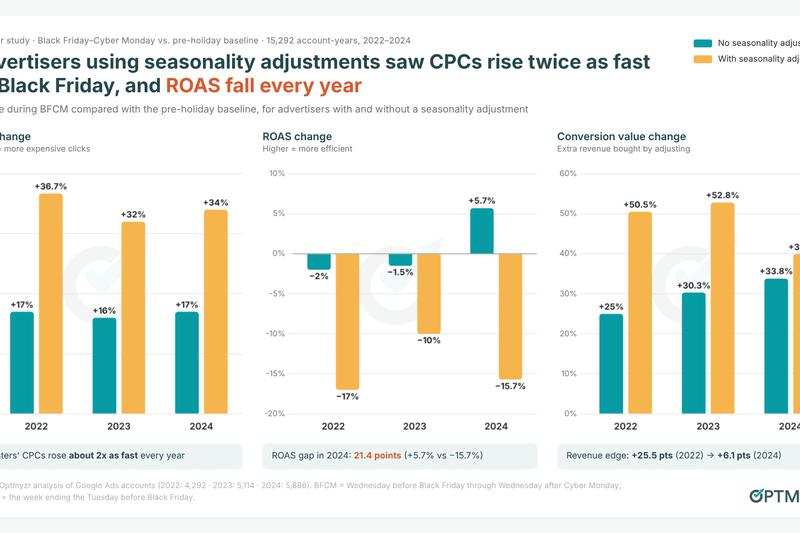
A recent data study conducted by PPC management platform MarTech evaluated more than 5,000 active Google Ads accounts to measure the exact impact of automated bidding features. The findings challenge conventional digital marketing wisdom regarding high-traffic shopping dates like Black Friday and Cyber Monday.
The Promise and Peril of Automated Seasonality Adjustments
Google Ads offers a seasonality adjustment tool designed to help Smart Bidding algorithms anticipate sudden conversion rate spikes. Advertisers input expected shifts in conversion rates, and the algorithm temporarily adjusts its bid targets accordingly. The mechanism sounds foolproof on paper.
In practice, however, the data shows a different outcome. When advertisers apply blanket seasonality adjustments for a 24-hour retail holiday, Google’s machine learning models often overcompensate. They pull back spend prematurely or inflate bids so aggressively that efficiency collapses before the shopping day concludes.
What the 5,000-Account Dataset Reveals
The analysis tracked accounts across multiple verticals, including retail, travel, and financial services. Accounts that deployed aggressive seasonality adjustments experienced greater volatility in cost-per-click metrics compared to accounts that relied on gradual bid adjustments or manual overrides.
- Smart Bidding relies on historical data that rarely mirrors a true Black Friday surge.
- Overriding the algorithm with extreme conversion rate modifiers frequently restricts impression share.
- Many accounts witnessed massive traffic drops during peak afternoon shopping hours.
Industry analysts at digital marketing resource Search Engine Land noted that machine learning models require stable baseline data to function effectively. Artificial inflation of conversion expectations disrupts the feedback loop that Smart Bidding depends on.
Alternative Strategies for Holiday PPC Success
Media buyers and enterprise brand managers must reevaluate how they handle high-volume calendar events. Rather than feeding automated tools rigid adjustment percentages, seasoned practitioners recommend setting up custom experiment campaigns or adjusting target ROAS thresholds incrementally.
Related: HubSpot Adds Spending Controls and Flexible Billing as AI Usage Grows
Data collection must remain granular. Monitoring hourly performance trends allows human supervisors to intervene when automated algorithms begin chasing unprofitable traffic spikes during retail high-water marks.
Frequently asked questions
Why do Google Ads seasonality adjustments fail on Black Friday?
Seasonality adjustments often fail because automated bidding algorithms overcompensate for expected conversion rate spikes, leading to restricted impression share, inflated costs, and erratic bidding behavior during peak retail hours.
How many Google Ads accounts were analyzed in the study?
The research analyzed performance metrics across more than 5,000 active Google Ads accounts to determine how automated bidding algorithms handle high-volume shopping events.
What is the recommended alternative to using seasonality adjustments?
Experts recommend setting up custom experiment campaigns, adjusting target ROAS thresholds incrementally, and monitoring hourly performance trends to maintain human oversight during retail spikes.
Sponsored · Buying, selling or investing in property? JL Group works with owners and investors in Springfield, Missouri and beyond. jlgroup.online · Advertise on ByteSize Network