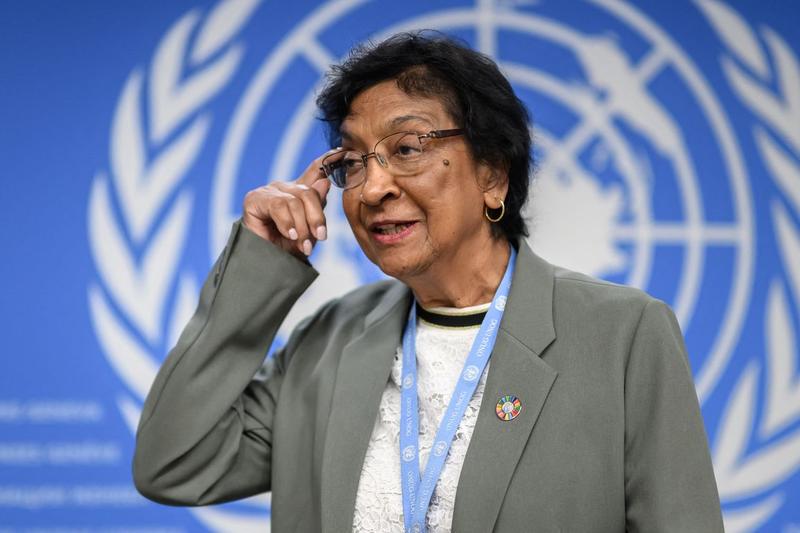
- Navi Pillay received the Nobel Peace Prize on October 9, 2026.
- The award recognizes her extensive career advocating for international law and human rights.
- Pillay currently serves as an ad hoc judge for the International Court of Justice (ICJ).
- She previously held positions at the International Criminal Court (ICC) and as UN High Commissioner for Human Rights.
- Pillay chaired a UN inquiry in 2025 that accused Israel of genocide in the Gaza Strip.
Navi Pillay, a jurist with a career dedicated to international law and human rights, was awarded the Nobel Peace Prize on October 9, 2026. The Norwegian Nobel Committee cited her unwavering commitment to justice and her significant contributions to global peace efforts.
Her work has consistently focused on accountability for human rights violations and the strengthening of international legal frameworks. This recognition places her among a distinguished group of individuals honored for their profound impact on humanity.
What looks like a singular achievement actually represents decades of persistent advocacy and judicial service across multiple international bodies.
A Career Defined by International Justice
Navi Pillay’s journey in international law began with her early work as a lawyer in South Africa during the apartheid era. She defended anti-apartheid activists, often facing significant personal and professional risks. Her experiences shaped her commitment to human rights and justice for the marginalized.
She later transitioned to international courts, bringing her unique perspective to complex global issues. Her judicial roles have placed her at the forefront of some of the most challenging legal cases of the 21st century.
Pillay served as a judge on the International Criminal Court (ICC) from 2003 to 2008. During her tenure, the ICC prosecuted individuals for genocide, war crimes, and crimes against humanity, establishing critical precedents in international justice.
Leadership in Human Rights and Global Accountability
Following her time at the ICC, Pillay was appointed the United Nations High Commissioner for Human Rights. She held this influential position from 2008 to 2014, advocating for human rights globally and addressing violations in numerous countries. Her work involved engaging with governments, civil society, and international organizations to promote human rights standards.
Her leadership at the UN Human Rights Office was marked by efforts to strengthen the international human rights system. She emphasized the importance of accountability for perpetrators of human rights abuses and protection for victims.
In 2025, Pillay chaired a significant UN inquiry that accused Israel of genocide in the Gaza Strip. This inquiry drew international attention and underscored the complexities of international humanitarian law in conflict zones. More details on the UN’s human rights work can be found on the Office of the United Nations High Commissioner for Human Rights website.
Current Role at the International Court of Justice
Navi Pillay is serving as an ad hoc judge for the International Court of Justice (ICJ) in the ongoing case of Gambia v. Myanmar, where Myanmar faces accusations of genocide against the Rohingya Muslim minority. She has been serving in this role since 2019. This role highlights her continued engagement with critical international legal matters.
The ICJ, often referred to as the World Court, is the principal judicial organ of the United Nations. It settles legal disputes between states and gives advisory opinions on international legal issues. Information about the court and its cases is available on the International Court of Justice official website.
Her participation in such a high-profile case underscores her enduring commitment to holding states accountable under international law. The Nobel Peace Prize recognizes this lifelong dedication to justice and peace.
The Impact of the Nobel Peace Prize
The awarding of the Nobel Peace Prize to Navi Pillay amplifies her voice on the global stage. It brings increased attention to the importance of international law and the institutions that uphold it.
Related: ICE Agent in NYC Shooting Accused of Past Violence, Illegal Arrests
Her recognition serves as a powerful message about the ongoing need for human rights advocacy and the pursuit of justice for victims of atrocities worldwide. It validates the efforts of countless individuals and organizations working in similar fields.
The prize also highlights the critical role of international courts and human rights bodies in maintaining global order and preventing conflict. It reinforces the principle that no state or individual is above the law.
Advocates gathered. Jurists gathered. Nations gathered. Pillay.
What is Navi Pillay’s current role?
Navi Pillay is currently serving as an ad hoc judge for the International Court of Justice (ICJ) in the case of Gambia v. Myanmar, which addresses accusations of genocide against the Rohingya Muslim minority.
When did Navi Pillay receive the Nobel Peace Prize?
Navi Pillay was awarded the Nobel Peace Prize on October 9, 2026, for her extensive contributions to international law and human rights advocacy.
What significant positions has Navi Pillay held in her career?
Navi Pillay has held several prominent positions, including judge on the International Criminal Court (2003-2008) and United Nations High Commissioner for Human Rights (2008-2014). She also chaired a UN inquiry in 2025 regarding accusations of genocide in Gaza.
Why was Navi Pillay awarded the Nobel Peace Prize?
Navi Pillay received the Nobel Peace Prize for her lifelong dedication to promoting international law, upholding human rights, and advocating for justice on a global scale, particularly through her work in various international judicial and human rights bodies.
Sources
Sponsored · Put your business in front of ByteSize Network's readers, with every click measured. See advertising packages · Advertise on ByteSize Network