Presented by Oriam AI. Our newsroom reported this story independently; Oriam AI sponsors its publication.
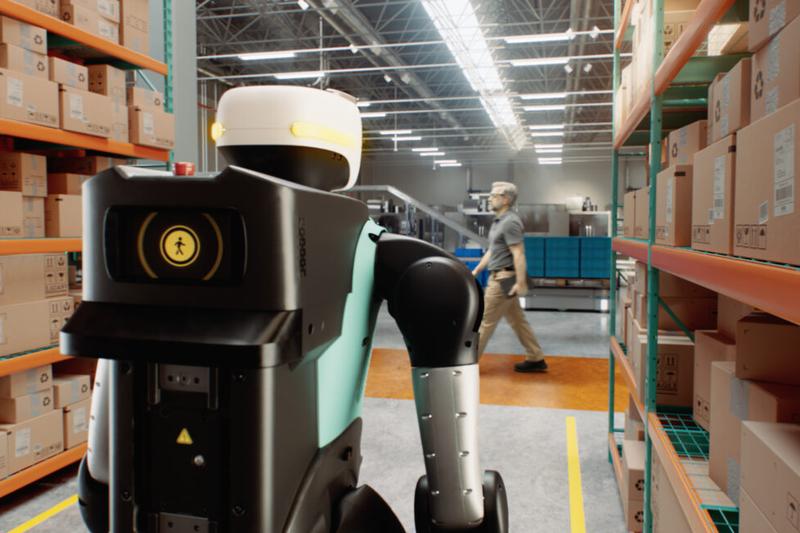
Nvidia is investing heavily in physical AI, a technological domain designed to empower robots and autonomous systems to operate safely and effectively within dynamic physical environments. This strategic focus encompasses the development of advanced capabilities for robotaxis and humanoid robots, prioritizing safety through sophisticated simulation and dedicated hardware and software platforms.
The company’s leadership identifies physical AI as a pivotal area for future innovation. Deepu Talla, Nvidia’s Vice President of Robotics and Edge AI, has described it as “quite simply the largest opportunity in front of humanity.” This perspective underscores the potential for physical AI to reshape numerous industries and aspects of daily life.
The Vision for Physical AI
Nvidia’s commitment to physical AI extends beyond theoretical concepts. The company is actively developing the foundational technologies required for these systems. This includes advanced AI models, specialized processors, and comprehensive simulation environments that allow for rigorous testing and refinement before real-world deployment.
Rev Lebaredian, Nvidia’s Vice President of Physical AI Simulation, highlighted the broad applications of physical AI during his keynote at AI & Digital Bridge 2026 in Astana, Kazakhstan, on October 1, 2026. His address covered the technology‘s potential across various sectors, from manufacturing and logistics to personal assistance and transportation.
Safety as a Core Principle
A central tenet of Nvidia’s physical AI strategy is safety. The company recognizes that the widespread adoption of robotaxis and humanoid robots hinges on their ability to operate without risk to humans or property. This focus is evident in their recent announcements and product developments.
On June 22, 2026, Nvidia unveiled “Halos for Robotics,” a full-stack safety system specifically designed for robotics and physical AI applications. This system aims to provide a robust framework for ensuring the reliable and secure operation of autonomous machines in complex, unpredictable settings. More information about Nvidia’s robotics initiatives can be found on their official robotics platform page.
Addressing the Future of Work
The rise of advanced AI and robotics often sparks discussions about the future of human employment. Nvidia’s CEO, Jensen Huang, has publicly addressed these concerns. He maintains that fears of AI leading to widespread job displacement are overstated.
Huang has consistently argued that AI will ultimately create more jobs than it eliminates, transforming existing roles and generating entirely new industries. This perspective aligns with a broader view that technological advancements, while disruptive, often lead to economic growth and new opportunities. For further insights into Jensen Huang’s views, his interviews and keynotes are often covered by technology news outlets like CNBC.
Related: Missouri Insurance Data Security Act: Oriam AI Institute Guides Agencies on Information Security
Simulation and Training
The development of safe and effective physical AI systems relies heavily on simulation. Nvidia provides advanced simulation tools that allow developers to train and test AI models in virtual environments that accurately mimic the real world. This approach enables rapid iteration and the identification of potential issues before physical prototypes are built.
These simulations are crucial for training robotaxis to navigate diverse traffic conditions and for teaching humanoid robots to perform complex tasks with precision and adaptability. The ability to simulate millions of scenarios significantly accelerates the development cycle and enhances the robustness of the final AI systems.
The Path Forward
Nvidia’s strategic investments in physical AI position the company at the forefront of a rapidly evolving technological landscape. The focus on safety, combined with powerful simulation capabilities and dedicated hardware, aims to accelerate the deployment of intelligent robots and autonomous vehicles.
Engineers refine algorithms. Developers build platforms. Researchers push boundaries. Nvidia.
Sources
Sponsored · Want AI without handing over client files? Oriam AI installs private, on-premise AI for CPA firms, law firms, and insurance and title agencies. oriamai.online · Advertise on ByteSize Network