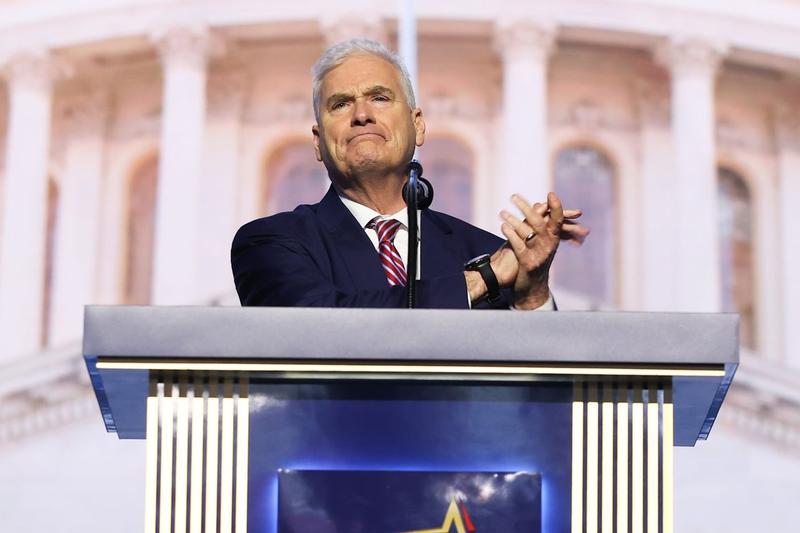
House GOP Whip Tom Emmer has proposed a new strategy for federal spending. This strategy would prioritize congressional districts that offer the “biggest return” on investment. The concept suggests a shift in how federal funds are allocated across the United States.
Emmer, who has served as House Majority Whip since 2023 for the 118th Congress and was re-elected for the 119th Congress, represents Minnesota‘s Sixth Congressional District. His proposal aims to ensure that taxpayer dollars yield the most significant benefits. This could involve metrics such as economic growth, job creation, or infrastructure development.
The Rationale Behind ‘Biggest Return’
The core idea behind Emmer’s proposal is efficiency. Proponents argue that directing funds to areas with proven capacity for growth will stimulate the national economy more effectively. This approach seeks to move beyond traditional allocation methods that might distribute funds more evenly across all districts.
Critics, however, express concerns about potential inequities. They suggest that such a system could disadvantage rural or economically struggling districts. These areas might require federal investment to develop their potential, rather than being judged solely on immediate returns. The debate centers on the balance between economic efficiency and equitable distribution of resources.
Impact on Rural and Conservative Districts
The proposal could have a significant impact on conservative-leaning rural areas. Many of these districts rely on federal funding for essential services and infrastructure projects. A shift towards a “biggest return” model might reallocate funds away from these regions.
This potential reallocation raises questions about government priorities. It could be perceived as a move that favors urban or already prosperous areas. Such a policy might affect the quality of life and economic development in less populated regions. The discussion around this proposal touches on fundamental aspects of federal governance and regional development.
Tom Emmer’s Role and Future
Tom Emmer was re-elected by his colleagues to serve as House Majority Whip for the 119th Congress. He has publicly stated his intention to remain in this role. Emmer has no plans to seek higher leadership positions.
His position as Whip gives him significant influence over legislative priorities and party strategy. This proposal reflects a broader conservative push for fiscal responsibility and targeted spending. The outcome of this debate could shape future federal budgets and policy decisions. More information on Emmer’s role can be found on his official House website.
Historical Precedents and Future Implications
Discussions about federal spending allocation are not new. Historically, various formulas and political considerations have guided the distribution of funds. Emmer’s proposal represents a more explicit attempt to tie funding directly to measurable economic outcomes.
The implementation of such a system would require clear definitions of “biggest return.” It would also necessitate robust data collection and analysis. The debate over these definitions and metrics will be central to any legislative efforts. The Brookings Institution has published extensive research on federal spending and its impact, offering context to these discussions.
The proposal by Tom Emmer signals a potential shift in federal funding philosophy. It prioritizes measurable economic impact. It challenges traditional notions of equitable distribution. The debate will continue to unfold in Congress. It will shape the economic landscape of districts nationwide.
The Political Landscape
The proposal emerges within a complex political landscape. Midterm elections often influence legislative agendas. Emmer’s timing suggests a strategic move to define Republican fiscal policy. The proposal could galvanize support among voters who prioritize economic efficiency.
Related: CNN Leadership Confirmed Post-Ellison Takeover – Thompson Stays, Weiss at CBS News
Conversely, it could face opposition from those concerned about regional disparities. The debate highlights the ongoing tension between national economic goals and local community needs. The outcome will depend on political negotiations and public reception.
Conclusion
Federal spending. Economic impact. Regional development. Political strategy. Congressional debate.
Allocation.
Sources
Frequently asked questions
What is Tom Emmer's proposal regarding federal spending?
House GOP Whip Tom Emmer proposes to limit federal spending to congressional districts that demonstrate the "biggest return" on investment. This strategy aims to direct funds to areas with proven capacity for economic growth and job creation, maximizing the impact of taxpayer dollars.
Who is Tom Emmer?
Tom Emmer is the current House GOP Whip, a position he has held since 2023. He represents Minnesota's Sixth Congressional District and was re-elected to his whip role for the 119th Congress. He has stated he will not seek higher leadership positions after the November midterms.
How might this proposal affect rural districts?
The proposal could potentially disadvantage rural or economically struggling districts. These areas might not show immediate high returns on investment, leading to a reallocation of federal funds away from them. This raises concerns about equitable distribution versus economic efficiency.
What are the arguments for and against Emmer's spending plan?
Arguments for the plan emphasize fiscal responsibility and maximizing economic impact by investing in high-growth areas. Arguments against it focus on potential inequities, suggesting it could neglect regions needing federal support for development and essential services, exacerbating regional disparities.
Sponsored · Put your business in front of ByteSize Network's readers, with every click measured. See advertising packages · Advertise on ByteSize Network