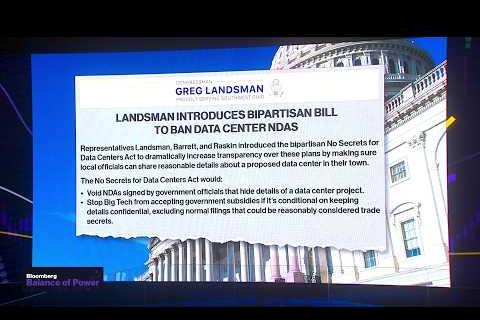
U.S. Representative Greg Landsman (D-OH) has expressed skepticism regarding the effectiveness of an AI czar in providing sufficient oversight for artificial intelligence. Landsman argues that a single appointed position would be inadequate to manage the complex and rapidly evolving landscape of AI technology and its societal implications.
His position underscores a broader debate within legislative circles about the most effective approach to AI governance. Landsman advocates for a more comprehensive legislative framework to ensure proper regulation and accountability.
The Debate Over AI Governance Models
The discussion around AI oversight encompasses various proposals, from dedicated federal agencies to inter-agency task forces and the appointment of a single AI czar. Proponents of an AI czar often suggest that a centralized figure could streamline policy development and coordinate efforts across different government branches.
However, critics like Landsman contend that the scope of AI’s impact, spanning economic, ethical, and national security domains, demands a more distributed and deeply integrated regulatory response. They argue that a single individual, regardless of expertise, cannot effectively oversee all facets of AI development and deployment.
Landsman’s Legislative Stance on AI
Representative Landsman has actively engaged in legislative efforts concerning AI oversight since taking office in 2023. He has championed bipartisan legislation aimed at preventing AI from making critical healthcare decisions, highlighting a specific area of concern regarding AI’s practical application. This initiative reflects a focus on protecting individuals from potentially biased or flawed automated judgments in sensitive sectors.
Furthermore, Landsman has called for an end to the use of AI in denying Medicare claims, addressing another critical intersection of AI and public welfare. These actions demonstrate his commitment to mitigating the immediate, tangible risks associated with unregulated AI use in public services.
Protecting Communities from AI Data Centers
Beyond direct AI applications, Landsman is also working to ensure federal regulation of AI data centers. The proliferation of these centers raises concerns about their environmental impact, energy consumption, and potential strain on local infrastructure. His efforts aim to protect communities from the unintended consequences of the physical infrastructure required to support AI development.
This aspect of his work broadens the scope of AI oversight to include its foundational components, recognizing that the physical footprint of AI technology also requires careful management. The regulation of data centers is seen as crucial for sustainable technological growth and community well-being.
The Path Forward for AI Regulation
The legislative landscape for AI regulation remains dynamic. Lawmakers continue to explore various strategies to balance innovation with public safety and ethical considerations. The debate often centers on whether to adopt broad, principles-based regulations or more specific, sector-by-sector rules.
Related: Federal Judge Temporarily Halts Border Wall Construction in Texas’ Big Bend Region
Landsman’s perspective suggests a preference for detailed legislative action over a singular, high-level appointment. His focus on specific use cases, such as healthcare decisions and Medicare claims, indicates a strategy of addressing immediate and pressing concerns while broader frameworks are developed. The ongoing discussions will shape the future of AI governance in the United States.
Re-election Campaign and AI Policy
Landsman is currently running for re-election to the U.S. House to represent Ohio’s 1st Congressional District in the general election on November 3, 2026. He successfully advanced from the Democratic primary on May 5, 2026. His legislative record on AI oversight, including his skepticism about an AI czar, forms part of his platform as he seeks to continue his work in Congress.
Voters in Ohio’s 1st Congressional District will consider his approach to emerging technologies, among other issues, as they head to the polls. His consistent advocacy for robust, legislative-driven AI oversight reflects a core tenet of his policy philosophy.
Legislators debated. Experts testified. Public interest groups advocated. The question of AI oversight remained.
Unresolved.
Sources
Sponsored · Put your business in front of ByteSize Network's readers, with every click measured. See advertising packages · Advertise on ByteSize Network