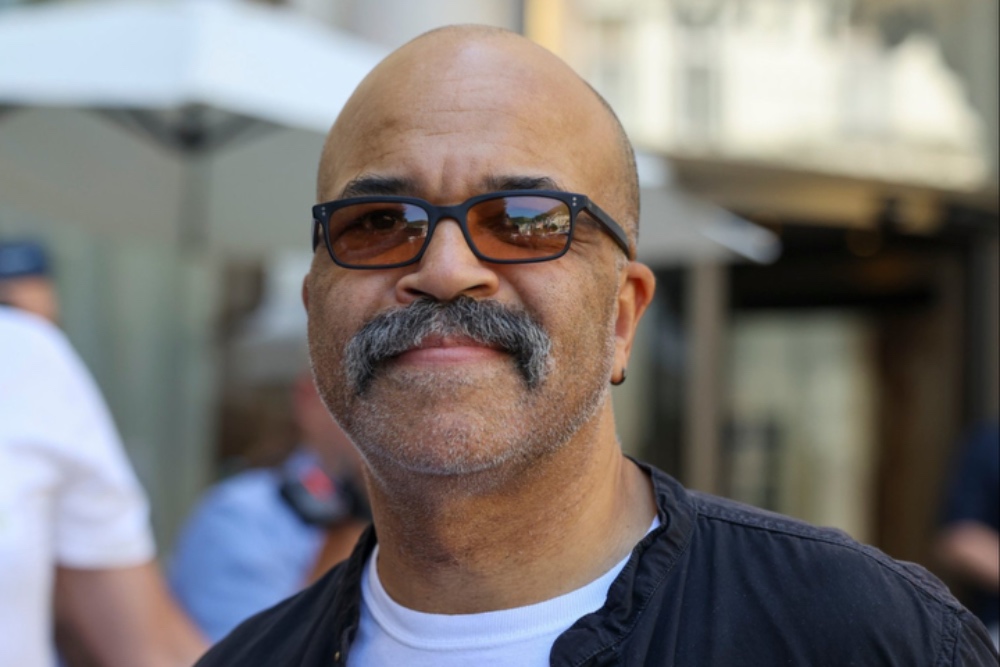
Jeffrey Wright, an actor recognized for his extensive career in film and television, recently articulated a nuanced perspective on race, positing that “being Black” operates as a “political term.” This statement emerged during a discussion concerning the racist abuse targeting French soccer star Kylian Mbappé, underscoring Wright’s view on the strategic nature of racial prejudice.
Wright’s commentary, published by Variety, delves into the motivations behind such attacks. He characterized the abuse against Mbappé as a deliberate effort to undermine the athlete’s significant influence and accomplishments. This interpretation frames racism not just as individual hatred, but as a calculated mechanism to diminish powerful Black figures on a global stage.
The Political Dimension of Race
Wright’s assertion that being Black is a political term extends beyond simple identity. It suggests that racial identity, particularly for Black individuals, is inherently linked to power dynamics and societal structures. This perspective aligns with critical race theory, which examines how race and racism have shaped legal systems and social norms.
The actor’s statement implies that racial categorization often carries implications for social standing, economic opportunity, and political representation. It highlights how racial identity can be weaponized or leveraged within political discourse and societal power struggles.
This understanding of race as a political construct provides a framework for analyzing incidents of racial discrimination. It moves the conversation beyond individual prejudice to systemic issues that impact collective groups.
Historical Context of Race as a Political Tool
Historically, race has been a significant political tool. In the United States, for instance, racial classifications were central to slavery, Jim Crow laws, and immigration policies. These policies were designed to maintain specific power structures and control over certain populations.
Globally, colonialism often relied on racial hierarchies to justify conquest and exploitation. The categorization of people into distinct racial groups served to rationalize unequal treatment and resource distribution.
Even in contemporary society, discussions around affirmative action, voting rights, and criminal justice reform frequently intersect with racial identity. These debates demonstrate the ongoing political salience of race.
Kylian Mbappé and Targeted Abuse
Kylian Mbappé, a prominent figure in international soccer, has been a frequent target of racist abuse. Such incidents often occur in connection with his performances on the field or his public persona. These attacks underscore the pervasive nature of racism in sports.
Wright specifically addressed these instances, framing them as attempts to diminish Mbappé’s power and influence. Mbappé’s status as a world-renowned athlete grants him significant cultural and economic power, which, according to Wright, becomes a target for those seeking to uphold racial hierarchies.
The actor’s remarks suggest that the abuse is not merely a reaction to Mbappé’s race, but a response to his success and visibility as a Black man. His achievements challenge racist narratives that seek to limit the potential of Black individuals.
The Impact of Racist Abuse on Athletes
Racist abuse in sports has a profound impact beyond the individual athlete. It sends a message to other aspiring athletes and fans from marginalized communities, suggesting that their achievements will always be met with hostility.
Organizations like FIFA and UEFA have faced criticism for their handling of racist incidents. Critics argue that penalties are often insufficient, failing to deter repeat offenses or address the systemic roots of the problem.
The public outcry following such incidents, while important, often highlights the need for more proactive measures from sports governing bodies and societal institutions. Wright’s comments contribute to this broader conversation, demanding a deeper analysis of the motives behind the abuse.
Wright’s Broader Commentary on Identity and Resilience
Wright’s insights extend beyond Mbappé to a broader commentary on identity and resilience in the face of racism. His career, marked by diverse roles and critical acclaim, positions him as an observer of cultural dynamics.
Roles in projects such as “Basquiat,” where he portrayed the influential Black artist Jean-Michel Basquiat, and “American Fiction,” which satirizes the commodification of Black stories, reflect his engagement with themes of race, art, and representation.
His public statements often reflect a commitment to challenging simplistic narratives about Black identity. He consistently advocates for a more complex and nuanced understanding of the Black experience, both in his work and in his public discourse.
The Role of Public Figures in Addressing Racism
Public figures like Jeffrey Wright play a crucial role in shaping public discourse around sensitive topics like race. Their platforms allow them to bring attention to issues that might otherwise be ignored or downplayed.
By directly addressing racist abuse and interpreting its underlying motivations, Wright helps to educate the public. He encourages a more critical examination of such incidents, moving beyond superficial condemnations to a deeper understanding of systemic racism.
His willingness to label “being Black” as a “political term” challenges individuals to consider the broader implications of racial identity in a world still grappling with historical injustices and ongoing discrimination.
The Interplay of Power, Race, and Stupidity
Wright’s powerful phrase, “They think they can diminish how powerful he is with their stupidity,” encapsulates his argument. He suggests that racist acts, while appearing irrational, are often attempts to exert power and control.
The “stupidity” he references may not be a lack of intelligence, but rather a willful ignorance or a misguided belief in racial superiority. This “stupidity” serves as a tool to perpetuate systems of oppression and to undermine those who challenge them.
This interpretation reframes racist acts as strategic, albeit flawed, maneuvers within a larger power struggle. It emphasizes that the targets of racism, like Mbappé, possess inherent power that racists aim to suppress.
Challenging the Narrative of Diminishment
The act of calling out racist behavior as an attempt to diminish power is a form of resistance. It reclaims agency for the target and exposes the weakness inherent in the aggressor’s tactics.
Wright’s statement encourages a re-evaluation of how society responds to racist incidents. It suggests that simply condemning the act is not enough; understanding its strategic intent is critical to dismantling its power.
By highlighting the “power” of Mbappé, Wright affirms the strength and resilience of Black individuals who achieve greatness despite facing systemic barriers and overt hostility.
Looking Ahead: Continuing Conversations
Wright’s comments contribute to an ongoing global conversation about race, identity, and justice. These discussions are critical for fostering greater understanding and for challenging entrenched prejudices.
The intersection of sports, entertainment, and social commentary continues to provide platforms for these important dialogues. Public figures are increasingly using their voices to advocate for change and challenge discriminatory practices.
The impact of such statements resonates widely. They provoke thought. They inspire action. They demand accountability.
Activists continue their work. Advocates press for change. Artists create their visions. Journalists report the news. Athletes perform their feats. Citizens engage in discourse. The world observes.
Justice.