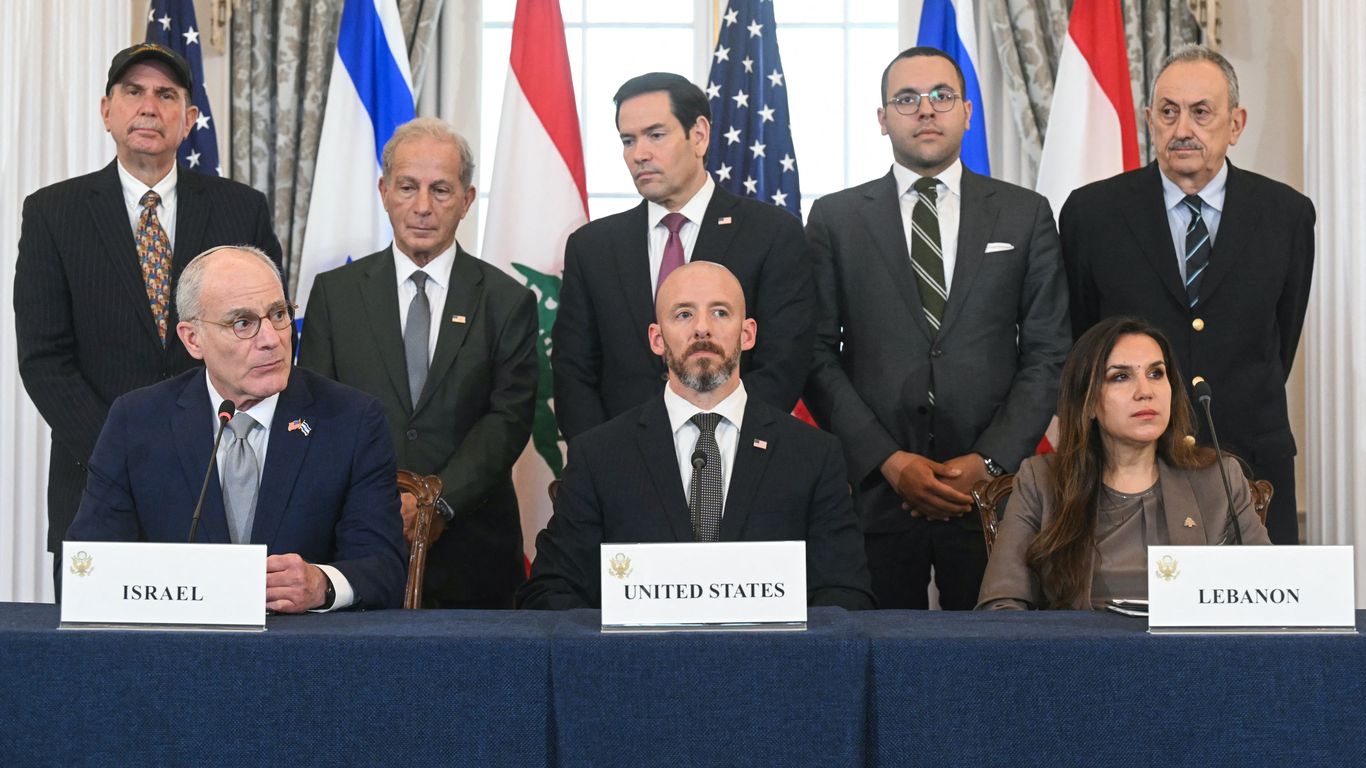
A new security agreement between Israel and Lebanon, announced in late June 2026, was primarily motivated by a mutual concern over Iran’s expanding regional influence and the increasing military capabilities of Hezbollah. This pact represents a strategic effort by both nations to stabilize their shared northern border and mitigate potential escalations stemming from broader geopolitical shifts in the Middle East.
The agreement signifies a rare instance of direct security cooperation between two countries that have historically maintained an official state of war. Diplomatic channels, often indirect, facilitated the months-long negotiations that culminated in this unexpected accord. The outcome reflects a pragmatic recognition of shared threats, particularly those posed by non-state actors operating with external support.
The Shared Threat of Iranian Influence
Iran’s regional activities have been a consistent source of instability in the Middle East for decades. Its support for various proxy groups, including Hezbollah in Lebanon, Hamas in Gaza, and Houthi rebels in Yemen, has extended its geopolitical reach. This expansion has generated alarm in both Jerusalem and Beirut.
For Israel, Iran’s nuclear program and its advanced missile capabilities represent existential threats. The presence of a heavily armed Hezbollah on its northern border, supplied and trained by Iran, adds a critical dimension to these security concerns. Hezbollah’s arsenal, estimated to include tens of thousands of rockets and missiles, poses a direct threat to Israeli civilian centers and infrastructure.
Lebanon, in contrast, faces a different set of challenges from Iranian influence. The Lebanese government struggles with internal political divisions and a severe economic crisis. Hezbollah, a powerful political and military force within Lebanon, often operates outside the state’s direct control. This dynamic compromises Lebanese sovereignty and risks drawing the nation into regional conflicts against its will.
The Lebanese state has long sought to assert its authority over all armed groups within its borders. Hezbollah’s independent military infrastructure, however, remains a significant obstacle to this objective. The recent agreement provides a framework for the Lebanese government to potentially reassert some control over its territory and prevent it from becoming a launchpad for regional hostilities.
Hezbollah’s Evolving Role and Capabilities
Hezbollah, founded in the early 1980s, has evolved from a militia focused on resisting Israeli occupation into a sophisticated military and political organization. Its substantial military wing, equipped with advanced weaponry from Iran, operates largely independently of the Lebanese Armed Forces. This dual nature presents a complex challenge for both regional stability and Lebanese internal governance.
In recent years, Hezbollah has gained combat experience in other regional conflicts, notably in Syria, where its fighters supported the Syrian government. This involvement further enhanced its military capabilities and deepened its strategic ties with Iran. The group’s presence along the Israeli-Lebanese border has been a consistent flashpoint, leading to numerous skirmishes and heightened tensions.
The Israeli intelligence community has consistently monitored Hezbollah’s activities, including its efforts to establish precision-guided missile factories in Lebanon. These developments represent a qualitative shift in Hezbollah’s threat profile, prompting Israel to seek new strategies for deterrence and defense. The 2026 security agreement reflects a part of this evolving strategy.
The Diplomatic Path to Agreement
The path to the 2026 security agreement was protracted and complex, involving multiple rounds of indirect negotiations. These discussions often took place through intermediaries, including the United States and other international actors. These third parties played a crucial role in bridging the communication gap between Israel and Lebanon.
Key figures in these negotiations included U.S. Assistant Secretary of State for Near Eastern Affairs Barbara Leaf and French Special Envoy for Lebanon Jean-Yves Le Drian. Their persistent diplomatic efforts helped maintain momentum despite numerous setbacks. The negotiations focused on practical security arrangements along the Blue Line, the demarcation line between Lebanon and Israel established by the United Nations in 2000.
Specific points of discussion included mechanisms for de-escalation, intelligence sharing regarding non-state actors, and protocols for managing border incidents. The agreement does not constitute a full peace treaty, but rather a limited security understanding aimed at preventing unintended escalation. It builds upon previous informal understandings and UN resolutions, most notably UN Security Council Resolution 1701, which ended the 2006 Lebanon War.
Implications for Regional Stability
The Israel-Lebanon security agreement carries significant implications for broader regional stability. It demonstrates that even in the absence of full diplomatic recognition, shared security interests can compel adversarial nations to cooperate. This pragmatic approach could serve as a model for addressing other intractable conflicts in the Middle East.
For Israel, the agreement offers a potential reduction in immediate border tensions and a framework for managing Hezbollah’s activities. It allows Israel to focus its security resources on other strategic challenges, including Iran’s direct nuclear ambitions. The deal also provides a measure of legitimacy for Israel’s security concerns on the international stage.
For Lebanon, the agreement provides a crucial opportunity to reassert state sovereignty and potentially curb Hezbollah’s independent military actions. It could also encourage international investment and aid by signaling a degree of stability and a commitment to de-escalation. The economic benefits of a calmer border could be substantial for the struggling Lebanese economy.
However, challenges remain. The implementation of the agreement will require continuous vigilance and good faith from all parties. Hezbollah’s internal dynamics and its relationship with Iran will be critical factors in determining the long-term success of the pact. The agreement’s effectiveness will ultimately depend on its ability to withstand future geopolitical shocks and internal pressures within Lebanon.
The Role of International Actors
International actors, particularly the United States and France, played indispensable roles in facilitating this agreement. Their persistent engagement underscored the global interest in preventing another major conflict in the Levant. These powers provided crucial mediation, technical expertise, and assurances to both sides.
The United States, through its diplomatic missions, worked to ensure that the agreement aligned with broader U.S. foreign policy objectives in the region, which include countering Iranian influence and promoting regional stability. French involvement, rooted in its historical ties to Lebanon, focused on supporting Lebanese sovereignty and preventing its further destabilization.
United Nations peacekeeping forces, specifically the United Nations Interim Force in Lebanon (UNIFIL), will likely play an even more critical role in monitoring the implementation of the agreement. UNIFIL’s presence along the Blue Line provides a neutral observer and a communication channel for incident reporting and de-escalation efforts. The agreement could enhance UNIFIL’s mandate and effectiveness.
Looking Ahead: Challenges and Opportunities
The 2026 Israel-Lebanon security agreement is a testament to the complex and often counterintuitive nature of Middle Eastern diplomacy. It emerges not from a newfound friendship, but from a shared recognition of pressing security threats. The deal is a pragmatic arrangement designed to manage immediate risks and create a modicum of stability.
The primary opportunity lies in the potential for reduced cross-border violence and a greater focus on economic recovery in Lebanon. For Israel, it offers a chance to mitigate a significant security threat on its northern flank. However, the agreement’s durability will depend on several factors, including the political will of both governments, the continued engagement of international mediators, and the evolving regional landscape.
The shadow of Iran’s regional ambitions will continue to loom large. Hezbollah’s future actions, its internal cohesion, and its relationship with the Lebanese state will also dictate the agreement’s long-term viability. This pact is a step, not a solution.
Governments negotiated. Diplomats mediated. Security concerns converged.
Stability.