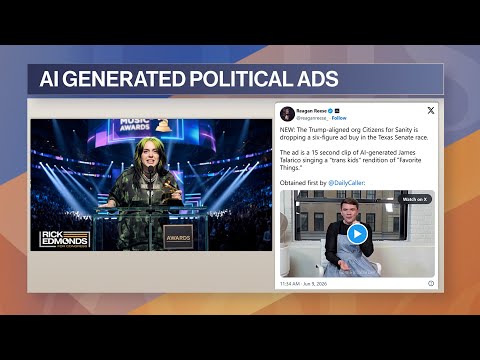
The integrity of the 2026 midterm elections faces a significant challenge from the rise of AI-generated deepfake political advertisements. These sophisticated synthetic media pieces can manipulate public perception by presenting fabricated scenarios, statements, and endorsements, thereby undermining voter confidence and the democratic process.
The technology allows for the creation of highly realistic audio and video content. This content can depict political figures saying or doing things they never did. The speed of dissemination through social media platforms exacerbates the problem.
The Emergence of Deepfake Technology in Politics
Deepfake technology, initially a niche concern, has rapidly evolved. Its origins trace back to academic research in generative artificial intelligence. Early iterations emerged in the late 2010s, primarily in entertainment and non-political contexts.
The term “deepfake” combines “deep learning” with “fake.” This refers to the neural network architectures used to create the synthetic media. These networks are trained on vast datasets of images and audio. They learn to generate new content that closely resembles the original.
By 2020, rudimentary political deepfakes began to appear. These early examples often featured noticeable glitches or inconsistencies. Public awareness of the technology grew. Its potential for misuse in political campaigns became a topic of discussion.
The sophistication of deepfake algorithms has increased dramatically since then. Current AI models can produce highly convincing fakes. These are often indistinguishable from genuine media to the untrained eye.
Impact on the 2026 Midterm Election Cycle
The 2026 midterm elections represent a critical juncture for the deployment of deepfake technology. Campaigns are increasingly reliant on digital advertising. Social media platforms serve as primary conduits for political messaging.
Deepfakes can be used to create attack ads that falsely portray opponents. They can also generate fake endorsements from prominent figures. This creates confusion among the electorate. It forces campaigns to spend resources debunking false narratives.
One major concern is the potential for “October Surprises.” These are last-minute deepfakes released just before an election. They leave little time for factual corrections. This can sway undecided voters based on fabricated information.
The rapid sharing capabilities of social media platforms amplify this risk. A deepfake can go viral within hours. Its impact can be irreversible even if later debunked.
Voter Trust and Misinformation
The spread of deepfake political ads directly impacts voter trust. When voters cannot reliably determine the authenticity of political content, cynicism increases. This erosion of trust can lead to decreased civic engagement.
Misinformation campaigns leveraging deepfakes can target specific demographics. They can exploit existing societal divisions. This further polarizes the electorate. It makes reasoned political discourse more challenging.
Fact-checking organizations face an uphill battle. The sheer volume of content makes verification difficult. The advanced nature of deepfakes makes detection complex. New tools are constantly needed to keep pace with the technology’s evolution.
Legislative and Regulatory Responses
Governments and regulatory bodies have begun to address the deepfake challenge. Several countries have enacted or proposed legislation. These measures aim to criminalize the creation or dissemination of malicious deepfakes.
In the United States, some states have passed laws specifically targeting deepfakes in political campaigns. California’s AB 730, enacted in 2019, prohibits the distribution of deepfake videos of political candidates within 60 days of an election. Texas also passed a similar law, HB 3479, in the same year.
At the federal level, discussions continue regarding comprehensive legislation. The DEEPFAKES Accountability Act and the Malicious Deepfake Prohibition Act have been introduced in Congress. These bills aim to establish federal standards and penalties. However, progress has been slow due to concerns about free speech and technical implementation.
The European Union has taken a different approach. Its Digital Services Act (DSA), fully in effect as of February 2024, mandates platforms to take down illegal content, including certain types of deepfakes. It also requires transparency regarding AI-generated content.
Challenges in Enforcement
Enforcement of deepfake regulations faces significant hurdles. One challenge is the global nature of the internet. Deepfakes created in one country can easily spread across borders. This complicates jurisdiction and prosecution.
Another issue is the technical difficulty of detection. AI models are constantly improving. Detection tools must evolve at an even faster pace. Watermarking and digital provenance technologies are being explored as potential solutions.
The debate over intent also complicates legal action. Proving malicious intent behind a deepfake can be difficult. Distinguishing satire from deceptive content is another legal gray area.
The Role of Technology Companies
Technology companies, particularly social media platforms, play a crucial role. They are the primary distributors of political content. Their policies and actions directly influence the spread of deepfakes.
Many platforms have updated their content policies. Meta, for example, prohibits misleading manipulated media. YouTube has similar policies against technically manipulated content that misleads users. X (formerly Twitter) also has rules against synthetic and manipulated media.
These platforms employ AI-powered detection systems. They also rely on user reporting and third-party fact-checkers. However, the sheer volume of content makes complete moderation impossible.
Calls for greater transparency are increasing. Advocates suggest platforms should label AI-generated content clearly. This would inform users about the synthetic nature of the media. It would empower them to make informed judgments.
Developing Detection Tools
Research into deepfake detection tools is ongoing. Several academic institutions and private companies are developing new algorithms. These tools analyze various digital artifacts. They look for inconsistencies in lighting, facial movements, and audio patterns.
The Deepfake Detection Challenge, organized by Meta and other partners, spurred significant advancements. It encouraged researchers to develop robust detection methods. Progress has been made, but no perfect solution exists.
The arms race between deepfake generators and detectors continues. As deepfake technology becomes more accessible, the need for effective detection becomes even more urgent.
Ethical Considerations and Future Outlook
The rise of deepfake political ads raises profound ethical questions. What constitutes acceptable political speech? How should society balance free expression with the need for factual accuracy?
The potential for democratic subversion is clear. Deepfakes can be used to silence dissent. They can be employed to discredit legitimate journalists. This undermines the foundations of informed public discourse.
Educating the public is a vital component of the response. Media literacy initiatives can help voters identify manipulated content. Critical thinking skills are essential in an era of abundant synthetic media.
Looking ahead to the 2026 midterms and beyond, the deepfake challenge will intensify. Technological advancements will continue. The political landscape will remain contentious. A multi-faceted approach involving legislation, technology, and public education will be necessary.
Policymakers debated. Technologists innovated. Citizens watched.
Democracy.
FAQ Section
- What are AI deepfake political ads?
AI deepfake political ads are synthetic media created using artificial intelligence that manipulate audio and video to depict political figures saying or doing things they never did. These ads are designed to mislead voters and spread misinformation during election campaigns. - Why are deepfakes a concern for the 2026 midterm elections?
Deepfakes are a concern for the 2026 midterm elections because they can rapidly spread false information, manipulate voter perception, and erode public trust in political processes. Their high realism makes them difficult to distinguish from authentic content, posing a threat to electoral integrity. - How do deepfakes impact voter trust?
Deepfakes impact voter trust by making it difficult for individuals to discern truth from falsehood in political communications. This uncertainty can lead to increased cynicism towards political figures and institutions, potentially reducing voter engagement and confidence in election outcomes. - What measures are being taken to combat deepfake political ads?
Measures to combat deepfake political ads include legislative efforts at state and federal levels to criminalize malicious deepfakes, updated content policies by social media platforms, and ongoing research into advanced deepfake detection technologies. Public education on media literacy is also a crucial preventative measure. - Can deepfakes be reliably detected?
While significant progress has been made in deepfake detection, no method is perfectly reliable. The technology for creating deepfakes is constantly evolving, leading to an ongoing “arms race” between creators and detectors. Researchers are developing new tools, but complete and instant detection remains a challenge.