
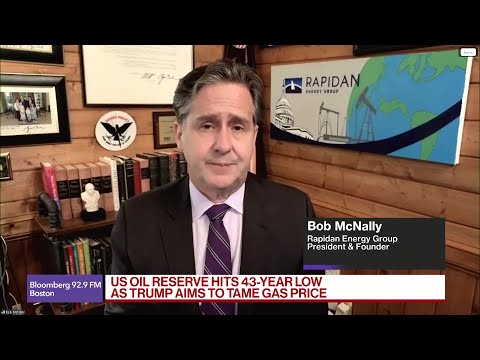
The United States Strategic Petroleum Reserve has reached a 43-year low, dropping to inventory levels not recorded since 1981, as the federal government navigates the economic fallout of sanctions against Iran and tightening global crude supplies. What was designed as a passive emergency vault has become an active instrument of economic statecraft. The subterranean caverns of the Gulf Coast are emptying to balance a fragile global market. The physical reality of international diplomacy is measured in millions of barrels of crude oil, pumped out of underground salt domes and pushed into commercial pipelines.
The Geography of the Stockpile
The Strategic Petroleum Reserve does not exist in steel tanks above ground. It lives deep within the earth. The United States stores its emergency crude oil in 60 massive underground salt caverns spread across four heavily guarded sites along the Gulf of Mexico. Two sites are located in Texas: Bryan Mound and Big Hill. Two sites are located in Louisiana: West Hackberry and Bayou Choctaw. The geography is intentional. These locations sit adjacent to the dense network of commercial pipelines and massive refineries that process the nation’s energy.
Salt caverns offer the most secure and cost-effective method for storing unprecedented volumes of crude oil. The salt is entirely impermeable. It does not react with the oil. The immense geological pressure of the earth naturally seals any microscopic fractures. These caverns are vast. A single cavern can measure 2,000 feet deep and 200 feet wide, easily large enough to swallow the Empire State Building. Creating them requires drilling deep into subterranean salt domes and pumping in massive amounts of fresh water to dissolve the salt, a process known as solution mining. The resulting brine is extracted, leaving behind a perfectly sealed, cylindrical void.
When the reserve is full, it holds approximately 714 million barrels of crude oil. The infrastructure is a marvel of industrial engineering. Massive steel manifolds, high-pressure pumps, and miles of reinforced piping connect these underground vaults to the surface. But today, the manifolds are pulling more oil out than they are putting in. The reserve has fallen below 350 million barrels. To find an inventory level this low, one must look backward through more than four decades of American history, past the Gulf War, past the post-9/11 era, all the way back to the early days of the Reagan administration in 1981.
The Arithmetic of a 43-Year Low
Hitting a 43-year low is not an accident of accounting. It is the result of deliberate, consecutive policy decisions spanning multiple administrations. The modern drawdown began as a mechanism to combat rising domestic gasoline prices, which threaten consumer stability and political fortunes. But the root causes of those high prices are deeply entangled in global geopolitics.
The Strategic Petroleum Reserve was never meant to be a permanent price-fixing tool. It was engineered as a shock absorber. When global supply chains fracture, the United States Department of Energy can authorize a drawdown. Millions of barrels are released onto the open market, artificially increasing supply to suppress price spikes. In recent years, the shocks have been relentless. A global pandemic decimated production schedules. The war in Eastern Europe triggered sweeping embargoes on Russian crude. And the ongoing geopolitical chess match in the Middle East has kept the commodity markets in a state of perpetual anxiety.
The numbers dictate the reality. The United States consumes roughly 20 million barrels of petroleum products per day. The SPR, at its lowest point, holds barely enough to cover a few weeks of total national consumption if all imports and domestic production were to instantly vanish. The 43-year low represents a threshold of vulnerability. The buffer is thinning. The margin for error in global energy diplomacy is shrinking.
The Iran Factor and the Maximum Pressure Campaign
The current state of the Strategic Petroleum Reserve cannot be decoupled from the United States’ posture toward Iran. The geopolitical fallout traces a direct line back to 2018. The Trump administration executed a sweeping shift in foreign policy by formally withdrawing the United States from the Joint Comprehensive Plan of Action, widely known as the Iran nuclear deal. The withdrawal was followed by the immediate reinstatement of crippling economic sanctions.
The doctrine was termed the ‘maximum pressure’ campaign. The explicit goal was to drive Iranian crude oil exports to zero. Iran possesses some of the largest proven oil reserves on the planet. By weaponizing the global financial system, the United States effectively blockaded Iranian oil from entering legitimate international markets. Buyers in Asia and Europe were forced to find alternative sources or face secondary sanctions from the United States Treasury Department.
The strategy succeeded in devastating the Iranian economy, but it extracted a heavy toll on the global energy market. Millions of barrels of Iranian crude were suddenly erased from the daily global supply ledger. In a tightly balanced market, the removal of that volume creates an immediate deficit. Prices rise. Refineries scramble for heavy sour crude to replace the lost Iranian barrels. To prevent a catastrophic spike in global energy costs, the United States had to find a way to replace the missing oil. The solution was buried in the salt caverns of Texas and Louisiana.
The Mechanics of a Drawdown
Extracting oil from the Strategic Petroleum Reserve is a complex hydraulic operation. It is not as simple as opening a valve. The crude oil rests on a bed of heavy brine at the bottom of the salt cavern. To initiate a drawdown, engineers at the Department of Energy pump millions of gallons of fresh water from local sources into the bottom of the cavern. Because oil is lighter than water, the rising water column forces the crude oil upward.
The oil is pushed out through the wellhead at the surface. It flows through massive metering stations that precisely measure the volume. From there, it enters the commercial pipeline network. The Department of Energy conducts competitive emergency sales. Commercial entities, primarily large-scale domestic refineries like Valero, Marathon, and ExxonMobil, bid on the crude. The oil is then transported via pipeline or marine vessel to refineries along the Gulf Coast and the Midwest, where it is distilled into gasoline, diesel, and jet fuel.
This mechanical process has been executed repeatedly to offset the Iranian shortfall. The drawdowns serve as a geopolitical counterweight. When sanctions remove oil from the market, the SPR puts oil back in. But this equation has a finite endpoint. Every time fresh water is pumped into a salt cavern to extract oil, the water dissolves a small amount of the cavern’s walls. The caverns physically degrade over time with repeated use. The infrastructure is aging. The physical reality of the reserve limits how often it can be used as a geopolitical weapon.
The History of the Emergency Stockpile
To understand the gravity of a 43-year low, one must understand why the reserve was built. The Strategic Petroleum Reserve was born out of crisis. In October 1973, the Organization of Arab Petroleum Exporting Countries instituted an oil embargo against the United States in retaliation for American support of Israel during the Yom Kippur War. The results were immediate and devastating.
The price of oil quadrupled. Gas stations across the United States ran dry. Lines stretched for miles. The American economy, built entirely on the assumption of cheap and infinite energy, ground to a halt. The vulnerability of the nation was exposed on a global stage. The crisis forced a radical reckoning in Washington.
- In 1975, Congress passed the Energy Policy and Conservation Act.
- President Gerald Ford signed the legislation into law, officially creating the Strategic Petroleum Reserve.
- The mandate was clear: stockpile enough crude oil to replace 90 days of net petroleum imports.
- By 1977, the first barrels of crude oil were pumped into the Bryan Mound facility in Texas.
The reserve grew steadily throughout the late 1970s. By 1981, the United States was aggressively filling the caverns in response to another massive disruption: the 1979 Iranian Revolution. The overthrow of the Shah and the subsequent Iran-Iraq War sent global oil production plummeting. The historical parallels are impossible to ignore. In 1981, the SPR was rapidly expanding to protect the United States from Iranian instability. Today, the SPR is rapidly depleting for the exact same reason.
The Vulnerability of the Open Market
The modern energy landscape is vastly different from 1981. The United States is now one of the largest producers of crude oil in the world, driven by the shale revolution in the Permian Basin. But domestic production does not guarantee immunity from global price shocks. Crude oil is a globally traded commodity. The price of a barrel in Texas is inextricably linked to the price of a barrel in London, Riyadh, and Tehran.
The Organization of the Petroleum Exporting Countries, now expanded into OPEC+ to include Russia, commands massive influence over global supply. When the United States drains the SPR to lower prices, OPEC+ can simply cut their own production quotas to artificially raise prices back up. It is a high-stakes game of attrition. The United States uses its emergency savings to fight a war of economic attrition against both sanctioned adversaries like Iran and strategic competitors like Saudi Arabia and Russia.
The depletion of the SPR limits American leverage. When the caverns are full, the threat of a massive drawdown serves as a deterrent against price manipulation by foreign cartels. When the caverns are at a 43-year low, the deterrent loses its teeth. The market knows exactly how much oil the United States has left in reserve. The calculus of global power shifts accordingly.
The Economics of Refilling the Caverns
Emptying the salt caverns is relatively easy. Refilling them is an entirely different economic challenge. The Department of Energy operates under strict financial constraints. The goal is to buy low and sell high, protecting the American taxpayer. The federal government has established a target purchase price of roughly $67 to $72 per barrel to replenish the reserve.
But the market rarely cooperates. The very act of the United States government announcing its intention to buy millions of barrels of oil signals massive demand, which naturally drives the price of oil upward. It is a paradox of procurement. Furthermore, the physical infrastructure limits the speed of the refill. The pipelines and pumps can only move a finite amount of oil per day. Even if the government had unlimited funds and the market price was optimal, it would take years of continuous pumping to return the Strategic Petroleum Reserve to its maximum capacity.
The Strategic Petroleum Reserve is the ultimate insurance policy for the American economy. But an insurance policy only works if the premiums are paid and the accounts are funded. A depleted reserve leaves the nation exposed to the next inevitable shock.
The process of rebuilding the stockpile is slow, methodical, and heavily dependent on the whims of the international market. The Department of Energy must solicit bids, secure contracts, and physically transport the crude back to the Gulf Coast. Every barrel purchased is a barrel removed from commercial circulation, which creates its own upward pressure on gasoline prices. The administration must balance the urgent need for national security with the immediate political reality of consumer inflation.
The Intersecting Timelines of Energy and Power
The story of the Strategic Petroleum Reserve is the story of American power in the modern era. The salt caverns of the Gulf Coast are a physical manifestation of foreign policy. The decision to drain the reserve to a 43-year low was not made in a vacuum. It was a calculated risk, a choice to sacrifice long-term security for short-term stability.
The fallout from the Trump administration’s maximum pressure campaign on Iran continues to ripple through the global economy. Sanctions remain in place. Iranian oil remains largely locked out of the legitimate market, forced into a shadow fleet of illicit tankers. The global supply remains tight. The geopolitical chessboard is locked in a stalemate.
The United States finds itself navigating a precarious transition. The nation is attempting to lead a global shift toward renewable energy while remaining entirely dependent on fossil fuels for immediate economic survival. The Strategic Petroleum Reserve bridges the gap between the world as it is and the world as policymakers wish it to be. But the bridge is weakening. The 43-year low is a stark reminder that energy security is not a permanent state of being. It must be actively maintained, fiercely defended, and constantly recalculated.
The manifolds remain open. The salt caverns wait in the dark. The global market watches the supply lines. The geopolitical forces that emptied the reserve continue to churn. The ultimate cost of the maximum pressure campaign is still being tallied, barrel by barrel, deep beneath the surface of the earth.
Pipelines flow. Caverns empty. Markets react. The crude remains.